

Emotiva ERC-2 CD player
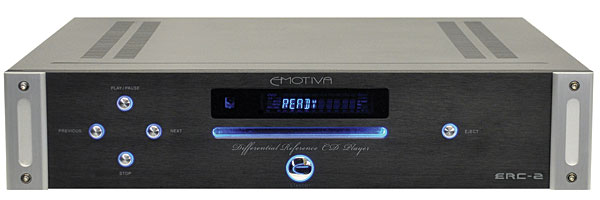
Because I am an audiophile, I want to hear that music through the best possible source component. Lately, I've been enjoying CDs through the Emotiva ERC-2 CD player ($449).
The Emotiva ERC-2 measures 17" (435mm) wide by 4.25" (110mm) high by 14" (360mm) deep and, at 17.5 lbs (8kg), is the heaviest component to enter my listening room since the 25-lb Simaudio Moon i3.3 integrated amplifier ($3300, discontinued). The player's distinct appearance was developed by Emotiva's president and CEO, Dan Laufman, and VP of engineering, Lonnie Vaughn. In building the ERC-2, their goal was to "keep it simple, easy to use, and elegant . . . in a machine-oriented way."
Ensemble Dirondo CD player
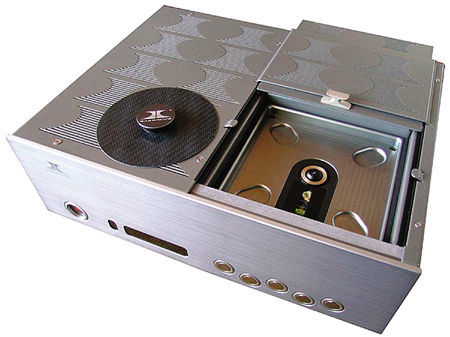
I've encountered a number of audio products over the years whose thoughtful design and intricate craftsmanship brought to mind the expression "built like a Swiss watch." As often as I'd thought or even written that phrase, however, I don't think I'd ever stopped to seriously consider what an audio component might be like if actually built by the nation that produces Rolex and Breitling wristwatches.
Esoteric P-2 CD transport
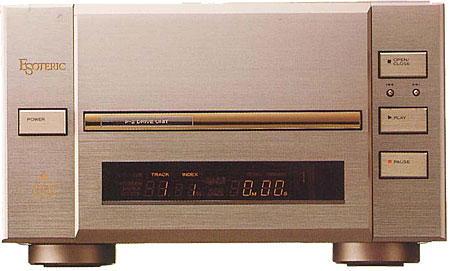
The whole idea that different CD transports have different sonic characteristics when driving the same digital-to-analog converter is a vexing problem. It is easy to prove that even the cheapest CD players recover the data stored on most CDs with bit-for-bit accuracy, thus disproving the widespread and erroneous belief that errors in the digital code are commonplace and affect presentation aspects such as imaging, soundstage depth, textural liquidity, etc (footnote 1). If the datastream driving the digital converter is comprised of the same sequence of ones and zeros, regardless of the transport, what other factors could account for the sonic differences between CD drives reported by many listeners?
Esoteric SA-60 universal player
In the ongoing">http://www.stereophile.com/asweseeit/907awsi">ongoing debacle that has been the introduction and promotion of high-resolution digital audio and the record industry's struggles to engage the public's interest in it, two recent events stand out.
Eversolo Play CD Edition streaming integrated amplifier
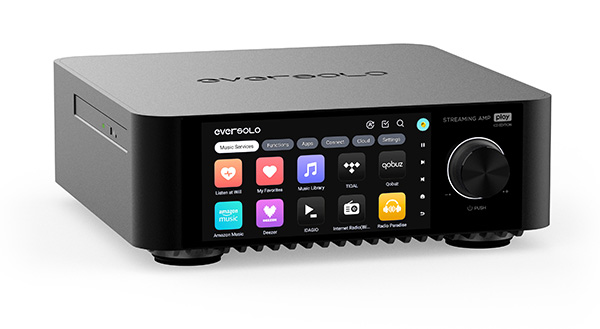
The all-in-one stereo component occupies the same territory as those Italian restaurants that also serve sushi and Texas barbecue. Every instinct says it's a dubious overreach: Few chefs master two or more distinct cuisines. But then you experience that rare eatery that somehow nails the California roll, the carbonara, and the brisket, and you realize that dismissing it on principle could mean missing something that's genuinely excellent.
Exposure CD Player
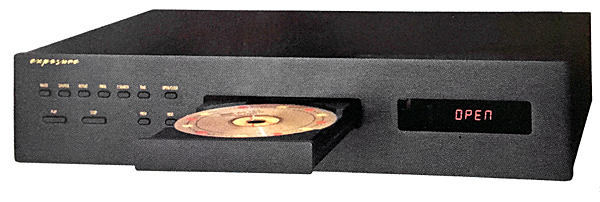
Exposure owner/designer John Farlowe graduated from the UK's University of Sussex at the end of the swinging '60s. He put his B.Sc in electronic engineering to use at HiWatt, manufacturers of tube guitar amplifiers. His keen interest in pro audio, particularly in sound reinforcement for rock bands, led him to Midas (studio mixing desks and systems), where, as director and designer, he designed and built mixing desks and got together with the late Dave Martin of Martin Audio. They became heavily involved in sound systems for Pink Floyd. Midas desks and Martin speakers were used at many live venues, including those at London's Rainbow.
Four 3rd-Generation CD players: Adcom, Magnavox, Onkyo, Yamaha
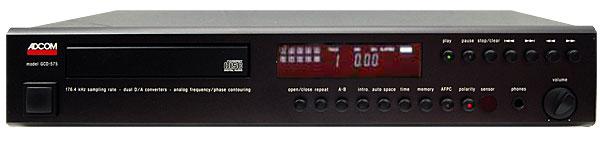
I once told Stereophile publisher Larry Archibald it might be worth, say, a 10% loss in sound quality with CD not to have to jump up and turn over the damned record. Sometimes a CD saves you from popping up twiceMahler's Fifth or Bruckner's Seventh on a single disc instead of three LP sidesor three timesMozart's Magic Flute on three CDs instead of 6 LP sides. That might be worth a 15% sacrifice.
GamuT CD 1 CD player
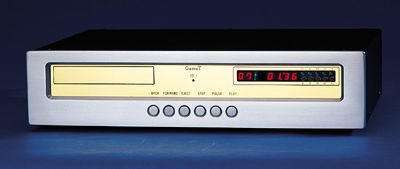
I was in a jam. John Atkinson was gently reminding me of rapidly approaching deadlines, and my longtime reference CD player, the Simaudio">http://www.stereophile.com//digitalsourcereviews/343/">Simaudio Moon Eclipse, had just been recalled for an upgrade. This wouldn't normally have been a problem, but I was also in the middle of relocating from New Mexico to California, and all of my backup gear was either in storage or on a moving truck somewhere.
Gramophone Dreams #101: The Shanling ET3 CD transport
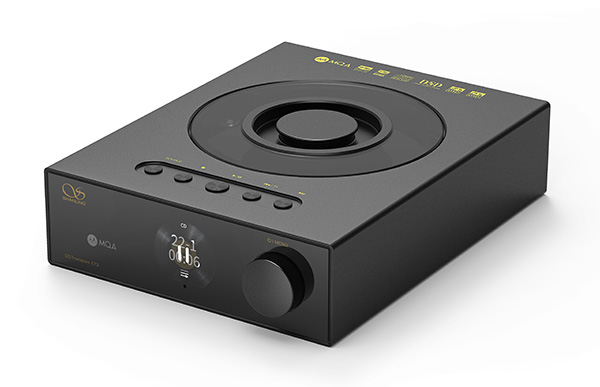
Costing just $899, Shanling's top-loading ET3 CD transport appears to have been designed by people who recognize the multitude of big and small fails (or lost opportunities) of previous CD transports. In use, the ET3 felt like a distillation of what I've always wanted in a transport: strong, solid, compact, cool-looking, and feels good to use.
Gramophone Dreams #88: TEAC VRDS-701T CD transport
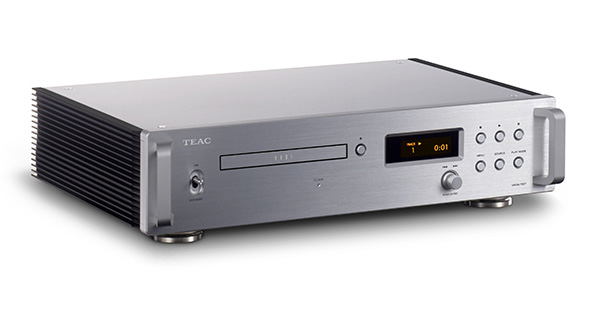
It's the late 1980s, and I'm soldering tube amplifiers on a plywood bench. I decide on a whim that it's time to break down and buy a CD player to supplement the Dynaco tuner and Dual cassette deck in my workroom music system.
I was a slow starter with digital because of my early take on CD sound: It was emotionally drained with grumbling distortions in the bass and an off-timbre midrange, crowned by a thin, artificial treble, and penetrated by an eerie, unnatural silence whenever the musicians stopped playing. I thought cassettes had higher fidelity and that CDs would be a passing fad, but I kept browsing CDs at Tower Records, and the itch to buy some was getting pretty strong.
One of my friends said, "Maybe it's not the conversion principle that's to blame but something else, like an imperfect CD player?" That interesting thought had not occurred to me, and it obviously occurred to lots of engineers, because they are still trying to improve the quality of CD playback by adjusting the mechanism.