

47 Laboratory 4704 PiTracer CD transport
Every once in a while, a piece of super-esoteric gear crosses my path that, on the face of it, makes no sense whatsoever. Eventually, however, the component is revealed as being "merely" simple and elegant, begging the question: Must it always be done the way it's always been done?
47 Laboratory 4715 D/A processor & 4716 CD transport
Back in 1984, when I still had all my hair and began listening to digital audio (wait a minute...), I was disappointed with the compact disc. Most of that disappointment came from the format's musical performance, which was poor, but a portion of my dismay came from realizing that my days as a hands-on hobbyist were numbered: I was used to selecting and setting up my own turntable, tonearm, and cartridge, but a CD player defied such involvement. Plugging it in and playing it were all that I or most anyone else could do.
Accuphase DP-75V CD player
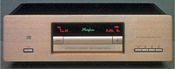
Although the Accuphase DP-75V looks like a conventional single-box CD player, it's actually a separate transport section and digital processor, each of which can be used independently. The transport is a 16-bit/44.1kHz mechanism, the datastream appearing on RCA coax and TosLink optical output connectors on the rear panel.
Accuphase DP-80L CD player & DC-81L digital processor
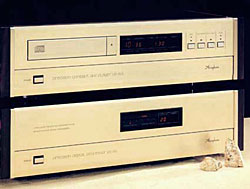 $13,000! You could buy two Hyundai Excels for that kind of money. Or one 5-liter Ford Mustang. Or two-thirds of a Saab 900 Turbo. How could the purchase of this Accuphase two-box CD player be justified on any rational grounds? What if it did offer state-of-the-art sound quality? Would it really be 50 times better than a humble Magnavox? Would it even be 4.3 times better than the California Audio Labs Tempest II CD player? And would it approach the sound quality routinely offered from LP by the similarly priced Versa Dynamics 2.0 turntable?
Accuphase DP-90 CD transport & DC-91 D/A processor
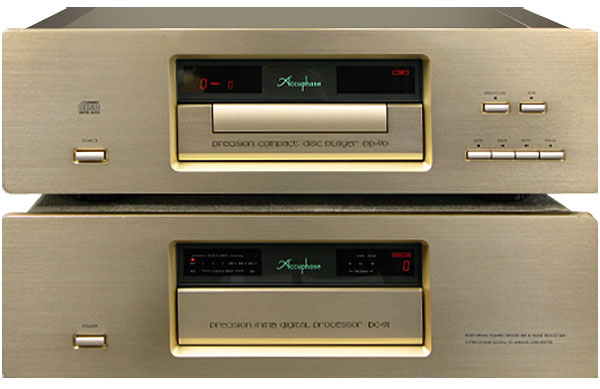
In 1995, as the compact disc enters its second decade of commercial reality, it's fair to say that the associated hardware has come of age, exorcising at last the digital gremlins of time-base jitter and quantization noise. Digital-processor maturation is particularly evident in the design of the all-critical D/A processor. The simplistic digital circuitry of yesterday has given way to considerable design sophistication that deals directly with jitter and low-level nonlinearities.
Adcom GCD-575 CD player
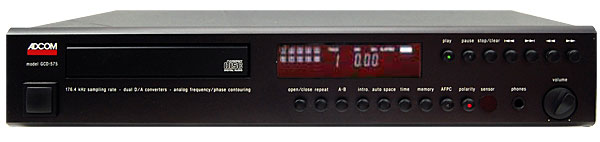
I once told Larry Archibald it might be worth, say, a 10% loss in sound quality with CD not to have to jump up and turn over the damned record. Sometimes a CD saves you from popping up twiceMahler's Fifth or Bruckner's Seventh on a single disc instead of three LP sidesor three timesMozart's Magic Flute on three CDs instead of 6 LP sides. That might be worth a 15% sacrifice.
Advance Paris X-CD9 CD player
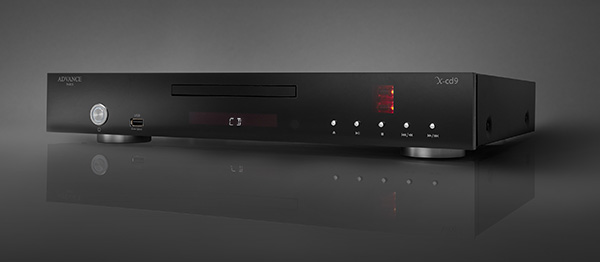
Like many vinyl obsessives, I've amassed a considerable CD collection—a 10' × 15' wall of them, behind dark blue curtains in my listening room. It is almost as if I was concealing a dirty secret from purist analog snobs, including me.
Aesthetix Saturn Romulus DAC/CD player
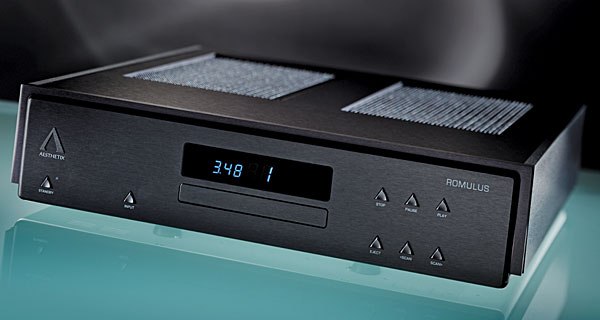
Tubes?
In a CD player?
Century-old technology embedded in a modern digital design?
I realize that Aesthetix's Saturn Romulus is not the first disc player or D/A processor with tubes, nor will it be the lastbut does combining these technologies even make sense? Are audiophiles working at cross purposes to themselves, looking for modern perfection but preferring a little old-school sweetening here and there?
AH! Njoe Tjoeb 4000 CD player
Audiophiles once took it as given that LPs sounded better than CDs—end of discussion. Things are no longer so cut-and-dried. In my seven years as a contributing editor to Stereophile, I've seen an enormous improvement in the quality of digital software and playback-delivery systems. The early-1980s recording and remastering anomalies that made listening to early digital recordings so fatiguing are largely things of the past, though advocates of massive compression, jacked-up gain, and compensatory EQ ("Sounds-better-on-cheap-radios," they dully chant) continue to sully the waters of natural resolution.
Alesis MasterLink ML-9600 Hard Disk/CD-R Recorder
When a well-respected analog disc-mastering veteran like Stan Ricker says that the Alesis MasterLink ML-9600, a hard-disk-based digital recorder/CD burner, is "the best tool in my mastering bag...done right it can sound better than all but the absolute top drawer analog," you take the endorsement seriously. Progress is possible. Mastering tool, CD burner, 24-bit/96kHz recorder, audio reviewer's best friend—the versatile MasterLink is one of the coolest products I've ever had my hands on.