

Krell KAV-300cd CD player
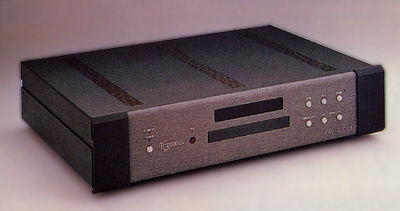
You'd be hard-pressed to find a company more protective of its reputation than Krell. At a recent meeting of the Academy for the Advancement for High End Audio and Video, a motion was made to replace the phrase "High End" with the more purely descriptive "High Performance." Krell's CEO, Dan D'Agostino, objected—while he knew the description fit his products, he wasn't sure about those from some of the other members.
Krell KPS-20i CD player
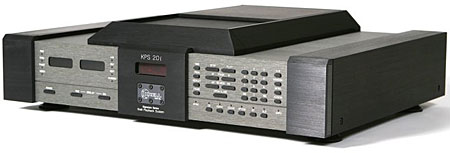
The Krell KPS-20i (KPS stands for "Krell Playback System") is essentially a CD transport and digital processor in one chassis. What make the KPS-20i different from a CD player are the unit's five digital inputs, which allow the KPS-20i to function as a digital/analog converter for external digital sources.
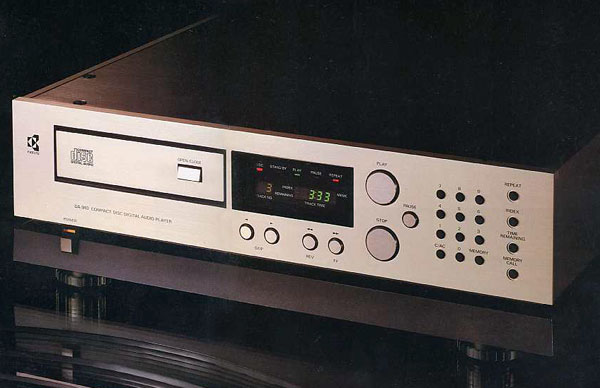
Kyocera DA-910 CD player
Those of our readers who are still anti-CD are going to be offended by what I am about to say. Partly because they do not want it to be true, but mainly because it is. I shall utter the heresy anyway: the Compact Disc is, right now, doing more for the cause of high-end audio than anything that has ever come along before!
There, I've said it. Now I shall explain it.
Linn Classik CD receiver
Over the past two decades, enough advances in the high-end audio industry have trickled down to aspiring audiophiles that we now enjoy a level of high-value, high-resolution performance that would have seemed unattainable even just a few years ago. Still, immersion in a profound musical experience remains an ephemeral goal to potential converts, given the level of expertise that seems necessary to assemble a truly audiophile set of separates.
Linn Karik/Numerik CD player
When the Compact Disc was first introduced nearly ten years ago, many were critical of the sound quality from this medium that promised "Perfect Sound Forever." To many sensitive listeners digital playback was a travesty that paled by comparison to even modestly priced turntable/arm/cartridge combinations. Ironically, those listeners who first praised CD sound have been forced to recant when confronted by the huge improvements in digital to analog conversion (and A/D conversion) seen in the past few years.
Linn Majik CD player
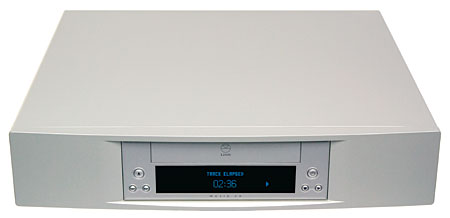
In the early 1980s, Ivor">http://www.stereophile.com/interviews/1101ivor">Ivor Tiefenbrun, of Linn Products, Ltd., compared digital audio to "a nasty disease" that his company offered not to spread. Less than 25 years later, digital sources outnumber analog ones in Linn's product line—so much so that the venerable Scottish manufacturer has expanded its line of disc players to encompass two different formats: multi- and two-channel.
Linn Sondek CD12 CD Player
A funny thing happened to Linn Product's Brian Morris when he attempted to bring Linn's new Sondek CD12 through Customs as hand-luggage:
Luxman D-105u CD player
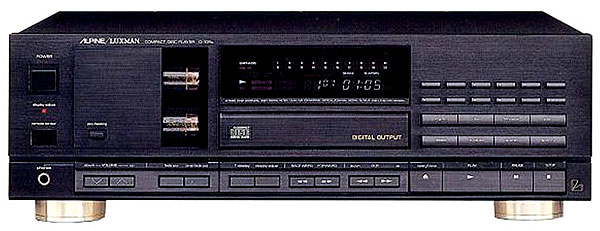
The $1200 D-105u, the top of Luxman's CD-player line, is novel in its twin-triode vacuum-tube amplification in the analog output stage. This configuration is said to provide high linearity with low distortion and that hard-to-quantify musicality found in tubed products. In addition, the D-105u incorporates an anti-vibration laser pick-up mechanism and a high-mass magnetic disc clamper, the latter feature said to mass-load the disc center to minimize spindle-motor microvibration, thus improving tracking accuracy for lowest error rate.
Métronome Technologie AQWO SACD/CD transport and D/A processor
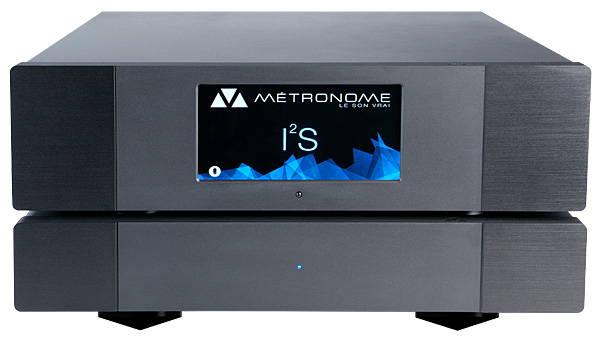
In an era when polar opposites compete as absolutes, it can be a challenge to acknowledge the different and equally valid ways in which audiophiles approach musical truth. But the reality is that our perceptions of how reproduced music should sound are determined, to a large extent, by how we approach the live experience.
Marantz CD-94 CD player
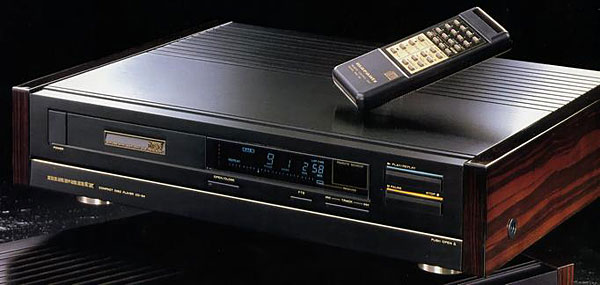
Let's go back a few years. Well, more than a few, actually. The electronics end of high-end audio consisted of two companiesMarantz and McIntosh. If you were not up to shopping at their stratospheric price leveleven though the industry hadn't yet invented components priced to compete with automobilesyou could always fall back on Dynaco, the poor man's high end in kit form. You hooked all this together with two-dollar connecting cables and 16-gauge zip cord purchased from the local electrical supply house, orif you felt particularly flushyou'd spend a few (very few) bucks more at Fred's Stereo for the cables with the fancy molded plugs. Hoses were used for watering the lawns.