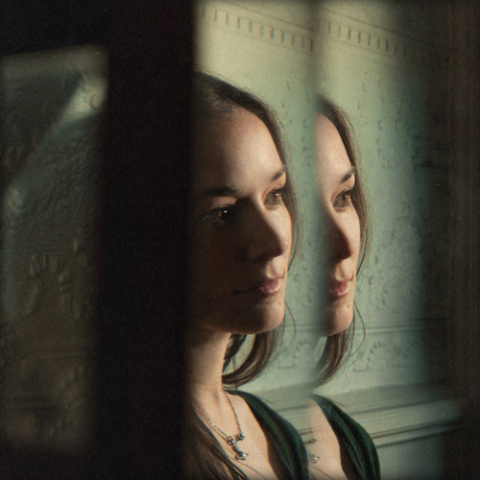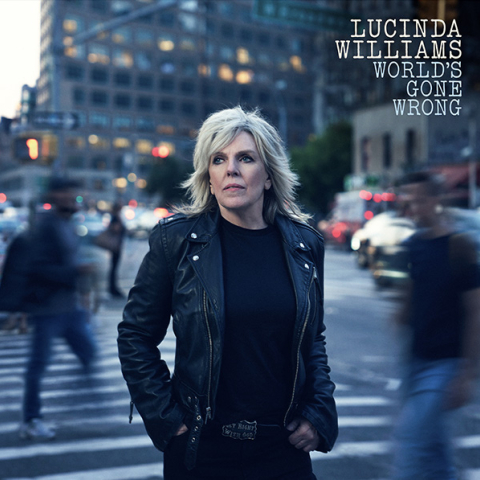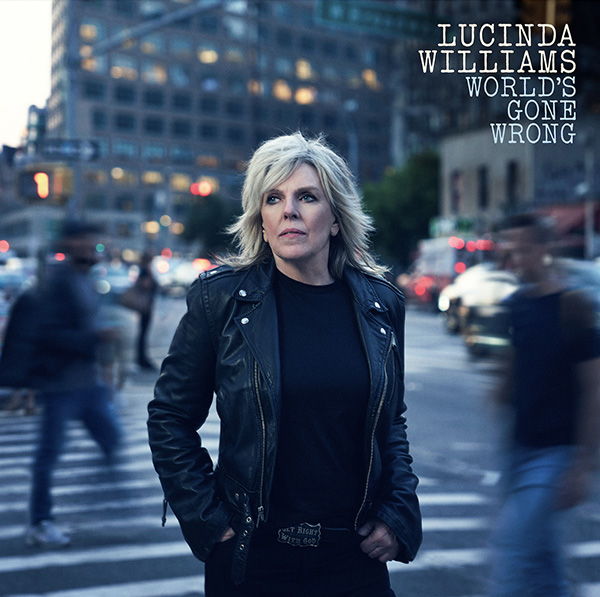
Lucinda Williams: World's Gone Wrong
Highway 20 Records/Thirty Tigers H20015LP (LP). 2026. Ray Kennedy, Tom Overby, prods.; Kennedy, John Rooney, engs.
Performance ****½
Sonics ****½ There are times when songwriters, particularly those who have been at it for a while, need a jolt, a shock to the system that gets their creative juices flowing again. An obvious example is Bruce Springsteen, who was inspired by 9/11 to write his last best group of songs, which became The Rising. Such troubled times call for protest, but writing songs that carry a message and don't sound preachy—and that don't ignore the need for melody—is exceptionally difficult. Lucinda Williams has pulled it off. Having wrongs to protest has sent Williams back to her roots and helped her rediscover her mojo, post-stroke. "It made me think about back in the '60s when I was a teenager. I used to get involved and go to the marches and demonstrations and sing these songs that were so great. Everybody knew 'We Shall Overcome,' and I missed that," she told me in a phone call just before embarking on a European tour. "That's kind of what I was going for when I was writing these songs. I wanted to feel like that again, because that was a very powerful and empowering feeling, standing with a group of like-minded people, singing. You felt like you weren't alone."
Williams has now climbed all the way back from the 2020 stroke that left her unable to play guitar or walk without assistance. Here, she and her band are locked in to a like-minded musical groove. Her voice, always an acquired taste, has rarely been better.
The rocking guitars on the first, title track, which also features country singer-songwriter Brittney Spencer, power the kind of everyman tale Williams has always had a knack for composing. The song presages the emotional arc of the entire album. It's somber, even hopeless: "She stares out the window and shakes her head/She can't believe the things she's read/She can't believe what's being said/Some days she can't get outta bed." What keeps the song and the album from being just a litany of disheartening disasters is melody, a spirit of defiance, and an appeal to set public downsides aside before they become personally ruinous: "She holds him tight and softly smiles/Says baby let's put on some Miles/ And dance barefoot across the tiles/And forget our troubles for a little while."
In that same vein, reminiscent of "Crescent City" from her 1988 self-titled album on Rough Trade, is the easygoing "Low Life," which was recorded at Electric Lady Studios in NYC. In this memory set to music, she returns to her home state of Louisiana and in a barroom among "good hurricanes" (the drink) and Slim Harpo records, she feels right at home: "On the front door there's a sign/Ain't got no shoes on never mind/Dr. John, maybe he was wrong/I've been in the right place all along."
Musically, another strength here is the abundance of likable, obvious melodic hooks, as in the title track and "Sing Unburied Sing," which are easily strong enough to stand apart from the messages they convey as just enjoyable tunes—among the most relatable she's ever written. All this new music is given an expert performance by Williams's ace road band of veterans, including guitarists Doug Pettibone and Marc Ford, keyboardist Rob Burger, bassist David Sutton, and drummer Brady Blade. Sonically, Ray Kennedy, one of Nashville's finest engineers, has given the album a wide soundstage, a natural sense of balance, and the kind of unignorable mix that says "Please take notice."
Most surprising here is "So Much Trouble in the World," from Bob Marley and the Wailers' 1979 album Survival. For Lucinda to cover a stinging anthem by Marley isn't an obvious move, but the song fits perfectly with the emotional tenor of this album. In a masterstroke—one of the touches that makes the album so powerful—Williams is joined by the incomparable Mavis Staples.
"It's such a great song. I've always loved that song. It's timeless. And it's so relevant," Williams told me during our call. "I worked it up with my band and we did it a couple of times live, and I decided to record it. At first I was hesitant, because I didn't want to try and compete with Bob." She laughed. "Everybody said you can add your own spin, and it'll be great, so I jumped in and did it. Having Mavis on it really was the final touch. It just lifted the whole song up." Williams closes this powerful collection with a pair of essential messages. In "Freedom Speaks," she sings, "So let me remind you/Just what's at stake/Apathy will blind you/Until it's way too late/So don't take me for granted/I'm strong in the light/Don't take me for granted/Stand up and fight." And in the closer, "We've Come Too Far to Turn Around," with Norah Jones, she appeals to standing steadfast, to keepin' on keepin' on: "We are weary of these trials/Of tribulations, we are tired/But we have come too far to turn around."
How has The World Gone Wrong been received so far?
"I thought it would be obvious," she told me with a tone of disbelief. "People are so complacent. They seem surprised that I wrote these songs. I had one journalist just straight-out ask me, 'Lucinda, has the world gone wrong?' And I was like, 'Have you been living under a rock?'"—Robert Baird
Highway 20 Records/Thirty Tigers H20015LP (LP). 2026. Ray Kennedy, Tom Overby, prods.; Kennedy, John Rooney, engs.
Performance ****½
Sonics ****½ There are times when songwriters, particularly those who have been at it for a while, need a jolt, a shock to the system that gets their creative juices flowing again. An obvious example is Bruce Springsteen, who was inspired by 9/11 to write his last best group of songs, which became The Rising. Such troubled times call for protest, but writing songs that carry a message and don't sound preachy—and that don't ignore the need for melody—is exceptionally difficult. Lucinda Williams has pulled it off. Having wrongs to protest has sent Williams back to her roots and helped her rediscover her mojo, post-stroke. "It made me think about back in the '60s when I was a teenager. I used to get involved and go to the marches and demonstrations and sing these songs that were so great. Everybody knew 'We Shall Overcome,' and I missed that," she told me in a phone call just before embarking on a European tour. "That's kind of what I was going for when I was writing these songs. I wanted to feel like that again, because that was a very powerful and empowering feeling, standing with a group of like-minded people, singing. You felt like you weren't alone."