The Eagles: One of These Nights (Deluxe Edition)
Asylum/Rhino R1-727158 (3 LPs). 1975/2026. Bill Szymczyk, Don Henley, prods.; Szymczyk, Allan Blazek, Rob Jacobs, engs.
Performance ****½
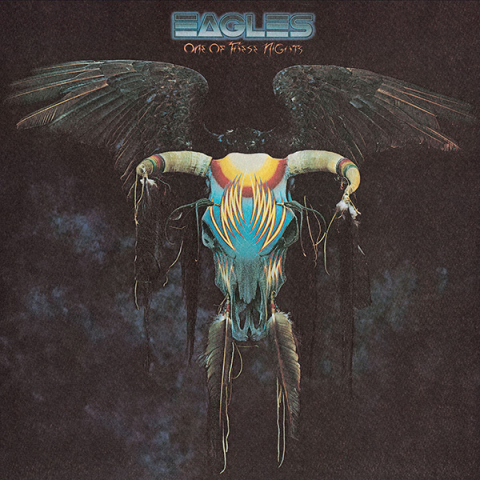
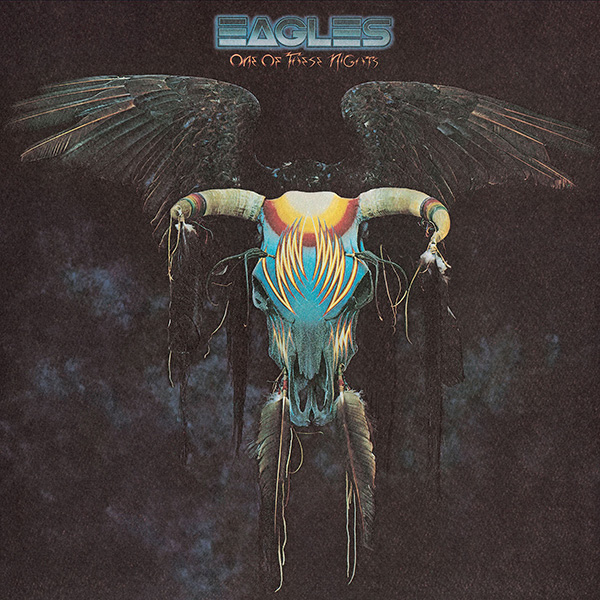
Sonics ****½ The Eagles entered 1975 with several Top 40 hits to their credit but broke into wide public consciousness with the release of their fourth album, One of These Nights. With its embossed, Grammy-nominated cover artwork by Gary Burden, it was their first to hit the top spot on the US Billboard 200 album chart, and the album spawned three Top Five singles: "One of These Nights," "Lyin' Eyes," and "Take It to the Limit." The first two were written by Don Henley and Glenn Frey; bassist Randy Meisner co-wrote and sang lead on "Take It to the Limit." The title track became the band's second number one single. (The first, in March 1975, was "Best of My Love" from On the Border.) "One of These Nights" manages to be perky and mysterious at the same time, beginning at the end of the first verse when Henley digs into "The full moon is calling, the fever is high/And the wicked wind whispers and moans/You got your demons, you got desires/Well, I got a few of my own." While the next verse evokes the whore/angel female archetype, a well-worn sentiment first heard in blues tunes, Henley's vocal performance and Meisner's rolling bass line make this tune one of the band's most memorable originals.
Much of the album's success emanates from its immaculate production, by Bill Szymczyk and a cadre of five engineers. A former sonar technician for the US Navy, Szymczyk, who had no musical training and was not a player himself, had produced albums for the James Gang (a trio led by future Eagle Joe Walsh) before he was tapped, in 1974, to complete On the Border, the album the Eagles had started recording in London with Glyn Johns. Szymczyk, whose smooth production moved the band away from country and toward a more pronounced rock sound, would remain the band's producer through their next album, Hotel California.
Recorded at Criteria Studios in Miami and the Record Plant in Los Angeles, One of These Nights was undoubtedly built from parts and overdubs. Yet its sound manages to combine big production values with a relentless focus on telling details. The rich, sitar-like weave of guitars in "Too Many Hands"; the panning, spacious production, and cymbal flourishes of Bernie Leadon's banjo-driven instrumental "Journey of the Sorcerer"; and Albhy Galuten's sweeping synthesizer on "Hollywood Waltz" are elegant touches in the warm, inviting sound.
This deluxe reissue includes the original album remixed plus, on the remaining two LPs, a live show from the Sunshine Festival held at Anaheim Stadium in September 1975, the final show in the One of These Nights tour. The main album, remixed by Rob Jacobs, sounds very much like the original, still smooth and high-gloss, but any tweaks or changes are not readily apparent. If there's a flaw in this Don Henley–produced deluxe reissue, it's the lack of information about sources and engineers. The engineers and producers of the previously unreleased live show are uncredited, but it's obviously a professional recording.
This reissue, which was reviewed in its three-LP version, is also available in a three-CD-plus–Blu-ray edition with Dolby Atmos and high-resolution stereo mixes. The lacquers for the LP version were cut by Chris Bellman at Bernie Grundman Mastering.
One commonly heard criticism of One of These Nights is that because of its very success—its three singles have been played to death on radio—the album has become unlistenable. Indeed, several deep tracks not written by the Henley/Frey team may be the most interesting parts of the album. Leadon's spacey instrumental "Journey of the Sorcerer" is a much-needed palette cleanser after the album's pop singles. "Visions," one of two tracks co-written by then-new guitarist Don Felder, adds a harder rock edge. "Hollywood Waltz" is one of the band's finer salutes to their hometown.
The most potent criticism leveled at the band—that their obsessive perfectionism was boring—is on display in the live Anaheim Stadium show, which was Bernie Leadon's final appearance as an Eagle. (Leadon would rejoin the band only for their Rock & Roll Hall of Fame induction performance in 1998.) Heard in wonderfully clear and dynamic sound, and a set list that includes such standout tracks as "Take It Easy," "Witchy Woman," and their welcome cover of Tom Waits's "Ol' '55," the live performance can be viewed two ways: as evidence of the band's live prowess or as evidence that they were hyperfocused on note-for-note reproduction of their studio records—further proof that they were unable to stretch out and jam.
Conversely, in the 1970s, bands that didn't try to replicate their studio albums (think Led Zeppelin or Allman Brothers) were criticized for jamming too much and making their songs unrecognizable.
While Their Greatest Hits 1971–1975 will forever be their bestselling album, and Hotel California their polished artistic coup and audiophile favorite (about which Frey quipped, "We created a monster with Hotel California, and it ate us"), One of These Nights marked the end of the original Eagles. Leadon was replaced by Joe Walsh, who appears at the end of the live show in a rendition of his own "Rocky Mountain Way." Meisner left in 1977. One of These Nights remains the last gasp of a band still full of amity and hungry for success.—Robert Baird
Asylum/Rhino R1-727158 (3 LPs). 1975/2026. Bill Szymczyk, Don Henley, prods.; Szymczyk, Allan Blazek, Rob Jacobs, engs.
Performance ****½
Sonics ****½ The Eagles entered 1975 with several Top 40 hits to their credit but broke into wide public consciousness with the release of their fourth album, One of These Nights. With its embossed, Grammy-nominated cover artwork by Gary Burden, it was their first to hit the top spot on the US Billboard 200 album chart, and the album spawned three Top Five singles: "One of These Nights," "Lyin' Eyes," and "Take It to the Limit." The first two were written by Don Henley and Glenn Frey; bassist Randy Meisner co-wrote and sang lead on "Take It to the Limit." The title track became the band's second number one single. (The first, in March 1975, was "Best of My Love" from On the Border.) "One of These Nights" manages to be perky and mysterious at the same time, beginning at the end of the first verse when Henley digs into "The full moon is calling, the fever is high/And the wicked wind whispers and moans/You got your demons, you got desires/Well, I got a few of my own." While the next verse evokes the whore/angel female archetype, a well-worn sentiment first heard in blues tunes, Henley's vocal performance and Meisner's rolling bass line make this tune one of the band's most memorable originals.