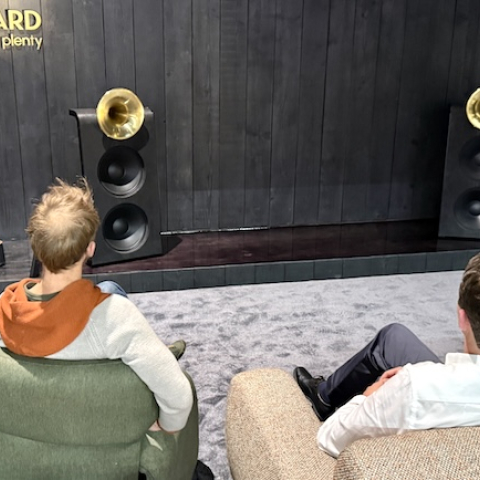
"You can use our amplifiers with horns and high-efficiency loudspeakers and not hear any noise. When we introduced our 300B amplifiers, people were surprised that they didn't need a mute because there was no noise. People can't believe that it's possible to get rid of the old limitations."
Moderately biased impressions
At 145.5lb and close to 28" high and 19" deep and costing $80,000/pair, Octave's Jubilee Mono SE is the largest, most expensive amplifier I've ever reviewed—$32,500/pair more than my reference D'Agostino Progression M550 monoblocks ($47,500/pair). With eight KT120 and three ECC82 tubes per amplifier, a pair of Jubilee Mono SEs puts out enough heat to warrant air conditioning on warmer days. Because their height and weight made them difficult to hoist onto an amplifier stand, I left them on the floor during the review, resting on their rubber feet. Until the release of Wilson Audio's Pedestal isolation foot for heavy amplifiers, my reference Progression M550s, too, rest on their own rubber feet.
The monoblocks arrived with 16 power tubes, labeled according to position, four spare tubes, three screwdrivers, and an owner's manual with tube installation instructions. The tubes on my review units, as I mentioned, were installed by Manousselis, with some texted assistance from Brieger. Warning: The wood panels on the bottom of the cardboard boxes that hold the monoblocks are secured by staples that can damage your floor. I found out the hard way.
In addition to the usual stuff—a 15A IEC inlet, two sets of speaker lugs, an input for remote operation, a main power button, and RCA and XLR inputs—the Mono SE's rear panel has a few other, less common features: two toggle switches, to select RCA or XLR input and to turn Ecomode on or off; a muting LED that is invisible from the front; and, flush with the faceplate, eight numbered bias screws. More on bias-setting and eco-mode later.
The top panel includes Standby and Muting buttons and a Power Pre-Selector button that, when set to Low Bias, reduces the current to approximately 40% of its nominal value for low-volume listening and certain measurement functions. A rotary bias control enables selection of which tube to bias. A digital display includes a bias meter and six yellow, green, blue, and red LEDs, which indicate different amplifier states.
Tube biasing is easily accomplished via eight 10-turn potentiometer screws on the rear panel, one for each tube. Each biasing screw corresponds to a selection on the top-panel bias control. The manual supplies detailed instructions.
When we set up the amps, Brieger offered the following advice: "When you use the High Bias setting (blue LED), it takes 20 minutes from cold to fully ready. Depending on the speakers, Low Bias (green LED) uses less current, operates with lower accuracy, and delivers closer to a typical tube sound. When I bias, I normally start with 900; if you want a bit more control, you can go up to 1250."
Hofmann elaborated. "The bias adjustment range helps us match the amplifier to the speaker. A JBL Everest is different from a Dynaudio or a Wilson speaker. A High Bias setting increases the maximum output power. Distortions in high output power are lower in High Bias, but the benefit is more theoretical in some respects. Even when listening loudly, the average output power will be in the region of 150–200W.
"The more important aspect, in my experience, is speaker demand in respect to damping factor or control. With High Bias, there is a higher damping factor even in the midrange. If we have too much control, the bass can be too tight and the midrange too far forward. I think this is one of the reasons why developers of high-efficiency speakers don't like push-pull amps with high output power. Of course, I do not really recommend true high-efficiency speakers for the Jubilee SE. For the amplifier itself, it is not a disadvantage to work with less quiescent current."
At a bias of 900, and even when raised to 1125, I found the sound too lean in the midrange through my Wilson Alexia 2s. Only when I raised the bias to 1250 did I hear what the Octave Jubilee SE Monos can ultimately deliver through these speakers.
Engaging Ecomode reduces heat and unnecessary power consumption when the unit is switched on but not in use. After 10 minutes without receiving signal, the tube output stage reverts to idle, and power consumption is reduced to less than 100Wpc. When signal is detected, the amp turns back on after a 60-second warm-up delay. Brieger says it takes only 10 minutes to restore sound to optimal level from Ecomode idle, 20 minutes from cold. Out of habit, I always gave the amps at least 20 minutes to warm up fully.
When it was time to connect the Mono SEs, Brieger counseled us to use the outer terminals close to the edge of the rear plate, as they are directly connected to the output transformer. Asked to clarify, Hofmann replied, "The outer terminals are direct contact points to the output transformer. Both speaker terminals are connected in direct parallel by an internal bridge. The difference between the two pairs is of minor importance; there is no difference in the sound or technology."
Blossoming sound
As I began listening, I recalled that Hofmann is an opera lover. He said his goal is to design equipment that will make the music of Wagner, Rossini, and other greats sound as good as possible. "I want to see this singer in front of me with the whole body and the whole emotion," he noted during our chat. "This is only possible with an amplifier that has high bandwidth. Bass is so important for all the voices. I think of the scene in Beethoven's Fidelio, when he's in jail crying out to God (Gott! Welch Dunkel hier! ... In des Lebens Frühlingstagen), declaring that his wife is an angel who will lead him to freedom. Or of Lucia. You get tears in your eyes when you hear this music, and this must come out of the system. "Of course, I also listen to pop, jazz, rock, and world, including gypsy music from Eastern Europe. I have 2400 analog records, including all of Kraftwerk. I like Kraftwerk's Radio-Activity and Autobahn, for example. All Frank Zappa, Yes, Genesis, Gentle Giant, Wishbone Ash, Jethro Tull, etc. I love 'Montana' from Zappa's Over-Nite Sensation, and Ian Carr & Nucleus, which is a little bit strange with a lot of brass. I also like XTC, the new wave music, Talking Heads—all of them. These are not audiophile recordings, but it's music of its time, with its own impressions and sound."
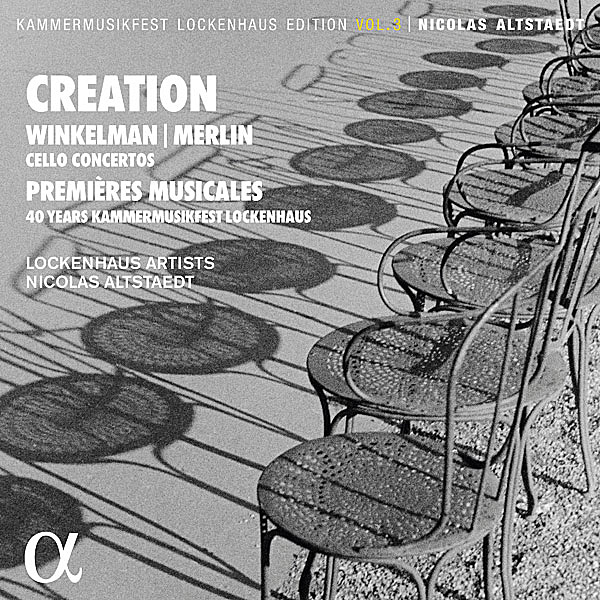 Hofmann's preferences notwithstanding, I began with music of our own time—music reviewed in our August 2022 issue: Helena Winkelman's Concerto for Cello and Strings (Atlas) from cellist Nicolas Altstaedt's album Creation (24/96 WAV, Alpha 861). With bias set to 1125, the background was dead silent, an absolutely blank canvas from which colors blossomed forth like flowers in springtime. The sound had irresistible natural warmth—that thrilling, indefinable liquidity that makes audiophiles melt. Bass was tight and convincing but not quite equal in impact to that elicited from my challenging Alexia 2s by the solid state D'Agostino Progression M550s, which pump out 1100Wpc into 4 ohms. Highs were smoother, however, and everything else on the audiophile checklist was at least equally rewarding.
When I upped the bias to 1200, and then to 1250, the music seemed to get louder as the lower midrange and bass began to flesh out. The soundstage was huge—as big as I expect from the best amplification in my system. During the opening of "Bubbles," an electronic downtempo tease of a track from Yosi Horikawa's Wandering (16/44.1 FLAC, First World Records/Tidal), various balls are heard, falling on a hard surface. The Mono SEs nailed the resulting phantasmagoria of timbres. The effect was deliciously sensuous.
Hofmann's preferences notwithstanding, I began with music of our own time—music reviewed in our August 2022 issue: Helena Winkelman's Concerto for Cello and Strings (Atlas) from cellist Nicolas Altstaedt's album Creation (24/96 WAV, Alpha 861). With bias set to 1125, the background was dead silent, an absolutely blank canvas from which colors blossomed forth like flowers in springtime. The sound had irresistible natural warmth—that thrilling, indefinable liquidity that makes audiophiles melt. Bass was tight and convincing but not quite equal in impact to that elicited from my challenging Alexia 2s by the solid state D'Agostino Progression M550s, which pump out 1100Wpc into 4 ohms. Highs were smoother, however, and everything else on the audiophile checklist was at least equally rewarding.
When I upped the bias to 1200, and then to 1250, the music seemed to get louder as the lower midrange and bass began to flesh out. The soundstage was huge—as big as I expect from the best amplification in my system. During the opening of "Bubbles," an electronic downtempo tease of a track from Yosi Horikawa's Wandering (16/44.1 FLAC, First World Records/Tidal), various balls are heard, falling on a hard surface. The Mono SEs nailed the resulting phantasmagoria of timbres. The effect was deliciously sensuous.
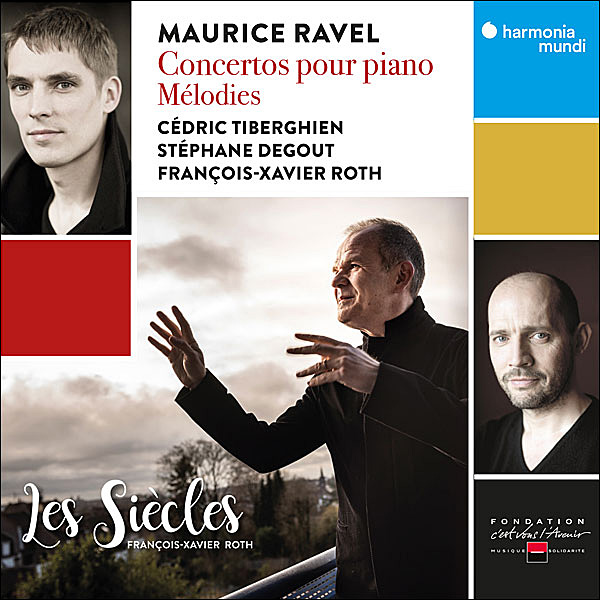 I had hoped to review Les Siècles's superbly recorded Maurice Ravel: Concertos pour piano / Mélodies (24/96 WAV, Harmonia Mundi 902612), with pianist Cédric Tiberghien and baritone Stéphane Degout, but alas, my colleague Stephen Francis Vasta claimed it first. The musicianship on this recording is stellar; the color, depth, and air of the period instruments, heavenly. Seduced by Degout's piano-accompanied rendition of Ravel's song cycle, Trois Poèmes de Stéphane Mallarmé, I had to compare mezzo-soprano Janet Baker's rendition in her famous analog recording with the Melos Ensemble (16/44.1 FLAC, Decca/Qobuz). Her voice was gorgeous, her highs incomparably beautiful. Degout sounded marvelous but, oh, were Baker's highs special. So were the golden, dew-kissed highs of my beloved soprano Elisabeth Schumann, which sounded as if touched by magic.
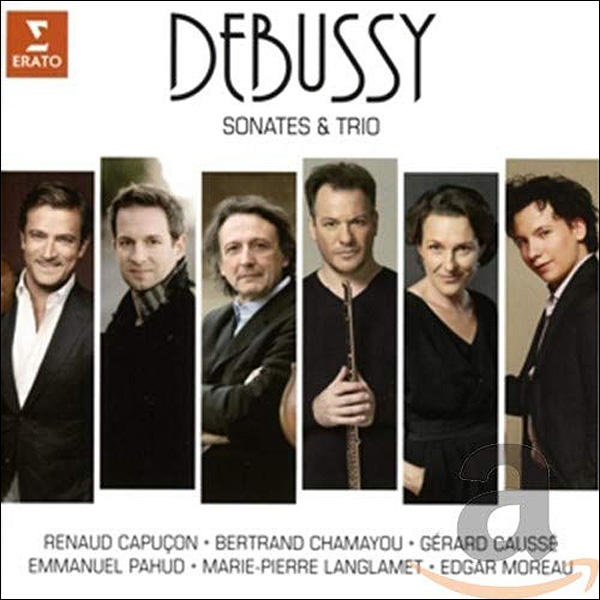 Soprano Jodie Devos sounded equally heavenly on Frank Bridge's "Come to Me in My Dreams" from And Love Said... (24/96 FLAC, Alpha/Qobuz), and Nicolas Kruger's piano was supremely sonorous. As I listened to Elina Garanca, Deborah Voigt, Camilla Nyland, Kirsten Flagstad, and (for a change of pace) bass René Pape sing great operatic music by Richard Wagner, I wrote, repeatedly, "gorgeous." The only time I deviated from that descriptor was after hearing the flute in Debussy's Trio Sonata for Flute, Viola and Harp, from Debussy: Sonates & Trio (24/96 MQA, Erato/Tidal): I wrote, "beyond gorgeous."
Besides lacking the ultimate in bass oomph on my speakers, everything was in place, perfect and delectable. I continued my blissful audition with a widely diverse selection of music: the title track from the Gerry Mulligan Quartet's take on Yip Harburg and Vernon Duke's "What Is There to Say?" (16/44.1 MQA, Columbia/Tidal); Rotary Connection's 5th Dimension–like "I Am the Black Gold of the Sun" (16/44.1 FLAC, Chess/Qobuz) from their Black Gold collection; conductor Andris Nelsons's sonorous orchestral-suite rendition of Richard Strauss's Der Rosenkavalier on our June 2022 Recording of the Month, Richard Strauss: Orchestral Works (24/96 MQA, DG/Tidal); Rachael & Vilray's fun "At Your Mother's House," from their eponymous album (24/88.2 MQA, Nonesuch/Tidal); Gregory Porter's soulful "Holding On" from Take Me to the Alley (24/96 MQA, Blue Note/Tidal); and Frank Zappa's hilarious "Montana" from Over-Nite Sensation (24/192 FLAC, Frank Zappa Catalog/Qobuz).
When music was meant to be fun, I had fun; when it was meant to tug at my heart, it tugged. And when music got fast, furious, dramatic, even violent, it kept its integrity, remaining perfectly articulated, focused, ultimately transparent, and consistently seductive. Nothing remained at arm's length except the occasional track that didn't speak to me. No, the low bass on Yello's "Electrified II" from Toy (24/48 MQA, Universal/Tidal) and Strauss's Also Sprach Zarathustra (from the album cited above) wasn't as room-shaking as with some solid state powerhouses that have entered my system. But I'd never have missed it if I hadn't heard fuller bass with other amplification. On its own, the bass sounded timbrally right and snappingly complete.
In a class of its own
Soprano Jodie Devos sounded equally heavenly on Frank Bridge's "Come to Me in My Dreams" from And Love Said... (24/96 FLAC, Alpha/Qobuz), and Nicolas Kruger's piano was supremely sonorous. As I listened to Elina Garanca, Deborah Voigt, Camilla Nyland, Kirsten Flagstad, and (for a change of pace) bass René Pape sing great operatic music by Richard Wagner, I wrote, repeatedly, "gorgeous." The only time I deviated from that descriptor was after hearing the flute in Debussy's Trio Sonata for Flute, Viola and Harp, from Debussy: Sonates & Trio (24/96 MQA, Erato/Tidal): I wrote, "beyond gorgeous."
Besides lacking the ultimate in bass oomph on my speakers, everything was in place, perfect and delectable. I continued my blissful audition with a widely diverse selection of music: the title track from the Gerry Mulligan Quartet's take on Yip Harburg and Vernon Duke's "What Is There to Say?" (16/44.1 MQA, Columbia/Tidal); Rotary Connection's 5th Dimension–like "I Am the Black Gold of the Sun" (16/44.1 FLAC, Chess/Qobuz) from their Black Gold collection; conductor Andris Nelsons's sonorous orchestral-suite rendition of Richard Strauss's Der Rosenkavalier on our June 2022 Recording of the Month, Richard Strauss: Orchestral Works (24/96 MQA, DG/Tidal); Rachael & Vilray's fun "At Your Mother's House," from their eponymous album (24/88.2 MQA, Nonesuch/Tidal); Gregory Porter's soulful "Holding On" from Take Me to the Alley (24/96 MQA, Blue Note/Tidal); and Frank Zappa's hilarious "Montana" from Over-Nite Sensation (24/192 FLAC, Frank Zappa Catalog/Qobuz).
When music was meant to be fun, I had fun; when it was meant to tug at my heart, it tugged. And when music got fast, furious, dramatic, even violent, it kept its integrity, remaining perfectly articulated, focused, ultimately transparent, and consistently seductive. Nothing remained at arm's length except the occasional track that didn't speak to me. No, the low bass on Yello's "Electrified II" from Toy (24/48 MQA, Universal/Tidal) and Strauss's Also Sprach Zarathustra (from the album cited above) wasn't as room-shaking as with some solid state powerhouses that have entered my system. But I'd never have missed it if I hadn't heard fuller bass with other amplification. On its own, the bass sounded timbrally right and snappingly complete.
In a class of its own
The gorgeous-sounding Octave Jubilee Mono SE joins a handful of other blessed-with-greatness amps—the Gryphon Essence Mono, Pass Labs XA200.8, and D'Agostino Progression M550 monoblocks; the Krell KSA-300i integrated; the Accustic Arts stereo AMP V—that I regretted having to part with after the review was complete. Sonically, the Octave Jubilee Mono SE is in a class of its own. Having heard what it can produce with speakers more easily driven than mine, I have no doubt that most music lovers will find its bass convincingly complete and natural, its midrange marvelously full and smooth, and its highs heavenly. Unique among tube amplifiers in size, topology, stunning silence, and durability, the Mono SE will beckon to those who can afford it. Giving the Octave Jubilee Mono SE the highest possible class-A listing in Stereophile's Recommend Components only begins to do justice to this amplifier
At 145.5lb and close to 28" high and 19" deep and costing $80,000/pair, Octave's Jubilee Mono SE is the largest, most expensive amplifier I've ever reviewed—$32,500/pair more than my reference D'Agostino Progression M550 monoblocks ($47,500/pair). With eight KT120 and three ECC82 tubes per amplifier, a pair of Jubilee Mono SEs puts out enough heat to warrant air conditioning on warmer days. Because their height and weight made them difficult to hoist onto an amplifier stand, I left them on the floor during the review, resting on their rubber feet. Until the release of Wilson Audio's Pedestal isolation foot for heavy amplifiers, my reference Progression M550s, too, rest on their own rubber feet.
As I began listening, I recalled that Hofmann is an opera lover. He said his goal is to design equipment that will make the music of Wagner, Rossini, and other greats sound as good as possible. "I want to see this singer in front of me with the whole body and the whole emotion," he noted during our chat. "This is only possible with an amplifier that has high bandwidth. Bass is so important for all the voices. I think of the scene in Beethoven's Fidelio, when he's in jail crying out to God (Gott! Welch Dunkel hier! ... In des Lebens Frühlingstagen), declaring that his wife is an angel who will lead him to freedom. Or of Lucia. You get tears in your eyes when you hear this music, and this must come out of the system. "Of course, I also listen to pop, jazz, rock, and world, including gypsy music from Eastern Europe. I have 2400 analog records, including all of Kraftwerk. I like Kraftwerk's Radio-Activity and Autobahn, for example. All Frank Zappa, Yes, Genesis, Gentle Giant, Wishbone Ash, Jethro Tull, etc. I love 'Montana' from Zappa's Over-Nite Sensation, and Ian Carr & Nucleus, which is a little bit strange with a lot of brass. I also like XTC, the new wave music, Talking Heads—all of them. These are not audiophile recordings, but it's music of its time, with its own impressions and sound."
Hofmann's preferences notwithstanding, I began with music of our own time—music reviewed in our August 2022 issue: Helena Winkelman's Concerto for Cello and Strings (Atlas) from cellist Nicolas Altstaedt's album Creation (24/96 WAV, Alpha 861). With bias set to 1125, the background was dead silent, an absolutely blank canvas from which colors blossomed forth like flowers in springtime. The sound had irresistible natural warmth—that thrilling, indefinable liquidity that makes audiophiles melt. Bass was tight and convincing but not quite equal in impact to that elicited from my challenging Alexia 2s by the solid state D'Agostino Progression M550s, which pump out 1100Wpc into 4 ohms. Highs were smoother, however, and everything else on the audiophile checklist was at least equally rewarding.
When I upped the bias to 1200, and then to 1250, the music seemed to get louder as the lower midrange and bass began to flesh out. The soundstage was huge—as big as I expect from the best amplification in my system. During the opening of "Bubbles," an electronic downtempo tease of a track from Yosi Horikawa's Wandering (16/44.1 FLAC, First World Records/Tidal), various balls are heard, falling on a hard surface. The Mono SEs nailed the resulting phantasmagoria of timbres. The effect was deliciously sensuous.
I had hoped to review Les Siècles's superbly recorded Maurice Ravel: Concertos pour piano / Mélodies (24/96 WAV, Harmonia Mundi 902612), with pianist Cédric Tiberghien and baritone Stéphane Degout, but alas, my colleague Stephen Francis Vasta claimed it first. The musicianship on this recording is stellar; the color, depth, and air of the period instruments, heavenly. Seduced by Degout's piano-accompanied rendition of Ravel's song cycle, Trois Poèmes de Stéphane Mallarmé, I had to compare mezzo-soprano Janet Baker's rendition in her famous analog recording with the Melos Ensemble (16/44.1 FLAC, Decca/Qobuz). Her voice was gorgeous, her highs incomparably beautiful. Degout sounded marvelous but, oh, were Baker's highs special. So were the golden, dew-kissed highs of my beloved soprano Elisabeth Schumann, which sounded as if touched by magic.
Soprano Jodie Devos sounded equally heavenly on Frank Bridge's "Come to Me in My Dreams" from And Love Said... (24/96 FLAC, Alpha/Qobuz), and Nicolas Kruger's piano was supremely sonorous. As I listened to Elina Garanca, Deborah Voigt, Camilla Nyland, Kirsten Flagstad, and (for a change of pace) bass René Pape sing great operatic music by Richard Wagner, I wrote, repeatedly, "gorgeous." The only time I deviated from that descriptor was after hearing the flute in Debussy's Trio Sonata for Flute, Viola and Harp, from Debussy: Sonates & Trio (24/96 MQA, Erato/Tidal): I wrote, "beyond gorgeous."
Besides lacking the ultimate in bass oomph on my speakers, everything was in place, perfect and delectable. I continued my blissful audition with a widely diverse selection of music: the title track from the Gerry Mulligan Quartet's take on Yip Harburg and Vernon Duke's "What Is There to Say?" (16/44.1 MQA, Columbia/Tidal); Rotary Connection's 5th Dimension–like "I Am the Black Gold of the Sun" (16/44.1 FLAC, Chess/Qobuz) from their Black Gold collection; conductor Andris Nelsons's sonorous orchestral-suite rendition of Richard Strauss's Der Rosenkavalier on our June 2022 Recording of the Month, Richard Strauss: Orchestral Works (24/96 MQA, DG/Tidal); Rachael & Vilray's fun "At Your Mother's House," from their eponymous album (24/88.2 MQA, Nonesuch/Tidal); Gregory Porter's soulful "Holding On" from Take Me to the Alley (24/96 MQA, Blue Note/Tidal); and Frank Zappa's hilarious "Montana" from Over-Nite Sensation (24/192 FLAC, Frank Zappa Catalog/Qobuz).
When music was meant to be fun, I had fun; when it was meant to tug at my heart, it tugged. And when music got fast, furious, dramatic, even violent, it kept its integrity, remaining perfectly articulated, focused, ultimately transparent, and consistently seductive. Nothing remained at arm's length except the occasional track that didn't speak to me. No, the low bass on Yello's "Electrified II" from Toy (24/48 MQA, Universal/Tidal) and Strauss's Also Sprach Zarathustra (from the album cited above) wasn't as room-shaking as with some solid state powerhouses that have entered my system. But I'd never have missed it if I hadn't heard fuller bass with other amplification. On its own, the bass sounded timbrally right and snappingly complete.
The gorgeous-sounding Octave Jubilee Mono SE joins a handful of other blessed-with-greatness amps—the Gryphon Essence Mono, Pass Labs XA200.8, and D'Agostino Progression M550 monoblocks; the Krell KSA-300i integrated; the Accustic Arts stereo AMP V—that I regretted having to part with after the review was complete. Sonically, the Octave Jubilee Mono SE is in a class of its own. Having heard what it can produce with speakers more easily driven than mine, I have no doubt that most music lovers will find its bass convincingly complete and natural, its midrange marvelously full and smooth, and its highs heavenly. Unique among tube amplifiers in size, topology, stunning silence, and durability, the Mono SE will beckon to those who can afford it. Giving the Octave Jubilee Mono SE the highest possible class-A listing in Stereophile's Recommend Components only begins to do justice to this amplifier