"Oh goody!" thought self, to self: "Another Gryphon component to review." As eloquent and revelatory as that statement may be, there's an even more illuminating backstory.
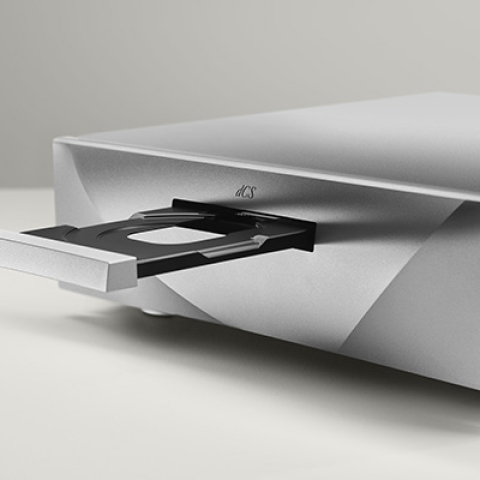
I had been aware of Denmark-based Gryphon Audio since the advent of the Gryphon Exorcist, a now-discontinued demagnetizer that cost far more than your average break-in CD, but I only began to encounter Gryphon electronics at audio shows a few years ago. While at first they seemed available for review only as a complete package, Jim Austin was able to arrange for me to review the Gryphon Ethos CD player–D/A processor ($39,000). I reported on that player in the January 2020 issue of Stereophile. To my surprise, I found the Ethos an "open, marvelously detailed, and fresh-sounding unit that makes listening an absolute joy." I had not expected my experience to be so positive.
Baggy for kitty
Why was I surprised? Because the sound I encountered from the Ethos in an all-Gryphon system at AXPONA 2019 was bright and lacked warmth—so much so that I fled the room without taking notes. It wasn't until quite recently—after I'd spent some time with the Gryphon Essence monoblock power amplifier ($45,980/pair), the product under review—that Gryphon's director of sales, Rune Skov, confessed to me that the sound in that second-floor, air-walled convention-center room was so untamable—so far from what he wished to present—that he had lobbied for a static display. Static displays rarely cut it at audio shows, so Skov put his best foot forward and proceeded as though everything was fine. Which, without letting the cat out of the bag just yet, is how I felt once I heard the Essence monoblocks.
The brand-new, fully balanced Essence monoblocks are the lowest-powered monoblocks in the Gryphon line. They do not come cheap. The Essences are specified as putting out 55 watts into 8 ohms in pure class-A mode—that's $836/W. If you have speakers with a 4 ohm nominal impedance, like my Wilson Audio Alexia 2s, the Essence's 100 class-A watts into 4 ohms make it a relative bargain, at $418/W. Still, whatever your loudspeakers' nominal impedance, I don't think you'll find many folks who consider the Essence a bargain product. Which doesn't necessarily mean they don't represent a good value for the right customer.
Before I said "yes" to this review, I needed some assurance that the Essence monos could handle my loudspeaker, whose impedance dips well below 4 ohms in the bass. At first, Gryphon essentially brushed off my concern, but it was eventually addressed in detail during a joint Skype conversation with Skov and Gryphon's chief designer, Tom Møller.
"When we began to develop the Essence mono amplifier, we used it on our less-efficient speakers that are pretty difficult to drive so we could ensure that the amp could drive them and keep a supertight grip around multiple 8" drivers," Skov said. "Our goal was to control inefficient speakers, be extraordinarily fast, and have tons of resolution and lots of musicality."
"55W into 8 ohms is not a lot," Møller acknowledged. "We wanted to make sure that the small amp could drive larger speakers with reasonable sound pressure."
Møller, a 20-year Gryphon veteran who is responsible for the topology and internal design of the company's amplifiers, preamplifiers, and CD players, explained that the Essence's power output is identical in class-A (high bias) and class-AB (low bias). "In AB, perhaps the first 7 watts are class-A; most of the time, however, the amp operates in class-AB." I asked if the monoblock had been optimized for high bias or low; I had already experienced the sonic differences between the Essence's two bias settings and had strongly held views of my own.
 "It's optimized for high bias," Møller responded. "All our products are. If you put the Essence in low bias, the sound quality will almost certainly go down. It's not terrible—you can listen to background music and so on—but when you want to listen seriously and switch to high bias, it will reach the best temperature in a half-hour or so. If, on the other hand, you turn the monoblocks on from cold, you will have to wait an hour at least. If you start from cold and give them a couple of hours in high bias, they will perform great, and if you give them even more time, they can open up a little bit more."
That's precisely what I had already noticed, so I found Møller's confirmation reassuring.
To ensure that I always auditioned the amps at their best, I kept them on in low-bias mode between evaluation sessions, switching to high bias at least an hour before critical listening.
The biasing light show
"It's optimized for high bias," Møller responded. "All our products are. If you put the Essence in low bias, the sound quality will almost certainly go down. It's not terrible—you can listen to background music and so on—but when you want to listen seriously and switch to high bias, it will reach the best temperature in a half-hour or so. If, on the other hand, you turn the monoblocks on from cold, you will have to wait an hour at least. If you start from cold and give them a couple of hours in high bias, they will perform great, and if you give them even more time, they can open up a little bit more."
That's precisely what I had already noticed, so I found Møller's confirmation reassuring.
To ensure that I always auditioned the amps at their best, I kept them on in low-bias mode between evaluation sessions, switching to high bias at least an hour before critical listening.
The biasing light show
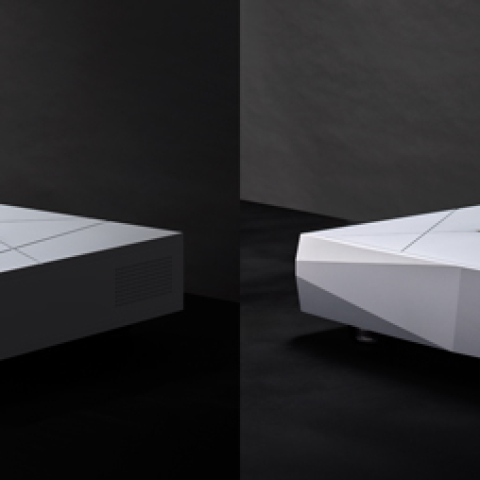
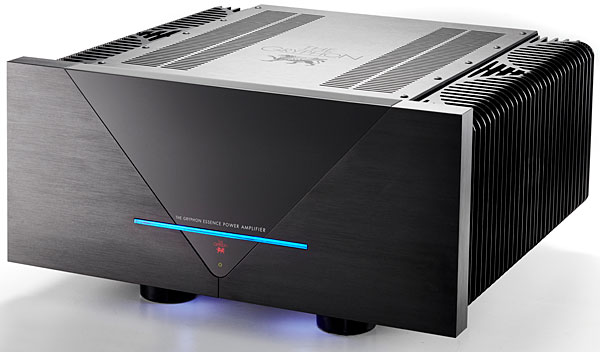
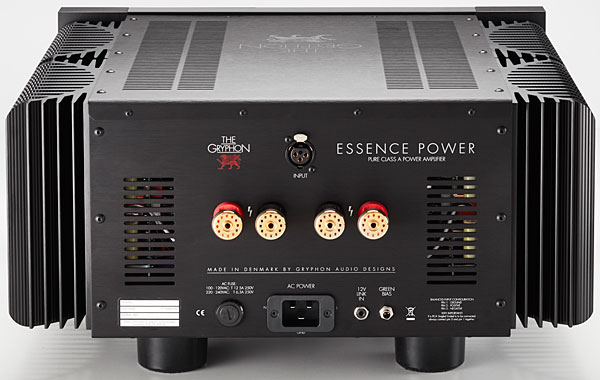
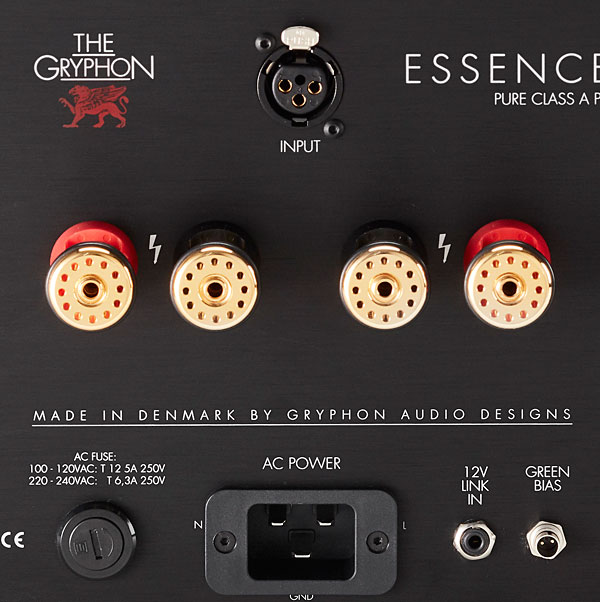
Beauty, like preference in music, is a matter of personal taste. To me, the Essence, with its polished black acrylic finish, is Scandinavian design at its most elegant. The monoblock's rear panel is simple: a 20-amp IEC connector, a single XLR input, and two large, proprietary gold-plated binding posts sensibly placed and a cinch to open and close. It's the front panel that is unique. Located on the amp's underside, close to the front edge, are three controls, easily accessible to anyone who can bend over without falling down. In the middle sits the main on/off toggle switch. It is flanked by two touch-activated buttons: "Mode" on the left and "Bias" on the right.
The Bias button, as you would expect, determines whether the amplifier operates in low or high bias.
The Mode button has nothing to do with how the Essence drives speakers; it's all about the front-panel light show.
When you flip the main power switch to the "on" position, the front panel's Gryphon logo lights up in an understated red and a small, touch-activated "Standby/On" sensor button just below it glows red. When you lightly touch the sensor, a long, horizontal touch bar turns blue, and both it and the logo blink for 25 seconds or so. After that, in Mode 1, the "on" button turns a faint green, and the bar remains blue. If you then change the amplifier's bias, the bar will blink for 10 seconds in the color corresponding to the new bias setting—red for high, green for low—before reverting to blue.
 In Mode 2, the light doesn't revert to blue; it stays the color (red or green) corresponding to the chosen bias. In Mode 3—"stealth" mode—all the front-panel lights, except the green "On" symbol, remain dark until the bias is changed, at which point the touch bar blinks for 10 seconds in the appropriate color before going dark again. That's the most complex thing about this amplifier's functions.
Asked what else is special, Møller pointed to the Essence's new Sanken power transistors from Japan. "In the Diablo 300 integrated amplifier, we used four sets of power transistors in each stereo channel; here, we're using five sets to reduce the output impedance. In addition, in a monoblock, the two channels are coupled in parallel to further lower output impedance. This makes the power amp very powerful, so it can deliver a lot of current. This is the first step to making a very good power amplifier.
"The voltage amplifier stages are also very important. We use dual JFETs as a buffer in the input stage, going to a symmetrical, dual-differential voltage-amplifying stage with bipolar transistors. We also use surface-mounted resistors in the voltage-amplifying stages throughout the amp. Every stage is run in class-A. The power supply section, which uses a custom-made toroidal transformer with very low mechanical noise/hum, is not directly in the signal path, but it affects it indirectly. We also have a lot of capacitance—220,000µF each side—which, because it's in parallel in the monoblocks, means 440,000µF for each channel.
"The power supply for the voltage-amplifying stages is fully regulated and very low noise to prevent smearing of small details and is decoupled with good-quality polypropylene capacitors. Many of our larger amplifiers use 10 pairs of output transistors coupled in parallel. Normally, if you do this, you'll have a large capacitance in the base of the transistors, which is difficult to drive and can lower amplifier bandwidth. To avoid this, we use a lot of power to drive the output transistors. That is some of our secret.
"The circuit board is almost the most important component, because it contains all the signal and grounding tracks, which must be placed optimally to avoid introducing noise and smearing line and detail. Signal paths on the board are intentionally very short. We don't use any internal connectors to conduct sound; all sound passes through high-quality cables that are soldered into the XLR sockets on the Essence's rear plate and lead directly into the printed circuit board. The only wires we use lead to and from the pcb. A small, 15cm-or-so wire leads to the speaker connectors. It's the same silver/copper wire as in the Diablo 300, our biggest and most successful integrated amplifier, and in our speakers. We don't use more internal power supply or signal cabling than absolutely necessary because, during production, it can be difficult to wire components perfectly. In the worst case, if a signal wire is placed closer to a transformer than ideal, it can add audible induced hum. If you eliminate wires from the pcb, the layout will be consistent, which ensures that every Essence power amplifier sounds the same."
In Mode 2, the light doesn't revert to blue; it stays the color (red or green) corresponding to the chosen bias. In Mode 3—"stealth" mode—all the front-panel lights, except the green "On" symbol, remain dark until the bias is changed, at which point the touch bar blinks for 10 seconds in the appropriate color before going dark again. That's the most complex thing about this amplifier's functions.
Asked what else is special, Møller pointed to the Essence's new Sanken power transistors from Japan. "In the Diablo 300 integrated amplifier, we used four sets of power transistors in each stereo channel; here, we're using five sets to reduce the output impedance. In addition, in a monoblock, the two channels are coupled in parallel to further lower output impedance. This makes the power amp very powerful, so it can deliver a lot of current. This is the first step to making a very good power amplifier.
"The voltage amplifier stages are also very important. We use dual JFETs as a buffer in the input stage, going to a symmetrical, dual-differential voltage-amplifying stage with bipolar transistors. We also use surface-mounted resistors in the voltage-amplifying stages throughout the amp. Every stage is run in class-A. The power supply section, which uses a custom-made toroidal transformer with very low mechanical noise/hum, is not directly in the signal path, but it affects it indirectly. We also have a lot of capacitance—220,000µF each side—which, because it's in parallel in the monoblocks, means 440,000µF for each channel.
"The power supply for the voltage-amplifying stages is fully regulated and very low noise to prevent smearing of small details and is decoupled with good-quality polypropylene capacitors. Many of our larger amplifiers use 10 pairs of output transistors coupled in parallel. Normally, if you do this, you'll have a large capacitance in the base of the transistors, which is difficult to drive and can lower amplifier bandwidth. To avoid this, we use a lot of power to drive the output transistors. That is some of our secret.
"The circuit board is almost the most important component, because it contains all the signal and grounding tracks, which must be placed optimally to avoid introducing noise and smearing line and detail. Signal paths on the board are intentionally very short. We don't use any internal connectors to conduct sound; all sound passes through high-quality cables that are soldered into the XLR sockets on the Essence's rear plate and lead directly into the printed circuit board. The only wires we use lead to and from the pcb. A small, 15cm-or-so wire leads to the speaker connectors. It's the same silver/copper wire as in the Diablo 300, our biggest and most successful integrated amplifier, and in our speakers. We don't use more internal power supply or signal cabling than absolutely necessary because, during production, it can be difficult to wire components perfectly. In the worst case, if a signal wire is placed closer to a transformer than ideal, it can add audible induced hum. If you eliminate wires from the pcb, the layout will be consistent, which ensures that every Essence power amplifier sounds the same."
Why was I surprised? Because the sound I encountered from the Ethos in an all-Gryphon system at AXPONA 2019 was bright and lacked warmth—so much so that I fled the room without taking notes. It wasn't until quite recently—after I'd spent some time with the Gryphon Essence monoblock power amplifier ($45,980/pair), the product under review—that Gryphon's director of sales, Rune Skov, confessed to me that the sound in that second-floor, air-walled convention-center room was so untamable—so far from what he wished to present—that he had lobbied for a static display. Static displays rarely cut it at audio shows, so Skov put his best foot forward and proceeded as though everything was fine. Which, without letting the cat out of the bag just yet, is how I felt once I heard the Essence monoblocks.
"It's optimized for high bias," Møller responded. "All our products are. If you put the Essence in low bias, the sound quality will almost certainly go down. It's not terrible—you can listen to background music and so on—but when you want to listen seriously and switch to high bias, it will reach the best temperature in a half-hour or so. If, on the other hand, you turn the monoblocks on from cold, you will have to wait an hour at least. If you start from cold and give them a couple of hours in high bias, they will perform great, and if you give them even more time, they can open up a little bit more."
Beauty, like preference in music, is a matter of personal taste. To me, the Essence, with its polished black acrylic finish, is Scandinavian design at its most elegant. The monoblock's rear panel is simple: a 20-amp IEC connector, a single XLR input, and two large, proprietary gold-plated binding posts sensibly placed and a cinch to open and close. It's the front panel that is unique. Located on the amp's underside, close to the front edge, are three controls, easily accessible to anyone who can bend over without falling down. In the middle sits the main on/off toggle switch. It is flanked by two touch-activated buttons: "Mode" on the left and "Bias" on the right.
In Mode 2, the light doesn't revert to blue; it stays the color (red or green) corresponding to the chosen bias. In Mode 3—"stealth" mode—all the front-panel lights, except the green "On" symbol, remain dark until the bias is changed, at which point the touch bar blinks for 10 seconds in the appropriate color before going dark again. That's the most complex thing about this amplifier's functions.
Asked what else is special, Møller pointed to the Essence's new Sanken power transistors from Japan. "In the Diablo 300 integrated amplifier, we used four sets of power transistors in each stereo channel; here, we're using five sets to reduce the output impedance. In addition, in a monoblock, the two channels are coupled in parallel to further lower output impedance. This makes the power amp very powerful, so it can deliver a lot of current. This is the first step to making a very good power amplifier.
"The voltage amplifier stages are also very important. We use dual JFETs as a buffer in the input stage, going to a symmetrical, dual-differential voltage-amplifying stage with bipolar transistors. We also use surface-mounted resistors in the voltage-amplifying stages throughout the amp. Every stage is run in class-A. The power supply section, which uses a custom-made toroidal transformer with very low mechanical noise/hum, is not directly in the signal path, but it affects it indirectly. We also have a lot of capacitance—220,000µF each side—which, because it's in parallel in the monoblocks, means 440,000µF for each channel.