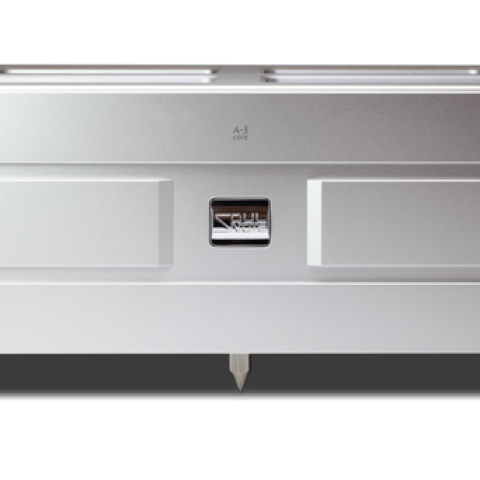
Cosmetically, the PWR-3 could hardly be less obtrusive. There's not a lot to see. Centered on the faceplate, flanked by the mirrored chevron logo of LKV Research, is a blue power-on LED. The back of the amp is also sparse: two pairs of Cardas RCA input jacks, two pairs of WBT speaker binding posts, an IEC connector to let the juice in, and a toggle switch to let it flow. Inside where you can't see it, two types of wire are in use: Belden 22-gauge solid-core copper with silver plating and PTFE (Teflon) insulation, and Southwire 14-gauge solid-core copper insulated with concentric layers of PVC and nylon.
Setup
Installing the PWR-3 was a breeze. Light and compact, it slid easily into the bottom shelf of my five-tier Salamander rack, which stands atop an IKEA bamboo chopping block. I ran the PWR-3 for a couple of weeks without paying much attention, streaming Tidal and Qobuz via Roon, before getting down to critical auditioning. I found I had to experiment with cables to get the best sound from the PWR-3. My reference speaker cables, the Analysis Plus Silver Apex (10' with banana plugs), seemed a little thin with the PWR-3, which compelled me to return to my previous, excellent all-rounder speaker cables, the Auditorium 23 (6' with bananas), which produced a fuller, sweeter sound although with less definition than with the Analysis Plus cables.
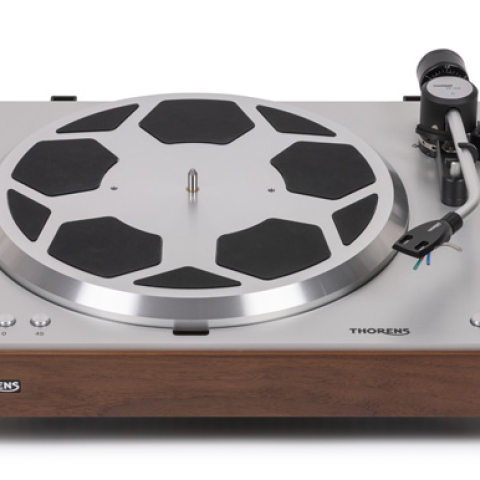
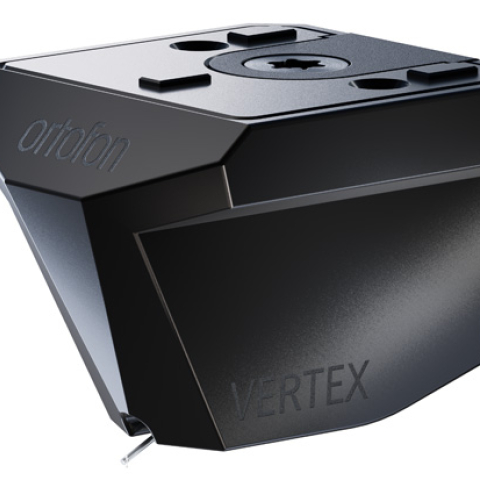
I ran dual analog rigs: my Kuzma Stabi R turntable with 4Point tonearm and an EMT TSD 15 moving coil cartridge, and my Thorens TD 124, on which I have mounted a Jelco TS-350S tonearm (sadly discontinued) with Ortofon's SPU Classic GE MkII moving coil cartridge. A Sculpture A Mini Nano step-up transformer allowed both vinyl front-ends to be linked to the MM input of my Tavish Audio Design Adagio tubed MM stage. The Adagio was connected to the preamp via a 2m pair of Analysis Plus Silver Apex RCA interconnects. A 2m RCA pair of Triode Wire Labs Spirit II interconnects connected the Sugden LA-4 preamplifier to the PWR-3, which then sent music out through the aforementioned Auditorium 23 cables to, alternately, the Fleetwood DeVille and DeVore Fidelity O/96 loudspeakers. The PWR-3 ran slightly warm to the touch.
Plays well with others
Herb wrote that the "class-D LKV amp played equally rich and atmosphere-soaked through the entire audio band." That's also true of the PWR-3. What's perhaps more surprising is that this baby brother of the reference-level PWR+ surpassed its bigger sibling in some ways. Much like the Technics SU-R1000 integrated amplifier I raved about in Stereophile's December 2021 issue, the PWR-3 produced a spooky quiet, which can probably be attributed to low distortion and noise, in the audible range at least (footnote 3). The stillness of this negative sound space defined wonderful, tonally rich sonic solitude.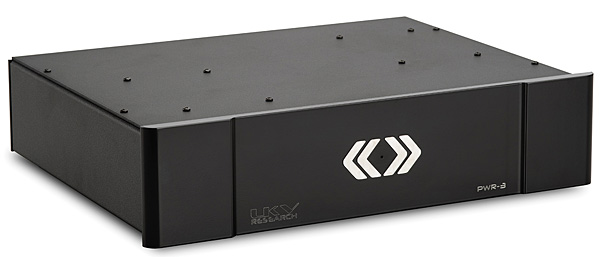 Like the Technics SU-R1000, the PWR-3 approached recordings as an equal-opportunity arbiter, a sonic truth teller that preserved the uniqueness of each recording in ambient warmth, adding only a dollop of richness and, occasionally, lushness. But it didn't quite measure up to the Technics in resolution, definition, and the scale of soundstage and imaging.
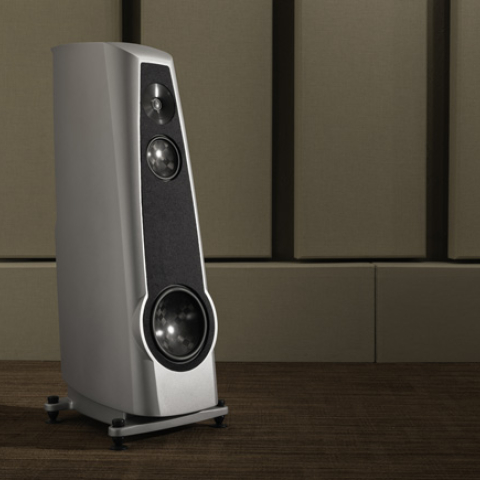
The PWR-3 played equally well with all my equipment. It paired superbly with the Sugden LA-4, revealing this preamp's focus without becoming analytical or antiseptic; it brought richness and body to the Fleetwood DeVille loudspeakers without obscuring their openness, depth, and projection; and it paired perfectly with the DeVore Fidelity O/96 loudspeakers, producing large, meaty images with great detail and palpable texture.
While not as viscous, textured, or physical-sounding as my reference Shindo Haut Brion power amplifier, the PWR-3, with the Thorens turntable and Fleetwood DeVille loudspeakers, presented a deep soundstage with luxurious spaciousness. A walloping, tight low end was balanced by clean mids and a clear, silken treble.
Vinyl expressions
Like the Technics SU-R1000, the PWR-3 approached recordings as an equal-opportunity arbiter, a sonic truth teller that preserved the uniqueness of each recording in ambient warmth, adding only a dollop of richness and, occasionally, lushness. But it didn't quite measure up to the Technics in resolution, definition, and the scale of soundstage and imaging.
The PWR-3 played equally well with all my equipment. It paired superbly with the Sugden LA-4, revealing this preamp's focus without becoming analytical or antiseptic; it brought richness and body to the Fleetwood DeVille loudspeakers without obscuring their openness, depth, and projection; and it paired perfectly with the DeVore Fidelity O/96 loudspeakers, producing large, meaty images with great detail and palpable texture.
While not as viscous, textured, or physical-sounding as my reference Shindo Haut Brion power amplifier, the PWR-3, with the Thorens turntable and Fleetwood DeVille loudspeakers, presented a deep soundstage with luxurious spaciousness. A walloping, tight low end was balanced by clean mids and a clear, silken treble.
Vinyl expressions
The PWR-3 didn't smooth over recordings; rather, it exposed the music ingrained in the vinyl with focus, purity, and tonal balance. The PWR-3 displayed wholeness and serenity, which pulled me deep into the music, especially with vinyl records. To my ears, vinyl's sonic density and natural sound can bring recorded music to life; defying class-D clichés, the PWR-3 complemented and enhanced vinyl's strengths.
 Jeff Porcaro's snare drum on Steely Dan's 1975 groover, "Chain Lightning," from Katy Lied (LP, Japan Probe IPS 80181/ABC Records ABCL 5094), had an edgy punch and whack, moving air about me perceptibly as though the great drummer were still with us, manning a drum kit in my room. The PWR-3, driving the Fleetwood DeVilles, left nothing to the imagination, faithfully recreating the swinging two-and-four dance whipped up by Donald Fagen's Rhodes piano and Porcaro's magic groove.
 Those same sensations of punch, power, and drama recurred on Victor Feldman's In My Pocket (LP, Cohearent Sound CSR-1001), a 1977 recording produced and mastered by Kevin Gray and recorded by Allen Sides. Joined by bassist Chuck Domanico, guitarist Fred Tackett, and flutist Hubert Laws, drummer Harvey Mason drives the performance with flow and power. Mason's snare is loud and clear, the PWR-3 supplying the heavy, quick attack. It takes a powerful, pure amplifier to play with such freedom and unrestrained dynamics. The LKV PWR-3 nailed it.
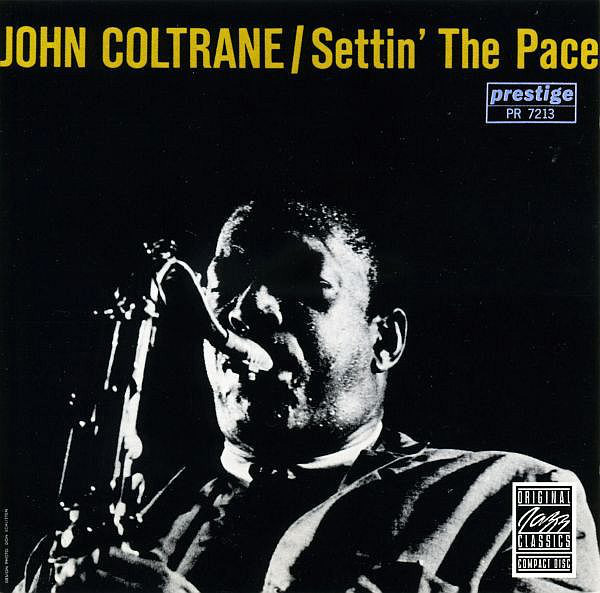 It also nailed John Coltrane's Settin' the Pace (LP, Prestige PRLP 7213), especially the roughage of the master's tenor saxophone, the agile fingering of bassist Paul Chambers, and, like I've never heard it before, the shimmering, reverberant ring of drummer Art Taylor's cymbal: an absolute tone delivered purely and succinctly with a focused attack made possible by the PWR-3's (subjectively) low noisefloor and the DeVilles' open and revealing mids and treble.
The PWR-3 meets the O/96
It also nailed John Coltrane's Settin' the Pace (LP, Prestige PRLP 7213), especially the roughage of the master's tenor saxophone, the agile fingering of bassist Paul Chambers, and, like I've never heard it before, the shimmering, reverberant ring of drummer Art Taylor's cymbal: an absolute tone delivered purely and succinctly with a focused attack made possible by the PWR-3's (subjectively) low noisefloor and the DeVilles' open and revealing mids and treble.
The PWR-3 meets the O/96
As expected, the DeVore Fidelity O/96, with its larger 10" woofer (compared to the DeVille's 6" woofer), and its bigger cabinet, played with a fuller, warmer sound. It also produced a larger soundstage than the Fleetwood DeVille, though it fell a little short of the DeVille's openness and speed. Victor Feldman's album In My Pocket was fuller and groovier with the O/96; it sounded slower, but it was still dynamic. Harvey Mason's drums seemed better meshed with the other instruments, but I missed the visceral, smack-to-the-head snare drum attack of the Fleetwood DeVilles. The PWR-3 worked well with both speakers, revealing their strengths while maintaining its sweet tone, color, and transparency. Overall, though, the O/96 proved a better partner, tapping the same purity and power as the DeVille but making a denser soundstage and populating it with images brimming with texture, tone, and fine detail—the best of the amp and the speaker, combined.
A class-D mate with attitude
I'm a fan of the DACs and amplifiers of Brooklyn-based Mytek (footnote 4). I had the class-D Mytek Brooklyn AMP+ ($2495) on hand for comparison. Whereas LKV uses Purifi's class-D modules, Mytek uses modules from another Danish firm, Pascal (footnote 5), which Mytek modifies in-house. The AMP+ works up 250Wpc into 8 ohms (24dBW), 300Wpc into 4 ohms (21.7dBW), and 400Wpc into 2 ohms (20dBW), while the PWR-3, as mentioned, offers 175Wpc, 360Wpc, and 225Wpc into those loads, respectively. Steely Dan's "Chain Lightning" became a beast with the Mytek, playing with more energy, drive, and ZZ Top–worthy rock-and-roll boogie. Guitars and drums had a little more texture, but there was also a hint of treble glare. Also, the Mytek lacked the PWR-3's royal tone, warm atmosphere, and broad soundstage. The AMP+ played with revolution in mind; the PWR-3 with beauty, charm, and color. Two very different class-D amplifiers. Conclusion
Sometimes, as you listen, listen again, then listen some more, subtler aspects of the music become apparent and your impressions evolve. I wrote that the PWR-3 is a clear and transparent amplifier but also that it is colored and rich in tone. The late Art Dudley, Stereophile's emeritus deputy editor, once wrote about the DeVore Fidelity O/96 that it is "colorful yet uncolored." That's how I feel about the LKV Research PWR-3. It's full of apparent contradictions: warm and clear, colorful yet transparent, soulful and precise. Sure, the PWR+ is superior in some ways, but in other ways the PWR-3 provides a richer, more musical experience. It's a sweet-sounding amplifier with a penchant for making instruments sing. It soothed the heart of this beast. And it costs a third of what its bigger sibling costs.
Footnote 3: Above the audible range, all bets are off: It's class-D after all. Footnote 4: Mytek Audio was founded in 1992 by electrical engineer Michal Jurewicz, the company's president and chief designer. Footnote 5: Founded in 2006, Copenhagen-based Pascal specializes in the design and manufacture of advanced, compact amplifier modules.
Installing the PWR-3 was a breeze. Light and compact, it slid easily into the bottom shelf of my five-tier Salamander rack, which stands atop an IKEA bamboo chopping block. I ran the PWR-3 for a couple of weeks without paying much attention, streaming Tidal and Qobuz via Roon, before getting down to critical auditioning. I found I had to experiment with cables to get the best sound from the PWR-3. My reference speaker cables, the Analysis Plus Silver Apex (10' with banana plugs), seemed a little thin with the PWR-3, which compelled me to return to my previous, excellent all-rounder speaker cables, the Auditorium 23 (6' with bananas), which produced a fuller, sweeter sound although with less definition than with the Analysis Plus cables.
Herb wrote that the "class-D LKV amp played equally rich and atmosphere-soaked through the entire audio band." That's also true of the PWR-3. What's perhaps more surprising is that this baby brother of the reference-level PWR+ surpassed its bigger sibling in some ways. Much like the Technics SU-R1000 integrated amplifier I raved about in Stereophile's December 2021 issue, the PWR-3 produced a spooky quiet, which can probably be attributed to low distortion and noise, in the audible range at least (footnote 3). The stillness of this negative sound space defined wonderful, tonally rich sonic solitude.
Like the Technics SU-R1000, the PWR-3 approached recordings as an equal-opportunity arbiter, a sonic truth teller that preserved the uniqueness of each recording in ambient warmth, adding only a dollop of richness and, occasionally, lushness. But it didn't quite measure up to the Technics in resolution, definition, and the scale of soundstage and imaging.
The PWR-3 didn't smooth over recordings; rather, it exposed the music ingrained in the vinyl with focus, purity, and tonal balance. The PWR-3 displayed wholeness and serenity, which pulled me deep into the music, especially with vinyl records. To my ears, vinyl's sonic density and natural sound can bring recorded music to life; defying class-D clichés, the PWR-3 complemented and enhanced vinyl's strengths.
Jeff Porcaro's snare drum on Steely Dan's 1975 groover, "Chain Lightning," from Katy Lied (LP, Japan Probe IPS 80181/ABC Records ABCL 5094), had an edgy punch and whack, moving air about me perceptibly as though the great drummer were still with us, manning a drum kit in my room. The PWR-3, driving the Fleetwood DeVilles, left nothing to the imagination, faithfully recreating the swinging two-and-four dance whipped up by Donald Fagen's Rhodes piano and Porcaro's magic groove.
Those same sensations of punch, power, and drama recurred on Victor Feldman's In My Pocket (LP, Cohearent Sound CSR-1001), a 1977 recording produced and mastered by Kevin Gray and recorded by Allen Sides. Joined by bassist Chuck Domanico, guitarist Fred Tackett, and flutist Hubert Laws, drummer Harvey Mason drives the performance with flow and power. Mason's snare is loud and clear, the PWR-3 supplying the heavy, quick attack. It takes a powerful, pure amplifier to play with such freedom and unrestrained dynamics. The LKV PWR-3 nailed it.
It also nailed John Coltrane's Settin' the Pace (LP, Prestige PRLP 7213), especially the roughage of the master's tenor saxophone, the agile fingering of bassist Paul Chambers, and, like I've never heard it before, the shimmering, reverberant ring of drummer Art Taylor's cymbal: an absolute tone delivered purely and succinctly with a focused attack made possible by the PWR-3's (subjectively) low noisefloor and the DeVilles' open and revealing mids and treble.
As expected, the DeVore Fidelity O/96, with its larger 10" woofer (compared to the DeVille's 6" woofer), and its bigger cabinet, played with a fuller, warmer sound. It also produced a larger soundstage than the Fleetwood DeVille, though it fell a little short of the DeVille's openness and speed. Victor Feldman's album In My Pocket was fuller and groovier with the O/96; it sounded slower, but it was still dynamic. Harvey Mason's drums seemed better meshed with the other instruments, but I missed the visceral, smack-to-the-head snare drum attack of the Fleetwood DeVilles. The PWR-3 worked well with both speakers, revealing their strengths while maintaining its sweet tone, color, and transparency. Overall, though, the O/96 proved a better partner, tapping the same purity and power as the DeVille but making a denser soundstage and populating it with images brimming with texture, tone, and fine detail—the best of the amp and the speaker, combined.
I'm a fan of the DACs and amplifiers of Brooklyn-based Mytek (footnote 4). I had the class-D Mytek Brooklyn AMP+ ($2495) on hand for comparison. Whereas LKV uses Purifi's class-D modules, Mytek uses modules from another Danish firm, Pascal (footnote 5), which Mytek modifies in-house. The AMP+ works up 250Wpc into 8 ohms (24dBW), 300Wpc into 4 ohms (21.7dBW), and 400Wpc into 2 ohms (20dBW), while the PWR-3, as mentioned, offers 175Wpc, 360Wpc, and 225Wpc into those loads, respectively. Steely Dan's "Chain Lightning" became a beast with the Mytek, playing with more energy, drive, and ZZ Top–worthy rock-and-roll boogie. Guitars and drums had a little more texture, but there was also a hint of treble glare. Also, the Mytek lacked the PWR-3's royal tone, warm atmosphere, and broad soundstage. The AMP+ played with revolution in mind; the PWR-3 with beauty, charm, and color. Two very different class-D amplifiers. Conclusion
Sometimes, as you listen, listen again, then listen some more, subtler aspects of the music become apparent and your impressions evolve. I wrote that the PWR-3 is a clear and transparent amplifier but also that it is colored and rich in tone. The late Art Dudley, Stereophile's emeritus deputy editor, once wrote about the DeVore Fidelity O/96 that it is "colorful yet uncolored." That's how I feel about the LKV Research PWR-3. It's full of apparent contradictions: warm and clear, colorful yet transparent, soulful and precise. Sure, the PWR+ is superior in some ways, but in other ways the PWR-3 provides a richer, more musical experience. It's a sweet-sounding amplifier with a penchant for making instruments sing. It soothed the heart of this beast. And it costs a third of what its bigger sibling costs.
Footnote 3: Above the audible range, all bets are off: It's class-D after all. Footnote 4: Mytek Audio was founded in 1992 by electrical engineer Michal Jurewicz, the company's president and chief designer. Footnote 5: Founded in 2006, Copenhagen-based Pascal specializes in the design and manufacture of advanced, compact amplifier modules.