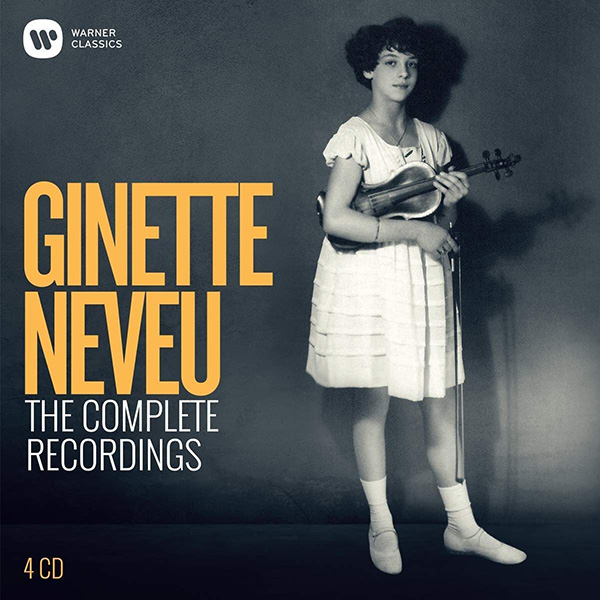
The preternaturally talented Neveu (1919–1949) was playing her soul out on a made-in-1730 Omobono Stradivari—Omobono was one of Antonio's sons—and its rich tones came through my speakers dense and rub-my-fingers-together tactile. The Aero strongly emphasized bow-on-string textures, which emphasized Neveu's tone, making for a sensuous, compelling Ginette Neveu listening experience.
To my delight, LTA's DAC presented these remastered pre-1949 recordings with that Kodachrome tone I've come to associate with NOS R-2R converters. Best of all, the Aero added a faint halo of tube luminosity that accentuated room tones and piano harmonics while hinting at the tube gear these recordings were made with. But I expected that.
What I didn't expect was how the Aero presented these recordings with such a stirring sense of rhythm and momentum, traits I don't usually associate with NOS DACs.
Along with drive and momentum, the Aero's sparkling clarity reveled in exposing and sorting small-signal complexities that operate at the fringes of audibility—a trait I
do associate with NOS DACs. I also noticed cogent behavior in the time domain, which I also
do expect from NOS DACs.
In concert, these Aero talents allowed me to experience a musical phenomenon that bluegrass guitar master Tony Rice describes as "timing, groove, or drive—all the words musicians use to describe pull." In this four-minute video (footnote 1), Rice explains that "Time in most music forms is supposed to breathe." When asked what "breathe" means, he said his bassist Todd Phillips gave him the best analogy of what this "breathing" is: It is how the music's beat shifts up and down during the performance of a song without disturbing metronomic time.
In Phillips's analogy, "Metronomic time is a freight train rolling down the tracks at a constant speed. In the middle of that train is a boxcar with a hobo, who represents the beat. The hobo is free to move from one end of the car to the other while the train continues at a constant rate." The time between beats varies with the hobo's position in the boxcar and will sway about unavoidably during the course of a song without interrupting the train's metronomic time. Rice says that most listeners won't consciously notice the beat moving, but they will feel it as something he likens to a "mysterious pulse."
I've always thought sigma delta processors exposed rhythm and beat better than R-2R DACs, but LTA's Aero is a glaring exception to that stereotype. Noticing the Aero's extraordinary way with PRaT made me wonder if its choke-filtered mega-farad power supply, in concert with its fierce I/V stage, were responsible for these sensations of drive. The Aero is only the second R-2R processor I've used (the first was
HoloAudio's Spring Level 3) that grabs the beat and puts it out front where listeners can find it. The Aero and the Spring 3 are both stripped-down NOS R-2R DACs with no reconstruction filters and powerful output stages. Coincidence?
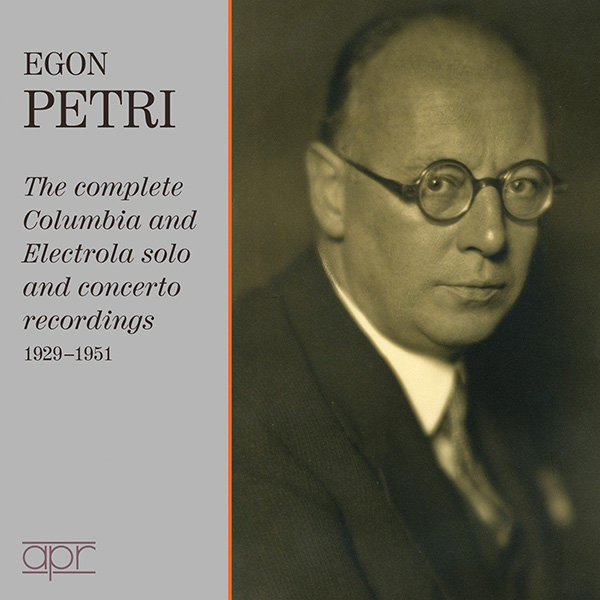
Dutch-American pianist Egon Petri (1881–1962) exploits the "mysterious pulse" described above to spectacular poetic effect. His 1945 rendering of the Bach/Busoni "Chaconne" from
The Complete Columbia and Electrola Solo and Concerto Recordings 1929-1951 (APR CD 7701) sounded revved to the max momentum-wise, with goosebump-level performance intensity. On that same disc, Petri's inspired handling of the Bach/Busoni "Choral Preludes" (recorded in 1942) put the hobo in a delirious frenzy. I could tell because, sourced by TEAC's VRDS-701T CD transport, the Aero tracked and exposed the tiniest beats and beat clusters more distinctly and noticeably than
Denafrips's Terminator Plus DAC or the
HoloAudio May. This Aero talent made delicate notes delectable and memorable.
What the May and the LTA Aero did exactly the same was make Egon Petri feel like a real, solid person that I could touch. What the Aero and May did differently involved the character of their relative transparencies: The Aero set recordings in a brighter, clearer light whereas the May placed performers in a deeper, darker, more atmospheric space.
With the Terminator Plus, Petri felt less solid than with the Aero or the May, but the T+ pulled out even more tiny beat stuff than LTA's Aero or Holo's May DAC. The T+ is all about tone touch and space, which it makes sound wet and vivid and pleasurable to observe. British manufacturer dCS's many-times-more-expensive
Lina DAC ($13,500) and $7750
Master Clock exposed all Petri's tiny beats and put them in their most natural relationship to Egon's big beats.
With the dCS Lina, Petri's big and small notes appear to emerge from the same large, fully formed piano sitting in a specific, outlined space between my speakers. Compared to these NOS DACs, the oversampling Lina presented a more precisely focused view of Petri's keyboard pyrotechnics and let me perceive the presence of a soundboard and all those steel strings and wood hammers covered in felt. With the Lina, I had a stronger sense of each note's origin as a hammer striking a string strung over some wood. The Aero (and the other R-2R DACs) showed those impacts less distinctly. As described above, the Aero was microdetailed and super-transparent, but it did not emphasize those material-based sounds. Instead, the Aero showcased dynamic expression, flow, and timing.
The Lina swings and dances with the best, but its top pleasure is showing complete, exquisitely formed sonic pictures.
I am trying to describe how each DAC emphasized different aspects of Petri's spectacular performance and recreated his piano with different forms of realism. These differences are more subtle than I make them sound, and maybe more psychic than sonic, but they are real and important. These variations in emphasis affected my perceptions of each artist's work and my enjoyment of each recording's sound.
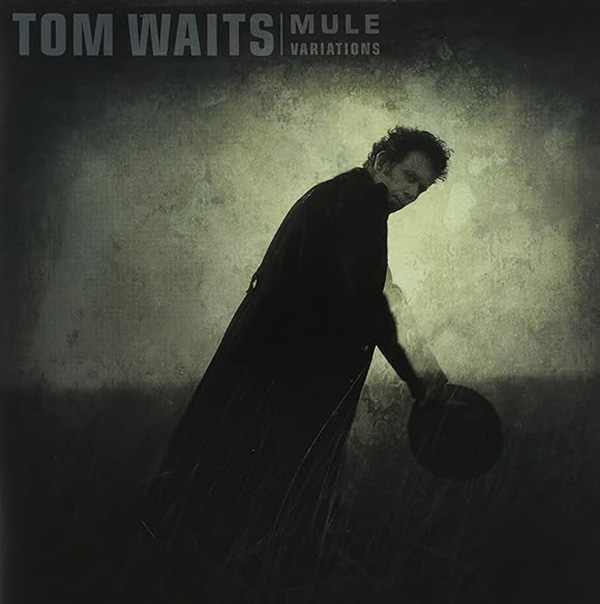
As a final check for musicality, clarity, and well-sortedness, I played one of my favorite Tom Waits compositions, which features Les Claypool from Primus on bass guitar: "Big In Japan" from
Mule Variations (Epitaph CD 86547-2). This 1999 recording often moves sluggishly and sounds thick and distorted—but only on rough and unresolving sound systems. The dCS Lina unpacked this funky, effects-soaked sound collage with clarity, style, and aplomb, letting it rub my senses like rough wool and 80-grit sandpaper. I wondered how the Aero might handle this difficult track.
And the answer: very differently. To my surprise, LTA's DAC shifted the energy emphasis from the bass and midrange—the bottom octaves of Waits's voice—up to the midrange and treble, presenting Waits's vocals with considerably less weight and texture. With the Aero, the song's lyrics were clearer to my ear but less gnarly, gritty, and attitude-rich.
With the Aero, Waits's "Get Behind the Mule" came through lighter, bouncier, and more tuneful than it did with the Lina, which gave the tune a darker, heavier, more dirge-like presence. When the Aero played my favorite
Mule Variations track, "Cold Water," it emphasized the beat and a drunk hobo, while the Lina showed me the effects of reverb and metronomic time on the tune's final mix.
Overall, the dCS Lina emphasized wholeness, density, detail, and texture. The Aero countered with sway and unaffected musicality.
I never pined
In my system, Linear Tube Audio's Aero DAC presented recordings with connoisseur-level NOS R-2R sound, which I would characterize as naturally transparent and unstressed. But it rose above this generic R-2R aesthetic by virtue of its extreme clarity, timbral beauty, and fit, athletic boogie factor.
Don't worry: the American-made NOS 6SN7/12SN7 output tubes did not make LTA's NOS DAC sound tubey, warm, or fuzzy. Rather, its industrial-strength tubes added a vitalizing measure of brilliance and delicacy, which, along with drive and beat keeping, were the Aero's defining traits.
If your taste leans toward boogie, glow, and touch (as mine does), LTA's Aero might be the DAC you've been searching for. When it was in my system, I never pined for more luxury-priced digital.
Footnote 1: See youtube.com/watch?v=R0IRiZ_IQus&t=8s.