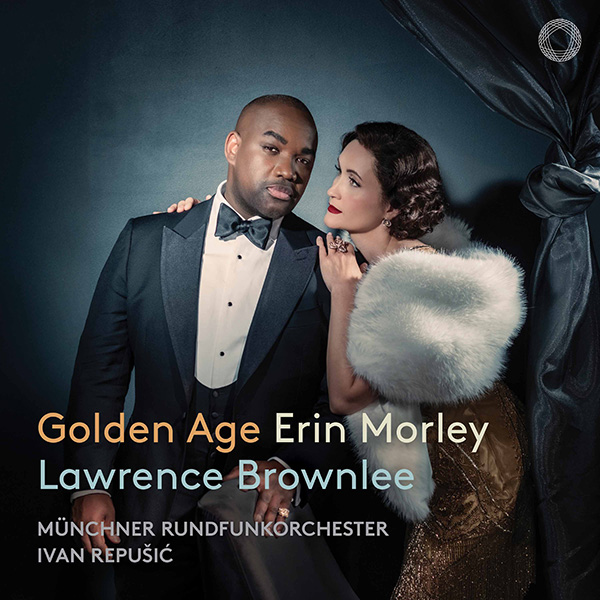
Erin Morley & Lawrence Brownlee: Golden Age
Münchner Rundfunkorchester, Ivan Repušić, cond.
Pentatone PTC 5187400 (CD; reviewed as 24/96). 2025. Morley, Brownlee, others, prods.; Michael Havenstein, eng.
Performance *****
Sonics ****½ For lovers of the human voice—those who enjoy seeing how far it can stretch and opera buffs with a soft spot for bel canto glories—Golden Age is sheer pleasure. More than a host of bonbons, it showcases two of today's finest high-flying 19th century specialists, tenor Lawrence Brownlee and soprano Erin Morley, in their glorious prime. The selections are right out of the coloratura playbook, include duets and solos by Donizetti, Rossini, Bizet, Delibes, and Verdi. A few are unusual, including the Count and Countess's fetching duet, "Ah, quel respect ... Ce téméraire qui croit nous plaire," from Rossini's rarely heard Le comte Ory (1828); the somewhat tedious "Ils verront si je mens!" duet from Bizet's La jolie fille de Perth (1867), and Brownlee's sensational solo, "Di mia patria o bel soggiorno," from Donizetti's Marino Faliero (1835); the Donizetti's punishingly high tessitura makes it clear why it's rarely programmed.
The rest, including Donizetti's adorable duet "Quoi! Vous m'aimez? ... De cet aveu si tendre" from La fille du régiment and his endearing "Tornami a dir che m'ami" duet from Don Pasquale (1843), is core repertoire. In the latter, no one can replace Amelita Galli-Curci and Tito Schipa's superior freedom and infinite charm. Few sopranos ever mesmerized like the 35-year-old Galli-Curci did in her famed 1917 RCA Victor recording of "Caro Nome" from Verdi's Rigoletto (1851); Maria Callas may be the sole exception. Morley's take may not be especially poignant and may negotiate coloratura more slowly than the first crop of Golden Age singers on record, but he maintains interest. In other material these two artists sing fabulously, including in Delibes's Bell Song and Bizet's gorgeous "Je crois entendre encore."—Jason Victor Serinus
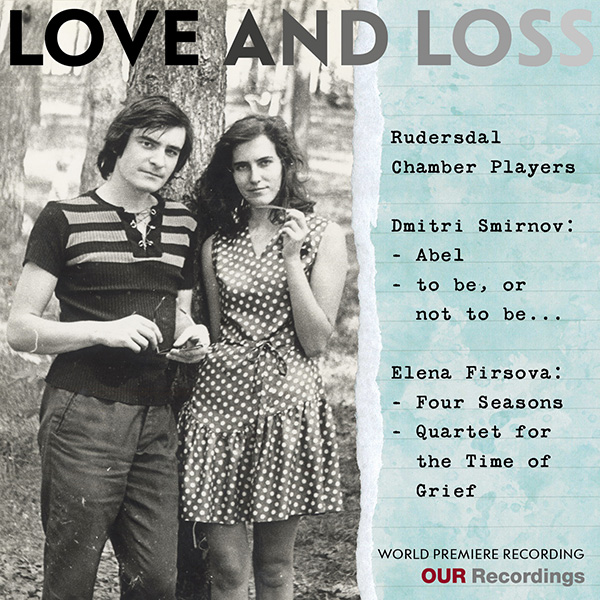 Elena Firsova & Dmitri Smirnov: Love And Loss
Rudersdal Chamber Players
OUR Recordings 8226932 (CD; reviewed as 24/352.8 WAV). 2025.. Mette Due, prod., eng.
Performance ****½
Sonics ***** OUR Recordings, a musician-centric Danish label founded in 2006 by recorder player Michela Petri and guitarist/lutist Lars Hannibal, has garnered award after award for musical content. It deserves an award for sound quality. Few labels record in DXD, let alone with the liquid clarity that engineer Mette Due achieves here.
The four chamber works on Love and Loss were composed between 1991 and 2023 by Russian composers Elena Firsova and Dmitri Smirnov, Firsova's late husband. All are uncompromising in their truth-telling originality. The most arresting piece is Firsova's Piano Quartet No.2 Four Seasons (2019). First heard (along with Smirnov's to be or not to be...) at the Rudersdal Sommerkoncerter Festival in 2019, Four Seasons is a mesmerizing and disquieting personal take on the seasons in the couple's adopted home in England. The work is so ruminative that it feels as though Firsova is probing life's deepest mysteries with each note. "Summer" is by far the shortest movement; the dying expanse of "Autumn" the longest. If you need help finding your way in, consider that Firsova and Smirnov's harmonic language reflects the chilling repression and censorship rampant in Russia during the time they met at the Moscow Conservatory in the 1970s.
Smirnov's to be or not to be..., composed the year before he died, of COVID, and Abel from 1991, reflect the composer's fascination with Shakespeare's Hamlet and William Blake's ink drawing The Body of Abel Found by Adam and Eve. Brooding, agitation, horror, confusion, and primordial groans surface in a piece in which a clarinet sings Adam and a violin sings Eve.
The newest work, Firsova's poignant Quartet for the Time of Grief, was written on Smirnov's death. Urgently recommended.—Jason Victor Serinus
 Ben-Haim: Symphony No.2
Israel Philharmonic/Lahav Shani
Deutsche Grammophon 00028948680818. 2025. Friedemann Engelbrecht, prod.; Jupp Wegner, eng.
Performance *****
Sonics ****½ After the unexpected angularity of Ben-Haim's First Symphony a few years back, the Second returns to his more accessible, Romantic-leaning style. In fact, at the start you may think that you've stumbled into the wrong symphony: The subdued flute over strings evokes an English pastoral mood, Vaughan Williams with "wrong" notes. Even as the movement picks up, it maintains lightness and buoyancy, and Shani points the second theme delicately. String-based climaxes sound glamorous without going full-on Korngold; an imposing, brass-led tutti leads to a final winding down. The following scherzo is light but also spacious; the expanding textures stay clear even as brasses and timpani join in. Modernistic, anguished high strings launch the Andante affetuoso, although thankfully they don't screech. The movement relaxes again into the pastoral mode before building to taut, dramatic conflict, with some unsettled, early-Schoenbergish progressions. A jagged tutti introduces a finale of Sibelian breadth, while scurrying spinning-wheel figures introduce the quicker second group.
Shani, as in the First, leads with sure purpose, and where the Israel Philharmonic struggled a bit with that score, here they shine: Perhaps they found the writing more congenial and less taxing. The winds in particular have improved dramatically, both their playing and, somehow, the quality of the instruments. At any rate, they're standouts, especially in their various first-movement soli. Occasionally I'd have preferred less bright tuttis, but most of the time I didn't even notice the vivid sonics.
The symphony, short measure by CD standards, is offered exclusively as a download. No e-booklet or notes are provided, so we may never know whether or not the "English" passages were a conscious tribute.—Stephen Francis Vasta
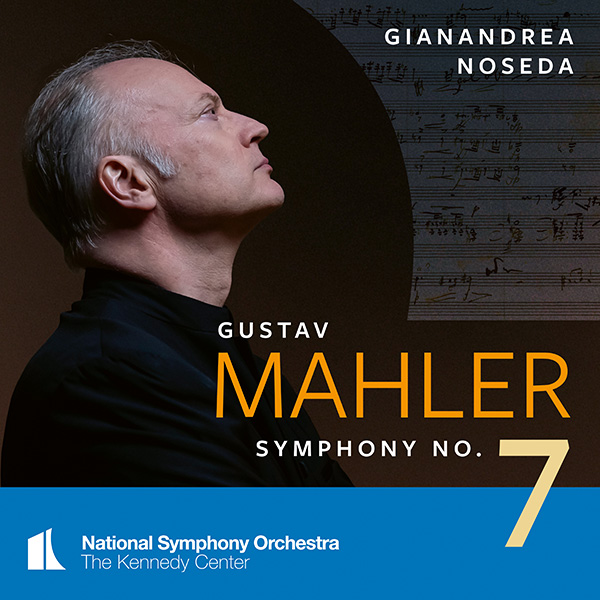 Mahler: Symphony No.7
National Symphony Orchestra/Gianandrea Noseda
National Symphony NSO 0022 (CD). 2025. Blanton Alspaugh, prod.; Mark Donahue, eng.
Performance ****
Sonics ****
Some Mahlerians prize the Seventh Symphony above the rest; others stumble over the quirky themes and structural ambiguities of the outer movements. Noseda does his best to resolve the ambiguities.
The strings' dotted rhythms at the start set off the various wind solos in sharp relief; the contrasting theme is delicate and pointed. The main Allegro moves well; even the third theme's curlicues have a firm rhythmic backbone. In the development, the solemn chorale and the "Star Trek" music are held in good expressive balance. Noseda elides smoothly and effectively into the recap, eschewing fussy setup.
Open-throated horn calls launch Nachtmusik I, which doesn't so much unfold as drive into its expansion. The marziale rhythms have a nice lift, with vivid contrapuntal interplay, and the mysterious nature calls recall early Mahler; oddly, this movement feels a few episodes too long. The scurrying Scherzo, with its stabbing clarinets and emphatic afterbeats, is an ominous play of darting shadows; it coheres better than most. Nachtmusik II moves along, jaunty rather than vernal; Noseda integrates them well into the whole.
After a forthright start, the Finale runs aground. Noseda slows for a nicely marked second theme, but with about half the movement left, he sets up a big, "triumphant" climax, analogous to that in the Sixth. This one arrives early though, and most of what follows feels like padding.
The reeds are clear and expressive, and brasses are firm. The unified strings offer fine tone: Only one chorale wanted a stronger middle-to-low presence.
The wind solos are precisely "placed." The first-movement climax takes on a hard edge. The Finale's first brass chorale registers with a pillowy depth and immediacy, but its return, amid scurrying winds and strings, is less distinct.—Steven Francis Vasta
Münchner Rundfunkorchester, Ivan Repušić, cond.
Pentatone PTC 5187400 (CD; reviewed as 24/96). 2025. Morley, Brownlee, others, prods.; Michael Havenstein, eng.
Performance *****
Sonics ****½ For lovers of the human voice—those who enjoy seeing how far it can stretch and opera buffs with a soft spot for bel canto glories—Golden Age is sheer pleasure. More than a host of bonbons, it showcases two of today's finest high-flying 19th century specialists, tenor Lawrence Brownlee and soprano Erin Morley, in their glorious prime. The selections are right out of the coloratura playbook, include duets and solos by Donizetti, Rossini, Bizet, Delibes, and Verdi. A few are unusual, including the Count and Countess's fetching duet, "Ah, quel respect ... Ce téméraire qui croit nous plaire," from Rossini's rarely heard Le comte Ory (1828); the somewhat tedious "Ils verront si je mens!" duet from Bizet's La jolie fille de Perth (1867), and Brownlee's sensational solo, "Di mia patria o bel soggiorno," from Donizetti's Marino Faliero (1835); the Donizetti's punishingly high tessitura makes it clear why it's rarely programmed.
Elena Firsova & Dmitri Smirnov: Love And LossRudersdal Chamber Players
OUR Recordings 8226932 (CD; reviewed as 24/352.8 WAV). 2025.. Mette Due, prod., eng.
Performance ****½
Sonics ***** OUR Recordings, a musician-centric Danish label founded in 2006 by recorder player Michela Petri and guitarist/lutist Lars Hannibal, has garnered award after award for musical content. It deserves an award for sound quality. Few labels record in DXD, let alone with the liquid clarity that engineer Mette Due achieves here.
Ben-Haim: Symphony No.2Israel Philharmonic/Lahav Shani
Deutsche Grammophon 00028948680818. 2025. Friedemann Engelbrecht, prod.; Jupp Wegner, eng.
Performance *****
Sonics ****½ After the unexpected angularity of Ben-Haim's First Symphony a few years back, the Second returns to his more accessible, Romantic-leaning style. In fact, at the start you may think that you've stumbled into the wrong symphony: The subdued flute over strings evokes an English pastoral mood, Vaughan Williams with "wrong" notes. Even as the movement picks up, it maintains lightness and buoyancy, and Shani points the second theme delicately. String-based climaxes sound glamorous without going full-on Korngold; an imposing, brass-led tutti leads to a final winding down. The following scherzo is light but also spacious; the expanding textures stay clear even as brasses and timpani join in. Modernistic, anguished high strings launch the Andante affetuoso, although thankfully they don't screech. The movement relaxes again into the pastoral mode before building to taut, dramatic conflict, with some unsettled, early-Schoenbergish progressions. A jagged tutti introduces a finale of Sibelian breadth, while scurrying spinning-wheel figures introduce the quicker second group.
Mahler: Symphony No.7National Symphony Orchestra/Gianandrea Noseda
National Symphony NSO 0022 (CD). 2025. Blanton Alspaugh, prod.; Mark Donahue, eng.
Performance ****
Sonics ****