 The surfboard
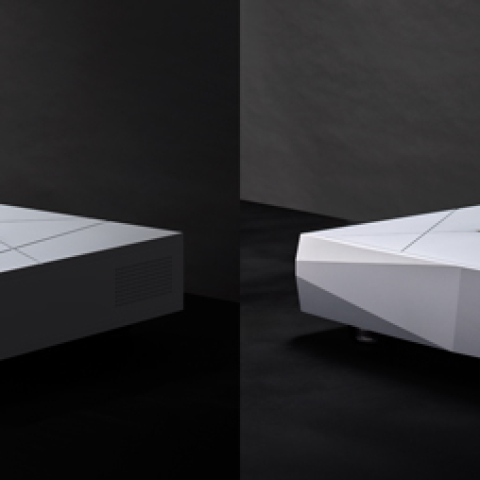
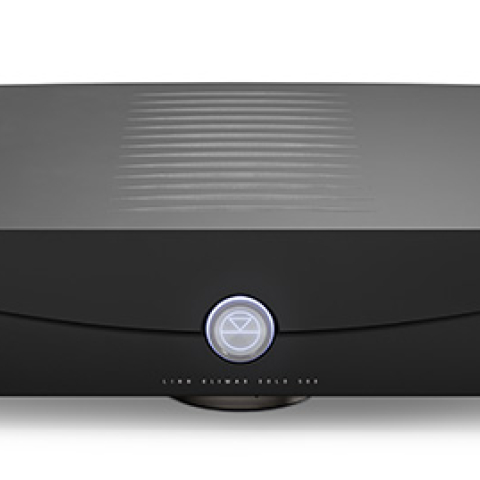
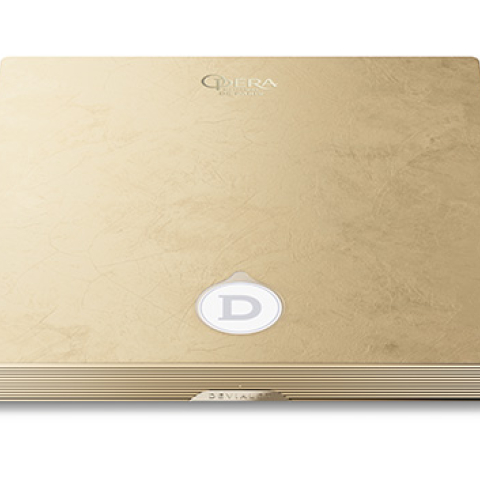
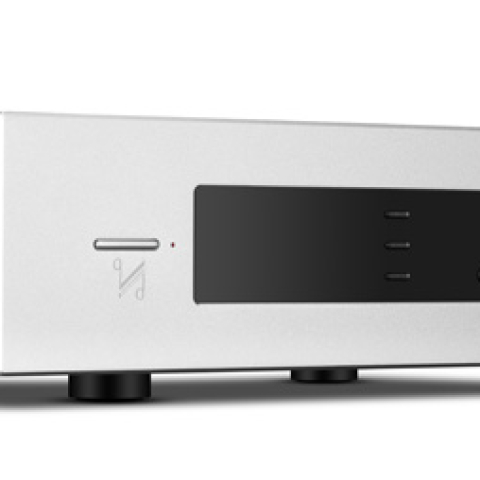
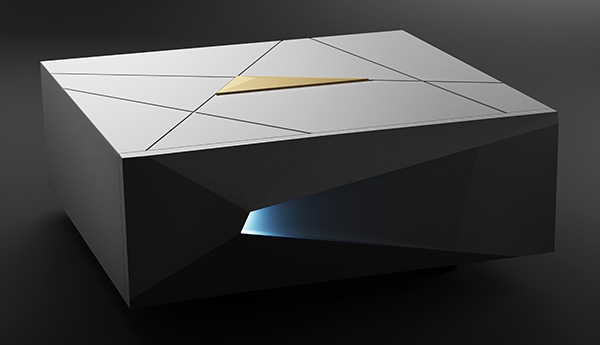
The Nazaré music server/streamer's chassis is simplicity itself. The striking front panel's 3D architecture includes a strongly accented indentation inspired by Nazaré Canyon's topography; it is illuminated by an LED when the unit is on. There are no front-panel controls. To turn the unit on and off, reach directly under the middle of the front panel and, upon encountering a smooth piece of vinyl, gently caress it. The panel is quite sensitive—a hard tap will not do—and seems to prefer certain touches and caresses over others. With patience, you'll find out exactly what lights its fire. During the on and shutdown sequences, the LED blinks until the cycle is complete. The back panel houses, near its center, a 15A IEC connector with fuse, an RJ45 jack, and, above them, a reclocked USB-A output. To the IEC connector's right sits a simple hole for an optional, banana-terminated grounding wire. Toward rear left is a second USB output. This one is not reclocked. The sculpted top panel includes a gold decorative insert. The Nazaré sits on four OEM IsoAcoustics Gaia footers. My initial plan was to leave the two-piece Statement NG/PhoenixNET stack where it had resided for the last year or two. That plan vaporized when the Nazaré wouldn't fit in the space I'd reserved for it. Instead, the Nazaré took over the Statement's shelf and the Statement was split in two, the PhoenixNET resting atop the Statement's server/streamer box.
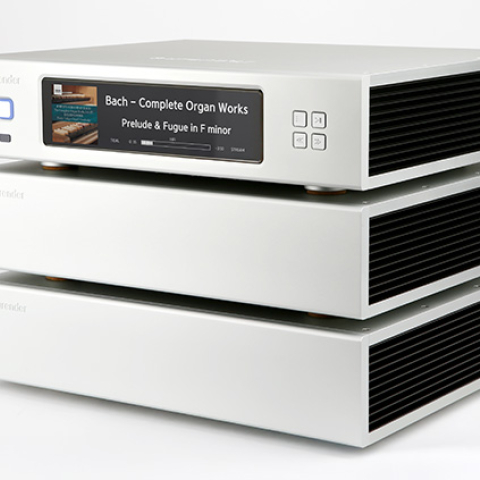
When the Statement first entered my system, I compared its sound with its supplied feet to its sound with aftermarket supports. In all cases, the aftermarket supports delivered more air, bass control, three-dimensionality, and musical satisfaction. I settled (as I often do) on Wilson Pedestals as the best-sounding supports for my system and room. Due to a lack of space, however, I only placed Pedestals under the Statement's power box. When the PhoenixNET Ethernet switch arrived, I squeezed it atop the Statement stack, again without Pedestals. Now, with those components split between two shelves with room to spare, I could try aftermarket supports under all three boxes. Doing so delivered more airy, colorful, three-dimensional sound, with fuller and tighter bass, than if I'd relied on the Statement and PhoenixNET's pre-attached supports. Since I intended to compare the sound of the Statement NG to that of the Nazaré, it was essential to create the fairest, most level playing field. Because the Nazaré comes with IsoAcoustics OEM Gaia footers already attached, I contacted Dave and Sean Morrison at IsoAcoustics to learn which IsoAcoustics supports (footnote 7) readily available to consumers were most similar to the OEM Gaias. Following their instructions, I placed the appropriate Orea Bronze and Indigo feet under the two Statement boxes and the PhoenixNET switch. After ensuring that identical cabling powered and connected the two servers, I felt ready to proceed with the review.
In a perfect world, I would have conducted the whole review in exactly the same environment. In this real world of ours, the only time I could find someone to help install long-awaited diffusers from Artnovion, also of Portugal, was during the review period. To compound matters, the installation was divided over three sessions. That meant that the soundscape kept changing, and I had to continually acclimate to a new environment by re-auditioning reference tracks. That was fun. Changing between the Nazaré and the Statement NG was easy: I only had to move a single USB cable and select the appropriate server in the Innuos Sense app. After a lot of back-and-forths, I finally got a handle on the sound and figured out which way was up—which when you're facing the biggest waves in the world is the only way to make it through alive. By the way, those Artnovion diffusers tamed a host of pesky room reflections, enhancing detail retrieval, accuracy, and listening pleasure. They really make a difference. And there are still more to install ... after this review is complete.
 Riding the wave
Operationally, all proceeded smoothly save for one temporary software glitch. Upon installing InnuOS 3.3.1, album covers vanished. A consultation with Innuos support revealed that an engineer had made a coding error. As soon as it was fixed, the album covers returned. As I began to preview recordings for music reviews, the first thing that stood out, on violist Rachel Yonan's beautifully recorded Kiss on Wood (24/352.8 FLAC, Sono Luminus), was a presence and luminosity that seemed magical. The lowest notes of piano, played by Kwan Yi, had never sounded so full and profound in my system. On the title piece—the premiere recording of James MacMillan's Kiss on Wood—I was struck by the recording's pristine beauty and superb dynamics. I expect well-engineered DXD recordings to sound superb, but something different and exciting was happening here. I was similarly enthused by the sound of the August Recording of the Month, Rachel Podger and Brecon Baroque's Just Biber (Channel Classics). My first listen, before the DSD128 files arrived, was to 24/192 PCM files derived from the DSD256 master (footnote 8). I expect anything recorded by Jared Sacks to sound wonderful, but I never thought I would hear such silent backgrounds or color-rich sounds.
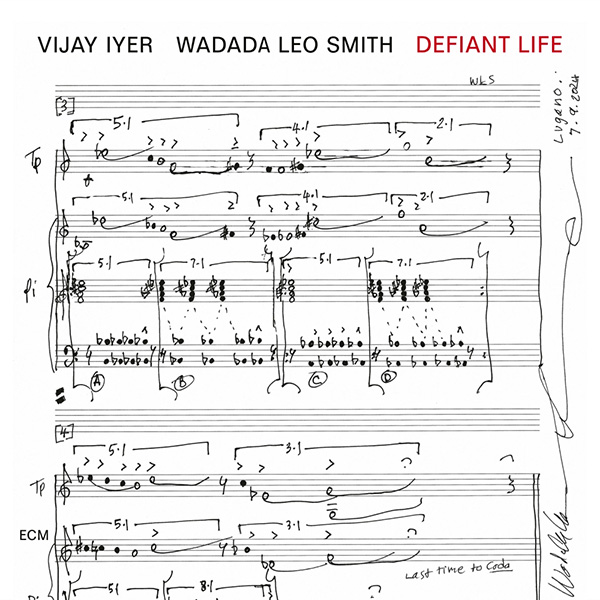 A similar experience awaited when I cued up the opening track, "Prelude: Survival," of Vijay Iyer and Wadada Leo Smith's Defiant Life (24/96 WAV, ECM/download). The piano's low rumble and the trumpet's distant sputter were clearer and more arresting than ever before. On Julia Bullock's heart-seizing "Brown Baby," from Walking in the Dark (24/192 WAV, Nonesuch/download), improved dynamics and pristine silences rendered her performance even more moving than I remembered it.
Then came a nagging question. I had changed two things, not one. How much of the improvement I was hearing was due to the acoustical improvements wrought by the Artnovion room treatments and how much from the upgrade from Statement Next-Gen to Nazaré? Direct comparison between the two servers was essential.
A similar experience awaited when I cued up the opening track, "Prelude: Survival," of Vijay Iyer and Wadada Leo Smith's Defiant Life (24/96 WAV, ECM/download). The piano's low rumble and the trumpet's distant sputter were clearer and more arresting than ever before. On Julia Bullock's heart-seizing "Brown Baby," from Walking in the Dark (24/192 WAV, Nonesuch/download), improved dynamics and pristine silences rendered her performance even more moving than I remembered it.
Then came a nagging question. I had changed two things, not one. How much of the improvement I was hearing was due to the acoustical improvements wrought by the Artnovion room treatments and how much from the upgrade from Statement Next-Gen to Nazaré? Direct comparison between the two servers was essential.
 I listened to far more. On a brand-new recording, Spunicunifait's Mozart: 6 String Quintets on Historical Instruments (24/192 WAV, Alpha/download), I auditioned Mozart's final String Quintet. The Nazaré beautifully highlighted the timbres of the period instruments, against a black background. I couldn't get enough of the sound of the two violas. It was like nothing else I'd heard, except perhaps the period-instrument viola on the Chiaroscuro Quartet's recording, W.A. Mozart: The Prussian Quartets (24/96 FLAC, BIS/download). Here, though (through the Nazaré) the viola's curiously nasal tang was more distinct—and distinctly delicious.
Toward the end of the review period, I moved the PhoenixNET to a shelf of its own and supported it with IsoAcoustics Gaia feet. Oh my goodness, did that make a difference! Instantly, backgrounds were even blacker, colors more distinct. I wish I'd done that a year or two ago.
I listened to far more. On a brand-new recording, Spunicunifait's Mozart: 6 String Quintets on Historical Instruments (24/192 WAV, Alpha/download), I auditioned Mozart's final String Quintet. The Nazaré beautifully highlighted the timbres of the period instruments, against a black background. I couldn't get enough of the sound of the two violas. It was like nothing else I'd heard, except perhaps the period-instrument viola on the Chiaroscuro Quartet's recording, W.A. Mozart: The Prussian Quartets (24/96 FLAC, BIS/download). Here, though (through the Nazaré) the viola's curiously nasal tang was more distinct—and distinctly delicious.
Toward the end of the review period, I moved the PhoenixNET to a shelf of its own and supported it with IsoAcoustics Gaia feet. Oh my goodness, did that make a difference! Instantly, backgrounds were even blacker, colors more distinct. I wish I'd done that a year or two ago.
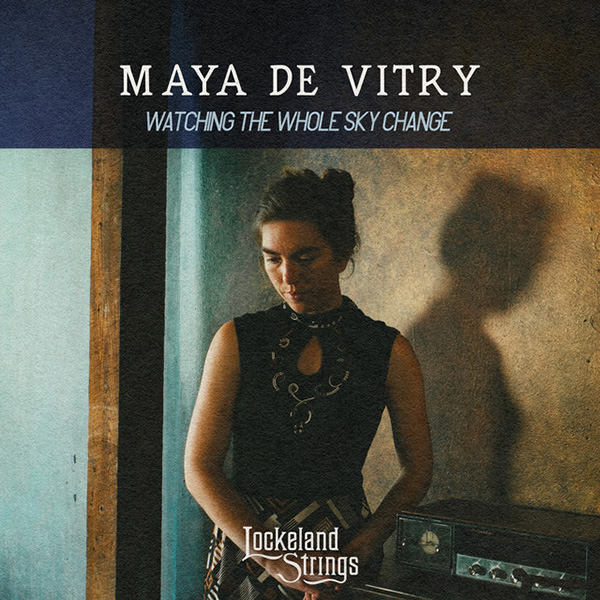 When my friend Gary Forbes paid a visit, one of his picks, Maya de Vitry and Lockeland Strings' Watching the Whole Sky Change (24/44.1 FLAC, Tone Tree Music/Tidal), turned out to be a perfect demo track. As beautiful as de Vitry's voice sounded through the Statement Next-Gen, the pristine silence that surrounded it and her guitar through the Nazaré left me mesmerized. For four minutes, I felt fulfilled.
Coming ashore
When my friend Gary Forbes paid a visit, one of his picks, Maya de Vitry and Lockeland Strings' Watching the Whole Sky Change (24/44.1 FLAC, Tone Tree Music/Tidal), turned out to be a perfect demo track. As beautiful as de Vitry's voice sounded through the Statement Next-Gen, the pristine silence that surrounded it and her guitar through the Nazaré left me mesmerized. For four minutes, I felt fulfilled.
Coming ashoreIgnore the subhead: I never returned to shore. The more I listened, the more I decided the Nazaré would not return to Portugal. As with the dCS Varèse digital music system and a host of other components I now use as references, the Nazaré sounded so good and revealed so much more significant information that I knew I had to continue riding its waves.
Footnote 7: Different models of IsoAcoustics footers are suitable for chassis of different weights. Footnote 8: Although my reference DAC, a dCS Varèse, can decode DSD256, the USB port through which it receives signal from the Nazaré is limited to DSD128. If Innuos develops a NazaréFLOW with proprietary outputs for the dCS Varèse, I expect this limitation will be resolved.