Media Server Reviews

Sort By:  Post Date TitlePublish Date

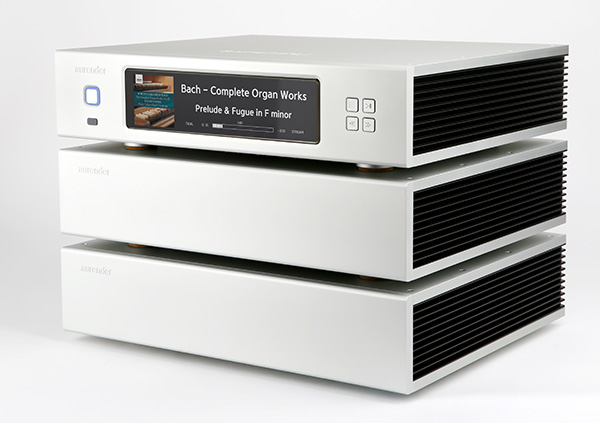
Aurender N50 server/streamer

I was born and raised in Argentina. Ever since I was a kid, I've been fascinated by machines. My mother used to call me "Botones" (Spanish for "Buttons") because I pressed every button and turned every knob I encountered. I was particularly interested in machines that played music, especially my dad's Grundig console, which sounded like a warm breeze in a beautiful sunset.

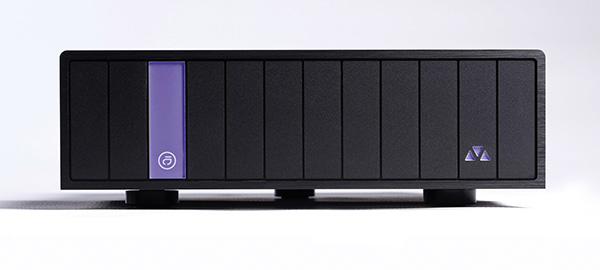
Innuos ZENith Next-Gen Streamer-Server

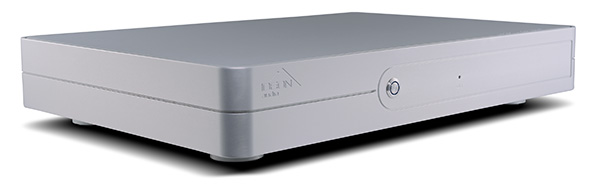
The Innuos ZENith Next-Gen ($20,700 as equipped) does what streamer-servers do: store music files, read them into memory, and send them on to a D/A converter to make music. In Innuos's complex (yet logical) lineup of streamers and streamer-servers, the ZENith Next-Gen sits just below the flagship Statement and above the ZENith Mk.3. The ZENith Mk.3 remains in the Innuos lineup for now but will be replaced at AXPONA shortly after this issue hits mailboxes and newsstands.

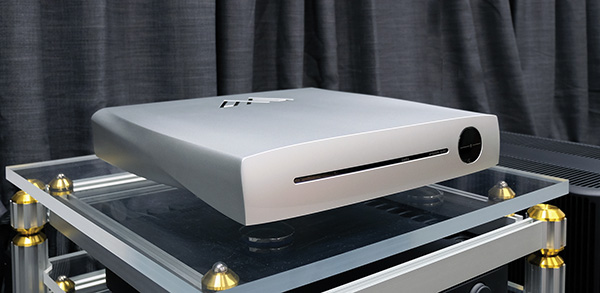
Though similar in many respects, with a very similar appearance, these two products—the ZENith Next-Gen and the ZENith Mk.3—are very different beasts. There is one rather obvious difference: a CD slot on the Mk.3 (with, of course, a CD drive inside), which makes it easy to rip CDs to the server's internal memory. This feature is absent from the more purist ZENith Next-Gen. But with the Next-Gen you can have your cake and eat it: Attach any USB CD ripper to one of the USB ports, and it will work just the same as the built-in ripper on the Mk.3. The other differences between the Mk.3 and the Next-Gen are less obvious, but those differences go much deeper; see the Details section in this review.

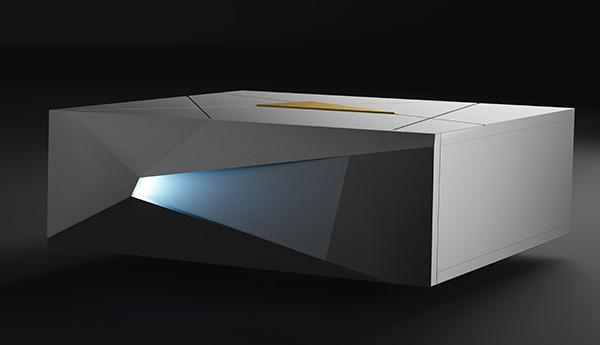
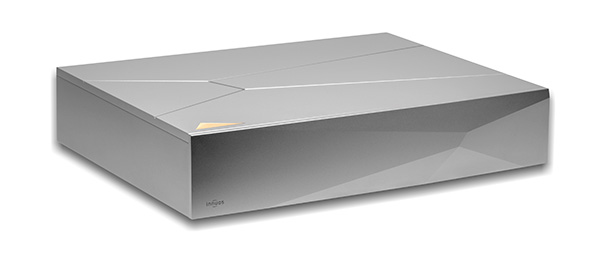
Ideon Absolute Stream Meta 2024 server/streamer

Is audio reviewing a futile pursuit? As much as we reviewers may strive, through subjective observation and objective measurement, to accurately describe how a component looks, sounds, and performs, we frequently find words and numbers inadequate to communicate the mysteries that abound in the transcendent realm of music. How can we fully share what we feel when a component allows us to experience, sometimes afresh, often in a new way, sounds that elicit joy, sorrow, terror, or more subtle emotions? How do we encapsulate in words and measurements the sonic equivalent of the wide-eyed wonder that shines through a baby's eyes as she discovers something new?

Such emotions—hence such questions—can arise when we move from one music server to another, or even between different software running on the same server. They are particularly intense in the case of this review of the Ideon Absolute Stream meta edition (2024) ($24,000) and its optional add-on, the Ideon Alpha Wave LAN Optimizer ($6900), considering that the review lacks measurements.

Grimm Audio MU2 streaming preamplifier

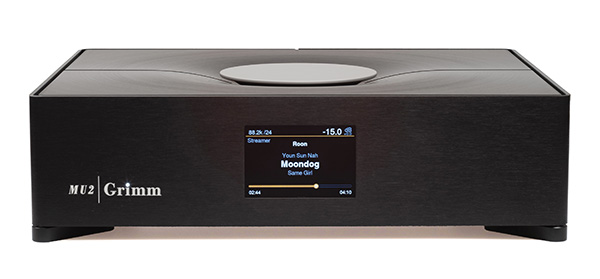
For several months, my wife and I had been living in a cozy studio apartment in New York's Financial District while our apartment underwent substantial renovations. All the old furniture was sold or donated, and decades of accumulated stuff was subjected to triage (sell, donate, or store). All my audio equipment, parts, and tools suffered the same fate. Downtown, my listening was via pretty decent headphones (B&W Px8, Audeze LCD-XC) connected to a Mytek Brooklyn+ DAC and my PC. Meanwhile, we were very busy shopping to equip the "new" apartment.

An all-in-one streamer-DAC-preamp would not have held much appeal for me if my old system was up and running. This, however, was a different time, and I was offered the Grimm MU2 for review with ideal timing.

Antipodes Oladra server/streamer/reclocker

Servers, servers, servers. How we who embrace digital hi-fi love them for their potential to make files and streams sound better (more alive, vital, streams sound better (more alive, vital, musical, moving, transparent) than music served from a computer. How we curse them when we experience the limitations of their software. How we despair when, shortly after ascending to Peak Digital Mastery, we download a software update that hurls us back into the Valley of Digital Unknowns.

I've climbed then slid down multiple hi-fi peaks as I've moved from computer to a Roon-equipped NUC, Roon Nucleus+, and Innuos Statement Next-Gen music servers. Along the way I've reviewed the original Innuos Statement from Portugal and the Antipodes Audio K50 from New Zealand. Now I'm exploring Antipodes's top-of-the-line server/streamer/reclocker, the Oladra ($25,000), which is designed for precise clocking, low noise, and high bandwidth.

WiiM Mini streaming D/A preamplifier

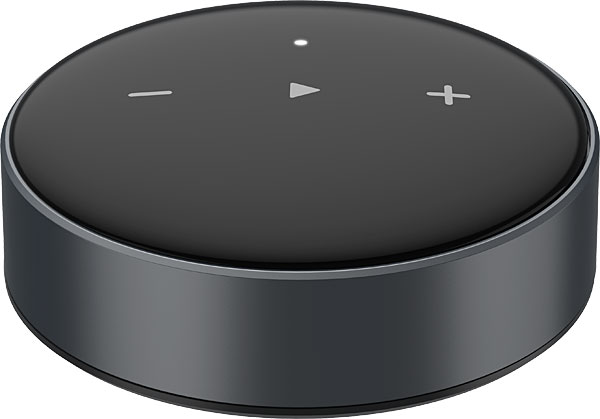
Characteristically, the email from Kal Rubinson got straight to the point: "I have a WiiM Mini that I have played with, but I am not the right one to review this as I am not sufficiently interested in or knowledgeable about wireless streaming. It ... can handle uncompressed PCM via its DACs." "I'll review it," I replied, intrigued by a $99 D/A processor that can stream hi-rez audio via Wi-Fi and that also has an analog input so it can act as a preamplifier.

Melco N50 Digital Music Library

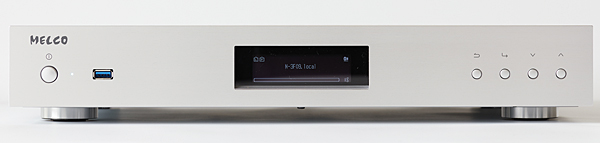
Melco, the Japanese maker of the N50 Music Library featured in this review, is not a household name among US audiophiles. Veterans may recall the Melco 3560 turntable, which was considered extravagant at its 1978 launch, in part because it supported three tonearms. Confusingly, several subsidiaries of the giant keiretsu Mitsubishi are called MELCO (for "Mitsubishi Electric Corporation"), but the maker of the N50 is not one of those MELCOs. This "Melco" is, rather, short for "Maki Engineering Laboratory Company," and though it got its start in hi-fi, these days its best-known products are network-attached RAID arrays made by Melco's American division, Buffalo Americas.

Lumin P1 streaming D/A preamplifier

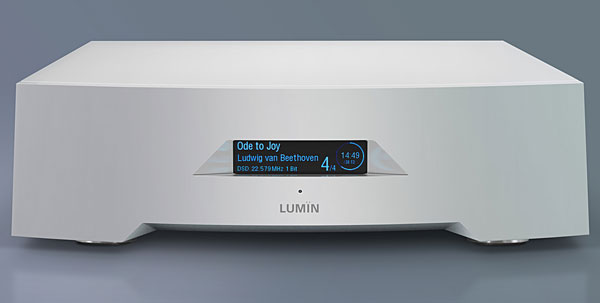
I start this review with a confession. I have consistently found that when I play CDs on a transport and feed the digital data via AES3 (AES/EBU) to a D/A processor, the music has more drive, particularly at low frequencies, than it does when I send the same 16/44.1 data to the same D/A processor via my network.

T+A Caruso R multisource receiver

I've been on a Kim Gordon kick lately. It began a few months ago with rediscovering some Sonic Youth albums and picking up Gordon's solo record, No Home Record. I recently finished reading her memoir, Girl in a Band, about her life, art, and musical career. I tend to read books rather than listen to them, but this time I listened with the Audible app, and I found the experience compelling. Gordon's delivery is direct, her voice even-keeled, almost deadpan. She's giving us the straight dope. Subtle inflections are detectable: moments when she felt strong and proud; leftover cobwebs of postbreakup pain. Her humanity came through.
Advertisement
Advertisement
Advertisement