5. "Stompy Jones,"
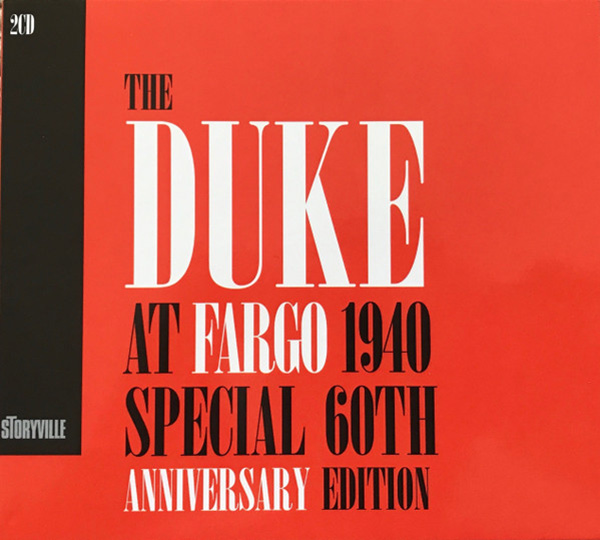
from Duke Ellington at Fargo 1940, Book-of-the-Month Records 30-5622 (3 LPs), 1978. The Duke at Fargo 1940: Special 60th Anniversary Edition, 2001. Storyville STCD 8316/17 (2 CDs), 2001. A pioneer on many fronts, Ellington was one of the first artists in any genre to release a blizzard of live albums right up until the end of his life. They provide a fascinating portrait of how the sound and arrangements of the orchestra changed over the years as players departed and sometimes (Johnny Hodges) returned. This justly famous recording, winner of the 1980 Grammy Award for Best Large Jazz Ensemble, is the work of a couple of freshfaced South Dakota boys, Jack Towers and Richard Burris. They received permission from the William Morris Agency, Ellington's management at the time, to record the November 7, 1940, dance concert at Fargo's Crystal Ballroom. Using three microphones, a disc cutter, and 16", 33 1/3 acetates that could hold 15 minutes of music per side, they set up right next to Ellington's piano. Finally dubbed to tape in the '70s by Towers, the album was quickly bootlegged. It became a Book-of-the-Month Club LP release in 1978. Dolby B noise reduction was used on the tapes. Sixty-one years after the recording date, with Towers aboard, Storyville Records released a two-CD set, 60th Anniversary Duke at Fargo. UK audio engineer John R.T. Davies advised Towers on how to remaster the tapes and remove noise. Considering its age and the limitations of the technology used to record it, the sound of this performance is, as it has always been, nothing short of astonishing.
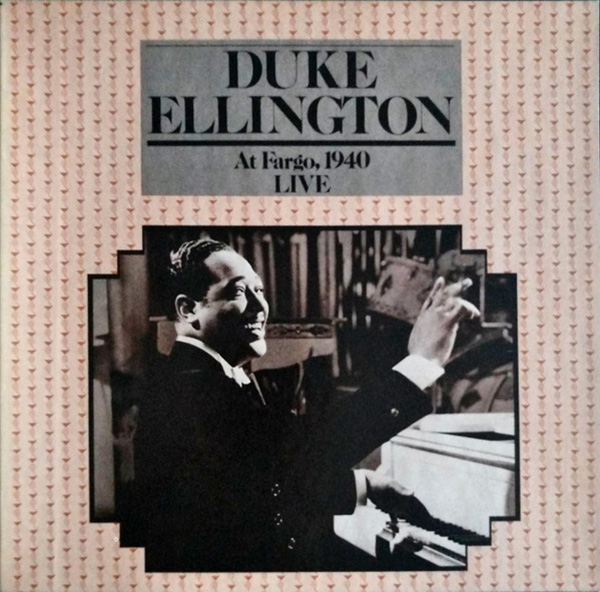 The Fargo concert is important for showing vividly, via a typical one-nighter, what an effective dance band the Ellington mob could be. "Warm Valley" was an effective slow number for close dancing. "Harlem Airshaft" and "Stompy Jones" both swing like mad, proving that although best known for sophistication, Duke and Co. could cook and swing as hard as the Count Basie Band or anyone else. Trumpeter Ray Nance, who had recently joined the orchestra, can be heard settling into the Ellington book very nicely.
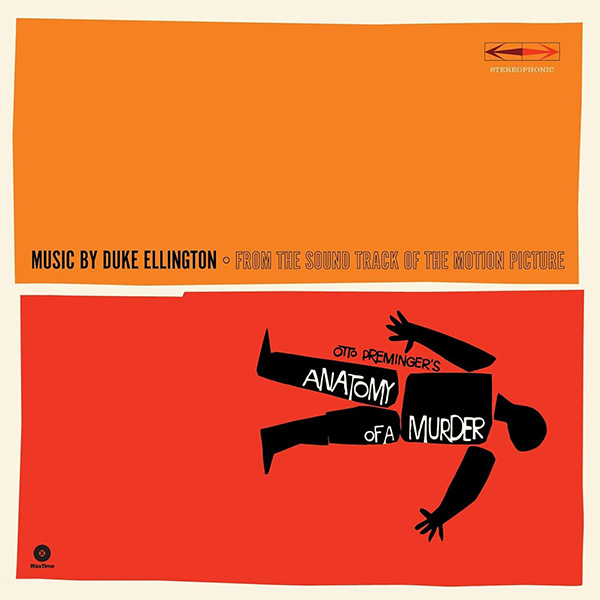
6. "Hero to Zero,"
from the Anatomy of a Murder soundtrack, Columbia CS 8166 (LP), 1959. After the Ellington band's appearance at the 1956 Newport Jazz Festival and their subsequent career resurgence, one of the projects Duke and Billy Strayhorn worked on was the score to Otto Preminger's tale of abuse and legal maneuvering starring a powerhouse cast including Lee Remick, James Stewart, and George C. Scott. Infamous for its discussion of "panties" (risqué for the Eisenhower years), Anatomy features Ellington in a brief on-screen role as pianist "Pie Eye." It's also famed for the first-ever use of non-diegetic film music—music not played onscreen—by African-American composers. The music comes in bursts, but Ellington and Strayhorn made the most of their opportunities. There are many wonderful moments here, with horns splashed in novel ways and percussion aplenty. Tenor player Paul Gonsalves's big, breathy, velvety tone on "Hero to Zero" is typical of this uniformly high-quality soundtrack. Another highlight is Ray Nance's performance on violin in the playfully titled "Low Key Lightly." In 1959, the Anatomy score won three Grammy Awards.
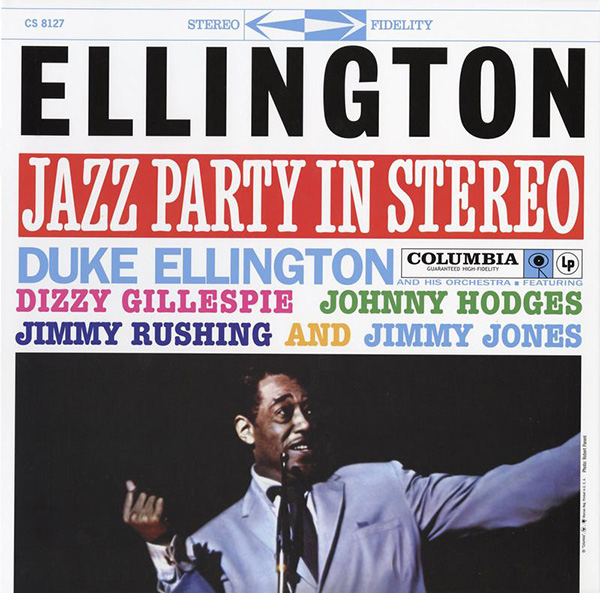
7. "All Of Me,"
from Jazz Party, Columbia, CS 8127 (LP), 1959; Jazz Party in Stereo, Analogue Productions AP 8127 (200gm LP), 2016. Another product of the Ellington Orchestra's late 1950s resurgence, Jazz Party (as the mono version was known) and Jazz Party in Stereo (as it was called in stereo) are famous for a number of unusual reasons. Two pieces, "Malletoba Spank" and "Tymperturbably Blue," capture nine percussionists banging away on marimbas and all manner of cymbals and drums including, of course, timpani. The late '50s is when Ellington was collaborating with a number of jazz players, young and old, some of whom, like the Basie band (First Time! The Count Meets the Duke, 1961), had once been rivals. The first track on side 2, "U.M.M.G." (which stands for Upper Manhattan Medical Group, the practice where Duke's physician worked), contains the first and only collaboration between Ellington and Dizzy Gillespie. The following track, the standard "All of Me" by Gerald Marks and Seymour Simons, is here mainly a vehicle for Gonsalves's full-bodied tenor before finishing with an old-fashioned Dixieland-style rave up. Always a fabulous-sounding recording and stereo mix, this set was digitally remastered and remixed in 1987, then remastered again by Bernie Grundman in 2012. It's another Ellington session that has happily seen high-quality pressings on audiophile labels including Classic Records (1995), Mobile Fidelity Sound Lab (1998), ORG (45rpm, 2012), and Analogue Productions (2016).
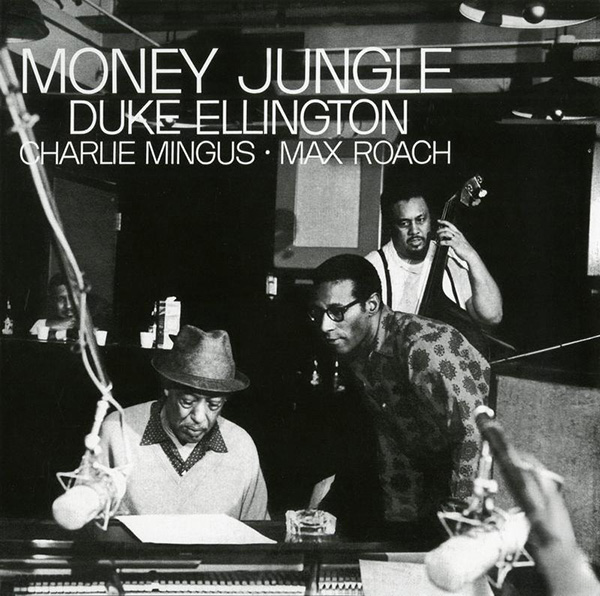
8. "Wig Wise,"
from Money Jungle, United Artists Jazz, UAJS 15017 (LP), 1962; Blue Note Tone Poet, B0031 1461-01 (LP), 2020. Ellington's unexpected collaborations in the early 1960s surprised many longtime fans, but those with open minds (a quality not always associated with jazz fans) were universal in their praise for the results, which often were spectacular. This trio date with the talented Charles Mingus on bass and the great Max Roach on drums has a timeless quality; it sounds like it could have been recorded yesterday. The three singular talents melded their creativity with unexpected ease, sparking one of the all-time great small-group classics. Every track here is a near classic, but on the bluesy "Wig Wise," Ellington takes his collaborators on a ride. Mingus and Roach keep up, with Roach's nimble cymbals setting the pace. "Switch Blade," a slower, more measured blues, has the trio supporting each other as if they'd played together forever. Reissued many times, the 2006 Classic Records 200gm LP and the more recent 2020 Tone Poet are both superb. Beware cheaper European public-domain reissues on labels like DOL and WaxTime.
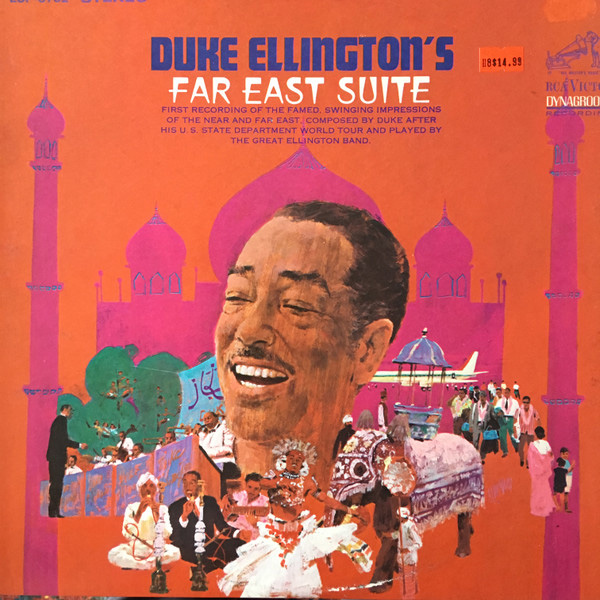
9. "Isfahan,"
from Duke Ellington's Far East Suite, RCA Victor, LSP-3782 (LP), 1967. Satisfying the need for a larger music canvas for Ellington to splash his ideas across, the suites tend to reward active listening. The term "suite" implies a single large work, but Ellington's suites usually were groups of shorter, thematically linked pieces grouped under a heading. A 1963 tour of India, Iran, Iraq, and Lebanon supplied most of the inspiration for this Ellington–Strayhorn collaboration; Strayhorn would die the year it was released. The tracks that stand out here are "Agra" and the chosen track, the justly famous Johnny Hodges showcase "Isfahan." The instrumentation here is basically the same as the band had used since the late 1920s, yet Ellington's and Strayhorn's music still sounded fresh and new. A Grammy Award winner in 1968 for Best Instrumental Performance, Large Group or Soloist with Large Group, Far East Suite features bold section parts—as in "Amad"—where the saxophones sound as they always have in Ellington's group. "Ad Lib on Nippon"—the closer, the longest track on the album, and the only composition inspired by a 1964 tour of Japan—is almost a suite unto itself. Ellington starts out slow on piano, then ups the tempo before the horns enter. Alone again, Ellington plays a reflective middle section, turning playful before Jimmy Hamilton's clarinet takes over for a long, intricate solo. Far East Suite was reissued in 1995 on CD (Bluebird 07863 66551-2) with extra alternate takes and on Speaker's Corner audiophile LP in 2006.
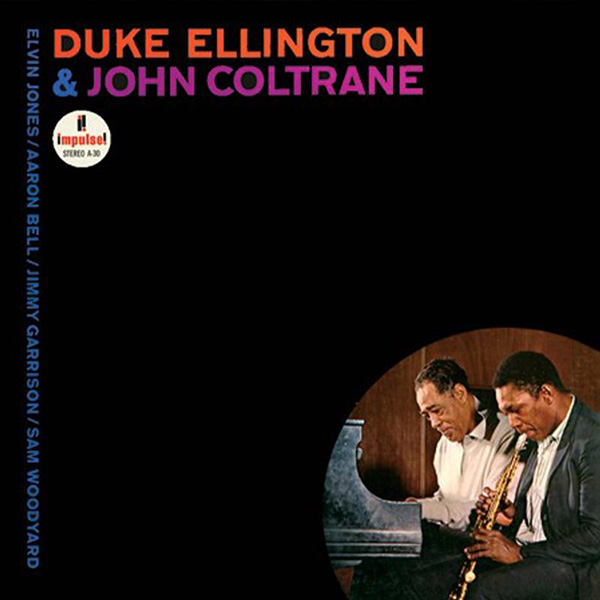
10. "Take The Coltrane,"
from Duke Ellington & John Coltrane, Impulse, AS-30 (LP), 1962; Analogue Productions, AIPJ 30 (2 45rpm LPs), 2010. Perhaps not as musically successful as Money Jungle, this meeting of old and new is nevertheless a wonderful exchange of musical modes and ideas. With drummer Elvin Jones and bassist Jimmy Garrison, both of whom played with Coltrane, as well as bassist Aaron Bell and Ellington alum drummer Sam Woodyard, the set is remarkably relaxed.