Not long ago, the return of vinyl records was still being labeled a fad—a momentary fascination that given the convenience of the digital world would soon fade. Then around 2022, when vinyl outsold CDs for the first time since 1987, minds began to change. What's still a mystery, however, is how vinyl long players, left for dead in the 1990s, suddenly became relevant and even cool again.
"When everything went very digital you couldn't say to people, 'Come over to my house and look at my cool record collection!'" said Dennis Wolfe, VP of A&R at Universal Music Enterprises and the force behind one of two new vinyl reissue series. "And then there were people who really dug the tactile experience of putting it on the turntable and having a nice rig, nice stylus, and investing in gear and feeling like they're getting the best analog experience possible. And then there are those who don't even own a friggin' record player and think of vinyl as a cool artifact. It's cool décor. It's a cool symbol of what you're into. It's a pop culture totem."
In an entirely predictable move considering vinyl's newly demonstrated staying power, the same major record labels that once went to the mat to kill vinyl in favor of CDs, and who until recently were content to license music titles to specialty high-end vinyl labels like Analogue Productions and Mobile Fidelity Sound Lab, have now entered the premium-vinyl business in a big way. While the majors have made small inroads into premium-vinyl reissues through online-only imprints such as Run Out Groove and Because Sound Matters, Universal Music Enterprises, the world's largest music company, has now launched two new upmarket vinyl imprints, Vinylphyle (180gm 33 1/3rpm) and the Definitive Sound Series (180gm One Step).
Only available online—not in record stores—the Vinylphyle reissues are priced at $39.95 for a single album and $54.98 for a double album. So far there are 12 Vinylphyle releases including Bob Marley's Exodus; The Band's Northern Lights—Southern Cross; Nat King Cole's The Christmas Song; The Velvet Underground & Nico's The Velvet Underground & Nico; Erykah Badu's Mama's Gun; Peter Frampton's Frampton Comes Alive!; Jellyfish's Spilt Milk; Heart's Dreamboat Annie; Marvin Gaye's I Want You; The Flying Burrito Brothers' The Gilded Palace of Sin; Gang Starr's Hard to Earn; and The Beach Boys' Pet Sounds.
 Released as part of the Interscope/Geffen/A&M arm of UME, the Definitive Sound Series (DSS) releases all use the One Step pressing process. Eliminating several of the usual steps needed to press records in favor of being closer to the source, One Steps, which are controversial given their $100 price ($125 for a double LP), use the cut lacquer to create a stamper, which is then used to press the records.
The titles so far are Dr. Dre's The Chronic; A Perfect Circle's Mer de Noms; Nat King Cole's The Christmas Song; R.E.M.'s Chronic Town/Murmur; Beck's Morning Phase; Blink-182's Enema of the State; and The Beach Boys' Pet Sounds. So far only two titles have overlapped between the series, but there will be more in the future.
Wolfe said the Vinylphyle project will avoid the jazz in the UME catalog, the reissuing of which is the province of other UME-owned labels such as Blue Note and Verve, in favor of focusing on "'80s, '90s, and the early 2000s genres of rock, R&B, hip hop, and pop." They will also focus on anniversary reissues, like the new 50th anniversary reissue of Frampton Comes Alive! Reached at his home via Zoom, Frampton said he's listened to and approves of the new Vinylphyle edition of his 1976 blockbuster.
"I like the original, the Chris Kimsey and me mix," Frampton said in that interview. "There's something about that first one that means so much to me. I wouldn't want to release a remix for the 50th anniversary. It had to be exactly the same except now it might sound a little better because of the better vinyl.
Released as part of the Interscope/Geffen/A&M arm of UME, the Definitive Sound Series (DSS) releases all use the One Step pressing process. Eliminating several of the usual steps needed to press records in favor of being closer to the source, One Steps, which are controversial given their $100 price ($125 for a double LP), use the cut lacquer to create a stamper, which is then used to press the records.
The titles so far are Dr. Dre's The Chronic; A Perfect Circle's Mer de Noms; Nat King Cole's The Christmas Song; R.E.M.'s Chronic Town/Murmur; Beck's Morning Phase; Blink-182's Enema of the State; and The Beach Boys' Pet Sounds. So far only two titles have overlapped between the series, but there will be more in the future.
Wolfe said the Vinylphyle project will avoid the jazz in the UME catalog, the reissuing of which is the province of other UME-owned labels such as Blue Note and Verve, in favor of focusing on "'80s, '90s, and the early 2000s genres of rock, R&B, hip hop, and pop." They will also focus on anniversary reissues, like the new 50th anniversary reissue of Frampton Comes Alive! Reached at his home via Zoom, Frampton said he's listened to and approves of the new Vinylphyle edition of his 1976 blockbuster.
"I like the original, the Chris Kimsey and me mix," Frampton said in that interview. "There's something about that first one that means so much to me. I wouldn't want to release a remix for the 50th anniversary. It had to be exactly the same except now it might sound a little better because of the better vinyl.
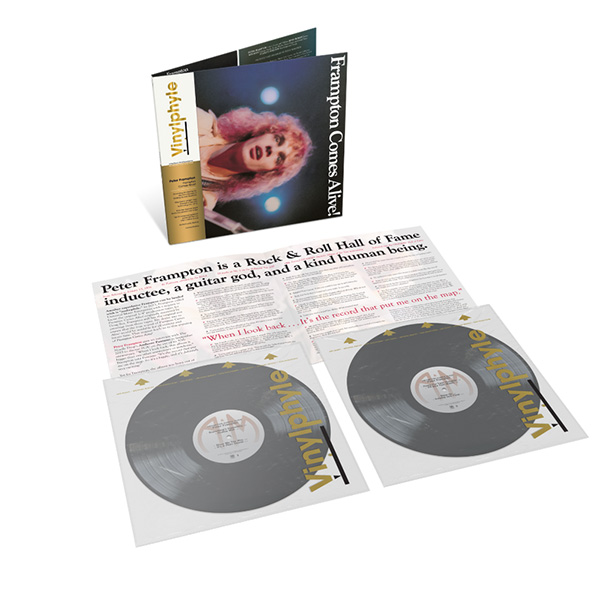 "The new one? It's beautiful, I love it," Frampton continued. "I'm very pleased that it sounds as good as it does because it was my decision to use the Doug Sax 25th anniversary remaster. The new mastering of this was also done incredibly well. To me, it sounds fresh again."
But why would a regular fan sink even more cash into another reissue of Bob Marley's Exodus, which has already been reissued innumerable times?
"The packaging is upgraded. Everything is in a gatefold, tip-on jacket, on clay-coated board, and interior pocket that gives it a nice touch," Wolfe said. "These have a Matte Aqueous (AQ) finish, so they feel good in your hands. And you're getting a four-panel inset that has brand-new liner notes talking about the record with a fresh perspective, as well as scans of the master tape boxes that we've used to press the record."
The source used is the most crucial thing in any reissue program. Some of the albums to be reissued in both series were recorded digitally, and both series use a mix of tape and digital sources. A point of emphasis for both is the prominent and detailed explanation of the entire chain, from the original sources down to the Neotech VR900 vinyl the DSS series uses.
"We will always be fully transparent on every single release on what source we are using," Wolfe explained. "We are never gonna try to fake it or flub it. If it's not AAA or it's ADA or DDA, we are going to put that on the package. We don't want there to be any speculation or claim of malfeasance. We are aware of that pitfall. And since we are broadening our scope as far as the eras and genres are concerned, we may not have an original master."
Most of the Vinylphyle titles are being mastered and cut by Joe Nino-Hernes of Sterling Sound in Nashville, Tennessee. Asked about the provenance and quality of source material of certain albums he has worked on, Nino-Hernes considers the question from a consumer's point of view.
"I'm a record buyer, so I want to know what the artist approved. I want to know what an original copy sounded like and what else is out in the world. Then I want to make the record that I want to hear. I want to take the best parts of the original and enhance them, really bring out the things that make the original so great."
"Exodus, for example, is a phenomenal album," Nino-Hernes enthuses. "It's a stunning recording. We put that tape up, and it just explodes out of the speakers. You really wanna capture all that energy. You want the low-end impact, and you want that great top end."
About The Band's Northern Lights—Southern Cross album, he said, "That one needed a little more work. That one was tricky. It was one of those titles where you put the tape up and listen to it, and it sounds good, but it's really dark. It has a kind of dry sound, and I wanted to bring as much extra life into it as I could. I wanted to add more top end, but you get to a point with that where it's like, okay, this is as much as it can take before it gets bright, before it gets harsh. But you want to be right on that edge."
"The new one? It's beautiful, I love it," Frampton continued. "I'm very pleased that it sounds as good as it does because it was my decision to use the Doug Sax 25th anniversary remaster. The new mastering of this was also done incredibly well. To me, it sounds fresh again."
But why would a regular fan sink even more cash into another reissue of Bob Marley's Exodus, which has already been reissued innumerable times?
"The packaging is upgraded. Everything is in a gatefold, tip-on jacket, on clay-coated board, and interior pocket that gives it a nice touch," Wolfe said. "These have a Matte Aqueous (AQ) finish, so they feel good in your hands. And you're getting a four-panel inset that has brand-new liner notes talking about the record with a fresh perspective, as well as scans of the master tape boxes that we've used to press the record."
The source used is the most crucial thing in any reissue program. Some of the albums to be reissued in both series were recorded digitally, and both series use a mix of tape and digital sources. A point of emphasis for both is the prominent and detailed explanation of the entire chain, from the original sources down to the Neotech VR900 vinyl the DSS series uses.
"We will always be fully transparent on every single release on what source we are using," Wolfe explained. "We are never gonna try to fake it or flub it. If it's not AAA or it's ADA or DDA, we are going to put that on the package. We don't want there to be any speculation or claim of malfeasance. We are aware of that pitfall. And since we are broadening our scope as far as the eras and genres are concerned, we may not have an original master."
Most of the Vinylphyle titles are being mastered and cut by Joe Nino-Hernes of Sterling Sound in Nashville, Tennessee. Asked about the provenance and quality of source material of certain albums he has worked on, Nino-Hernes considers the question from a consumer's point of view.
"I'm a record buyer, so I want to know what the artist approved. I want to know what an original copy sounded like and what else is out in the world. Then I want to make the record that I want to hear. I want to take the best parts of the original and enhance them, really bring out the things that make the original so great."
"Exodus, for example, is a phenomenal album," Nino-Hernes enthuses. "It's a stunning recording. We put that tape up, and it just explodes out of the speakers. You really wanna capture all that energy. You want the low-end impact, and you want that great top end."
About The Band's Northern Lights—Southern Cross album, he said, "That one needed a little more work. That one was tricky. It was one of those titles where you put the tape up and listen to it, and it sounds good, but it's really dark. It has a kind of dry sound, and I wanted to bring as much extra life into it as I could. I wanted to add more top end, but you get to a point with that where it's like, okay, this is as much as it can take before it gets bright, before it gets harsh. But you want to be right on that edge."
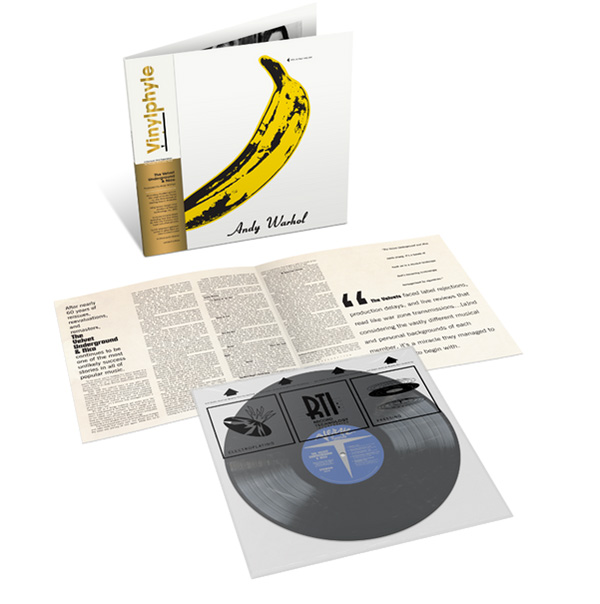 The most iconic album in this first group that Nino-Hernes worked on was The Velvet Underground & Nico. He approached it first as a fan. "It's so stylized. It has a raw component to it, a distorted component to it. It's intentionally manipulated. They didn't set out to go in the recording studio and make a high-fidelity recording in the traditional sense. You look at the tape box, and it says distortion or too much vocal overload, things like that. I wanted to capture that. I wanted it to come across on disc like that, to leap off the record like it does off the tape. I wanted it to come alive, and to open it up a little bit. The original had to be a little more frequency limited—band limited—so it would play back properly on the players of the era, but now we can let it breathe."
The obvious question that all true fans of the Velvets want answered about this new reissue is, What about the banana?
"Actually, it was not a hard decision to make. It was like if we're putting this out as part of the first batch, it better friggin' have the peelable banana," Wolfe said with a big grin. "What was fun was testing the different levels of adhesion that would produce the right amount of peel but also restick so it would not fall back off later when it was going back on your shelf. We had a roundtable focus group internally to find the right banana peel, and I feel like we landed on it."
Definitive Sound
The most iconic album in this first group that Nino-Hernes worked on was The Velvet Underground & Nico. He approached it first as a fan. "It's so stylized. It has a raw component to it, a distorted component to it. It's intentionally manipulated. They didn't set out to go in the recording studio and make a high-fidelity recording in the traditional sense. You look at the tape box, and it says distortion or too much vocal overload, things like that. I wanted to capture that. I wanted it to come across on disc like that, to leap off the record like it does off the tape. I wanted it to come alive, and to open it up a little bit. The original had to be a little more frequency limited—band limited—so it would play back properly on the players of the era, but now we can let it breathe."
The obvious question that all true fans of the Velvets want answered about this new reissue is, What about the banana?
"Actually, it was not a hard decision to make. It was like if we're putting this out as part of the first batch, it better friggin' have the peelable banana," Wolfe said with a big grin. "What was fun was testing the different levels of adhesion that would produce the right amount of peel but also restick so it would not fall back off later when it was going back on your shelf. We had a roundtable focus group internally to find the right banana peel, and I feel like we landed on it."
Definitive Sound
The reissue producer of the Definitive Sound Series One Steps is Tom "Grover" Biery of Slow Down Sounds, who previously launched the Because Sound Matters direct-to-consumer series of One Steps for Warner Bros. With the Definitive Sound Series, he thinks he's found an unserved niche in premium-vinyl pressings.
 "There was definitely a hole in the market for a younger vinyl audiophile that was not being addressed," Biery said from his office at Record Technology Incorporated (RTI) in Camarillo, California, where the DSS One Steps are pressed. Visible in the background during a Zoom call with him was a painting of Johnny Cash and several turntables. "You can see it everywhere. You didn't have to look very hard. There's been a lot of energy in the last year, 18 months, around superfans. Part of these One Step records that I've been doing is to make sure that fans of A Perfect Circle, as an example, have the same opportunity to have an amazing-sounding record as somebody who likes The Eagles.
"Also, most of the titles are so important that the labels really wouldn't want to license them to Mobile Fidelity or Analogue Productions. Nor would either of those labels have interest, because some of what I have done is coming from digital, and they are all about analog. But I'm kind of proving that it's all about the sound. Digital can sound amazing. Just because something was recorded digitally doesn't mean it can't be an amazing audiophile experience."
Speaking of the audiophile experience, Biery knows the series he's directing will face questions about whether One Steps, which are priced at $100 for a single LP and $125 for a double album, are a sonic improvement worth the money. In a 2025 podcast, leading mastering engineer Kevin Gray of Cohearent Audio called One Steps an "absolute scam foisted on the buying public." His position is that if anything, the three-step process yields better-sounding records, but One Steps usually get more mastering attention, and that's the reason for better sound. Reached for further comment, Gray said he has no interest in continuing this controversy. "I never said that One Steps sound lousy. I just said they are inferior to three-steps. I stand by that."
"Some people think it's a scam," said Biery. "Kevin made those comments that we've all heard. So is the Emo-ish audience going to step up? My thought is that they will. Not from the marketing point of view but just from the listener point of view. I was listening to Blink-182 and thinking, Travis Barker has never been captured in a recording the way this sounds. Even the bass parts—no one has ever heard them like this. They were there, we didn't do anything, we didn't say 'let's boost the bass.' It's not like that. All we tried to do is get onto a record what's as close as possible to what we hear on the tape.
"Making a One Step is really consuming. Despite the name, there's a lot of steps. The thing about a One Step is that it should actually reveal what is there. If it's not a great recording or there are problems, maybe a One Step is not a good idea."
"There was definitely a hole in the market for a younger vinyl audiophile that was not being addressed," Biery said from his office at Record Technology Incorporated (RTI) in Camarillo, California, where the DSS One Steps are pressed. Visible in the background during a Zoom call with him was a painting of Johnny Cash and several turntables. "You can see it everywhere. You didn't have to look very hard. There's been a lot of energy in the last year, 18 months, around superfans. Part of these One Step records that I've been doing is to make sure that fans of A Perfect Circle, as an example, have the same opportunity to have an amazing-sounding record as somebody who likes The Eagles.
"Also, most of the titles are so important that the labels really wouldn't want to license them to Mobile Fidelity or Analogue Productions. Nor would either of those labels have interest, because some of what I have done is coming from digital, and they are all about analog. But I'm kind of proving that it's all about the sound. Digital can sound amazing. Just because something was recorded digitally doesn't mean it can't be an amazing audiophile experience."
Speaking of the audiophile experience, Biery knows the series he's directing will face questions about whether One Steps, which are priced at $100 for a single LP and $125 for a double album, are a sonic improvement worth the money. In a 2025 podcast, leading mastering engineer Kevin Gray of Cohearent Audio called One Steps an "absolute scam foisted on the buying public." His position is that if anything, the three-step process yields better-sounding records, but One Steps usually get more mastering attention, and that's the reason for better sound. Reached for further comment, Gray said he has no interest in continuing this controversy. "I never said that One Steps sound lousy. I just said they are inferior to three-steps. I stand by that."
"Some people think it's a scam," said Biery. "Kevin made those comments that we've all heard. So is the Emo-ish audience going to step up? My thought is that they will. Not from the marketing point of view but just from the listener point of view. I was listening to Blink-182 and thinking, Travis Barker has never been captured in a recording the way this sounds. Even the bass parts—no one has ever heard them like this. They were there, we didn't do anything, we didn't say 'let's boost the bass.' It's not like that. All we tried to do is get onto a record what's as close as possible to what we hear on the tape.
"Making a One Step is really consuming. Despite the name, there's a lot of steps. The thing about a One Step is that it should actually reveal what is there. If it's not a great recording or there are problems, maybe a One Step is not a good idea."
 One album that has proven Biery's theory that younger listeners will buy high-end vinyl pressings is the DSS One Step of Dr. Dre's The Chronic, one of the foundational records in the Interscope catalog and one of the first rap albums to be certified triple platinum. The Chronic has already sold out its first One Step pressing. There are no plans for a repress—not yet—though Biery said an additional three-step vinyl pressing or an SACD has been discussed.
"We had to bake the Chronic tape because it was of that era," said Chris Bellman of Bernie Grundman Mastering in Los Angeles, who worked on many of the DSS releases. "The original pressing was 33 1/3 on two really long sides, so the levels were down. Somebody in Europe cut it at 45rpm, as a double album, and it was cut really loud. I said, okay, what people are used to hearing on the European press, I've got to at least match that. It's really loud coming off the One Step, but it works for that genre."
The most notable DSS pressing so far is the first-time pairing of R.E.M.'s 1982 EP Chronic Town and the band's first full-length, 1983's Murmur, in a single package.
"Both of the R.E.M.s [tapes] were in excellent shape," Bellman said in a recent interview from the Grundman studio. "They sounded fabulous and required a minimum amount of manipulation on my part. A little bit of focusing of low-end kind of information, but generally they were very intact. In those kinds of situations, when you produce a record with One Step, it just enhances the beauty of the tape. With Murmur, it brought out detail that even the original engineers and producers didn't hear on the tape. They commented to me about that. They were like, 'Wow, we forgot, don't remember, or we didn't even know that was in there.' In that respect, One Steps can be amazing."
Bellman said there's really no difference in how he masters for One Step versus regular vinyl. "I do the best-balanced mastering that I can get. I audition what I have done, test cuts on multiple playback systems, just to make sure I'm in the pocket. If they are a thumbs-up, then we're a go. They usually press 500, 600 from each stamper."
Bellman added, "Sonically, you have to try to figure out what the One Step process will do. My bad analogy is it's like buying jeans when you need to figure out if they're going to shrink or not. You expect that the One Step is going to do its thing in a positive way, and it generally does."
Asked whether a One Step is worth the premium, Bellman responded, "Definitely." Both Mitch Easter and Don Dixon, who produced Murmur together, added that what they hear on the new DSS pressing is superior to past versions.
"We expected to be completely unimpressed. Big deal. Another damn version of this record," Dixon said recently in a Zoom call from his home. "But this One Step process does have a clarity that regular records don't have. Especially in upper bass for me. The top end is not overhyped in any way, it's very smooth, but there." "It's a real thing," Easter affirmed later the same day. "I've been a skeptic about a lot of stuff that people say about all kinds of recordings. And we all know there's a snake-oil factor and people want to believe things that to my ears have not necessarily been true. Vinyl records have so much about them that's variable. We have traditional old pressings that sound wonderful, but these things really do seem to be different. I keep trying to come up with a good description of it, of what it is. The thrilling thing for us, too, is that since we were happy with the original record and what [original Sterling Sound engineer] Greg Calbi did when he mastered it, it was about how to be better without being different. Weirdly, it's sort of not different, but it's somehow better. It's like when you go to a restaurant and you always get the same dish, but on a certain night it's particularly good."
"There are definitely details that I am hearing that ring a bell," said Easter. "Or are they just more easily heard now? We heard them on the tape, you know, and then it kind of vanished on the original pressings, and we kind of forgot about them. There's definitely some kind of clarity improvement. It's a loud cut, which is always good. It's got more detail, but at the same time it's not like it's brighter. I don't know the twists and turns of all these things. All I know is that when I got the test pressing, I thought, Well, damn!"
Another esoteric but exciting aspect of the R.E.M. DSS pressing is the fact that the original two-track tape was rediscovered and used for this reissue. "They found the real, actual masters from Sterling, with Greg Calbi's notes," Dixon said. "I talked to the guy who said he found them. He showed me pictures of the box. It was my handwriting, so I knew it was the real two-track which I don't think they had been able to find prior to this, even for the fancy CD reissues."
One album that has proven Biery's theory that younger listeners will buy high-end vinyl pressings is the DSS One Step of Dr. Dre's The Chronic, one of the foundational records in the Interscope catalog and one of the first rap albums to be certified triple platinum. The Chronic has already sold out its first One Step pressing. There are no plans for a repress—not yet—though Biery said an additional three-step vinyl pressing or an SACD has been discussed.
"We had to bake the Chronic tape because it was of that era," said Chris Bellman of Bernie Grundman Mastering in Los Angeles, who worked on many of the DSS releases. "The original pressing was 33 1/3 on two really long sides, so the levels were down. Somebody in Europe cut it at 45rpm, as a double album, and it was cut really loud. I said, okay, what people are used to hearing on the European press, I've got to at least match that. It's really loud coming off the One Step, but it works for that genre."
The most notable DSS pressing so far is the first-time pairing of R.E.M.'s 1982 EP Chronic Town and the band's first full-length, 1983's Murmur, in a single package.
"Both of the R.E.M.s [tapes] were in excellent shape," Bellman said in a recent interview from the Grundman studio. "They sounded fabulous and required a minimum amount of manipulation on my part. A little bit of focusing of low-end kind of information, but generally they were very intact. In those kinds of situations, when you produce a record with One Step, it just enhances the beauty of the tape. With Murmur, it brought out detail that even the original engineers and producers didn't hear on the tape. They commented to me about that. They were like, 'Wow, we forgot, don't remember, or we didn't even know that was in there.' In that respect, One Steps can be amazing."
Bellman said there's really no difference in how he masters for One Step versus regular vinyl. "I do the best-balanced mastering that I can get. I audition what I have done, test cuts on multiple playback systems, just to make sure I'm in the pocket. If they are a thumbs-up, then we're a go. They usually press 500, 600 from each stamper."
Bellman added, "Sonically, you have to try to figure out what the One Step process will do. My bad analogy is it's like buying jeans when you need to figure out if they're going to shrink or not. You expect that the One Step is going to do its thing in a positive way, and it generally does."
Asked whether a One Step is worth the premium, Bellman responded, "Definitely." Both Mitch Easter and Don Dixon, who produced Murmur together, added that what they hear on the new DSS pressing is superior to past versions.
"We expected to be completely unimpressed. Big deal. Another damn version of this record," Dixon said recently in a Zoom call from his home. "But this One Step process does have a clarity that regular records don't have. Especially in upper bass for me. The top end is not overhyped in any way, it's very smooth, but there." "It's a real thing," Easter affirmed later the same day. "I've been a skeptic about a lot of stuff that people say about all kinds of recordings. And we all know there's a snake-oil factor and people want to believe things that to my ears have not necessarily been true. Vinyl records have so much about them that's variable. We have traditional old pressings that sound wonderful, but these things really do seem to be different. I keep trying to come up with a good description of it, of what it is. The thrilling thing for us, too, is that since we were happy with the original record and what [original Sterling Sound engineer] Greg Calbi did when he mastered it, it was about how to be better without being different. Weirdly, it's sort of not different, but it's somehow better. It's like when you go to a restaurant and you always get the same dish, but on a certain night it's particularly good."
"There are definitely details that I am hearing that ring a bell," said Easter. "Or are they just more easily heard now? We heard them on the tape, you know, and then it kind of vanished on the original pressings, and we kind of forgot about them. There's definitely some kind of clarity improvement. It's a loud cut, which is always good. It's got more detail, but at the same time it's not like it's brighter. I don't know the twists and turns of all these things. All I know is that when I got the test pressing, I thought, Well, damn!"
Another esoteric but exciting aspect of the R.E.M. DSS pressing is the fact that the original two-track tape was rediscovered and used for this reissue. "They found the real, actual masters from Sterling, with Greg Calbi's notes," Dixon said. "I talked to the guy who said he found them. He showed me pictures of the box. It was my handwriting, so I knew it was the real two-track which I don't think they had been able to find prior to this, even for the fancy CD reissues."
 Levi Seitz of Black Belt Mastering outside Seattle, Washington, is the other mastering engineer Biery has been working with for the DSS releases. Seitz, who established his mastering house in 2009, has been cutting lacquers since 2015. He cut the last two Beyoncé records as well as a number of Pearl Jam and Metallica reissues. He cut the lacquers for Beck's Morning Phase DSS One Step."
I used hi-rez digital masters that were done by Bob Ludwig," Seitz recalled. "These are the definitive masters. And again, you can throw that word 'definitive' around, but it really does mean something in this context. My understanding is that there was quite a lengthy process to get the level of quality that Beck wanted.
"We all hear differently. We all have different kit. And you have to take, whether it's on Discogs or [Steve] Hoffman [Music Forums], the feedback you read or hear with a grain of salt. There are so many people coming in hot and heavy, saying, 'Well, you know this element of the EQ is too much or this is not enough.' Someone came out recently, I don't know if it was Hoffman Forums or Discogs, and said, 'Well, you know I had the enhance button pressed on my receiver, and that's why I thought this was too heavy.'
"We vet these meticulously, and then they go for approvals to the various management and bands," Seitz said. "You want the most discerning people chiming in. Nobody wants anything to slip under the radar. You cherish that feedback because it sharpens you."
Seitz emphatically remains a One Step fan. "When you look at the final fit and finish of this entire package, I have no question that it's worth it," Seitz concluded. "Today, people are paying $40, $50, maybe $60 for a standard LP. So, One Steps are a little bit more than double that, but you frame it in the context that this will outlive you. You get to enjoy this for the rest of your life, and you can hand this down to your kids, your grandkids. When you put it in that perspective, I think it's worth it for a record that you love.
"To put it in food terms, there's a lot of fast food—drive-through manufacturing—happening with vinyl records. It's really special when someone has the discernment, like Biery, who is curating every aspect of the process. He's handpicking the compound, he's handpicking the print facility, the cutting engineers. And he's super thorough and discerning with the audio source. So, you start with super quality ingredients, you maintain that quality through the entire process, and you end up with something special because someone cared."
Wolfe and Biery both said that the two reissue programs will occasionally simultaneously release the same title, as happened with Cole's The Christmas Song and the Beach Boys' Pet Sounds. As to whether the market for vinyl reissues is already saturated—whether these two ventures by the largest record label have come too late—both said time will tell.
"This is very new," Wolfe said. "Both series just launched last year, so we are gonna see what the market says and how it responds."
Levi Seitz of Black Belt Mastering outside Seattle, Washington, is the other mastering engineer Biery has been working with for the DSS releases. Seitz, who established his mastering house in 2009, has been cutting lacquers since 2015. He cut the last two Beyoncé records as well as a number of Pearl Jam and Metallica reissues. He cut the lacquers for Beck's Morning Phase DSS One Step."
I used hi-rez digital masters that were done by Bob Ludwig," Seitz recalled. "These are the definitive masters. And again, you can throw that word 'definitive' around, but it really does mean something in this context. My understanding is that there was quite a lengthy process to get the level of quality that Beck wanted.
"We all hear differently. We all have different kit. And you have to take, whether it's on Discogs or [Steve] Hoffman [Music Forums], the feedback you read or hear with a grain of salt. There are so many people coming in hot and heavy, saying, 'Well, you know this element of the EQ is too much or this is not enough.' Someone came out recently, I don't know if it was Hoffman Forums or Discogs, and said, 'Well, you know I had the enhance button pressed on my receiver, and that's why I thought this was too heavy.'
"We vet these meticulously, and then they go for approvals to the various management and bands," Seitz said. "You want the most discerning people chiming in. Nobody wants anything to slip under the radar. You cherish that feedback because it sharpens you."
Seitz emphatically remains a One Step fan. "When you look at the final fit and finish of this entire package, I have no question that it's worth it," Seitz concluded. "Today, people are paying $40, $50, maybe $60 for a standard LP. So, One Steps are a little bit more than double that, but you frame it in the context that this will outlive you. You get to enjoy this for the rest of your life, and you can hand this down to your kids, your grandkids. When you put it in that perspective, I think it's worth it for a record that you love.
"To put it in food terms, there's a lot of fast food—drive-through manufacturing—happening with vinyl records. It's really special when someone has the discernment, like Biery, who is curating every aspect of the process. He's handpicking the compound, he's handpicking the print facility, the cutting engineers. And he's super thorough and discerning with the audio source. So, you start with super quality ingredients, you maintain that quality through the entire process, and you end up with something special because someone cared."
Wolfe and Biery both said that the two reissue programs will occasionally simultaneously release the same title, as happened with Cole's The Christmas Song and the Beach Boys' Pet Sounds. As to whether the market for vinyl reissues is already saturated—whether these two ventures by the largest record label have come too late—both said time will tell.
"This is very new," Wolfe said. "Both series just launched last year, so we are gonna see what the market says and how it responds."
Released as part of the Interscope/Geffen/A&M arm of UME, the Definitive Sound Series (DSS) releases all use the One Step pressing process. Eliminating several of the usual steps needed to press records in favor of being closer to the source, One Steps, which are controversial given their $100 price ($125 for a double LP), use the cut lacquer to create a stamper, which is then used to press the records.
The titles so far are Dr. Dre's The Chronic; A Perfect Circle's Mer de Noms; Nat King Cole's The Christmas Song; R.E.M.'s Chronic Town/Murmur; Beck's Morning Phase; Blink-182's Enema of the State; and The Beach Boys' Pet Sounds. So far only two titles have overlapped between the series, but there will be more in the future.
"The new one? It's beautiful, I love it," Frampton continued. "I'm very pleased that it sounds as good as it does because it was my decision to use the Doug Sax 25th anniversary remaster. The new mastering of this was also done incredibly well. To me, it sounds fresh again."
The most iconic album in this first group that Nino-Hernes worked on was The Velvet Underground & Nico. He approached it first as a fan. "It's so stylized. It has a raw component to it, a distorted component to it. It's intentionally manipulated. They didn't set out to go in the recording studio and make a high-fidelity recording in the traditional sense. You look at the tape box, and it says distortion or too much vocal overload, things like that. I wanted to capture that. I wanted it to come across on disc like that, to leap off the record like it does off the tape. I wanted it to come alive, and to open it up a little bit. The original had to be a little more frequency limited—band limited—so it would play back properly on the players of the era, but now we can let it breathe."
The reissue producer of the Definitive Sound Series One Steps is Tom "Grover" Biery of Slow Down Sounds, who previously launched the Because Sound Matters direct-to-consumer series of One Steps for Warner Bros. With the Definitive Sound Series, he thinks he's found an unserved niche in premium-vinyl pressings.
"There was definitely a hole in the market for a younger vinyl audiophile that was not being addressed," Biery said from his office at Record Technology Incorporated (RTI) in Camarillo, California, where the DSS One Steps are pressed. Visible in the background during a Zoom call with him was a painting of Johnny Cash and several turntables. "You can see it everywhere. You didn't have to look very hard. There's been a lot of energy in the last year, 18 months, around superfans. Part of these One Step records that I've been doing is to make sure that fans of A Perfect Circle, as an example, have the same opportunity to have an amazing-sounding record as somebody who likes The Eagles.
"Also, most of the titles are so important that the labels really wouldn't want to license them to Mobile Fidelity or Analogue Productions. Nor would either of those labels have interest, because some of what I have done is coming from digital, and they are all about analog. But I'm kind of proving that it's all about the sound. Digital can sound amazing. Just because something was recorded digitally doesn't mean it can't be an amazing audiophile experience."
Speaking of the audiophile experience, Biery knows the series he's directing will face questions about whether One Steps, which are priced at $100 for a single LP and $125 for a double album, are a sonic improvement worth the money. In a 2025 podcast, leading mastering engineer Kevin Gray of Cohearent Audio called One Steps an "absolute scam foisted on the buying public." His position is that if anything, the three-step process yields better-sounding records, but One Steps usually get more mastering attention, and that's the reason for better sound. Reached for further comment, Gray said he has no interest in continuing this controversy. "I never said that One Steps sound lousy. I just said they are inferior to three-steps. I stand by that."
One album that has proven Biery's theory that younger listeners will buy high-end vinyl pressings is the DSS One Step of Dr. Dre's The Chronic, one of the foundational records in the Interscope catalog and one of the first rap albums to be certified triple platinum. The Chronic has already sold out its first One Step pressing. There are no plans for a repress—not yet—though Biery said an additional three-step vinyl pressing or an SACD has been discussed.
Levi Seitz of Black Belt Mastering outside Seattle, Washington, is the other mastering engineer Biery has been working with for the DSS releases. Seitz, who established his mastering house in 2009, has been cutting lacquers since 2015. He cut the last two Beyoncé records as well as a number of Pearl Jam and Metallica reissues. He cut the lacquers for Beck's Morning Phase DSS One Step."
I used hi-rez digital masters that were done by Bob Ludwig," Seitz recalled. "These are the definitive masters. And again, you can throw that word 'definitive' around, but it really does mean something in this context. My understanding is that there was quite a lengthy process to get the level of quality that Beck wanted.
"We all hear differently. We all have different kit. And you have to take, whether it's on Discogs or [Steve] Hoffman [Music Forums], the feedback you read or hear with a grain of salt. There are so many people coming in hot and heavy, saying, 'Well, you know this element of the EQ is too much or this is not enough.' Someone came out recently, I don't know if it was Hoffman Forums or Discogs, and said, 'Well, you know I had the enhance button pressed on my receiver, and that's why I thought this was too heavy.'