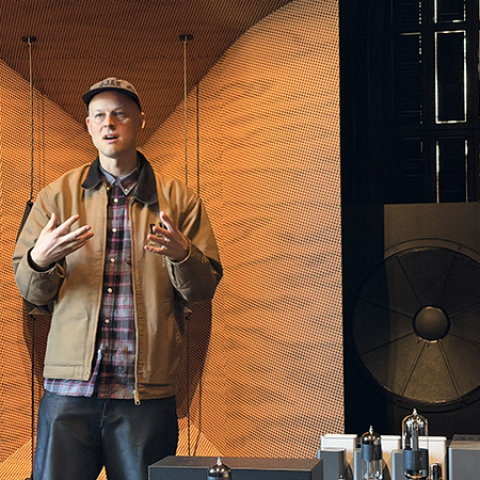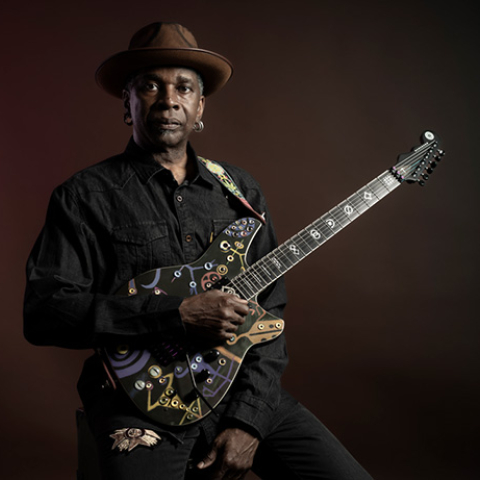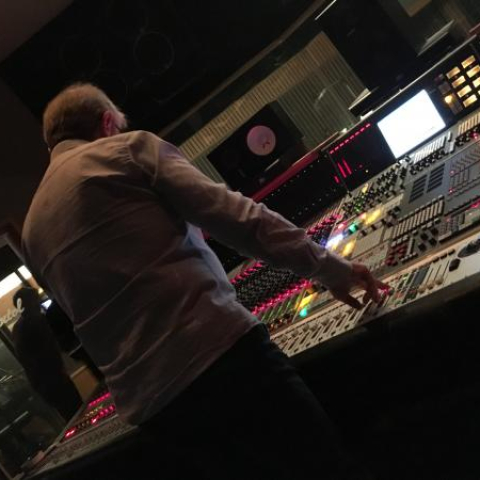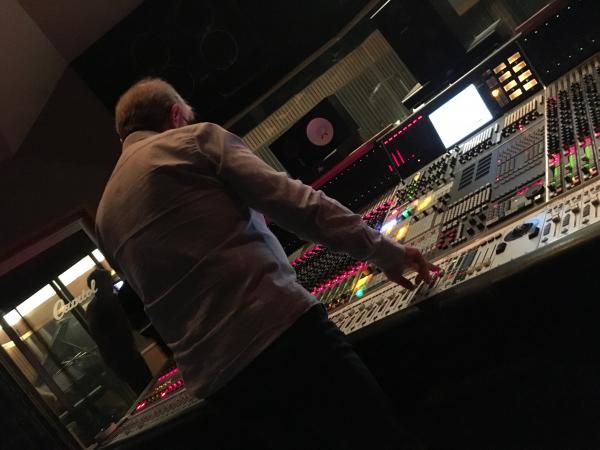
Schein On: Elliot Scheiner, behind the board in Studio A at LA's iconic Capitol Studios. Photo by Mike Mettler.
If not for the skill level of the producers and engineers who ensure recordings are able to get to the finish line, we may never have heard some of the best music of the past century-plus sound as good as it does.
To get us further inside the recording process, the organizers of Studio Confidential, a month-long series of events that have been held at the Loreto Theater in the Sheen Center for Thought and Culture on Bleecker Street in New York City, have been able to bring together seven of the best behind-the-board progenitors to discuss all the nuances, subtleties, and technical wizardry involved in how they do it.
Elliot Scheiner: We recorded the very first one we did in Ridgefield [in Connecticut, at the Ridgefield Playhouse], but then we said, "Well, what are we gonna do with it? We're not gonna release a movie." That's when we decided to do this as a series. And it's not the kind of thing where you want to tell all the stories. It's not like when you'd go to Capitol and you'd have Ed Cherney next door, and Al Schmitt in the mixing room. We sat around the studio and guys would walk in, and we'd tell these stories. So, I think this may be the last time this group or engineers from this period will get together like this. This kind of event will never happen again.
 Mettler: When did you decide you wanted to become a producer?
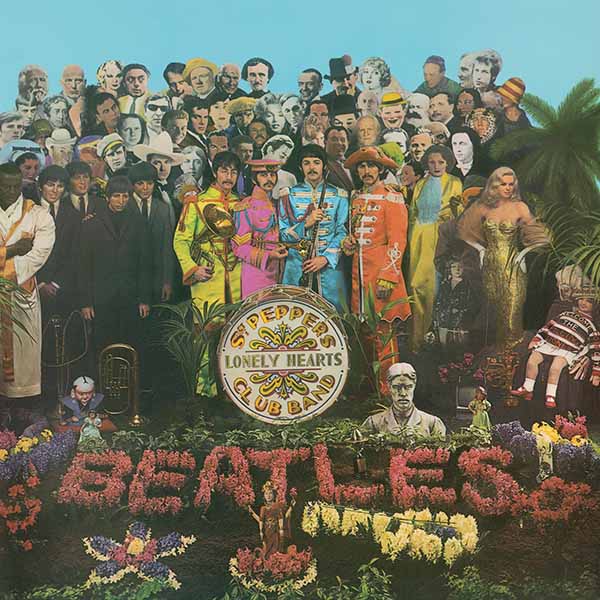
Scheiner: I remember that, every time I'd buy an album and before I'd even put it on, I'd read the back cover immediately—especially when it was a Beatles album. When I bought Sgt. Pepper's [released on Parlophone/Capitol in June 1967], I started reading the back, and then I put it on. I sat on the floor, and I listened to it at my uncle's house. He was a musician, a studio guy. He had a pair of Koss headphones. I put them on, and listened to this record for the first time in headphones. I was reading the back cover over and over, and that's when I decided, "I wanna be Geoff Emerick." [smiles.] Mettler: A lot of people would have said, "I wanna be Paul," but no—you were the guy who said, "I wanna be Geoff"! [both laugh.]
Scheiner: It was really devastating when Geoff went. [Emerick passed away at age 72 in October 2018.] A man who, for me personally, was so instrumental. Hearing his work made me wanna do this.
 Mettler: Can you pick an album that you could say is your favorite piece of work you've done, one that we might not expect you to name? Is that easy or hard for you to decide?
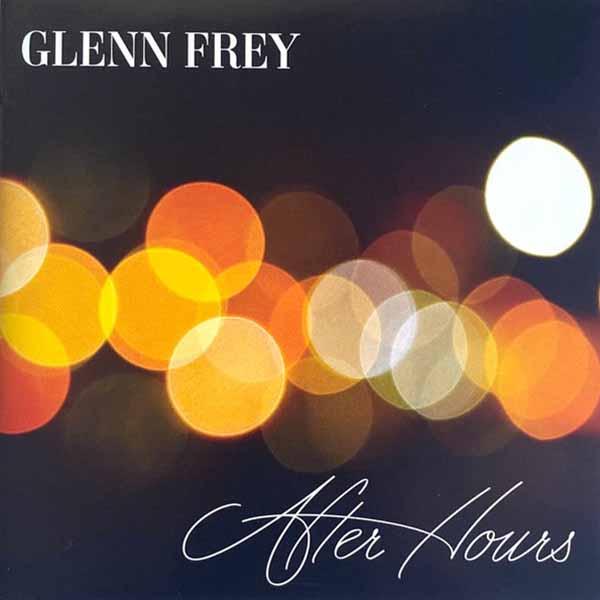
Scheiner: It's kind of hard. You may not agree with this, but for me, the last thing I did that went to vinyl was for Glenn Frey. He did a standards album called After Hours [released on Hip-O/UMe in May 2012]. It's a good-sounding record, and it was the last thing he recorded. He sang so great on that record, period. I mean, it was amazing that he got back there to actually sing like that. So, yeah, that was one of my favorites. I wish you'd had the chance to talk with him about it before he passed [at age 67 in January 2016]. I wish you had.
Scheiner: Oh boy. Let me think about that. That's a trick question! [both laugh.] I like to think when I go in to record that I'm gonna be happy with the track at the end of the day. It's been a really, really long time since something came out and I said, "Oh, this is sh--." I don't remember saying that very often, so I've been pretty lucky in that regard.
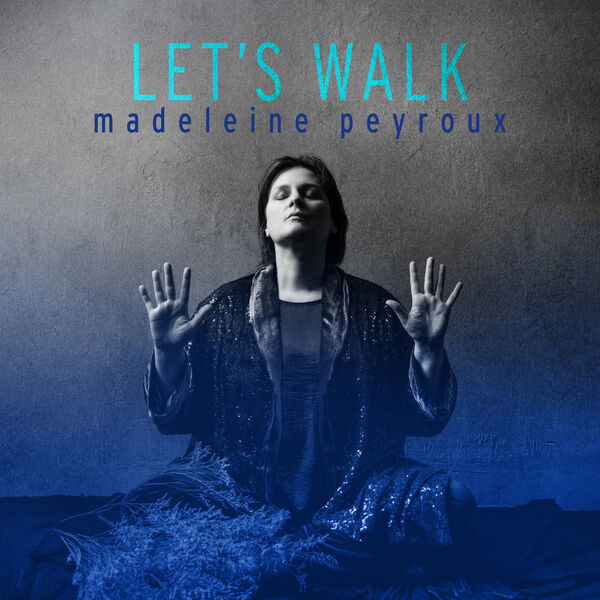 Scheiner: Okay, here's one I just thought of—an album I did that was just golden. I did a record with Madeleine Peyroux—her most recent record [Let's Walk, released on Thirty Tigers in June 2024], and it was amazing. I was using an old Neve 8038. I'd put up a fader, and I'd hear the bass drum just with nothing on it—and that was it. I knew it on the first day: "Oh my God, this is absolutely incredible." [Let's Walk was recorded at The Clubhouse in Rhinebeck, New York.]
Mettler: As someone who was a pioneer of mixing both new and old music in 5.1, are you now working in Atmos?
Scheiner: Okay, here's one I just thought of—an album I did that was just golden. I did a record with Madeleine Peyroux—her most recent record [Let's Walk, released on Thirty Tigers in June 2024], and it was amazing. I was using an old Neve 8038. I'd put up a fader, and I'd hear the bass drum just with nothing on it—and that was it. I knew it on the first day: "Oh my God, this is absolutely incredible." [Let's Walk was recorded at The Clubhouse in Rhinebeck, New York.]
Mettler: As someone who was a pioneer of mixing both new and old music in 5.1, are you now working in Atmos?
Scheiner: No, I use Auro-3D. Number one, when I go and record something, I don't go below 96[kHz]. I don't like to spend six months or eight months on an album and then drop down to 48. I see no reason for that.
Scheiner: Well, I would always introduce a song to somebody by saying, "You've gotta hear this." If you're listening to something that you find is so unbelievably beautiful, you tend to think about it in [relation to] a time period. Usually, it becomes synonymous with the time period when you've first listened to it—and then there is always something that goes along with it afterwards. It seemed to me there was always a girl involved with certain things you'd listen to, and they'd be of the same mind. They would have the same memory of a song.
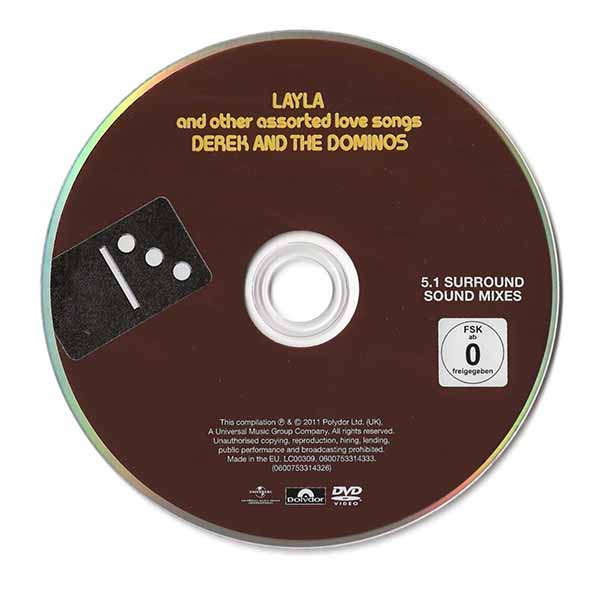 Mettler: Listening to the Layla album is like that for me—the time-period thing. It's now many decades after I first connected with that music, but whenever I put it on or I hear a track from it on satellite radio, it still transports me to the time when I'd listen to it in college, and how it directly related to my life at that time.
Scheiner: I mixed that one in 5.1. (footnote 2) And I got a call about—well, I don't remember which song it was, but it was about the organ at the end of whatever the song was. It was a quarter-note longer [after everybody else on the track had finished playing], and he asked me to kill it. I said, "You know, I understand what you're saying, but everybody knows that quarter-note, the one that went long. It's part of the record, and I can't change what was originally put out."
Scheiner: I hope to. I feel like I did 50 years ago. When I go into a session, as long as I've got what I want, it's the same experience. For someone like me, if I didn't have this, I don't know what I do. My son [Mathew Scheiner] opened a brand-new studio in Brooklyn, and I actually cut tracks there last month. I hadn't worked there before, and I was amazed at how they designed it. He's got a piano in there that's really great. I was doing a jazz thing there, and it was so perfect. Mettler: What's the name of the studio?
Scheiner: He calls the studio . . . [slight pause] The Nightfly.
Scheiner: I could, I could. We have the same sense of humor. [more laughter.] You know, I'm happy about everything I've done. Somebody asked me, "Were you ever unhappy?" I was unhappy because I never got to work with certain people, but that was it. Part 1 of the Studio Confidential Interview Series with Chuck Ainlay posted on Tuesday, February 24. You can now read it here.
Footnote 1: Morten Lindberg received numerous Best Surround Sound and Best Immersive Album nominations between 2007 and 2025. In 2020, he was awarded the Best Immersive Album Grammy for his work on Nidarosdomens Jentekor & Trondheimsolistene’s classical SACD/BD release, Lux. Footnote 2: Derek and the Dominos' Layla and Other Assorted Love Songs was initially released by Polydor/Atco in November 1970. Scheiner's 5.1 mix of Layla shared a 2012 Best Surround Sound Grammy with Bob Ludwig and Bill Levenson, and it can be found on the DVD in Polydor/UMG’s 2011-released Super Deluxe Edition 4CD/1DVD/2LP Layla box set.
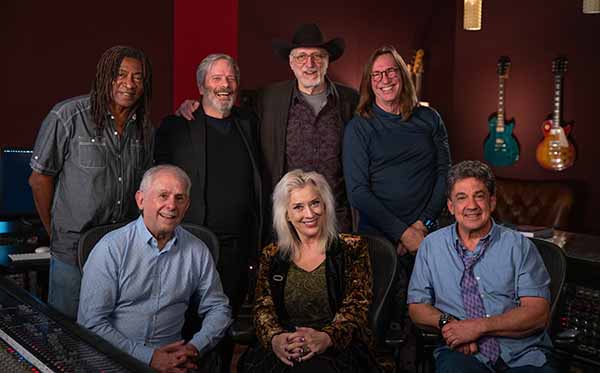
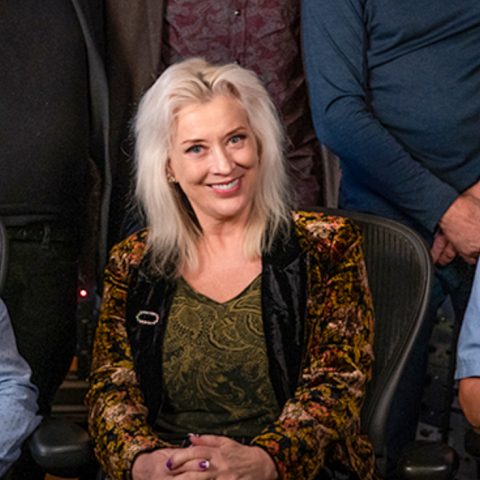
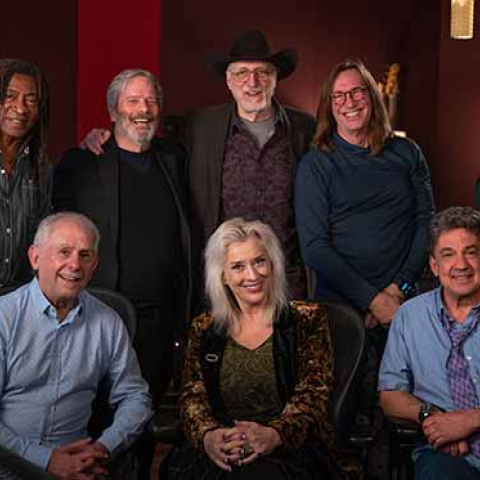
Studio Masters: The Magnificent Seven producers/engineers participating in the Studio Confidential series take a final bow, er, seat. Top row, l-r: Jimmy Douglass, Frank Filipetti, George Massenberg, Chuck Ainlay. Bottom row, l-r: Elliot Scheiner, Sylvia Massy, Niko Bolas.