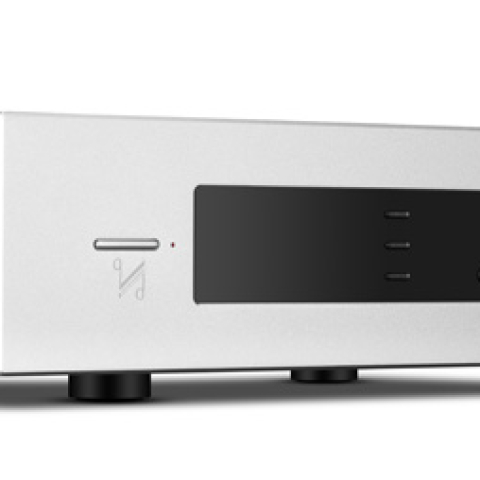
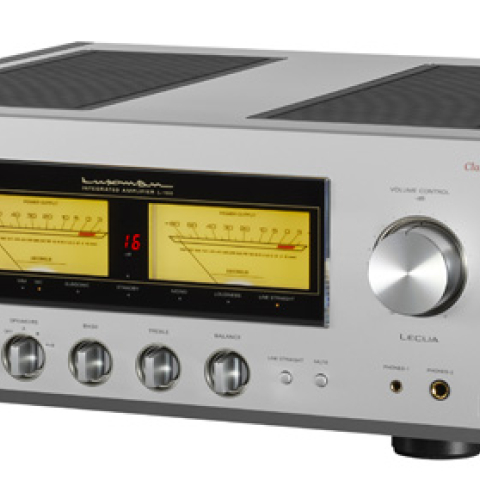
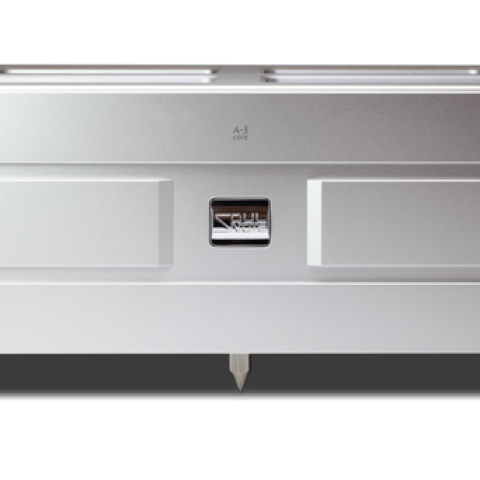
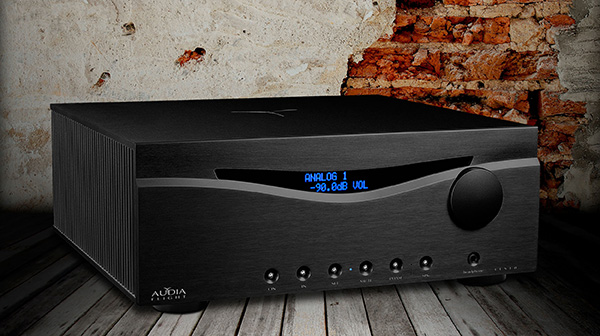
 The most salient thing about the design of the FLS10 is something that Paul Miller describes better than I could, so I'll just quote him (he helped assess the amplifier for our UK sister publication Hi-Fi News). Quoth Paul: "Loudspeakers typically expect a voltage input (where this voltage is proportional to the music signal's amplitude), so an amplifier will be designed to boost a low voltage input to a higher voltage output. This voltage gain is a high 46dB in the case of Audia Flight's FLS10 (in its 0dB input mode setting), however it does not employ voltage amplification from end-to-end. Instead, current amplification (feedback) is also used after the input voltage is first converted to an equivalent current using a transconductance stage. Subsequently, the output current is converted back into a voltage using a transimpedance stage."
Chez moi, the FLS10 drove two pairs of speakers—that is, for seven weeks I listened with my Focal Scalas connected to the amp; then I rolled the Estelon X Diamond IIs into the room for another month of power, finesse, and subtle sweetness.
The most salient thing about the design of the FLS10 is something that Paul Miller describes better than I could, so I'll just quote him (he helped assess the amplifier for our UK sister publication Hi-Fi News). Quoth Paul: "Loudspeakers typically expect a voltage input (where this voltage is proportional to the music signal's amplitude), so an amplifier will be designed to boost a low voltage input to a higher voltage output. This voltage gain is a high 46dB in the case of Audia Flight's FLS10 (in its 0dB input mode setting), however it does not employ voltage amplification from end-to-end. Instead, current amplification (feedback) is also used after the input voltage is first converted to an equivalent current using a transconductance stage. Subsequently, the output current is converted back into a voltage using a transimpedance stage."
Chez moi, the FLS10 drove two pairs of speakers—that is, for seven weeks I listened with my Focal Scalas connected to the amp; then I rolled the Estelon X Diamond IIs into the room for another month of power, finesse, and subtle sweetness.
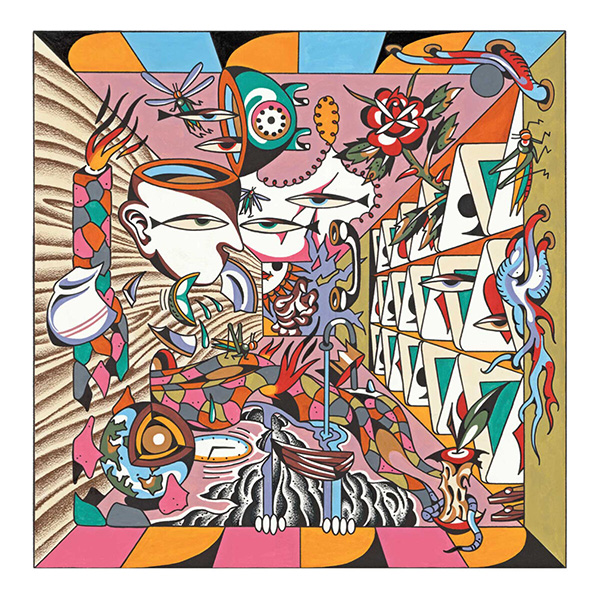 Getting an earful
CEO Massimiliano Marzi told me that the Audia Flight sound is the sum of his crew's life experiences, and that the company's goal is always to have "power and details together"—from the more affordable FL line to the all-out Strumento amplifiers. (The FLS series sits in the middle.) Of course I wondered what Marzi's description meant in practice, and I soon found out. It's a rounded and very pleasing quality. Some amplifiers explode the music out at you, which is its own thrill, but the FLS10's mission is to draw you in. It's certainly no wallflower, because there's grip, solidity, and bottom-end force in spades. And yet this chubster, proudly made in Civitavecchia (a coastal town 40 miles northwest of Rome), also has a relaxed quality about it. It brings out the music's energy with gusto—and with something akin to joy.
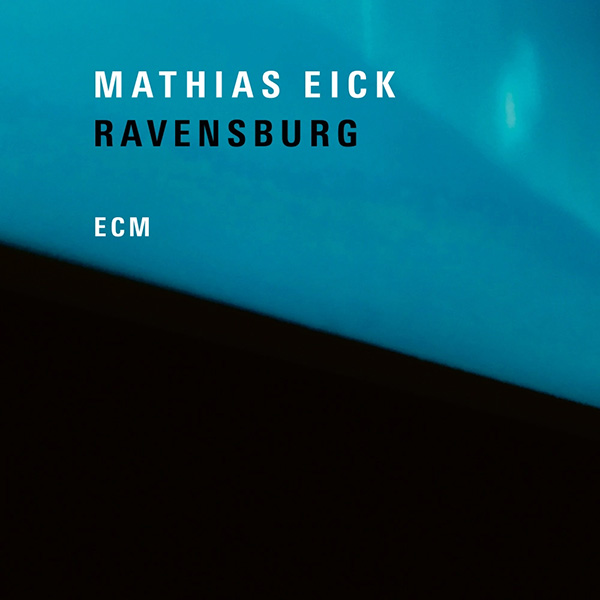 Next I turned to a more audiophile-grade track consisting of crystalline bells, wistful trumpet lines, and deep, resonant hand drums: Mathias Eick's "Children," from his album Ravensburg (24/96 FLAC, ECM/Qobuz). The recording seemed lit from within while displaying great precision that, to my ears, makes this amplifier an instrument in both senses of the words: scientific and musical.
"Apartments," the 11-minute closing track of string quintet Sybarite5's Collective Wisdom album (24/96 FLAC, Bright Shiny Things/Qobuz), is one of the most affecting recordings I've come across in recent years. It's a slowly building collage that first combines the sound of unrelenting rain with snippets of a New York radio broadcast. A viola then trills two plaintive, repetitive notes, and a dronelike cello moans a counterpoint to the forlorn vocalizations of a male and female voice. Meanwhile, in the distance, a piano produces rapid, nervous note ladders that never quite reach coherence with the other instruments, signifying brokenness and detachment. It's a profound mood piece that evokes unease, melancholy, and tristesse. I mention it here because the rain sound on the recording is remarkable, not just for its essential contribution to the ambience but for how much information it contains. This isn't rain heard through a half-open window. Instead, we are outside, in a courtyard or on a patio, and though it's clearly pouring, we hear the difference between drops of different sizes—some of which are received by grass or plants, and others that splash loudly off a table, a window sill, or a rock. On less-resolving systems, the downpour sounds like the crinkling of foil or bubble wrap, like a wash. Via the Audia Flight amp and the Focal Scalas, the resolution is such that the drops are separate, distinguishable events.
Next I turned to a more audiophile-grade track consisting of crystalline bells, wistful trumpet lines, and deep, resonant hand drums: Mathias Eick's "Children," from his album Ravensburg (24/96 FLAC, ECM/Qobuz). The recording seemed lit from within while displaying great precision that, to my ears, makes this amplifier an instrument in both senses of the words: scientific and musical.
"Apartments," the 11-minute closing track of string quintet Sybarite5's Collective Wisdom album (24/96 FLAC, Bright Shiny Things/Qobuz), is one of the most affecting recordings I've come across in recent years. It's a slowly building collage that first combines the sound of unrelenting rain with snippets of a New York radio broadcast. A viola then trills two plaintive, repetitive notes, and a dronelike cello moans a counterpoint to the forlorn vocalizations of a male and female voice. Meanwhile, in the distance, a piano produces rapid, nervous note ladders that never quite reach coherence with the other instruments, signifying brokenness and detachment. It's a profound mood piece that evokes unease, melancholy, and tristesse. I mention it here because the rain sound on the recording is remarkable, not just for its essential contribution to the ambience but for how much information it contains. This isn't rain heard through a half-open window. Instead, we are outside, in a courtyard or on a patio, and though it's clearly pouring, we hear the difference between drops of different sizes—some of which are received by grass or plants, and others that splash loudly off a table, a window sill, or a rock. On less-resolving systems, the downpour sounds like the crinkling of foil or bubble wrap, like a wash. Via the Audia Flight amp and the Focal Scalas, the resolution is such that the drops are separate, distinguishable events.
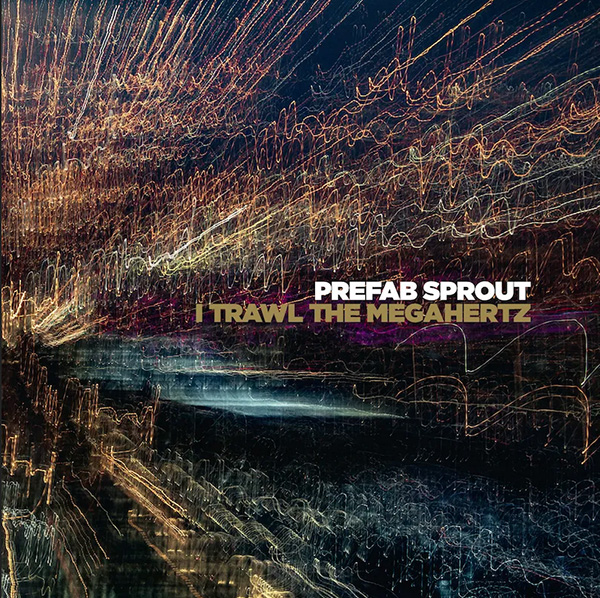 The beautifully gloomy character of "Apartments" reminded me of Paddy McAloon's elegiac "I Trawl the Megahertz" (24/44.1 FLAC, Sony Music UK/Qobuz), the title track of his astonishing 2003 solo album. Nothing from his very fine pop band Prefab Sprout comes close to the emotional depth of this rich, crepuscular record. I could hear every word of American guest Yvonne Connor reading McAloon's long-form poem on the 22-minute recording, as if her enunciation had somehow improved since the last time I listened. At the same time, the track's dreamy string section sounded as true and alive—silken but brimming with feeling—as the lyrical trumpet and clarinet parts.
Other than the human voice, a concert piano is probably the most difficult instrument for a stereo system to reproduce faithfully. The Audia Flight amplifier did exactly that. It lent a kind of virtual reality to John Cage's "In a Landscape" and "Ophelia," from Early Piano Music (16/44.1 FLAC, ECM/Qobuz). Pianist Herbert Henck gives these pieces a languorous beauty. Did it seem like there was an actual Steinway or Bósendorfer in my listening room? No, and I don't expect such a feat in my lifetime. But I'll say this: The disappearing act that critics anticipate and rave about—when our stereo system, firing on all cylinders, seems to fade away, leaving only the music—is by necessity also an appearing act. And Henck's piano was right here, sonorous and solid. Lower-register chords, like the ones five minutes into "Ophelia," hung heavy in the air—not far removed from a real piano at all. The top octave had that ethereal, bell-like sound of the actual thing. I wasn't fooled, but I got 80%, 85% of the way there, and that's very nearly as good as I've ever heard it.
Always, the Audia Flight/Focal Scalas combo did piano music exceptionally well. I was smitten by the instrumental tracks on Kristallen (24/96 FLAC, ACT Music/Qobuz), the 2020 album by Swedish keyboardist and composer Jan Lundgren and his trombonist compadre Nils Landgren. The lyrical concert grand motifs have bucketsful of space and air, conjuring an expansive, probably high-ceilinged recording space (or electronic reverb that mimics such a room, but my money is on real acoustics). "Dead-on colors," I wrote in my notes. "The weight of each left-hand note is conveyed regardless of whether the hammer strikes the string gently or with force."
The beautifully gloomy character of "Apartments" reminded me of Paddy McAloon's elegiac "I Trawl the Megahertz" (24/44.1 FLAC, Sony Music UK/Qobuz), the title track of his astonishing 2003 solo album. Nothing from his very fine pop band Prefab Sprout comes close to the emotional depth of this rich, crepuscular record. I could hear every word of American guest Yvonne Connor reading McAloon's long-form poem on the 22-minute recording, as if her enunciation had somehow improved since the last time I listened. At the same time, the track's dreamy string section sounded as true and alive—silken but brimming with feeling—as the lyrical trumpet and clarinet parts.
Other than the human voice, a concert piano is probably the most difficult instrument for a stereo system to reproduce faithfully. The Audia Flight amplifier did exactly that. It lent a kind of virtual reality to John Cage's "In a Landscape" and "Ophelia," from Early Piano Music (16/44.1 FLAC, ECM/Qobuz). Pianist Herbert Henck gives these pieces a languorous beauty. Did it seem like there was an actual Steinway or Bósendorfer in my listening room? No, and I don't expect such a feat in my lifetime. But I'll say this: The disappearing act that critics anticipate and rave about—when our stereo system, firing on all cylinders, seems to fade away, leaving only the music—is by necessity also an appearing act. And Henck's piano was right here, sonorous and solid. Lower-register chords, like the ones five minutes into "Ophelia," hung heavy in the air—not far removed from a real piano at all. The top octave had that ethereal, bell-like sound of the actual thing. I wasn't fooled, but I got 80%, 85% of the way there, and that's very nearly as good as I've ever heard it.
Always, the Audia Flight/Focal Scalas combo did piano music exceptionally well. I was smitten by the instrumental tracks on Kristallen (24/96 FLAC, ACT Music/Qobuz), the 2020 album by Swedish keyboardist and composer Jan Lundgren and his trombonist compadre Nils Landgren. The lyrical concert grand motifs have bucketsful of space and air, conjuring an expansive, probably high-ceilinged recording space (or electronic reverb that mimics such a room, but my money is on real acoustics). "Dead-on colors," I wrote in my notes. "The weight of each left-hand note is conveyed regardless of whether the hammer strikes the string gently or with force."
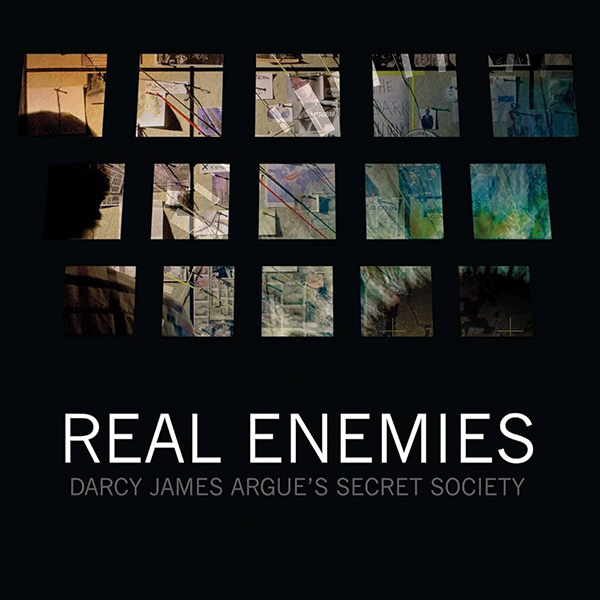 For a more raucous kind of jazz, I cued up Darcy James Argue's Secret Society, an 18-piece New York band that birthed one of 2016's best discs. Real Enemies (16/44.1 FLAC, New Amsterdam/Qobuz) is an intriguing set, unfolding like a noir movie soundtrack. I wouldn't want to replace the brilliant zither score on Carol Reed's The Third Man, but if that film ever gets a remake, Real Enemies is a ready-made mood setter. It's remarkable that the musicians don't play parts en masse—not often, anyway. The band makes sure to leave space around each phrase, and the instruments seem to be circling each other, teasing, without encroaching on each other's positions. There are classical and chamber-music influences, but the material also reaches into John Barry and Bernard Herrmann territory—masters of "visual music" in the 1950s and '60s. On the FLS10, it all sounded wonderfully seductive. Image density was of the reach-out-and-touch-it kind. In other words, exemplary.
All things considered
For a more raucous kind of jazz, I cued up Darcy James Argue's Secret Society, an 18-piece New York band that birthed one of 2016's best discs. Real Enemies (16/44.1 FLAC, New Amsterdam/Qobuz) is an intriguing set, unfolding like a noir movie soundtrack. I wouldn't want to replace the brilliant zither score on Carol Reed's The Third Man, but if that film ever gets a remake, Real Enemies is a ready-made mood setter. It's remarkable that the musicians don't play parts en masse—not often, anyway. The band makes sure to leave space around each phrase, and the instruments seem to be circling each other, teasing, without encroaching on each other's positions. There are classical and chamber-music influences, but the material also reaches into John Barry and Bernard Herrmann territory—masters of "visual music" in the 1950s and '60s. On the FLS10, it all sounded wonderfully seductive. Image density was of the reach-out-and-touch-it kind. In other words, exemplary.
All things consideredBeyond the somewhat brutish (dare I say un-Italian) exterior, the FLS10 is a thing of beauty. It animates even speakers with difficult loads. Above all, it doesn't just play music—it unlocks it. From heavy metal and EDM to jazz and pop and classical fare, the amplifier's speed tended to stay one step ahead of my high expectations, and the reproduction never felt frantic or mechanical. With a slightly mellow midbass and a potent, agile bottom end, the Audia Flight isn't warm in a bloated, nostalgic way, but its sensuous shimmer keeps pulling you in. More than once, I perceived phantom tubes in the system, although my ears also told me that second-order harmonic distortion is reassuringly low.