Phono Preamp Reviews

Sort By: Post DateTitle Publish Date

Sentec EQ11 phono preamplifier

With quiet elegance, the Sentec EQ11 phono stage and equalizer entered my expanding world of gramophone dreams. The EQ11 ($2500) is a modestly sized, tubed phono stage with the industry-standard RIAA phono equalization and five other EQ curves. These additional curves are for records pressed by companies that did not fully or promptly comply with the new, supposedly global industry standard introduced by the Recording Industry Association of America (RIAA) in 1954.
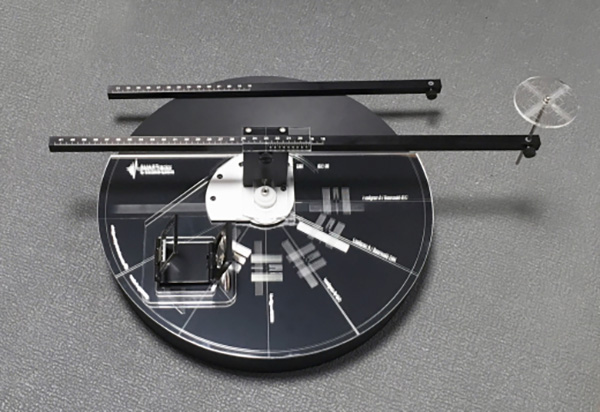
Analog Corner #229: Three Expensive Phono Preamplifiers, Phasemation, PBN, Qualia

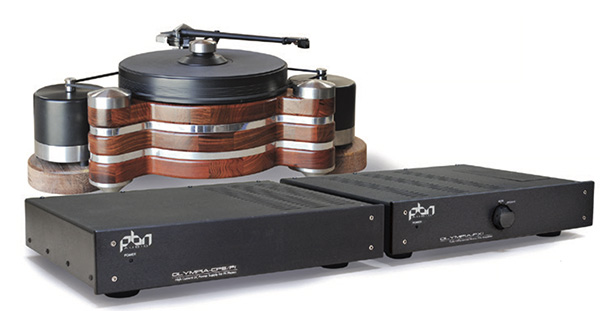
Other than being well built and high priced ($15,000, $22,000, $60,000), these three phono preamps have very little in common, in design or in sound. One has vacuum tubes, including a direct-heated 5U4G rectifier tube (the Phasemation). Two are solid-state (the PBN and Qualia). Two feature separate chassis for the left and right channels (the Qualia and Phasemation). All three have outboard power supplies. Two come from Japan (the Qualia and Phasemation), one is made in the US (PBN). All three are elegantly built, inside and out. Two are physically attractive, one is lab-grade butt ugly. One has a host of convenience features, including various equalization curves and three inputs (Phasemation). One offers no adjustability whatsoever (Qualia). One has two gain settings and multiple loading options (PBN). Two are designed to be used only with moving-coil cartridges, while the third (Phasemation) can also accommodate moving-magnets. One is fully balanced and dual- differential (PBN), two are not.

Listening #137

Except for a few titles I've combined with the ones in my listening room, and a few others that I intend to sell, the record collection I bought last year remains in three rows of boxes on the floor of our guest room. Because that room is spacious and comfortable, and equipped with a small refrigerator and a flat-screen TV, it is also the place where my 16-year-old daughter and her friends have their slumber parties and Dr. Who marathons. Thus, as you can imagine, I must sometimes explain to our young guests the Tao of collecting records.

The Entry Level #41

What I failed to make absolutely clear in my April column is that I really, truly, thoroughly enjoyed all three USB DAC–headphone amps that I auditioned: the Audioengine D3 ($189), the AudioQuest DragonFly v1.2 ($149), and the Cambridge Audio DacMagic XS ($199). Each offered a slightly different perspective on the music, but none could be accused of closing lanes on the George Washington Bridge, dumping several feet of snow on top of our car, or doing anything especially wrong.

Analog Corner #223: Acoustical Systems SMARTractor & Hagerman Trumpet Reference Phono Preamp

On analogplanet.com you'll find coverage of my visit in November 2013 to the 10th annual Manila Hi-Fi Show, which took place the weekend of the devastating typhoon Haiyan (Filipinos call it Yolanda). Because the people I met there are such big Stereophile fans, I wanted to be sure to give them a shout-out in this column, too.


Despite the weather, which prevented audiophiles living on other islands of the archipelago from flying in for the event, at least 2000 managed to attend. These are passionate, enthusiastic audiophiles—and the high proportion of young people, particularly among the vinyl buyers, was encouraging.


The greeting I received throughout the show was beyond my most vivid egomaniacal daydreams. I was treated so well that I don't know how to express my gratitude, other than to just say "Thanks"—and get back to work.

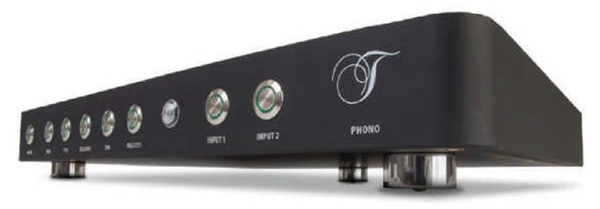
Analog Corner #221: Trinity Electronic Design & Thrax Phono Preamplifiers

The quest for vinyl quiet seems, at best, quixotic. By "vinyl quiet" I don't mean "quiet vinyl," which we now reliably get from pressing plants like QRP, RTI, Pallas, and a few others. I'm referring to makes of phono preamplifiers who set as a primary design goal electronic "quiet," ie, an absence or minimum of electronic noise. A stylus coursing through the groove of even the quietest LP still produces a considerable amount of noise.

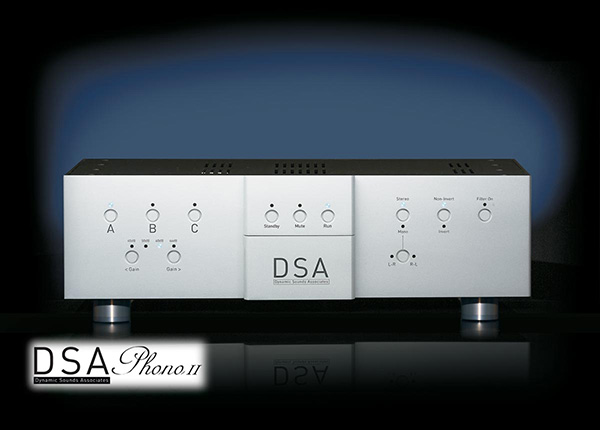
Analog Corner #219: DSA Phono II preamplifier, Stein Music and Miyajima phono cartridges

Shortly after the July 2013 issue of Stereophile hit the newsstands, I received an e-mail from audio restoration expert Doug Pomeroy, who specializes in the digital preservation of disc pressing metal parts, acetates, and 78s . . . His and my opinions about digital sound couldn't be more divergent.

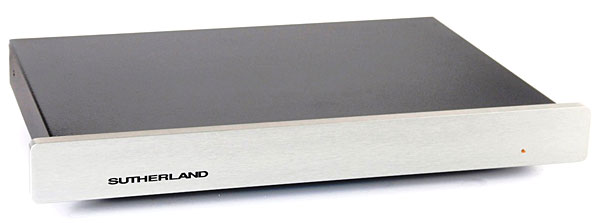
Analog Corner #217: Sutherland Engineering Insight phono preamplifier

Veteran phono-preamplifier designer Ron Sutherland has been partial, of late, to battery power. Getting off the grid can produce superb results, as demonstrated by his Hubble phono preamp ($3800), powered by 16 alkaline batteries.


I favorably reviewed the Hubble in the February 2010 issue, and remember loving most everything about it—particularly its drop-dead-quiet backdrops, its solid, weighty bottom end, and its fully fleshed-out instrumental textures. I was less enthused by its somewhat soft, muted high-frequency transients, though of course tastes and associated gear will differ. I need more grit, particularly for rock; you may not.

Analog Corner #216: The Power of Vinyl and the NVO SPA-II phono preamplifier

I was in Seattle last February to take part in one of the popular "Music Matters" events promoted by retailer Definitive Audio. Definitive's Mark Ormiston and Craig Abplanalp and their crew really know how to produce a memorable evening for both their customers and the manufacturers who fly in to demonstrate their gear. I was there to talk about . . . guess what?

Analog Corner #215: B.M.C. Phono MCCI phono preamplifier

In July 2008 I reviewed the intriguing Phono 2Ci moving-magnet/moving-coil phono preamplifier from Aqvox Audio Devices. Though it then cost only $1400, the Phono 2Ci's current-input circuitry represented a high-tech departure from the typical voltage-gain circuits used by almost everyone else. Although keeping its retail price so low resulted in some sonic compromises, it sounded remarkable, and tough to beat at the price.
Advertisement
Advertisement
Advertisement