Phono Preamp Reviews

Sort By: Post DateTitle Publish Date

Brilliant Corners #24: Consolidated Audio "Monster Can" & Fairchild 235 MC Step-Up Transformers
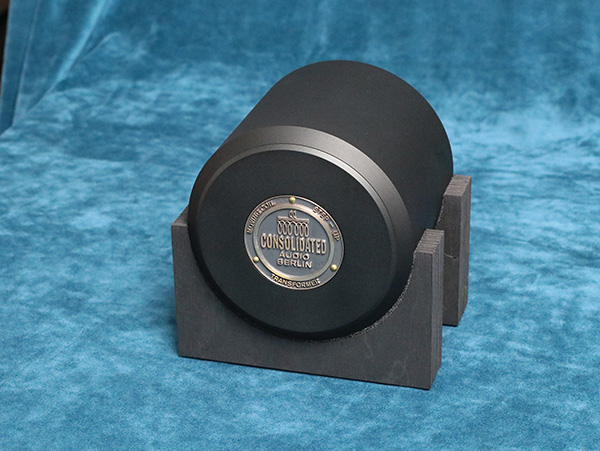
One of my favorite things about this pastime is the modesty of its aims. Despite the sometimes-astronomical sums spent on gear, and the small handful of drama queens who populate various corners of this hobby, all we're doing is trying to enjoy recorded music at home. No one here is reversing planetary warming or solving the Riemann hypothesis. The sole purpose of the pursuit we write about in these pages is to please, enlighten, and entertain. I like that about it.


This means that aesthetics matter. During a recent trip to Japan, I found myself marveling at the many vintage audio components used in both public listening spaces and people's homes, and the high prices these meticulously restored devices command. I found many of them lovely, the patina of age only adding to their allure. In the West, where we believe in eternal progress, it's common to ask whether these components' performance is up to contemporary standards. "Sure, it looks cool, but how does it sound?" we might ask, as though the physical beauty of the gear is a distraction or, worse, a ploy. Recall the old audiophile joke about the initials of the design-forward Danish manufacturer Bang & Olufsen standing for "beauty only."
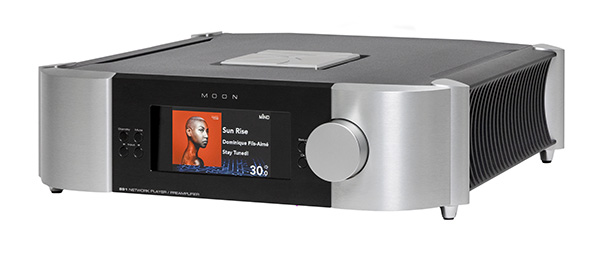
Moon 891 streaming preamplifier

No fewer than eight boxes, powered by six after-market power cables, comprise my current reference front-end. As much as separate boxes can afford superior isolation and provide far more room for visionary engineers to work their magic, the advantages of a single box, which requires a single power cable and far fewer after-market interconnects, are obvious.


Enter Simaudio's Moon 891 network player/preamplifier ($25,000; footnote 2). Also called a "streaming preamplifier,"it includes a DAC that converts PCM and MQA files up to 32/384 (with 24-bit files upconverted to 32-bit) and DSD files up to 256. It also includes what Simaudio company co-owner Costa Koulisakis describes as "a fully configurable" MC/MM phono stage. Both theoretically and practically, it's an ideal solution for someone with space and/or budget constraints.

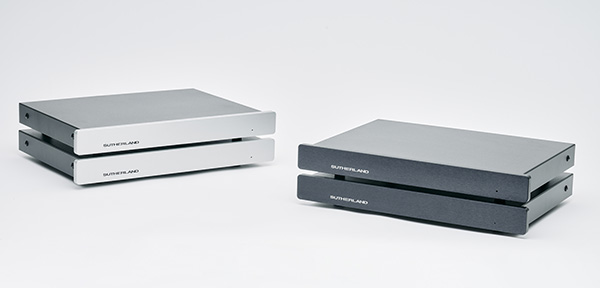
Brilliant Corners #22: Sutherland Dos Locos and Manley Oasis phono stages

"Give me the seduction, give me the pleasure," Ron Sutherland was nearly shouting into the phone. "I want to turn off the analytical mind and just enjoy myself!"


Sutherland speaks in the chipper Midwestern cadences of a comic character actor from the 1940s, sort of like a grown-up Eddie Bracken from The Miracle of Morgan's Creek, and I'd never heard him sound so excited. He was talking about his new phono stage, the Dos Locos, the first product he's designed collaboratively, having enlisted a group of audiophile friends who listened to and critiqued each iteration. "These friends are excellent listeners," Sutherland related, "whereas I'm a gearhead, and don't have the patience or discernment for that kind of listening. Sometimes I'd change something and they'd say, 'You made it worse!'" It sounded like he preferred the group dynamic. "There was something very intimate about this back-and-forth process," he told me. "And compared to working alone, it was a lot more fun!"

Gramophone Dreams #91: Mobile Fidelity, PrimaLuna, and First Watt Redux

Herb waits for Godot


It's important for readers to remember that I've spent my adult life as an artist and mechanic. Making things. Working as a tradesperson during the day then at an easel or workbench at night.


When I finished high school, all I wanted to do was work in a fancy, well-equipped shop building drag race engines. Engine building was something I had already shown a talent for, but my parents insisted I go to college. Unfortunately, my high school grade point average was so low I was turned down by every college I applied to. Consequently, my parents forced me to attend Wright Junior College in Chicago, a place where teachers rolled joints for their students. And I got straight A's. Those easy A's got me into Western Illinois University, a small state college in a tiny rural town called Macomb near the Mississippi River. My mother was so proud, she told everybody she knew that her son was accepted into "university," but she could never remember which one.

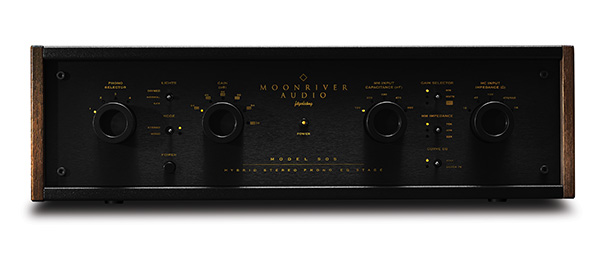
Spin Doctor #18: Moonriver 505 Phono Stage, DS Audio E3 Optical Phono Cartridge System

I spent the second three-and-a-half years of my life living with my family in Sweden. Our home was on an island just outside of Stockholm called Lidingö, which locals tell me today is like the Beverly Hills of Stockholm, a fancy place where the rich and famous live. Fifty-nine years ago, it wasn't quite so fancy; it just seemed like a cool place for a little kid from New York City to grow up.


I can't honestly say I remember many details about my life between the ages of three and a half and seven, yet apparently some of that Swedish way of thinking ended up influencing my life view, specifically, how Swedes approach consumer goods and purchasing decisions.

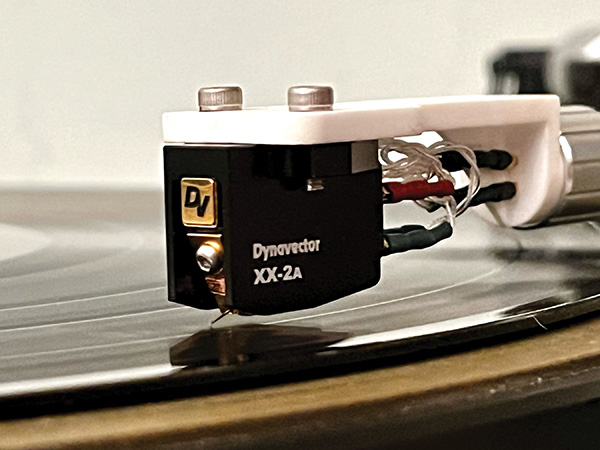
Spin Doctor #16: Sutherland Dos Locos Phono Preamp, Dynavector XX-2A Phono Cartridge

Ron Sutherland makes a strong case for being crowned the king of all phono preamps, though I expect he would blush at any such suggestion. In 1979, with degrees in physics and electronic engineering (where his final project involved designing and building a digital logic–controlled preamp), he teamed up with Gayle Sanders to found electrostatic speaker company MartinLogan. ("Martin" and "Logan" are Sanders' and Sutherland's middle names, respectively.) But after a few years, he found the increasingly corporate mindset at M-L a bit stifling, so he decided to go his own way. Ron wanted to build gear he thought was cool and fun while not being directed solely by its commercial potential. He joined up with his brother to start Sutherland Engineering, creating hi-fi equipment that piqued his own interest and hopefully that of a bunch of customers.


At first, Sutherland made a wide range of components, including preamps, power amps, and DACs, but gradually he focused more and more on phono preamps. Today that's the only thing he makes...

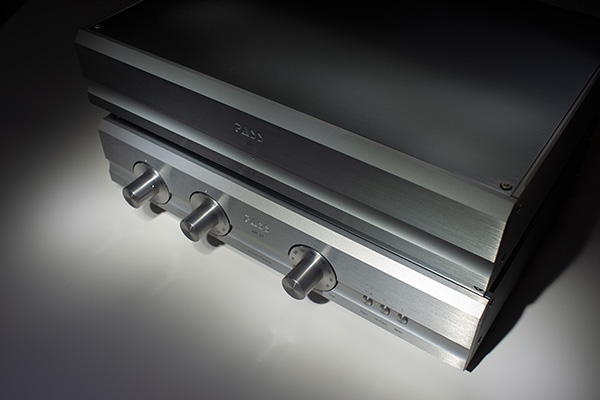
Pass Labs XP-27 phono preamplifier

One of the pleasures of reviewing—and also using—products from Pass Laboratories is an encounter with Nelson Pass's writing, which can usually be found in the owner's manual and is always competent, insightful, and sometimes funny. How often do you get real pleasure and insight from reading an owner's manual?


Pass Labs has a lot of owner's manuals online. Reading through one, I encountered the following passage; you'll find the same or similar language in other manuals and on the Pass Labs website. I present it not only because I admire it and agree with the philosophy it expresses but also because it captures the spirit of the product under review—the XP-27 phono preamplifier ($12,075 in silver)—at least as I've experienced it during an extended review period. Here it is, quoted at length with some slight adjustments to make it consistent with Stereophile's editorial style...

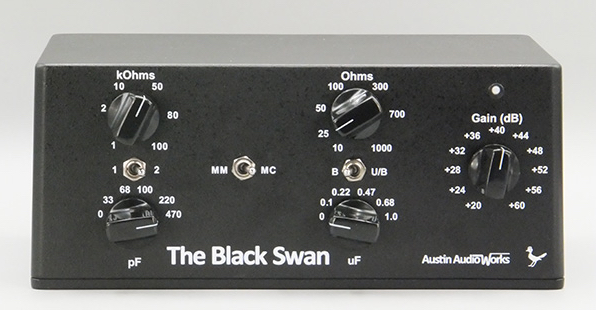
Spin Doctor #15: Austin AudioWorks Black Swan phono preamplifier

Forty years ago, as I was starting out on my audio journey, I railed against the flashy mainstream audio gear of the day. To me less was more, and I tried to convince my friends that my small, austere British-made audio rig, including what my friends jokingly called my Lynn Swanndek turntable (after the Steelers wide receiver), really did sound much better than their big silvery Japanese stacks loaded up with shiny knobs, switches, and meters. Audio was all about the sound after all, and I wasn't interested in some dazzling visual display that had nothing to do with what I was hearing. I gravitated toward gear that wasn't flashy or fancy looking, feeling that meant that the effort and expense to create it went where it counted most, to the parts that made it sound great.

Gramophone Dreams #85: Let the Right Brain In; the Hagerman Audio Labs Piccolo Zero head amp

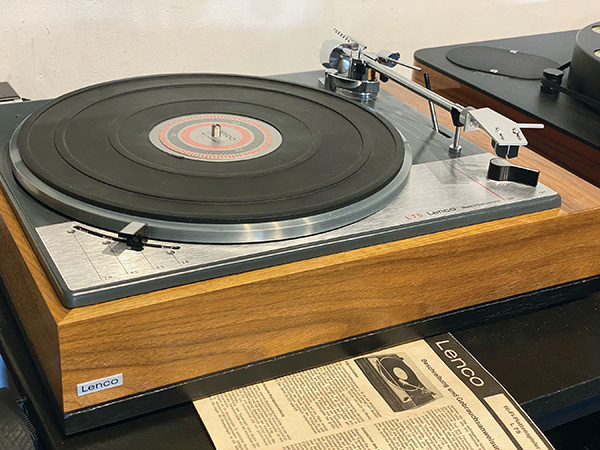
In the months since I told my Lenco story in Gramophone Dreams #79, two of my friends have bought L75s, and now they're enjoying them more than their shiny movie-star decks. One told me he has put more than $2000 into a Lenco L75 he bought online for $350. When I asked how his hot-rodded Lenco compared to his fancy belt drive, he replied, "You can feel it. The Lenco's motor pulls like a team of Clydesdales. It makes my belt drive feel like a pony pulling a child's cart."


When I asked him what he thought his rebuilt Clydesdale deck, with its new bearing, Jelco tonearm, and Grado Prestige Gold cartridge, was doing that his well-regarded belt drive was not, he replied, in a low, serious voice, "I think it gets more of the first part of a note."

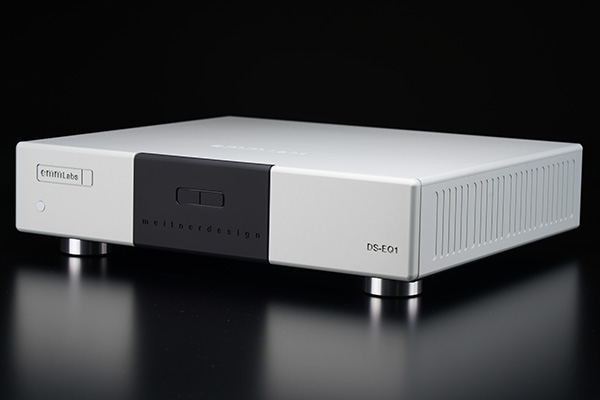
Spin Doctor #12: EMM Labs DS-EQ1, The Wand 14-4 Turntable, M•A Inner Sleeves

"I think both moving coil and moving magnet cartridges are terrible." That's what legendary Canadian audio designer Ed Meitner told me when I asked about the pioneering transimpedance current drive phono stage he created for his Meitner PA6 preamp some 40 years ago.


Meitner has been designing innovative hi-fi gear for the pro and consumer audio markets for more than 50 years, but for most of the last 30, he has been best known for his work with high-resolution digital audio and DSD recording. Despite this focus on digital—and despite that comment about the two leading phono cartridge technologies—deep in his heart, Ed still loves analog and has fond memories of the Kenwood optical cartridges from the 1970s, which I discussed in last month's Spin Doctor column. So when Ed read that a company in Japan called DS Audio was bringing back an improved version of the optical cartridge using modern materials, he contacted designer Tetsuaki Aoyagi to learn more.

Advertisement
Advertisement
Advertisement