

System Audio Legend 40.2 Silverback wireless streaming loudspeaker

The System Audio Legend 40.2 Silverback DS ($6414.84/pair including the WiSA Stereo Hub HT) is a floorstanding loudspeaker system of modest size, significant weight, and impressive solidity. Its sides are gently bowed . . . The appearance is cool and calm, with or without the grille.
T+A Solitaire S 530 loudspeaker
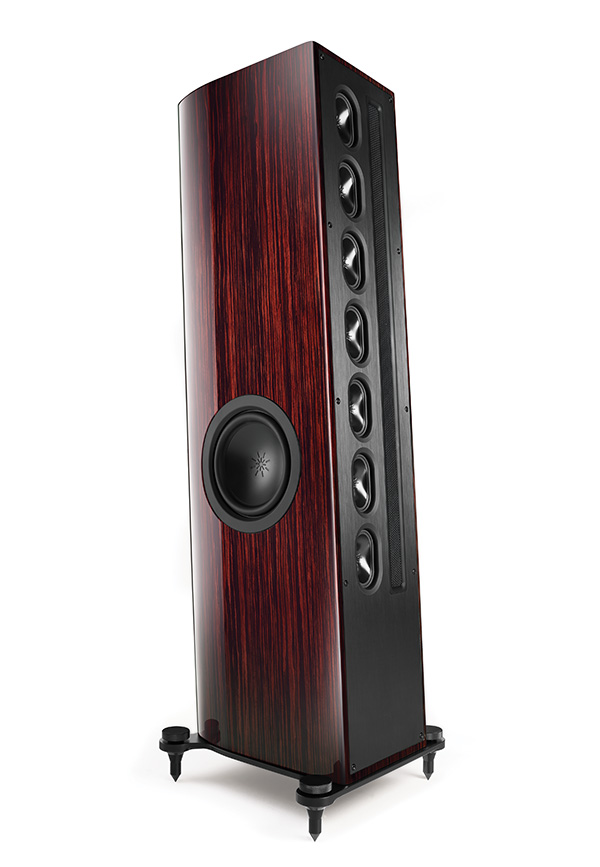
I jumped at the chance to review T+A's $47,900/pair Solitaire S 530 loudspeaker for a few reasons. First, because T+A is a well-established company with an approach I like and respect: They make hi-fi equipment of the highest quality but with prices that, though substantial, are in line with their technology and execution. Their stuff is very handsome with impressive industrial design, but T+A doesn't do audio jewelry. What's more, though T+A is aggressive in R&Dtheir "Company" webpage says, "Actually, we're scientists ..."but they are selective in the use of new technology. The third reason I was interested in reviewing a product from T+A is that their prices and technical level place them in a market segment I know well.
What I didn't know until recently is that T+A makes loudspeakers, and they're quite different from the loudspeakers other companies make. I only learned this when I started hearing about the S 530 and its larger sibling, the S 540, from friendsfriends whose ears I trust.
TAD Evolution One loudspeaker
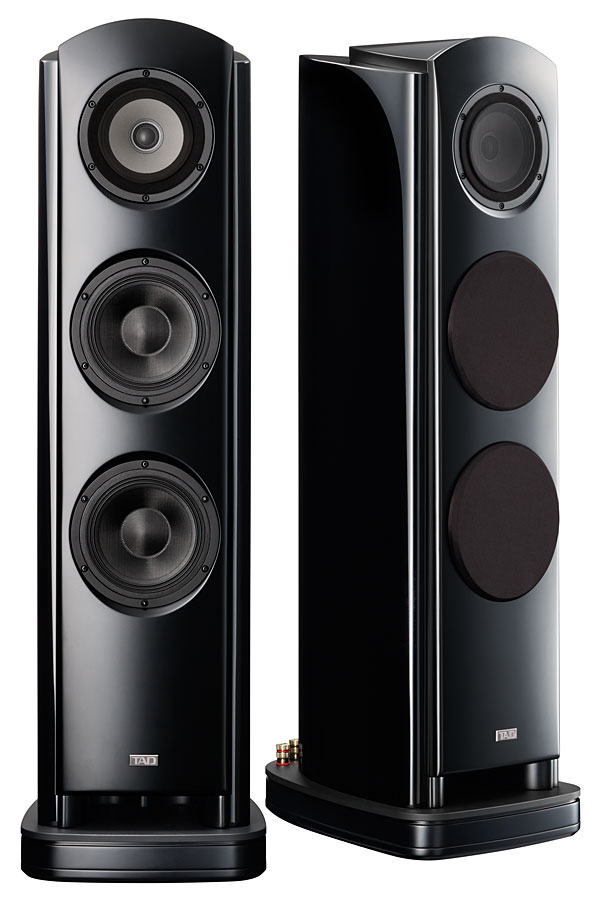
I had been anticipating getting to audition a pair of TAD loudspeakers in my system since the introduction of the original TAD Model-1, in 2003. It was designed by Andrew Jones, who had recently assumed the mantle of chief designer at Technical Audio Devices Laboratories (TAD), at that time a subsidiary of Pioneer. Although TAD dates back to the mid-1970s, its research and development efforts had been focused on the professional sound market, something that continues. Jones came from a long line of speaker innovators at KEF and was assigned the goal of developing state-of-the-art speakers for the domestic market.
TAD Grand Evolution One loudspeaker
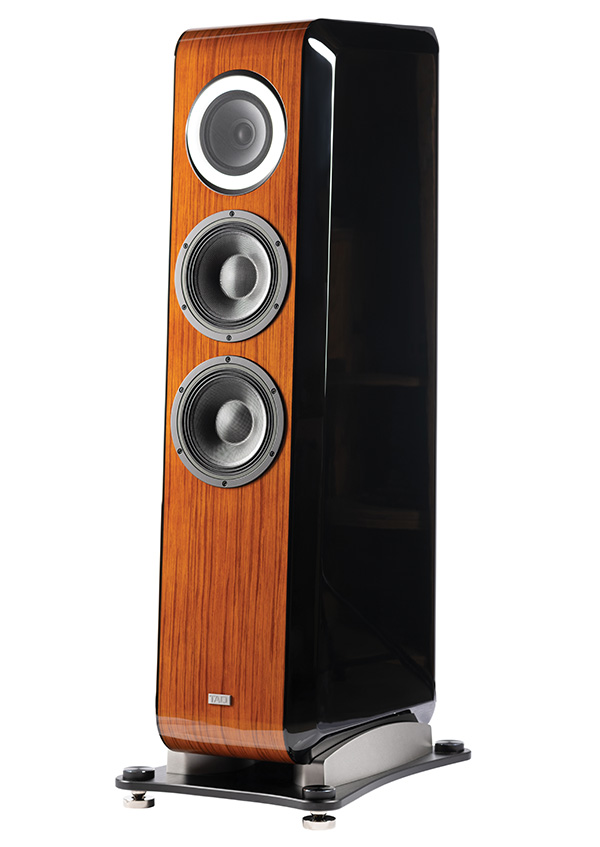
Review samples of some new high-end audio products do not grow on trees. They are more like dray horses trouping from one destination to another. After the US premiere of the Technical Audio Devices (TAD) Grand Evolution One (TAD-GE1), a floorstanding speaker from TAD's Evolution series, at the 2023 Capital Audio Fest, the review pair came to stay with me in Upstate New York for a couple of months before traveling on to the 2024 Florida Audio Expo for another public appearance. After that, they returned to John Atkinson for measuringthen off again on another journey.
The TAD Labs GE1 is a three-way, three-driver design. Up top is TAD's proprietary Coherent Source Transducer (CST), a 5½" coaxial tweeter/midrange driver. Two matched 7" woofers fill out the middle of the front panel.
Tannoy Churchill loudspeaker
Really Big Hi-Fi came to live with me for a couple of months this past spring in the form of a pair of Tannoy Churchill loudspeakers. They were trucked directly to San Rafael, California from Kitchener, Ontario, in flight cases so bulky they could double as coffins for NFL offensive linemen. Once ensconced chez moi, the Tannoy dreadnoughts provoked bewilderment, alarm, curiosity, envy, admiration, awe, and amazement in all who heard and saw them.
Tannoy Dimension TD12 loudspeaker
My friend Harvey">http://www.stereophile.com/showarchives.cgi?409">Harvey Rosenberg, who had more clever ideas in a day than most of us have in a lifetime, was a Tannoy loudspeaker enthusiast. I, on the other hand, had little experience with the brand before 1995, when Harvey invited me to come over and hear his then-new Tannoy Westminster Royals.
Tannoy Stirling Prestige Gold Reference loudspeaker
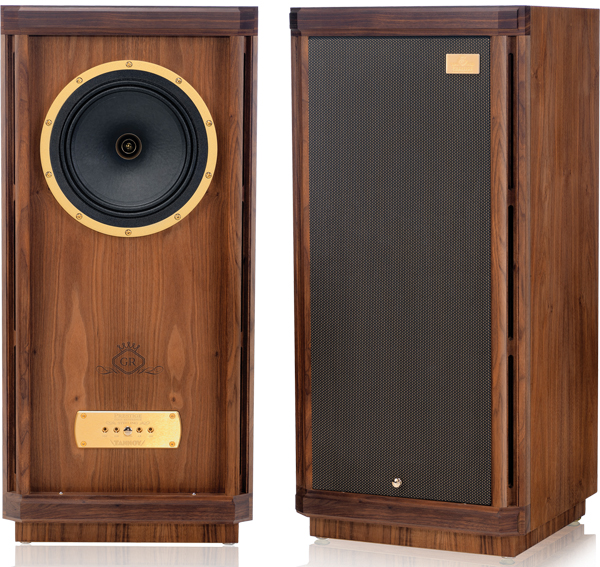
Founded in 1926 by Guy R. Fountain in London as the Tulsemere Manufacturing Company, Tannoya portmanteau (footnote 1) of "tantalum" and "alloy," after a tantalum-lead alloy used in rectifierstook on its current commercial identity in 1928. Through the war years and beyond, the company specialized in public-address (PA) systems. Indeed, today, "tannoy" is a widely recognized generic term for a PA system in the UK; there's an entry for "tannoy" in the Oxford English Dictionary.
TDL Studio 1 loudspeaker
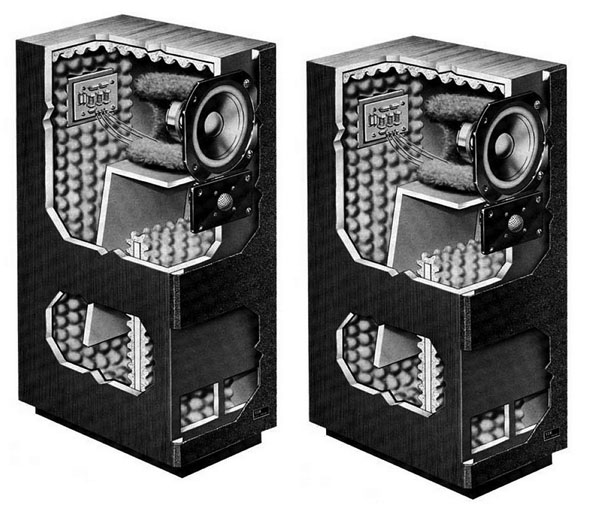
TDL is part of ELAC, one of the most successful OEM drive-unit manufacturers in the UK, particularly renowned for the 1" aluminum-dome tweeter that they make for Monitor Audio, Acoustic Energy, and British Fidelity. Perhaps of even more interest to readers of Stereophile is that the TDL system designer is one John Wright, who designed the classic series of IMF loudspeakers and who also was one of the leading equipment reviewers in the UK back in the 1960s. (For a while John was also a contributor to this magazine, his comprehensive reviews of tonearms appearing in Vol.2 Nos.10 & 12.)
Tekton Design Enzo XL loudspeaker
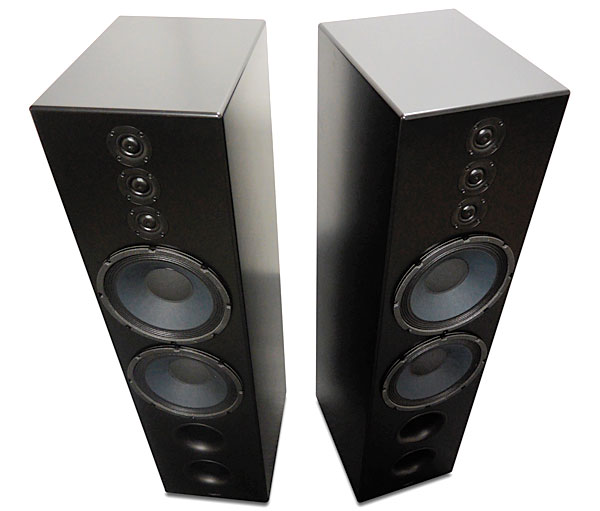
The CD era was well underway. Rudy Giuliani was about to sweep the crack hoes and squeegee humans off New York's garbage-filled streets. Disney was conquering Times Square. It seemed the perfect time for artists and audio weirdos like myself to go underground. Seeking economic sustainability, I hunkered down in my Seaport bunker and started a little business called Eddie Electric. I found a 23-year-old Japanese business partner named Ryochi who was dealing in big-E Levi's, bubble-back Rolexes, and antique Abarth cars. He was my Seaport, New YorkAkihabara, Tokyo connection.
Tekton Moab Be loudspeaker
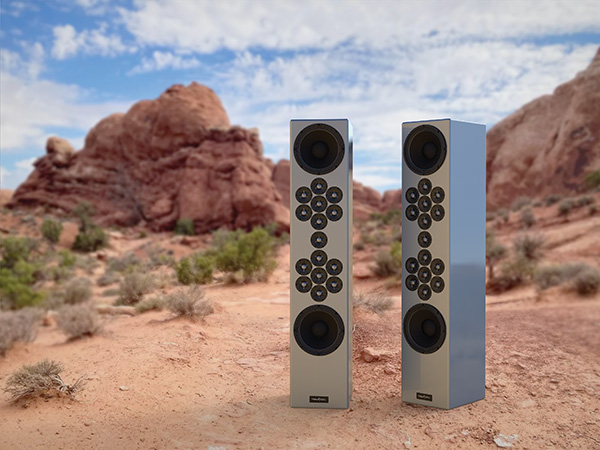
All photos by Rogier van Bakel. Compositing by David Evett.
For Christmas in 2020, a friend sent me a gift: a coffee mug decorated with a one-out-of-five-stars rating for the annus horribilis the world had just been through. The caption on the ceramic read, "VERY BAD WOULD NOT RECOMMEND."
True, the pandemic year and the lockdowns had been no fun, to put it mildly, but that doesn't mean there were no positives. Every day, rain or shine, my 10-year-old daughter and I played soccer on the field behind our house. Wepointlessly, I concedetrained our shepherd to walk backward on command. I savored having more time to read, watch movies, and take naps when the urge struck. Finally, I used the long stretch of weeks, then months, to rekindle my lifelong infatuation with music. Thousands of old and new recordings kept me balanced and tethered me to the rest of humanity during the dark days of social distancing. Rarely had music soothed and comforted me more than during the 10 months before the vaccines arrived.
My musical appreciationreverence at timeswas due in part to the new Tekton Moab floorstanders . . .