

Sound-Lab A-3 loudspeaker
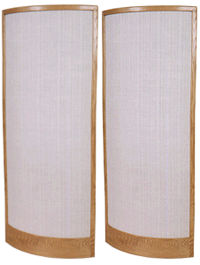
The Sound-Lab electrostatic loudspeakers are legendary. Many serious audiophiles have heard of them, and rumors of their existence abound in audio circles. But, like gnomes, UFOs, and poltergeists, Sound-Lab loudspeakers are sufficiently hard to find that it is sometimes difficult to prove to skeptics that they exist at all. Well, I can now report that they do. As proof of this contention, I can point to the two which are actually occupying solid, tangible space in my listening room at this very moment. I have even taken a photo of them, which will be published along with this report if they leave any sort of an image on the film emulsion. (Many such apparitions do not!)
Spendor A7 loudspeaker
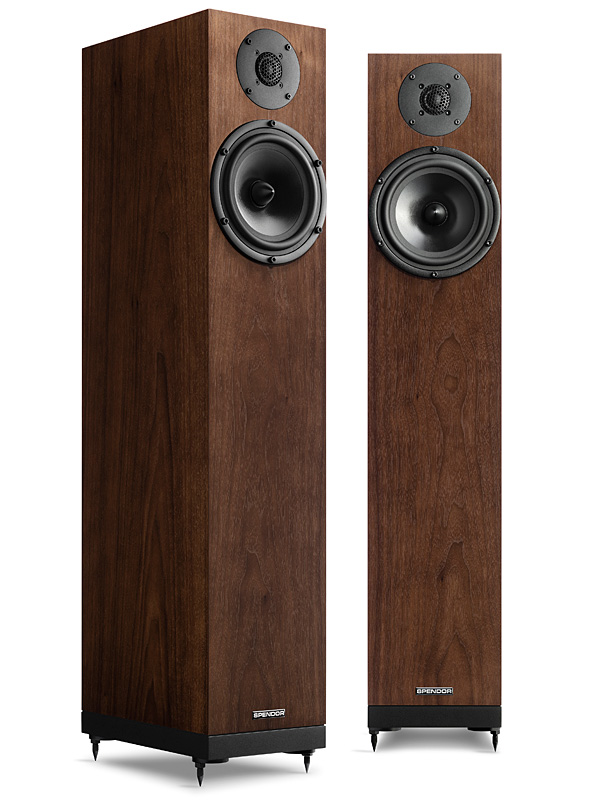
As Stereophile's lone New York City bachelor, I sometimes search for amore on Internet dating sites. One such encounter led me to Park Slope, Brooklyn, where I met a woman who, I soon learned, was at the top of the food chain of Manhattan's gold-encrusted arts community.
The single child of an upper-Westchester family, Jane So (not her real name) assists her employer in curating fine art for the city's premier galleries and museums. Her job also includes gifting her employer's millions to charitable organizations and the like. But in her off hours, when the boss isn't watching, Jane enjoys a bit of kink. As she told me over dinner, "Ken, I'm not looking for anything serious. I have several men who visit me during the week."
It dawned on me: I had stumbled into New York's subterranean sex world.
Spendor D7 loudspeaker
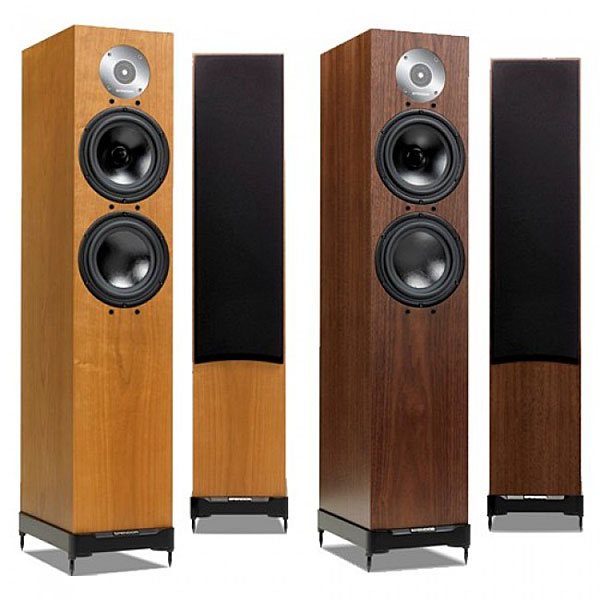
Hi-fi firms have begun in garages. The English Spendor company was started in a bathtub. Or was it a kitchen sink?
By days in the late 1960s and early 1970s, Spencer Hughes worked as part of the BBC's loudspeaker research team. Among other accomplishments, he helped develop the 5" midrange/woofer for the fabled LS3/5A loudspeaker.
Spendor S5e loudspeaker
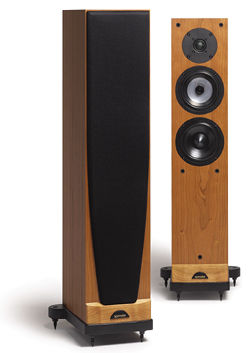
I'm never more conservative than when the subject turns to home audio. And at the end of the day, I want little more than to preserve the hobby's finest institutions: Alnico magnets. Parchment cones. Mono. Sonata form. Ballads that actually tell stories. Give me tubes. Give me vinyl. Give me thin-walled hardwood cabinets, obsolete tweeters, and handmade polypropylene woofers. Give me the Spendor BC1.
Spica Angelus loudspeaker
I am puzzled. No, really. I know you find it hard to believe that we sacerdotes of the golden-eared persuasion could ever be perplexed, but I have been pondering the imponderables of ports. Ever since the classic work of Richard Small and Neville Thiele in the early '70s showed how the low-frequency response of any box loudspeaker can be modeled as an electrical high-pass filter of some kind, with the relevant equations and data made available to all, there would seem to be very little reason why all loudspeakers with the same extension should not sound alike (or at least very similar) below 100Hz. Yet after reviewing 20 dynamic loudspeakers (and using 24) in the same room over the last seven months, I am led to the conclusion that speakers vary as much in the quality of their mid-to-upper bass as they do in any other region. A few are dry, more are exaggerated in this region; some are detailed and "fast," most are blurred, with the upper bass "slow" (by which I mean that the weight of bass tone seems to lag behind the leading edges of the sound).
Stenheim Alumine Three loudspeaker
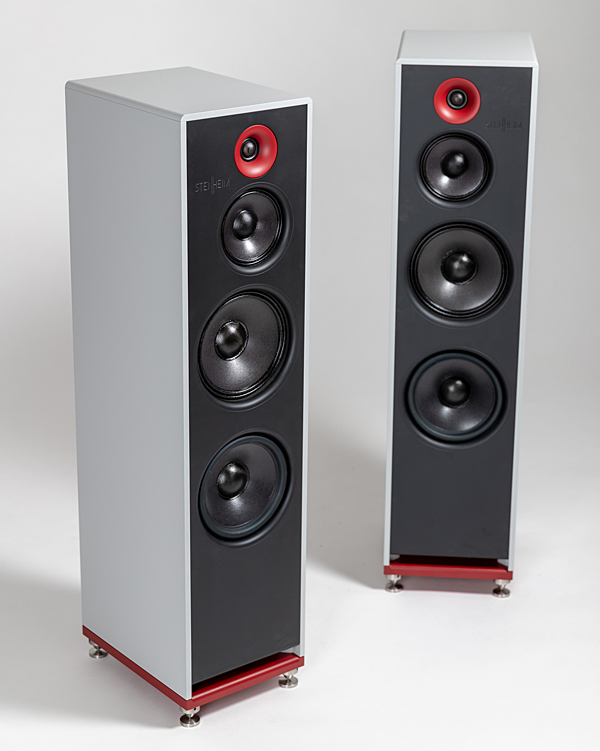
The made-in-Switzerland Stenheim Alumine Three floorstanding loudspeaker sells for $32,900/pair. It is not only the most expensive component I've reviewed for Stereophile; it costs more than 10 times (!) as much as my $3000/pair reference Falcon Acoustics Gold Badge LS3/5a speaker. So naturally I wondered: Will it sound 10 times better? And if it does sound 10 times better, what might the nature of the improvements be?
Stenheim Alumine Two.Five loudspeaker
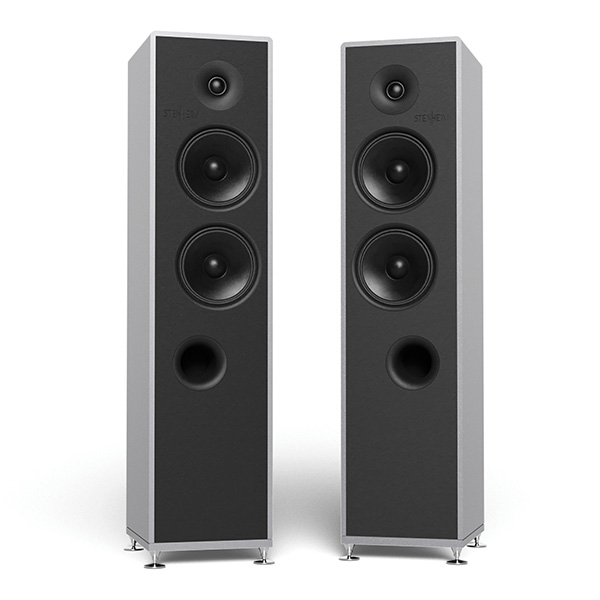
Stereophile has favorably reviewed three loudspeakers from Swiss manufacturer Stenheim. Art Dudley reviewed the Alumine standmount in April 2012 and the Alumine Five floorstander in March 2018. More recently, Herb Reichert reviewed Stenheim's three-and-a-half-way Alumine Three tower in October 2021. My assignment for this month's issue was to review the company's Alumine Two. Five floorstander, which, at $23,500/pair, fits neatly between the Alumine Two ($13,500/pair) and Three ($36,500/pair).
SVS Ultra Evolution Pinnacle loudspeaker
How many times have you been told by parents and teachers that everything successful must be built on a strong foundation? It's true in music, where the low frequencies are the foundation the music rests on, like the basement framing a building. If you get that part wrong, where are you? Sitting in the mud, that's where. With no chance to address beauty in the midrange, texture and air above, or other tasty things.
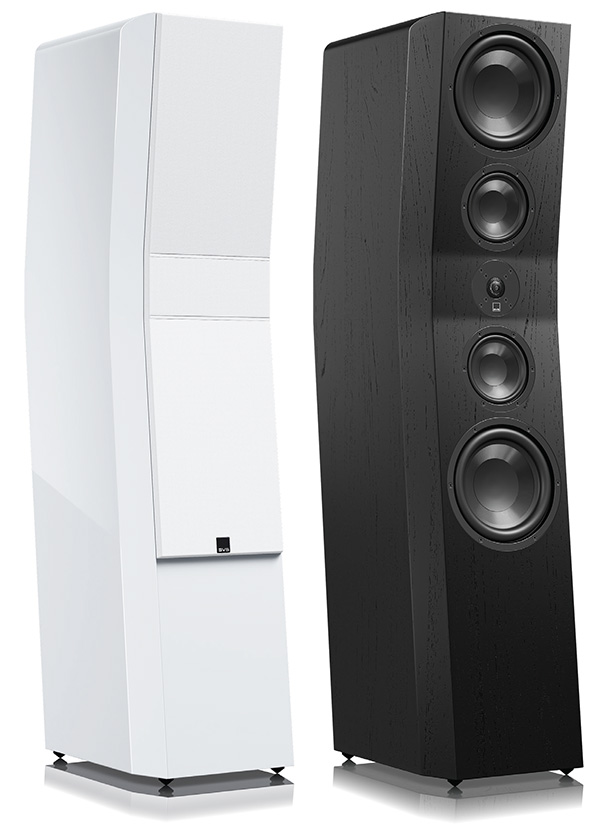
Youngstown, Ohiobased loudspeaker manufacturer SVS made foundations its specialty, starting at the company's very beginning in 1998, when it started by designing subwoofers and only subwoofers. The company didn't start offering regular loudspeakers, with midranges and high frequencies, until 2012. Over time, SVS's high-value speakers got more ambitious until earlier this year, at AXPONA, it introduced its most ambitious loudspeaker yet, the full-range, three-way Ultra Evolution Pinnacle ($4999.98/pair).
Swans Speaker Systems Baton
 As a privileged reviewer-type person, I was sent the souped-up, all-rosewood, bi-wirable version that sells for $2905/pair. They're quite handsome and very solidly built, weighing in at a respectable 50 lbs each. At $2275$2905/pair, the Baton is Swans' most affordable speaker, and reportedly employs many of the technical refinements of their larger, more costly models.
The Baton uses the tried-and-true two-way dynamic design, with a 7" coated-paper woofer and a 1" fabric-dome tweeter. The tweeter comes with a little Marigo dot stuck to its center to shape its response. It's not a physically easy task for a woofer to reproduce (well) all the frequencies from about 60Hz up to about 2 or 3kHz. One that succeeds is a nice find, though, because the sound has a nice coherence to it when most of the music is coming from the same driver. But don't take my word for itjust look how many zillions of two-way speakers there are out there.
As a privileged reviewer-type person, I was sent the souped-up, all-rosewood, bi-wirable version that sells for $2905/pair. They're quite handsome and very solidly built, weighing in at a respectable 50 lbs each. At $2275$2905/pair, the Baton is Swans' most affordable speaker, and reportedly employs many of the technical refinements of their larger, more costly models.
The Baton uses the tried-and-true two-way dynamic design, with a 7" coated-paper woofer and a 1" fabric-dome tweeter. The tweeter comes with a little Marigo dot stuck to its center to shape its response. It's not a physically easy task for a woofer to reproduce (well) all the frequencies from about 60Hz up to about 2 or 3kHz. One that succeeds is a nice find, though, because the sound has a nice coherence to it when most of the music is coming from the same driver. But don't take my word for itjust look how many zillions of two-way speakers there are out there.System Audio 1070 loudspeaker
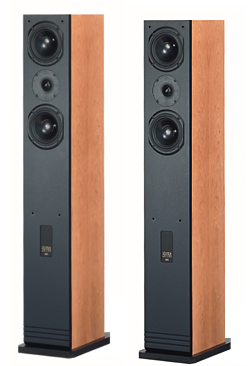 Denmark has probably contributed more to loudspeaker technology than any other country in the world. Vifa, Dynaudio, ScanSpeak, and Peerless driversused in a huge variety of speakersare all Danish. Products from companies such as JBL, Spendor, Linn, B&W, Celestion, KEF, Audio Physic, ProAc, and others are partially or wholly made in the little Scandinavian nation.
System Audio originated in 1984, when guitarist and electronics technician Ole Witthoft grew dissatisfied with the lack of realism he heard from most home audio systems and figured he could do better. He built some speakers for himself and for a few friends, with encouraging results. It's a familiar story: we all know competent hobbyist speaker builders. A few of them gain a bit of local notoriety, but most never venture further than making a few units for friends and relatives.
But Witthoft's reputation grew rapidly, and so did his business. Fourteen years later, his little startup has become a serious player in the loudspeaker market, with annual production in excess of 18,000 units.
Denmark has probably contributed more to loudspeaker technology than any other country in the world. Vifa, Dynaudio, ScanSpeak, and Peerless driversused in a huge variety of speakersare all Danish. Products from companies such as JBL, Spendor, Linn, B&W, Celestion, KEF, Audio Physic, ProAc, and others are partially or wholly made in the little Scandinavian nation.
System Audio originated in 1984, when guitarist and electronics technician Ole Witthoft grew dissatisfied with the lack of realism he heard from most home audio systems and figured he could do better. He built some speakers for himself and for a few friends, with encouraging results. It's a familiar story: we all know competent hobbyist speaker builders. A few of them gain a bit of local notoriety, but most never venture further than making a few units for friends and relatives.
But Witthoft's reputation grew rapidly, and so did his business. Fourteen years later, his little startup has become a serious player in the loudspeaker market, with annual production in excess of 18,000 units.