

Sonus Faber Lumina III loudspeaker
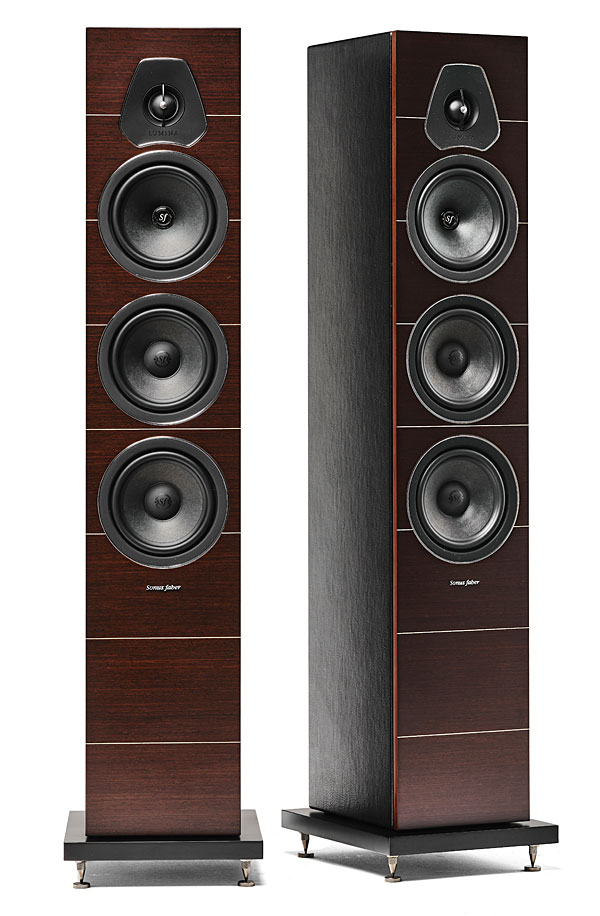
Time for some towers. In recent months, a succession of standmount speakers has passed through my listening room: GoldenEar BRXes, Bowers & Wilkins 705 Signatures, Marten Oscar Duos, original KEF LS50s, and the new LS50 Metas. All these loudspeakers sounded excellent, though different from one another. I felt that a floorstanding loudspeaker would make for an interesting change.
Sonus faber Sonetto V G2 loudspeaker
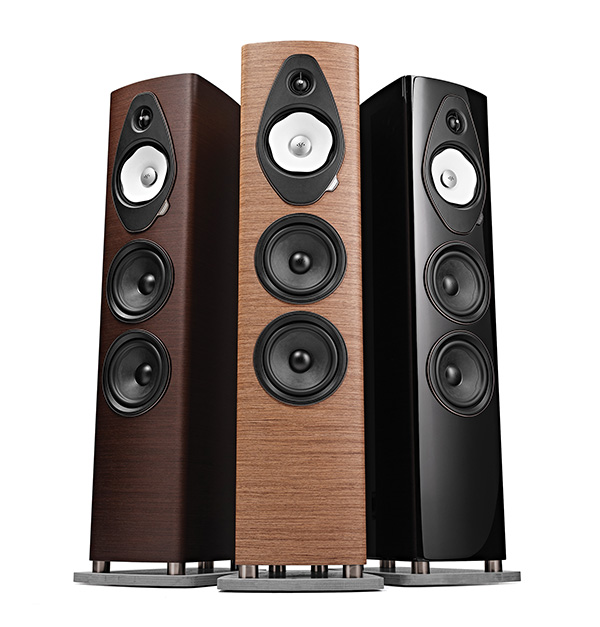
Here's a hard truth: A written review of a full-sized speakerany speaker, reallyis, at best, semi-useful. We all listen differently, we have different musical tastes, our system electronics are different, and our listening rooms vary a lot. You will gain a general picture of a speaker's capabilities and foibles from John Atkinson's measurements, and I can tell you how the speakers sound to me, in my room. But that's it. You need to hear them for yourself before making a buying decision. The best I can do is tell you how my music brain felt when the speakers were in my house and making music.
But hey, that's better than nothing. If you're in the market for a pair of modestly sized, reasonably priced floorstanding loudspeakers, I encourage you to read on as I describe the lively musical times I spent with the Sonus faber Sonetto V G2s ($6499/pair).
Sonus Faber Stradivari Homage loudspeaker
Yamaha once made a loudspeaker shaped like an ear. I felt sorry for the guy (especially if he was an audiophile) who had to write the ad copy explaining why a speaker shaped like an ear would sound better than one shaped like a shoebox or a wedge of cheese. An ear-shaped loudspeaker makes about as much sense as an eyeball-shaped television. But what about a loudspeaker that is designed like a musical instrument?
Sonus Faber Venere 2.5 loudspeaker
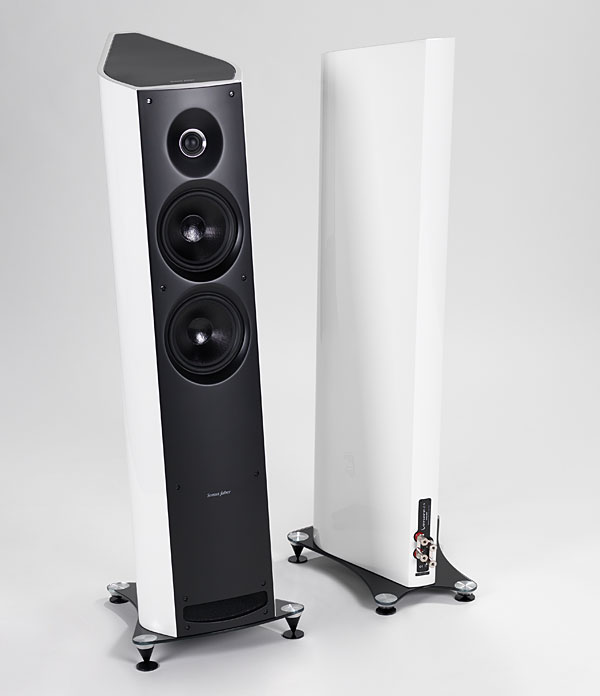
Sonus Faber is an iconic Italian high-end company whose loudspeakers have always evinced innovative technical design, superb construction, spectacular appearance, and great sound. I was intrigued with the design and performance of their stand-mounted Extrema (reviewed by Martin Colloms in the June 1992 Stereophile, Vol.15 No.6), which combined a proprietary soft-dome tweeter and a mineral-loaded polypropylene-cone woofer with an electrodynamically damped but passive KEF B139 driver that occupied the entire rear panel.
Sony ES SS-M9 loudspeaker
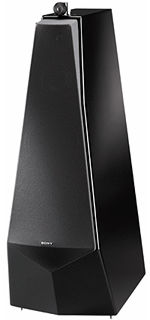
Conventional wisdom has it that large Japanese corporations are insular. But when it comes to audio, Sony bucks the conventional wisdom as much as it does in pretty much everything it does. In Europe, the company has long had an excellent reputation for producing loudspeakers using local design talent, so I wasn't surprised to see Sony launching a line of American-designed and -made speakers at Stereophile's 1994 High-End Hi-Fi Show in Miami. Stereophile writer Barry Willis came away from that Show raving about the Sonys: "What we heard was gorgeous, absolutely beautiful: rich, warm, and deep, with a seductive midrange, a shimmering, delicate, grain-free top-end, and a soundstage to die for," he wrote about the sound of the three-way SS-M7 in Miami (footnote 1), 1 concluding that "WATT/Puppy performance is now available at Vandersteen prices in an American-made loudspeaker sporting a Japanese badge."
Sony ES SS-M9ED loudspeaker
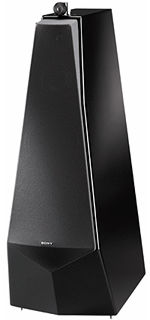
The occasion was the 1999 Consumer Electronics Show, and I had sought out the Sony suite at Bally's—the word in the Las Vegas bars where audio journalists hung out was that Sony was demonstrating the production version of their SCD-1">http://www.stereophile.com//digitalsourcereviews/180/">SCD-1 Super Audio CD player. I was glad I'd made the trek along the Strip: As I reported in the May 1999 Stereophile, the sound of a DMP recording—of unaccompanied choral music recorded and mixed in DSD by Tom Jung—was breathtaking, I felt, with an exquisite sense of space. It was definitely the best sound at the CES.
Sony SS-AR1 loudspeaker
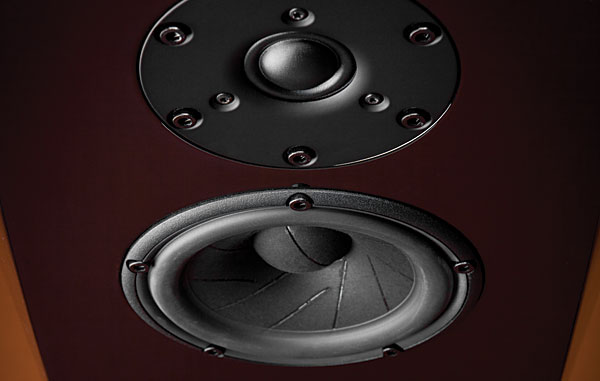
Every few years, it seems, Sony offers a statement product. Sometimes they do it to define a new product categorythe SCD-1 introduced to the world the SACD/CD player. Sometimes they do it because they can, as with the outstanding ES SS-M9 and ES SS-M9ED loudspeakers, enthusiastically reviewed by John Atkinson in Stereophile in September 1996 and August 2001, respectively. So when I heard that Sony would introduce a special new speaker at a "by invitation only" event at the 2011 Consumer Electronics Show last January, my interest was piqued. I've always kicked myself for not buying a pair of ES SS-M9s ($3500) when I could have. The ES SS-M9EDs were even better, said JAand, at $16,000/pair, a lot more expensive. Now, a decade later, Sony has decided to make another "statement."
Sony SS-AR2 loudspeaker
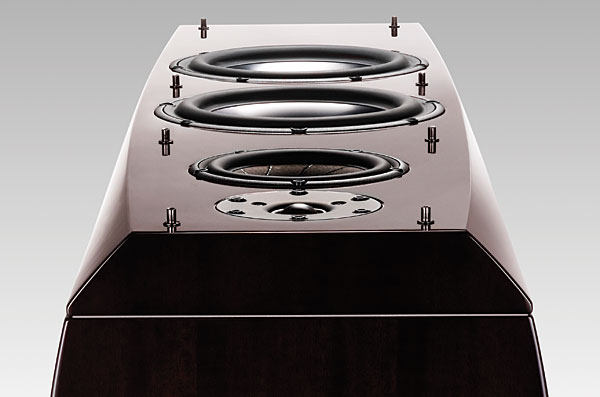
A highlight for me of Stereophile's 2011 equipment reviews was Kalman Rubinson's report on Sony's SS-AR1 loudspeaker in July. I had been impressed by this unassuming-looking floorstander at the 2009 Rocky Mountain Audio Fest, when, courtesy Ray Kimber, I had used a pair for my "Loudness Wars" demonstrationand was equally impressed when I used another pair for a dem of my recordings at Massachusetts retailer Goodwin's High End, in summer 2011. The SS-AR1 costs $27,000/pair and combines a full frequency range with an uncolored, detailed midrange, sweet-balanced highs, and excellent dynamics. "The Sony SS-AR1 is an impressive loudspeaker," summed up Dr. Kal; "it brings the analytical capabilities of studio monitoring to the listening room." So when I learned that Sony had introduced a smaller, less-expensive version, the SS-AR2 ($20,000/pair), it took me less than the proverbial New York minute to request a pair for review.
Sony SS-NA2ES loudspeaker
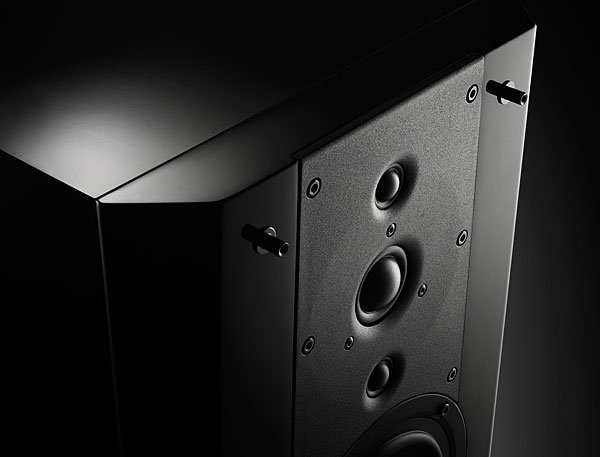
The door to a professional reviewer's listening room is one that revolves: As one product leaves, another enters. After a while, it becomes difficult to remember exactly when you auditioned any specific component. But some products stick in your memoryyou fondly remember the time you spent with them, and wish they hadn't departed quite so quickly. With loudspeakers, I recall a few such: Revel's Ultima Salon2 ($22,000, footnote 1), MBL's 111B ($17,000), Dynaudio's Confidence C4 ($16,000), Sonus Faber's Amati Futura ($36,000), Vivid's B1 ($14,990), TAD's Compact Reference CR1 ($40,600 with stands), and even the much less expensive Harbeth P3ESR ($2195$2395) and KEF LS50 ($1500). Among the most recently reviewed of those fondly remembered speakers is Sony's SS-AR2ES ($20,000).
Sound-Lab A-1 electrostatic loudspeaker
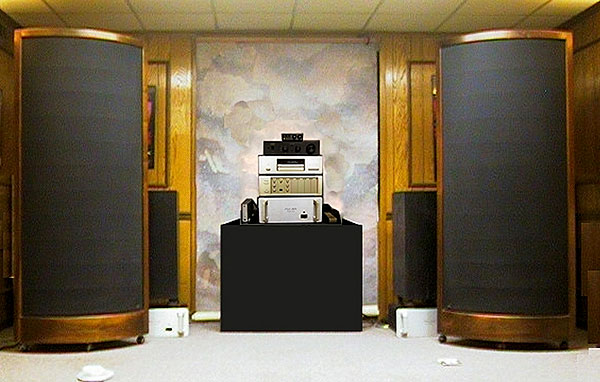
Designer Dr. Roger West got his first taste of electrostatic transducers many years ago during a stint with Janszen (remember the Janszen tweeter?). To realize the potential of the full-range electrostatic loudspeaker (ESL), he and Dr. Dale Ream formed a new company dedicated to ESL research and development. West describes this company, Sound-Lab Corp., as "the electrostatic speaker specialists."