 MQA via JPS Labs in binaural
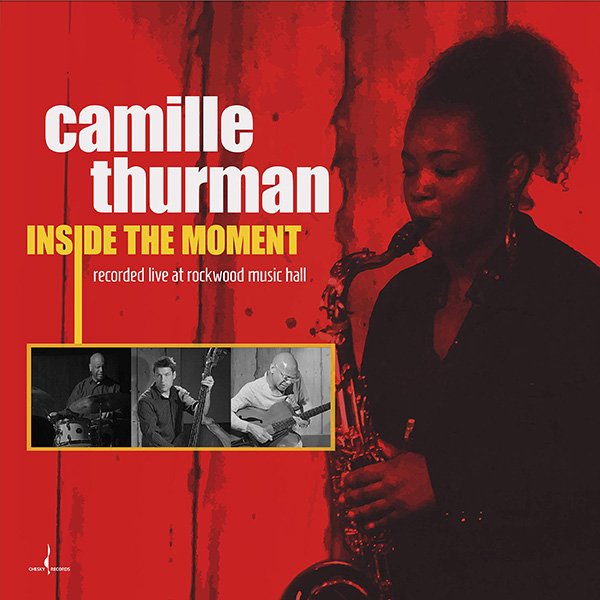
I only own one MQA recording, but it's a doozy. It's on a CD, and surely one of the most real-sounding live recordings I've encountered. Inside the Moment is a luxuriously packaged Chesky Records production (Chesky Records CD JD397) of Camille Thurman singing and playing saxophone, recorded live at New York's Rockwood Music Hall with a B&K binaural head feeding an MSB A/D converter, engineered and mastered via the sharp, wise ears of Nicholas Prout. Before I acquired this spectacular CD, I'd only experienced MQA via streaming on Tidal (footnote 1) through either a Mytek or a dCS DAC. But this crazy-cool binaural recording sounded crisper, better sorted, and more colorful than Tidal's regular 16/44.1 MQA fare. Besides extreme transparency and sharp focus, this recording is an orgy of reverberant three-dimensionality.
 Listening via Ethernet
I've been American dreamin', oh-whoa-oh
I'm American dreamin', oh-whoa-oh
I'm American dreamin', oh-whoa
But I never seem to get no rest The first voice I heard through the Ethernet-connected UD-701N was that of my latest singer-songwriter crush, Sierra Ferrell, singing "American Dreaming," composed by Ferrell and Melody Walker, off of Ferrell's good-sounding 2024 album Trail of Flowers (24/96 FLAC, Rounder/Qobuz). The sound was clear—not compressed or opaque—plus wide, deep, and pacey. Within seconds, the sincerity of Ferrell's voice was choking me up. By the second chorus, I was streaming tears—exactly what it didn't do when I played this Qobuz album via USB from my Mac mini. Played back from the computer, it had blah and meh issues. The sound was not nearly as clear and engaging as it was via the network directly into the UD-701N, served up by TEAC's HR Streamer app. No matter what DAC I am using in my floor system, sourcing Qobuz from my not-dedicated computer, driving 5m of USB wire, the feel of the sound reminds me of driving a dirty car on a sunny Sunday. My religion forbids such acts.
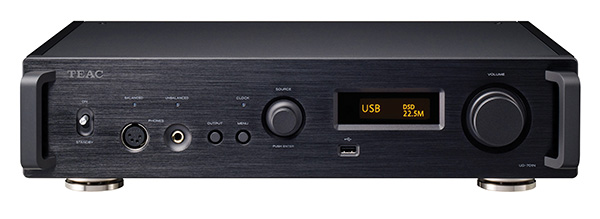
Normally I'm antifeature, but the 701N's choice of 1-bit or multibit processing drew me in because it managed to present both algorithms with their best traits front and center. The 701N let me switch quickly to 1-bit when a piano recording needed firming up, then back to multibit when I needed more color and atmosphere on a vocal recital or movie soundtrack. What a luxury! Listening to DSD
I possess only a handful of pure—untouched by PCM—DSD recordings, and they are all produced and recorded (in DSD) by Todd Garfinkle on his MA Recordings label. I smiled when the 701N played the "Nostalgias" track off Garfinkle's Otra Noche (MA Recordings M092) from a 5.645MHz DSD file on a USB flash drive. What I heard sounded pure, crystalline, and appealing—like DSD usually does. But the transparency was less liquid than I am used to. It did not have that mesmerizing celestial light that native DSD has when converted by my HoloAudio May DAC (KTE Level 3), nor the laser-mapped detail I get playing it through the dCS Lina DAC (with Master Clock). The UD-701N presented DSD recordings in a bold, straightforward manner that emphasized the description of forms over tone, lighting, or mood. The TEAC is less vibrant and atmospheric than the May and less microfocused than the Lina. But it still let DSD sound better than PCM.
Playing DSD files, the UD-701N offers three choices of finite impulse response filter (FIR): OFF, FIR 1, and FIR 2. These analog filters are intended to remove the high-frequency noise produced by the delta-sigma modulator (footnote 2). When I compared these three filtering modes, I initially preferred OFF, but I easily recognized and enjoyed the ringing-reduction accomplishments of FIR 1. FIR 1 winked at me alluringly and I hung with it—for a while. Initially, FIR 2 seemed sharper than FIR 1, but very quickly it started sounding suppressed. After a day, FIR 2 started to bug me, so I switched it off. NOS vs upconversion
What I like most about TEAC's UD-701N DAC is how recordings came out feeling not quite like RAW camera captures (as they do with my NOS R-2R DACs), but less Photoshopped than generic delta-sigma conversion. Tones and contrasts did not feel programmatically enhanced. I found this surprising because as I experimented with TEAC's Upconvert feature, my brain kept mumbling: if this DAC is delta-sigma, as the website says it is, then some type of upsampling must have already happened at the initial stages of its conversion—right?
HiFiMan's not-free ($5499) HE-R10P is a closed-back, wood-cupped planar magnetic headphone that lets your ears see back to the "view" from the microphone grilles. The R10P has laser-level resolve and moves tunes forward with a spunky, plucky verisimilitude that I find irresistible. Its 30 ohm impedance and 100dB/mW sensitivity make it easy to drive, but be warned: Its low distortion, clarity, and unbound dynamics will make your floor speakers sound fuzzy, confused, and repressed. Powered by the UD-701N's headphone amp, the R10Ps soared, dived, and sang with no confusion, with relaxed, unbridled dynamics. Speed and beauty. The tones and tempos of Itzhak Perlman playing Paganini's 24 Caprices (EMI CD 7243 5 67257 2) were so quick, so tactile, and so present that delirium was achieved.
 Conclusion
TEAC's UD-701N rendered my analog and digital content with a powerful, unprocessed, extrasolid this-is-it feel that made extended listening easy and something to look forward to. The 701N's engineering thoroughness was always evident, and its sound quality and user-friendliness were up there with the best I know at any price.
Footnote 1: Tidal stopped streaming in MQA during the first half of 2024. A new MQA-based streaming service is planned, a collaboration of Chesky and Lenbrook, parent company of Bluesound, NAD, and PSB. Footnote 2: Surprisingly, to me at least, the only low-pass filter employed by the UD-701N is this one, intended to filter noise above 75kHz from the delta-sigma modulator, even when multibit is chosen.—Jim Austin