Ambrose Akinmusire/Mary Halvorson: Slo-Mo Neon Luminate Hoverings
Akinmusire, trumpet, electronics; Halvorson, guitar, electronics
Nonesuch 075597892819 (CD). 2026. Akinmusire, Halvorson, prods.; Chris Allen, eng.
Performance ****½
Sonics ***** To say that these two musicians are at the top of the current jazz world is an understatement. In the important jazz critics' polls, Ambrose Akinmusire is consistently No.1 trumpet and Mary Halvorson is No.1 guitar. Their first album together is a singular, challenging listening experience. The first track, "Prelude in the Ash," is riveting from the first trumpet notes, which are announced like a summons. They are sometimes breathy but sometimes cut the air like a knife. Often they slide off center into microtonal manifestations of dissonance. The notes formulate asymmetrical ideas that you never see coming because no one hears or thinks like Ambrose Akinmusire. Halvorson is perhaps the voice of reason. On this first track she sets the frame for Akinmusire with a rich, resonant figure, repeated like a mantra. Each of them contributed four new compositions. They are real songs, with melodies that start like elemental haunting calls then intensify and expand through interaction. With these two fearless adventurers maneuvering in the open space of a duo, this album sometimes feels like arcane intellectual exercises. There is an austerity to its beauty. Akinmusire uses an effects pedal for the first time on record. On "Tangled Pretty," electronics add a dimension of depth, murmuring and hovering in the distance. Akinmusire flows into a rapt simple theme and then into enigmatic variations. Halvorson's countermelody provides a center.
Akinmusire's concluding title track is the longest piece and also the densest because of the heavier application of electronics. All the supplementary input creates an orchestral version of the kind of distilled, hypnotic, lingering motif that recurs throughout the album. This music has a strange majesty.—Thomas Conrad
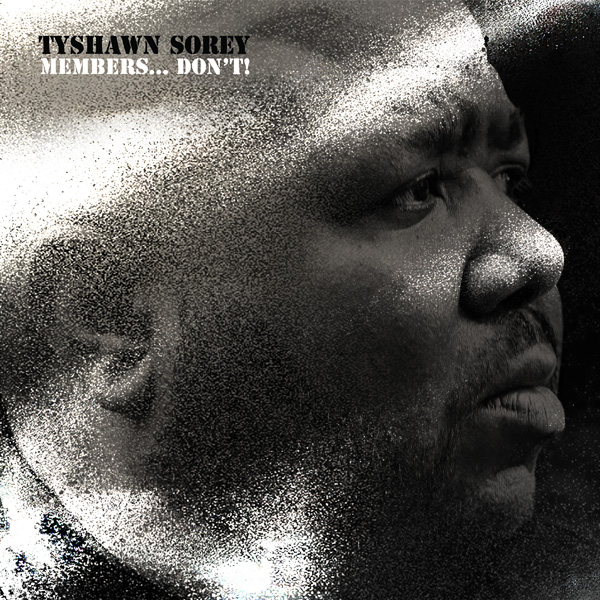 Tyshawn Sorey: Members... Don't!
Sorey, drums, arrangements; Adam O'Farrill, trumpet, electronics; Mark Shim, tenor saxophone; Lex Korten, piano; Tyrone Allen II, bass; Fay Victor, vocals
Pi 112 (2 CDs). 2026. Sorey, prod.; Gift Pratoomvieng, eng.
Performance *****
Sonics **** Tyshawn Sorey, drummer/composer/arranger/bandleader/auteur, may be the most decorated jazz musician of his generation. Among his awards are a Pulitzer Prize and a MacArthur Fellowship. That he is an artist of relentless curiosity is revealed by his latest project.
In 1968, a watershed year in American history, the great drummer Max Roach made a record called Members, Don't Git Weary. It had Charles Tolliver on trumpet, Gary Bartz on alto saxophone, Stanley Cowell on piano, and Jymie Merritt on bass. Today it is regarded as a classic of activism and protest in jazz. Sorey's Members... Don't! is a "reinterpretation" of Roach's work.
It is like no tribute album that you have ever heard. It is raging and monstrous. Sorey takes Roach's six tracks and explodes them. He blows all six into the 21st century, with its even more extraordinary political environment. He also expands them, tripling the total playing time. In the wild, seething, sprawling solos of trumpeter Adam O'Farrill, tenor saxophonist Mark Shim, and pianist Lex Korten, and the furious onslaughts of Sorey's drums, the music often feels frenzied. O'Farrill especially is astonishing, shattering melodies, spattering notes like Jackson Pollock flung paint. But the turbulence of Members... Don't! is not the same as chaos. The album is about our uniquely fraught current political milieu. There is coherence in the whole. Some tracks even fall into the form of head/solos/head. It is just that the head is freely reimagined and the solos are in extremis.
The last track, with vocalist Fay Victor, is a 15-minute out-of-body catharsis. This album was recorded live at the Jazz Gallery in New York. It must have been a transformative evening for those who were there.—Thomas Conrad
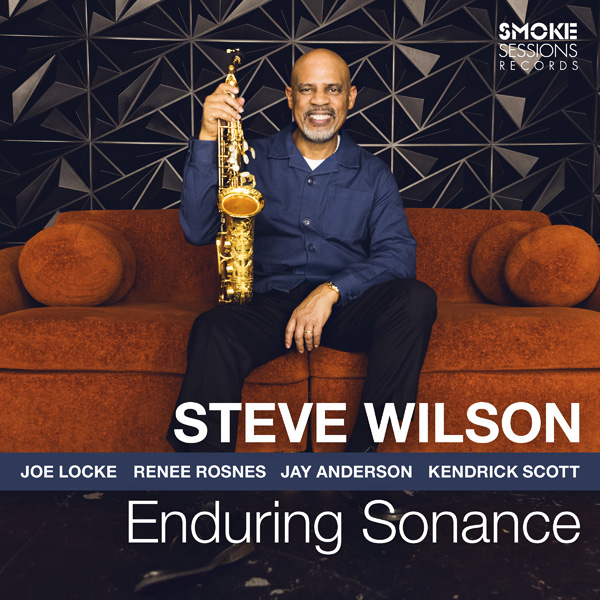 Steve Wilson: Enduring Sonance
Wilson, alto and soprano saxophones, flute; five others
Smoke Sessions SSR-2601 (CD). 2026. Paul Stache, prod.; Chris Allen, eng.
Performance ****
Sonics ****½ For high-quality jazz on the leading edge of the modern mainstream, few sources are as reliable as the Smoke Sessions label. Its roster and production values are solid. Enduring Sonance contains a band of A-list players, vivid sound by Chris Allen, and useful liner notes by Willard Jenkins. In our current era, jazz musicians are under pressure to write their own material. Steve Wilson bucks this trend. His concept here is to make an album out of songs he has always loved but that, as he puts it, "have not been overdone." The result is rich in pleasant surprises. "Pieces of Dreams" is not one of Michel Legrand's best-known songs, but the bittersweet melody has his magic touch. No one renders longing like Legrand. Wilson, on alto saxophone, is free with that melody because you can't always be careful when you are pouring out your heart. Billy Childs's "Quiet Girl" has something you don't often encounter in erudite jazz compositions: an irresistible hook.
Wilson's collaborators here include Joe Locke, whose concise contributions on vibraphone deepen the emotional resonance of every song, and Renee Rosnes, whose piano interludes are lovely. Rosnes's arrangements make five or six instruments sound like a little big band. This project is more than a blowing session because the solos (including Jay Anderson's cool bass break on Bill Lee's "How Long?") feel organic to Rosnes's ensemble forms.
All that said, Enduring Sonance is Steve Wilson's album. On Gino Vannelli's "The Surest Things Can Change" and on Quincy Jones's "The Eyes of Love," he does something that only special improvisers can do: He sings sweetly and burns fiercely at the same time. Musicians know how good Wilson is, yet he is an under-recognized saxophone player. Like the songs he plays here, his fame has not been overdone.—Thomas Conrad
Akinmusire, trumpet, electronics; Halvorson, guitar, electronics
Nonesuch 075597892819 (CD). 2026. Akinmusire, Halvorson, prods.; Chris Allen, eng.
Performance ****½
Sonics ***** To say that these two musicians are at the top of the current jazz world is an understatement. In the important jazz critics' polls, Ambrose Akinmusire is consistently No.1 trumpet and Mary Halvorson is No.1 guitar. Their first album together is a singular, challenging listening experience. The first track, "Prelude in the Ash," is riveting from the first trumpet notes, which are announced like a summons. They are sometimes breathy but sometimes cut the air like a knife. Often they slide off center into microtonal manifestations of dissonance. The notes formulate asymmetrical ideas that you never see coming because no one hears or thinks like Ambrose Akinmusire. Halvorson is perhaps the voice of reason. On this first track she sets the frame for Akinmusire with a rich, resonant figure, repeated like a mantra. Each of them contributed four new compositions. They are real songs, with melodies that start like elemental haunting calls then intensify and expand through interaction. With these two fearless adventurers maneuvering in the open space of a duo, this album sometimes feels like arcane intellectual exercises. There is an austerity to its beauty. Akinmusire uses an effects pedal for the first time on record. On "Tangled Pretty," electronics add a dimension of depth, murmuring and hovering in the distance. Akinmusire flows into a rapt simple theme and then into enigmatic variations. Halvorson's countermelody provides a center.
Tyshawn Sorey: Members... Don't!Sorey, drums, arrangements; Adam O'Farrill, trumpet, electronics; Mark Shim, tenor saxophone; Lex Korten, piano; Tyrone Allen II, bass; Fay Victor, vocals
Pi 112 (2 CDs). 2026. Sorey, prod.; Gift Pratoomvieng, eng.
Performance *****
Sonics **** Tyshawn Sorey, drummer/composer/arranger/bandleader/auteur, may be the most decorated jazz musician of his generation. Among his awards are a Pulitzer Prize and a MacArthur Fellowship. That he is an artist of relentless curiosity is revealed by his latest project.
Steve Wilson: Enduring SonanceWilson, alto and soprano saxophones, flute; five others
Smoke Sessions SSR-2601 (CD). 2026. Paul Stache, prod.; Chris Allen, eng.
Performance ****
Sonics ****½ For high-quality jazz on the leading edge of the modern mainstream, few sources are as reliable as the Smoke Sessions label. Its roster and production values are solid. Enduring Sonance contains a band of A-list players, vivid sound by Chris Allen, and useful liner notes by Willard Jenkins. In our current era, jazz musicians are under pressure to write their own material. Steve Wilson bucks this trend. His concept here is to make an album out of songs he has always loved but that, as he puts it, "have not been overdone." The result is rich in pleasant surprises. "Pieces of Dreams" is not one of Michel Legrand's best-known songs, but the bittersweet melody has his magic touch. No one renders longing like Legrand. Wilson, on alto saxophone, is free with that melody because you can't always be careful when you are pouring out your heart. Billy Childs's "Quiet Girl" has something you don't often encounter in erudite jazz compositions: an irresistible hook.