Photo: Tim McCusker.
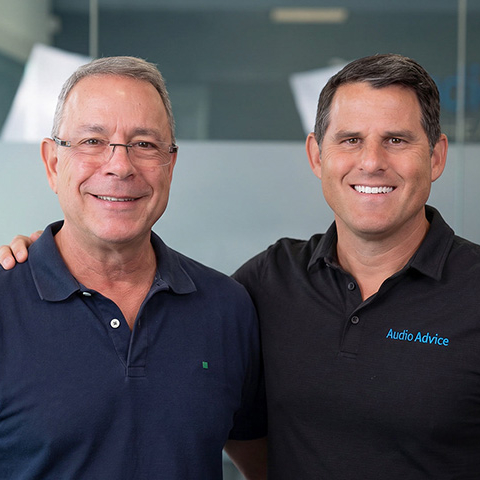
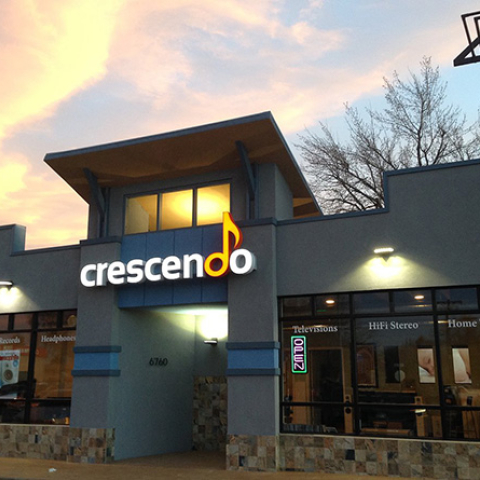
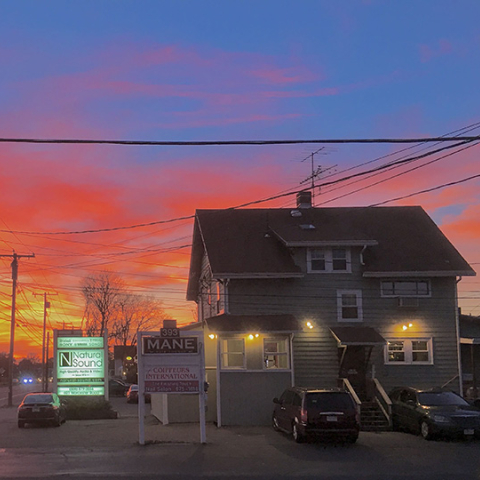
Not many hi-fi dealerships can say they've survived half a century of history. Natural Sound, which is based in Framingham, Massachusetts, about 20 miles west of Boston, is one that can. Founded by Jim Lackey in 1975, Natural Sound turns 50 years old this November. Lackey continues as the company's owner and president, though General Manager Pete Chinigo manages everyday business. In a recent conversation with Chinigo, I learned more about how business is going and what it takes for a hi-fi store—Natural Sound and others—to continue surviving into an uncertain future.
First some background. Way back in the 1980s, Chinigo bought a stereo system from Natural Sound. He was in his mid-teens. He then worked part-time at the dealership when he was in college. Three years ago, he returned to the area following a career change. He accepted a sales role, which quickly turned into a management role.
Both Chinigo and Lackey are alumni of Worcester Polytechnic Institute (WPI) in Worcester, Massachusetts, which is known for its engineering programs. Chinigo told me that Lackey started in the hi-fi business selling gear out of his dorm room at WPI. "He had a 'JVC Sold Here' sign outside of his door," Chinigo said. "That's where it all started." Eventually, in his senior year, Lackey was kicked off campus for doing it. "No one was allowed to make a profit on their nonprofit soil. They objected to that."
Lackey's time at WPI netted another industry connection: His roommate was
Kevin Voecks, who was a minority business partner in Natural Sound for a few years early on. In time he became a lead designer for Revel speakers, a brand Natural Sound has carried for years, and director of technology for Harman Specialty Group, which owns Revel (and other hi-fi brands).
How has Natural Sound managed to stick it out for so long? Chinigo credits the store's success to its solid relationships with hi-fi manufacturers. That requires adhering to companies' sales policies carefully and consistently. "We follow the rules very closely for our manufacturers and vendors. We don't discount when we're not supposed to; we follow their promos," he said. "We generally don't have a sale where we're just sort of knocking the prices down." It helps that, in contrast to many other brick-and-mortar dealerships, they don't sell new products online; they will only ship products to customers who have been in the store, in person. They
do sell some pre-owned equipment online—select vintage gear, trade-ins, and consignments—and also in the store and on third-party sites. Space is limited, Chinigo said, so they're selective.
Natural Sound started by selling lower-priced, entry-level stuff then gradually moved into the middle and higher-end tiers. They sell NAD and Rotel, and they've been selling Bowers & Wilkins speakers since the late 1970s, Chinigo said. They've sold McIntosh for more than 30 years. Sony is another mainstay—though only their higher-end products. "We're not Best Buy," he told me.
Natural Sound offers a trade-in program that's very helpful with customer relationships and retention. For up to three years, customers can get back exactly what they paid in trade for a product that costs at least twice as much. So if they buy, say, a $1500 component, they can trade it in on an item that costs $3000 or more and get $1500 off. They must have the original box and packaging, everything must be in good condition, and they have to be trading for something in the same category: speakers for speakers, a turntable for a turntable.
"It has served us well," Chinigo said about the program. "It's part of why people keep coming back. We can serve a lot of people and sell a lot of new stuff this way."
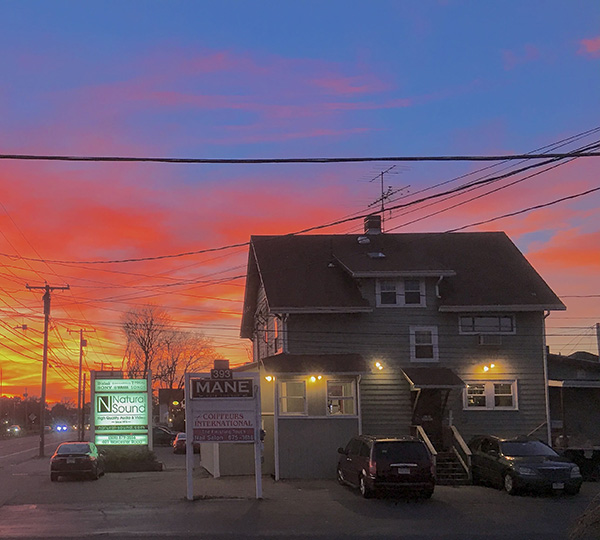
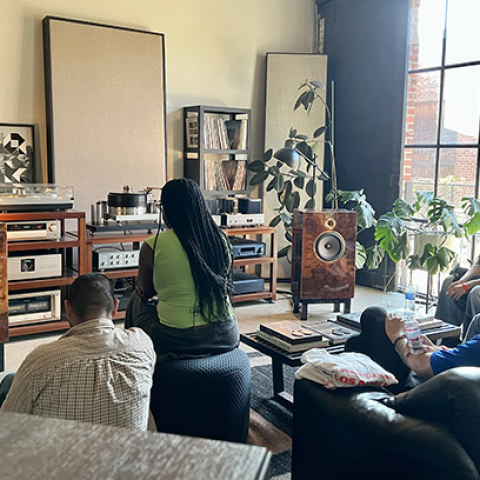
Natural Sound still occupies the same historic multistory house that has occupied since its earliest days. During those early days, Lackey lived there. Over time, the listening rooms and sales areas expanded and living space shrunk. Back then, the company was "a family affair," Chinigo said. Lackey's wife worked for Natural Sound, as did her father, an accountant. Chinigo is a second cousin of Lackey's wife.
One significant change Natural Sound has experienced is in its clientele. "We've got some new blood coming in here," Chinigo said. Over the last year or two, roughly half of the store's sales were to new customers. Another 30% were to
very long-term customers—20 years or more.
It's hard to be sure about such things, but Chinigo attributes the number of new customers in part to marketing efforts, including a redesigned website and a stepped-up social media presence.
New customers are important, but customer satisfaction is more important, because it leads to repeat business. The key to that is selling the right products to the right people. "We want to get them into something where we know they'll be sonically happy," Chinigo said.
"I believe that [for] each person that comes in, there's the ideal system for them: The right sound and the right price. I don't want it to be too expensive." There's a fine line between healthy spending and overspending.
"People who spend too much are not happy, because they know they went crazy and they're hurting themselves. I want them to spend a lot of money—don't get me wrong—but I don't want them to be in pain about it."
Future plans? "I'm hoping to keep the place going even after Jim is gone. I'd like to do that. I think it's possible."
Here's to another 50 years...