Finding fresh approaches to doing business isn't easy, especially in the current climate. But now it's becoming essential. Audio manufacturers, distributors, and dealers must figure out how to attract new customers while continuing to provide service for existing customers. Neither thing is easily accomplished in an era of change. But failure isn't an option. People with something to sell must connect with customers, and vice versa. Access is key.
Access can be via the internet, plus UPS or FedEx, plus, ideally, a 30-day return policy with free return shipping. But for some large and expensive things, internet sales are not sufficient: Would you pay for a $50,000 car without a test drive? What about a $50,000 amplifier or pair of speakers?
For decades, dealers have been shifting toward home theater and custom installation, with traditional two-channel audio playing second fiddle. Many of the remaining two-channel shops—the successful ones—are now selling expensive equipment as luxury goods to a different clientele, not your traditional Stereophile-reading audiophiles. That system seems to work well enough, but even at the luxury end of the hi-fi spectrum, customers can be hard to reach.
I recently spoke with Bob Visintainer, who for more than 20 years ran Manhattan's Rhapsody Audio, selling Magico, Devialet, Constellation, and other brands. He recently closed the Manhattan showroom and did something he thought he'd never do: He moved to Brooklyn.
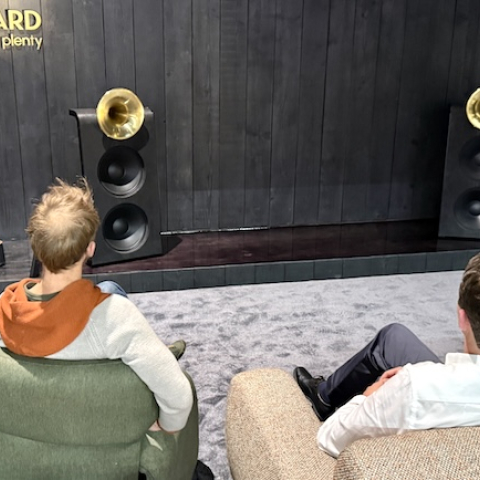
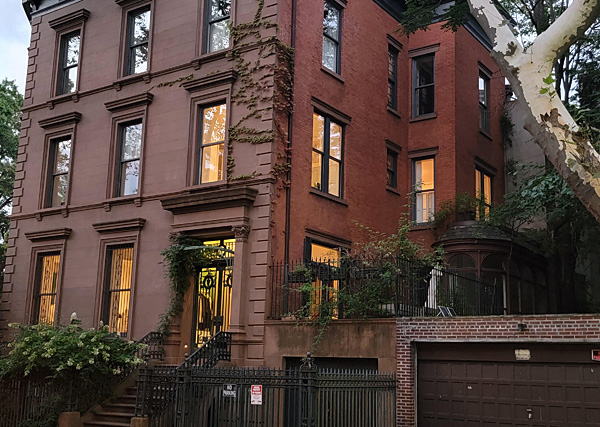
Visintainer now occupies a large, circa-1880 single-family home in the Fort Greene neighborhood of Brooklyn. He lives there. The 8000-square-foot space is equipped with four listening rooms, each with two systems. Visintainer has become a home dealer, but on a rather grand scale.
Visintainer is also a distributor for exotic artisan brands such as Pilium, Kondo, Diesis, Bayz, Alsyvox, Vyger, and Vyda. He's a fan of tube amps and efficient speakers that don't require much power. "I love efficiency," he said. "The sound floats the images in the air differently than when you have to 'drive' something."
Visintainer refers to his Fort Greene residence/dealership as an RLR, for Rhapsody Listening Room. There are more RLRs to come: He is working with a few former Rhapsody customers to open appointment-only showrooms in cities across the US. Most, like his Brooklyn shop, are in private residences, although a couple are planned for commercial spaces. Several are ready to open, although the parts shortages and shipping delays that have plagued the industry lately are causing problems for the RLRs too. RLRs are set to open in Dallas, West Palm Beach (Florida), Chicago, Portland (Oregon), and Palm Desert (California). He is also establishing service centers in Brooklyn, Chicago, and San Francisco.
RLR dealers purchase equipment at a discount. They own the space and gear. Visintainer handles the transactions, importation, and shipping; the home dealer receives sales commissions.
When a customer contacts Rhapsody or a manufacturer they represent, Visintainer told me, the lead is passed to the closest RLR. Potential customers can also contact the RLR directly. Marketing is via social media, audiophile forums, online advertising, and sometimes local, traditional advertising.
Reaching customers may be especially challenging in the industry's middle tier—neither well-known luxury products, which reach customers mainly via a handful of destination dealers, nor cheaper, more portable products that are well-served by internet sales. Mid-tier products are expensive enough that most buyers want to touch and hear them before buying. From a dealer's perspective, they're too heavy and/or valuable to make shipping them out to strangers an attractive option.
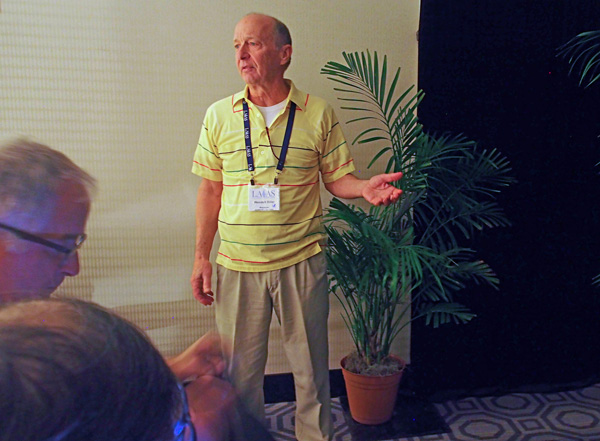 Wendell Diller, longtime sales and marketing manager of Magnepan, is navigating this shifting terrain. Once upon a time, audiophiles who frequented audio dealers cared exclusively about sound, Diller said in a recent interview. "In the '70s, the cosmetics were unimportant. Now the formula is much more complicated." Most of today's dealers, Diller says, aren't serving those products or those customers.
"How do we cope in today's market?" he asked. "Our business model is still the same—sound quality is the same priority as it was then." But the market has changed. "We need an entity—some means of supplying what the stereo store supplied to the consumer back when stereo was king."
Magnepan doesn't want to go factory-direct, or not entirely. People need to hear the speakers—especially the big ones. Service and setup help is needed. "I know Magnepan will need some boots on the ground in the market. We have to address the customers' needs where there isn't a bricks-and-mortar dealer."
Having fewer dealers has led to the company's current "tag-team" approach: A customer contacts Magnepan via their website. Then Diller or another staffer either helps the customer himself via Zoom, for instance, or introduces the customer to a product expert or the nearest dealer. This setup, though, is missing some important pieces. Something akin to Visintainer's RLR network could be one solution.
A few years ago, Diller and his wife Galina took a road trip around the US demoing their 30.7 Magneplanar planar-magnetic loudspeakers at dealerships. "It was expensive and labor-intensive, but it far exceeded my expectations," he said about the tour.
"Most or all of the rules in my 48-year career have changed so much," Diller said. "We have to learn new tricks."
"It's different, unique, and interesting," Visintainer said, describing the experiment he's doing. "I'll tell you two years down the road if it works."
Wendell Diller, longtime sales and marketing manager of Magnepan, is navigating this shifting terrain. Once upon a time, audiophiles who frequented audio dealers cared exclusively about sound, Diller said in a recent interview. "In the '70s, the cosmetics were unimportant. Now the formula is much more complicated." Most of today's dealers, Diller says, aren't serving those products or those customers.
"How do we cope in today's market?" he asked. "Our business model is still the same—sound quality is the same priority as it was then." But the market has changed. "We need an entity—some means of supplying what the stereo store supplied to the consumer back when stereo was king."
Magnepan doesn't want to go factory-direct, or not entirely. People need to hear the speakers—especially the big ones. Service and setup help is needed. "I know Magnepan will need some boots on the ground in the market. We have to address the customers' needs where there isn't a bricks-and-mortar dealer."
Having fewer dealers has led to the company's current "tag-team" approach: A customer contacts Magnepan via their website. Then Diller or another staffer either helps the customer himself via Zoom, for instance, or introduces the customer to a product expert or the nearest dealer. This setup, though, is missing some important pieces. Something akin to Visintainer's RLR network could be one solution.
A few years ago, Diller and his wife Galina took a road trip around the US demoing their 30.7 Magneplanar planar-magnetic loudspeakers at dealerships. "It was expensive and labor-intensive, but it far exceeded my expectations," he said about the tour.
"Most or all of the rules in my 48-year career have changed so much," Diller said. "We have to learn new tricks."
"It's different, unique, and interesting," Visintainer said, describing the experiment he's doing. "I'll tell you two years down the road if it works."
Wendell Diller, longtime sales and marketing manager of Magnepan, is navigating this shifting terrain. Once upon a time, audiophiles who frequented audio dealers cared exclusively about sound, Diller said in a recent interview. "In the '70s, the cosmetics were unimportant. Now the formula is much more complicated." Most of today's dealers, Diller says, aren't serving those products or those customers.
"How do we cope in today's market?" he asked. "Our business model is still the same—sound quality is the same priority as it was then." But the market has changed. "We need an entity—some means of supplying what the stereo store supplied to the consumer back when stereo was king."