 The MXA-800 in stereo
I am always seeking out new and interesting music, by any means necessary. I stumbled on a fascinating new recording just as I was preparing to sit back to try to get a handle on how my system sounded with the MXA-8400. Live in Berlin, performed by Kinan Azmeh and CityBand (16/44.1 download, Dreyer Gaido 21163), is a live and lively recording of some fascinating music. In the years following the Syrian uprising in 2011, Azmeh created this music "inspired by anger, sadness, frustration, and above all the need to hold on to one's optimism, hope and creative tools in the face of atrocities." I hear it as free jazz with Western tonality, framed by the rhythms of the Middle East. The instruments (clarinet, guitar, bass, drums) are full, firm, and clear, spread from speaker to speaker with some depth. The bass and percussion are subtly powerful. All are comfortably within the expansive ambiance of the Pierre Boulez Saal in Berlin, where the performers are central, and the audience completely surrounds them. In "plain old stereo," there is coherence to the presentation that reveals the warmth, depth, and passion of this remarkable music. Recently, several labels have released music from conductor Cristian Măcelaru. His traversal of the symphonies of George Enescu with the Orchestre National de France (16/44.1 download, Deutsche Grammophon 4865505) is especially outstanding. I was not familiar with the symphonies, knowing only his piano music and his two Romanian Rhapsodies, which in the past were concert lollipops alongside Liszt's Hungarian ones. The Rhapsodies are charming and colorful. The Lyngdorf revealed, beneath the foreground themes, a gentle melodic interplay I had not relished before. I heard snap and brio as the pace accelerated toward the end. It turns out that the symphonies, too, are rich in drama and romance, with full display of orchestral presence. The Lyngdorf laid it bare. The bass clarinet introduction that begins Kurt Weill's "Youkali" is deep and mournful, as are the opening lines sung by Marion Rampal before the transition to the plangent tango. This music puts us squarely into the serious, cynical times of post-WWI Berlin.
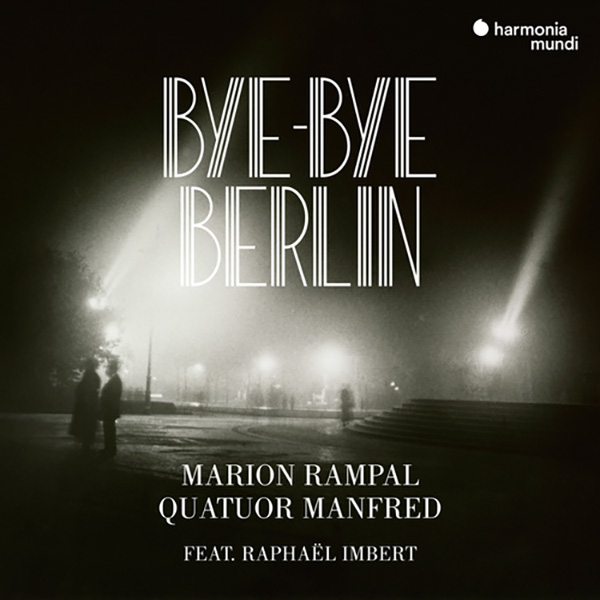 Bye-Bye Berlin (16/44.1 CD rip, Harmonia Mundi HMM902295), with Quatuor Manfred and Raphael Imbert on saxophone, is a recreation of a cabaret show with songs by the famous and not so famous. There's a wide emotional range and, as we have a table right up front, it should be played loud. I had struggled to find a comfortable level that accommodated the soft and the loud (N.B., Wagner's Flying Dutchman makes an appearance). Now, the clarity and imaging afforded by the MXA-8400 and the KEF speakers provide the necessary volume without strain in the music or on our ears. This setup provides it all for a thrilling/chilling experience.
Going from the recreation of an imagined event to a live recording of a real one, I put on my favorite version of "Stimela (The Coal Train)" by Hugh Masekela, from the album Hope (DSD rip from SACD, Analogue Productions APJ 82020). I listen to this often because it's fun. This time, after a few seconds, I realized that there was more going on. Masekela and his crew moved around within the central soundstage and the crowd sounds spread more widely than I remembered. Part of that was the ability of the Lyngdorf/KEF combination to play it at nearly live levels without apparent distortion. I was able to just close my eyes and get immersed in the music.
Bye-Bye Berlin (16/44.1 CD rip, Harmonia Mundi HMM902295), with Quatuor Manfred and Raphael Imbert on saxophone, is a recreation of a cabaret show with songs by the famous and not so famous. There's a wide emotional range and, as we have a table right up front, it should be played loud. I had struggled to find a comfortable level that accommodated the soft and the loud (N.B., Wagner's Flying Dutchman makes an appearance). Now, the clarity and imaging afforded by the MXA-8400 and the KEF speakers provide the necessary volume without strain in the music or on our ears. This setup provides it all for a thrilling/chilling experience.
Going from the recreation of an imagined event to a live recording of a real one, I put on my favorite version of "Stimela (The Coal Train)" by Hugh Masekela, from the album Hope (DSD rip from SACD, Analogue Productions APJ 82020). I listen to this often because it's fun. This time, after a few seconds, I realized that there was more going on. Masekela and his crew moved around within the central soundstage and the crowd sounds spread more widely than I remembered. Part of that was the ability of the Lyngdorf/KEF combination to play it at nearly live levels without apparent distortion. I was able to just close my eyes and get immersed in the music.
 Three on three
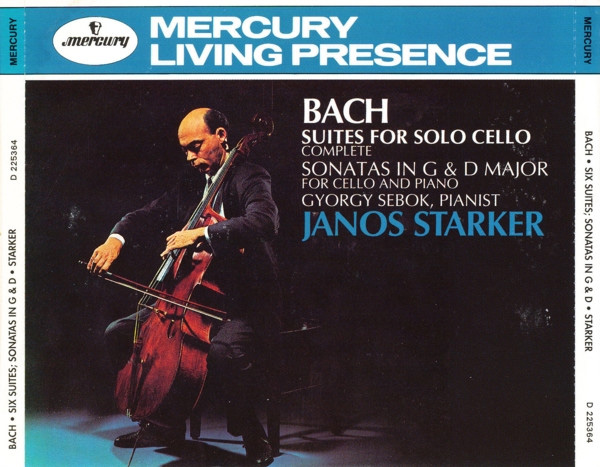
I wish I had more speakers so that I could use more channels of the MXA-8400, but since I was using it to drive only my front three, it seemed appropriate to dig out some Mercury Living Presence and RCA Living Stereo albums, which were remastered and released on three-channel SACDs about 20 years ago. Back then, I was so obsessed with the original LPs, then later the SACDs, that I can hear them in my head when I picture the album cover.
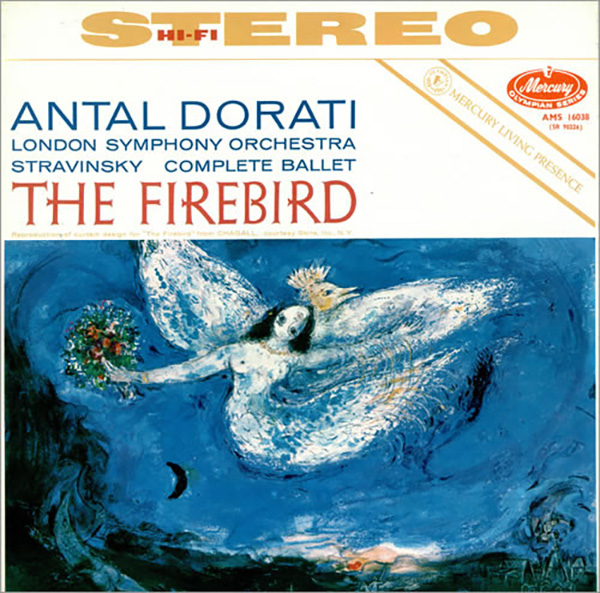 That's just with a single cello, albeit a great one masterfully played. What about a recording of a great symphony orchestra at full strength? That should be more of a stress test of the MXA-8400 and my KEF Blade Two Metas. I already knew what would come next: Reiner's Scheherazade with the Chicago Symphony Orchestra (SACD, RCA Living Stereo 82876-66377-2) and Dorati's Firebird (SACD, Mercury Living Presence 470 643-2), two stunners of the vintage. Back in the day, I used the Scheherazade as a demo to reveal the difference between a two-channel stereo recording and a three-channel one to people who had not made the step from stereo to multichannel. After playing most of the first movement, I asked them what they predicted would be the change in going to three channels. Most said it would result in greater detail and solidity across the center. But after I played the same selection in three channels, there was almost universal agreement that the most salient difference was a more expansive soundstage, an improvement I attributed to the removal of the center-channel content from the left and right speakers.
So let's do it again. In stereo, the Reiner Rimsky is still great, from the bold opening statement by the brass, and concertmaster Sidney Harth's romantic violin flourish, to the inexorable thematic development passed among all the orchestral sections. Heard now with the MXA-8400, there was more space and detail. But when I played it in three channels, the two-channel presentation could not compete. I now heard the immensity of Orchestra Hall and all that goes with it.
That's just with a single cello, albeit a great one masterfully played. What about a recording of a great symphony orchestra at full strength? That should be more of a stress test of the MXA-8400 and my KEF Blade Two Metas. I already knew what would come next: Reiner's Scheherazade with the Chicago Symphony Orchestra (SACD, RCA Living Stereo 82876-66377-2) and Dorati's Firebird (SACD, Mercury Living Presence 470 643-2), two stunners of the vintage. Back in the day, I used the Scheherazade as a demo to reveal the difference between a two-channel stereo recording and a three-channel one to people who had not made the step from stereo to multichannel. After playing most of the first movement, I asked them what they predicted would be the change in going to three channels. Most said it would result in greater detail and solidity across the center. But after I played the same selection in three channels, there was almost universal agreement that the most salient difference was a more expansive soundstage, an improvement I attributed to the removal of the center-channel content from the left and right speakers.
So let's do it again. In stereo, the Reiner Rimsky is still great, from the bold opening statement by the brass, and concertmaster Sidney Harth's romantic violin flourish, to the inexorable thematic development passed among all the orchestral sections. Heard now with the MXA-8400, there was more space and detail. But when I played it in three channels, the two-channel presentation could not compete. I now heard the immensity of Orchestra Hall and all that goes with it.
 Crossing the bridge?
 Conclusions
I thoroughly enjoyed the sound with the MXA-8400, as I do when listening with my bridged Benchmark AHB2s and the Buckeye monoblocks (footnote 3). I experienced fleeting impressions, when switching to it, that the Lyngdorf was a bit fuller than either of the other two amplifiers, but that impression was confounded by observing that when I switched back, I didn't feel that anything was lost.
Footnote 3: A Follow-Up on the Buckeye monoblocks appears in this issue with measurements here.