"It is my opinion that most of the chatter on which is better, single-ended or balanced, is driven by sales," he wrote. "Balanced cables cost more than single-ended, so they must be better, right? I am agnostic on whether single-ended or balanced is better in the overall audio universe. In certain instances, when a low-level source such as a microphone, moving coil cartridge, or tape head provides a differential signal, it is advantageous to treat it as balanced so that you may take advantage of the noise-cancelling properties of the balanced line between source and preamplifier, which typically deliver up to 6dB better signal-to-noise ratios. In situations where there are long runs between components and the possibility for ground potential differences exists, a balanced signal will also provide isolation from ground loops as well as cancellation of induced noise on both legs of a balanced line.
"My mono amplifier's design uses a single-ended input topology, which has the [fewest] gain stages as well as low levels of feedback. Its balanced input is an active instrumentation amplifier section of unity gain; it is a balanced–to–single-ended buffer that does not add gain and provides a true differential input. It is extremely transparent, but for purists who desire the shortest gain path possible, the SE input is the one to use."
The only way to decide which interconnects to use, then, was to listen.
Getting ready
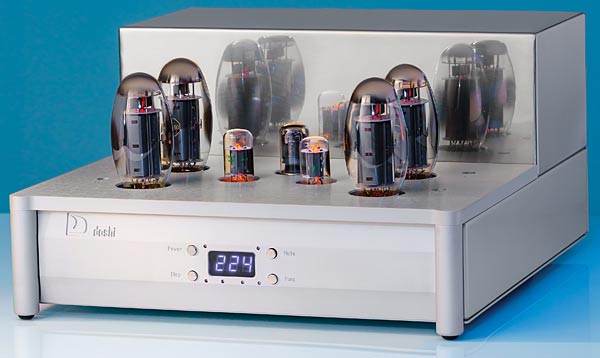
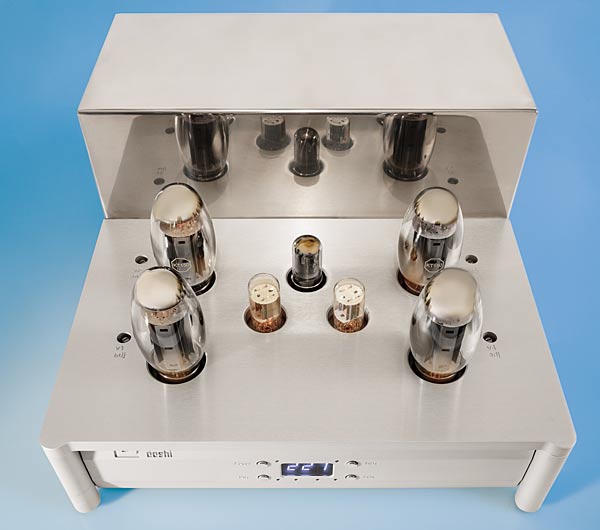
I encountered only two issues with the EVO amps—neither serious. As sometimes happens, one of the carefully packed power tubes died in transit. Happily, Doshi had sent along two spares.
The standby power button on the front panel of one of the monoblocks would only work properly if I pressed it forcefully and held it in for a second or two. If I bought this amp, I'd insist on getting this repaired.
Everything else performed flawlessly.
I asked Doshi about break-in. "Doshi Audio provides a combination of NOS and new-production tubes with its amplifiers, and the tubes have been dormant for quite a long period (over 50 years in some cases). Total break-in hours are dependent on tube aging and capacitor forming. The power and output transformers in this unit are so oversized that they are not subject to thermal stress or break-in type changes in performance.
"The best way to break in a Doshi amplifier is to listen to it normally and turn it off every 2–3 hours for 15–30 minutes for the first 15 hours of operation. This allows the power-supply and audio-coupling capacitors to distribute their internal winding stress uniformly. Once that's completed, there will be no change in character. The ICW CMR-series ClarityCaps used in the audio section perform superbly once they have gone through a few power cycles.
 "Tubes need a few hours at temperature for the gettering to activate and rid the internals of the tube of any remnants of the manufacturing process. The plate and cathode materials will also outgas impurities during this period, and the tube will slowly get to its optimum operating condition. This takes approximately 20–30 hours of operation."
Oh boy
"Tubes need a few hours at temperature for the gettering to activate and rid the internals of the tube of any remnants of the manufacturing process. The plate and cathode materials will also outgas impurities during this period, and the tube will slowly get to its optimum operating condition. This takes approximately 20–30 hours of operation."
Oh boy
It's best to avoid taking a serious listen before break-in is complete, but who can resist? I don't have the abstention power of Metropolitan Opera soprano Lucrezia Bori (1887–1960), who, after surgery in 1915 for nodes on her vocal cords, followed doctor's orders and uttered nary a sound for two years (footnote 7). For much of the break-in period, I listened to superbly recorded music that I can listen to forever, including favorite tracks from the John Atkinson–engineered choral recordings by the Portland State Chamber Choir, directed by Ethan Sperry. Stealing a brief listen shortly after firing everything up for the first time, I was stunned by the radiant glow and reverberant tail of a single glockenspiel note chiming in space. I'd heard that glockenspiel many times, but it had never gripped me like that before. I knew right then that reviewing the Doshi Evolution monoblocks would be a pleasure.
Before surrendering to the music, I needed to decide which bias setting to use. I began with Daniel Hope and Alexey Botvinov's new recording of Schnittke: Works for Violin and Piano (24/96 WAV, DG 00028948392346). The EVO mono beautifully conveyed the violin's intermingling of horsehair, resin, and steel, but a bias of 190mV rendered the sound too warm and pleasant and shortchanged some of Schnittke's acerbic bite. Lowering the bias to 180mV was a definite improvement—but only at 170mV did I hear optimally the natural contrast between timbres of violin and piano.
Going all the way up to 220mV created, to this sonic palette, an overly cooked soup in which the flavors of contrasting ingredients could no longer be distinguished. But at 170mV, I could perceive all of the emotion Hope and Botvinov drew from Schnittke's music: the alarm, danger, cynicism, sardonic wit, and, in Schnittke's most desolate passages, glimpses of vast solitude in the spaces between the notes.
Lovely as it would be to report that 170mV was the prince's kiss that rescued Snow White from the spell of the evil witch, it was not that. When I shifted genres from chamber music to the "life's a bitch, and I'm no witch" mix of voice, electronics, and rumbling bass of Yello's "Electrified II" on Toy (24/48 FLAC), 170mV delivered delicious color contrasts but slow and wimpy bass. As I increased bias to 220mV, bass improved significantly but color contrast declined. As with the EVO's predecessor, 190mV proved the safe middle ground that delivered sufficient tube warmth, more than respectable bass, and a fair degree of color differentiation with most music. But, with my components, in my room, only 170mV delivered the natural color contrasts delivered by my reference setup while retaining the glow and warmth of tubes.
Confirmation of the EVO mono's ability to convey fine details arrived with our April 2021 Recording of the Month, Žibuokle Martinaitytė's Saudade (24/96 WAV, ODE1386). Martinaitytė's orchestral fabric is complex; the recording's impact hinges on a system's ability to highlight the movement of a single instrument amidst 80 and to convey with clarity the individual voices of instruments speaking simultaneously in close proximity. The EVO monos conveyed Martinaitytė's myriad whispers with aplomb. They also superbly displayed the unique timbres of baroque instruments on Contralto (24/96 WAV, Erato 5209551), the recent recording by Nathalie Stutzmann and her Orfeo 55 orchestra.
 As lovely as the sound was, the EVO monos' single-ended nature left me wondering how much more was possible if I switched to single-ended interconnects. So, midway through the review, I disconnected the preamp and used a single pair of RCA interconnects to send signal directly from the dCS Rossini DAC to the EVOs. Whoa, was that different! The soundstage moved forward, air increased, intra-note space grew markedly quieter, and the music felt fuller and more direct. It was as though I was listening to a different DAC altogether. After switching to XLR and then back to RCA, it became clear that, with Doshi's design, single-ended interconnection delivers notably more clarity, air, silence, and color intensity and conveys a wider, deeper, more convincing soundstage.
Nonetheless, given my preference for 170mV bias, I was forced to choose between maximum transparency and clarity (especially on top) or the weightier images and increased bass that using balanced interconnects to and from the D'Agostino Momentum HD preamp would provide. Thus was I faced with that seemingly perpetual audiophile plight: You have to give a little to get a little. You can never have it all at once, or so it seems. But is getting all you want, all you need?
NOS upgrade
As lovely as the sound was, the EVO monos' single-ended nature left me wondering how much more was possible if I switched to single-ended interconnects. So, midway through the review, I disconnected the preamp and used a single pair of RCA interconnects to send signal directly from the dCS Rossini DAC to the EVOs. Whoa, was that different! The soundstage moved forward, air increased, intra-note space grew markedly quieter, and the music felt fuller and more direct. It was as though I was listening to a different DAC altogether. After switching to XLR and then back to RCA, it became clear that, with Doshi's design, single-ended interconnection delivers notably more clarity, air, silence, and color intensity and conveys a wider, deeper, more convincing soundstage.
Nonetheless, given my preference for 170mV bias, I was forced to choose between maximum transparency and clarity (especially on top) or the weightier images and increased bass that using balanced interconnects to and from the D'Agostino Momentum HD preamp would provide. Thus was I faced with that seemingly perpetual audiophile plight: You have to give a little to get a little. You can never have it all at once, or so it seems. But is getting all you want, all you need?
NOS upgrade
$500—the cost of Doshi's NOS tube-upgrade package—is far less than the cost of three years of intensive audiophilia-induced therapy. It's also slightly more than 1% of the cost of a pair of EVO amplifiers. After changing driver and input tubes and waiting 30 minutes for warm-up, the upgrade tubes delivered more saturated colors, life, and verve than the "stock" NOS. Even with the balanced interconnects, the increase in transparency was marked. Bass grew more profound on "Electrified II," Hope's violin sounded rounder and fuller—I could hear how differently the violin's upper and lower strings vibrated—and Botvinov's piano made more impact, sounding remarkably present. Martinaitytė's recording sounded more layered and 3D, bass was stronger, textural contrasts increased, and the experience was more immersive. The NOS upgrade package also enhanced the radiance of naturally radiant female voices. Never had mezzo-soprano Lorraine Hunt Lieberson sounded so radiant on Mahler's five Rückert-Lieder, from Lorraine Hunt Lieberson: Mahler, Handel & Peter Lieberson (Wigmore Hall Live, Tidal 16/44.1 FLAC). The Doshi EVO monoblocks did not produce the same breathtaking sense of space as the 100Wpc into 4 ohms Gryphon Essence monoblocks ($45,980/pair) had done, but their ability to highlight the natural radiant glow of some of the greatest voices on record was second to none. When another mezzo, Alice Coote, rose into her head voice on Mahler Song Cycles (DSD64, PTC5186576), with the Netherlands Philharmonic Orchestra under Marc Albrecht, it sounded as though her voice was reflected off a polished black onyx globe. Bass could have been a mite tighter, but highs were incandescent. What I'd give to have heard one of these women perform live in a hall that lent such radiance to their voices.
Vocal addicts would want me to detail how I began playing some of my favorite female singers nonstop, including Elisabeth Schwarzkopf and Elly Ameling, and delighted again and again in their heavenly highs. I also marveled at the sound of the various chimes, gongs, and glockenspiel on "Vineta," from the Portland State Chamber Choir's exceptionally spacious all-Eenvalds recording, Translations (Naxos 8.574124, 24/96 WAV), our Recording of the Month for June 2020. Next came soprano Jodie Devos's deeply felt rendition of Freddy Mercury's "You Take My Breath Away," from her recital, And Love Said (24/96 WAV, Alpha 668) with Nicolas Krüger. That, of course, led me to Mercury and Queen's more rocking rendition on the deluxe remastered version of A Day at the Races (Tidal 16/44.1 FLAC). Nor could I resist their wicked "Tie Your Mother Down," which through the Doshi EVO monos sounded equal parts raucous and hilarious.
Enter the EMM Labs DV2
In my experience, the DV2 Integrated DAC ($30,000) delivers larger images and stronger, tighter bass than the dCS Rossini—at the cost of some openness, top-end extension, and liveliness. I thought it might balance out the classic tube glow of the Doshi EVO monos and deliver neutral sound. Which is what it did. Bass on Andris Nelsons and the Boston Symphony Orchestra's performance of Shostakovich Symphonies Nos.4 & 11 (24/96 WAV, Deutsche Grammophon 002859502/HDTracks) was noticeably cleaner, stronger, and bigger, and the presentation as a whole was quite transparent and involving. The Rossini may bring more color to instruments and depict them with a more convincing edge, but the DV2's excellence down low and its toned-down top make it an ideal match for the EVO monoblocks.
On the last day of listening, I returned to the Rossini, and then to the "stock" NOS driver and input tubes supplied with the EVOs. With those tubes, the sound was plainer—it lacked ultimate glow, polish, and openness—but it was still mouthwateringly fine.
Got the picture?
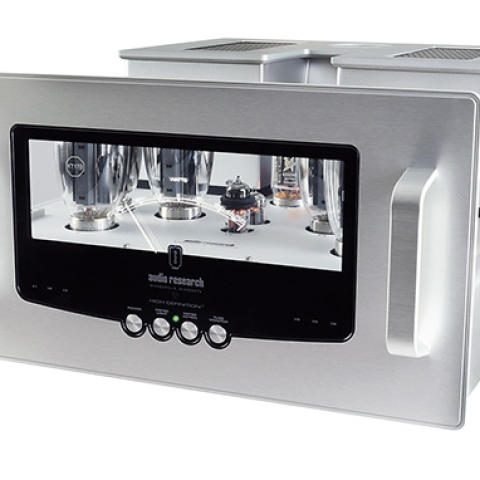
In the years since I began reviewing equipment for Stereophile, I've encountered only four other monoblocks in the same price range as the Doshi Audio Evolution mono power amplifiers that sound as exceptional: The Pass Labs XA 200.8s, D'Agostino Progressions, Gryphon Essences, and Audio Research Reference 160Ms. Each has a distinct sonic signature and unique mix of strengths and weaknesses, but all reproduce music in ways so compelling as to make listening a consistent experience of joy, discovery, and satisfaction. Of the five, the Doshis may be the quietest and most radiant. For an extra $500, their NOS Tube Upgrade package enables them to deliver sound so glowingly beautiful as to make them an essential audition. Given the EVO monos' flexibility—you can roll power tubes and adjust bias according to taste—and the ease of setup, why would anyone with sufficient funds and single-ended outputs on their preamp or DAC not seek them out? Enthusiastically, emphatically, ecstatically recommended.
Footnote 7: Bori eventually returned to the Met and sang marvelously until her retirement in 1936.
I encountered only two issues with the EVO amps—neither serious. As sometimes happens, one of the carefully packed power tubes died in transit. Happily, Doshi had sent along two spares.
"Tubes need a few hours at temperature for the gettering to activate and rid the internals of the tube of any remnants of the manufacturing process. The plate and cathode materials will also outgas impurities during this period, and the tube will slowly get to its optimum operating condition. This takes approximately 20–30 hours of operation."
Oh boyIt's best to avoid taking a serious listen before break-in is complete, but who can resist? I don't have the abstention power of Metropolitan Opera soprano Lucrezia Bori (1887–1960), who, after surgery in 1915 for nodes on her vocal cords, followed doctor's orders and uttered nary a sound for two years (footnote 7). For much of the break-in period, I listened to superbly recorded music that I can listen to forever, including favorite tracks from the John Atkinson–engineered choral recordings by the Portland State Chamber Choir, directed by Ethan Sperry. Stealing a brief listen shortly after firing everything up for the first time, I was stunned by the radiant glow and reverberant tail of a single glockenspiel note chiming in space. I'd heard that glockenspiel many times, but it had never gripped me like that before. I knew right then that reviewing the Doshi Evolution monoblocks would be a pleasure.
As lovely as the sound was, the EVO monos' single-ended nature left me wondering how much more was possible if I switched to single-ended interconnects. So, midway through the review, I disconnected the preamp and used a single pair of RCA interconnects to send signal directly from the dCS Rossini DAC to the EVOs. Whoa, was that different! The soundstage moved forward, air increased, intra-note space grew markedly quieter, and the music felt fuller and more direct. It was as though I was listening to a different DAC altogether. After switching to XLR and then back to RCA, it became clear that, with Doshi's design, single-ended interconnection delivers notably more clarity, air, silence, and color intensity and conveys a wider, deeper, more convincing soundstage.
Nonetheless, given my preference for 170mV bias, I was forced to choose between maximum transparency and clarity (especially on top) or the weightier images and increased bass that using balanced interconnects to and from the D'Agostino Momentum HD preamp would provide. Thus was I faced with that seemingly perpetual audiophile plight: You have to give a little to get a little. You can never have it all at once, or so it seems. But is getting all you want, all you need?
$500—the cost of Doshi's NOS tube-upgrade package—is far less than the cost of three years of intensive audiophilia-induced therapy. It's also slightly more than 1% of the cost of a pair of EVO amplifiers. After changing driver and input tubes and waiting 30 minutes for warm-up, the upgrade tubes delivered more saturated colors, life, and verve than the "stock" NOS. Even with the balanced interconnects, the increase in transparency was marked. Bass grew more profound on "Electrified II," Hope's violin sounded rounder and fuller—I could hear how differently the violin's upper and lower strings vibrated—and Botvinov's piano made more impact, sounding remarkably present. Martinaitytė's recording sounded more layered and 3D, bass was stronger, textural contrasts increased, and the experience was more immersive. The NOS upgrade package also enhanced the radiance of naturally radiant female voices. Never had mezzo-soprano Lorraine Hunt Lieberson sounded so radiant on Mahler's five Rückert-Lieder, from Lorraine Hunt Lieberson: Mahler, Handel & Peter Lieberson (Wigmore Hall Live, Tidal 16/44.1 FLAC). The Doshi EVO monoblocks did not produce the same breathtaking sense of space as the 100Wpc into 4 ohms Gryphon Essence monoblocks ($45,980/pair) had done, but their ability to highlight the natural radiant glow of some of the greatest voices on record was second to none. When another mezzo, Alice Coote, rose into her head voice on Mahler Song Cycles (DSD64, PTC5186576), with the Netherlands Philharmonic Orchestra under Marc Albrecht, it sounded as though her voice was reflected off a polished black onyx globe. Bass could have been a mite tighter, but highs were incandescent. What I'd give to have heard one of these women perform live in a hall that lent such radiance to their voices.
In my experience, the DV2 Integrated DAC ($30,000) delivers larger images and stronger, tighter bass than the dCS Rossini—at the cost of some openness, top-end extension, and liveliness. I thought it might balance out the classic tube glow of the Doshi EVO monos and deliver neutral sound. Which is what it did. Bass on Andris Nelsons and the Boston Symphony Orchestra's performance of Shostakovich Symphonies Nos.4 & 11 (24/96 WAV, Deutsche Grammophon 002859502/HDTracks) was noticeably cleaner, stronger, and bigger, and the presentation as a whole was quite transparent and involving. The Rossini may bring more color to instruments and depict them with a more convincing edge, but the DV2's excellence down low and its toned-down top make it an ideal match for the EVO monoblocks.
In the years since I began reviewing equipment for Stereophile, I've encountered only four other monoblocks in the same price range as the Doshi Audio Evolution mono power amplifiers that sound as exceptional: The Pass Labs XA 200.8s, D'Agostino Progressions, Gryphon Essences, and Audio Research Reference 160Ms. Each has a distinct sonic signature and unique mix of strengths and weaknesses, but all reproduce music in ways so compelling as to make listening a consistent experience of joy, discovery, and satisfaction. Of the five, the Doshis may be the quietest and most radiant. For an extra $500, their NOS Tube Upgrade package enables them to deliver sound so glowingly beautiful as to make them an essential audition. Given the EVO monos' flexibility—you can roll power tubes and adjust bias according to taste—and the ease of setup, why would anyone with sufficient funds and single-ended outputs on their preamp or DAC not seek them out? Enthusiastically, emphatically, ecstatically recommended.
Footnote 7: Bori eventually returned to the Met and sang marvelously until her retirement in 1936.