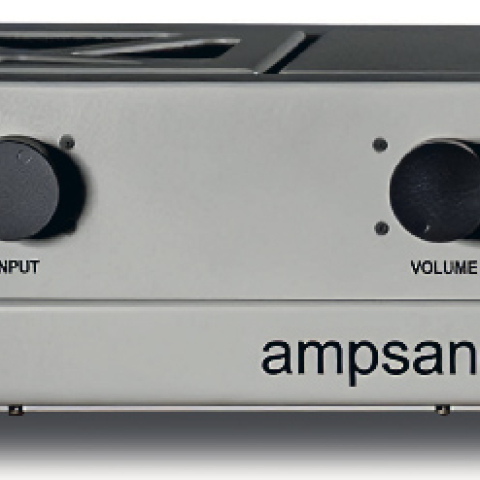
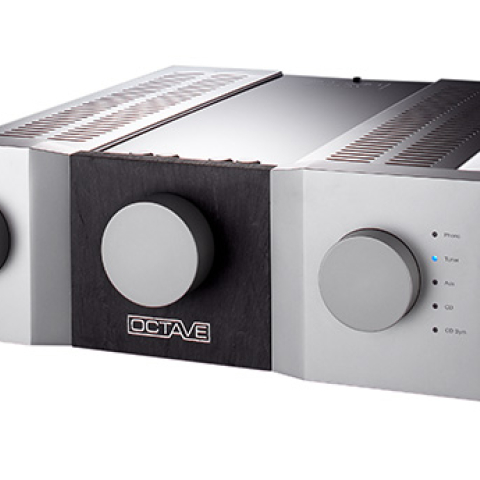
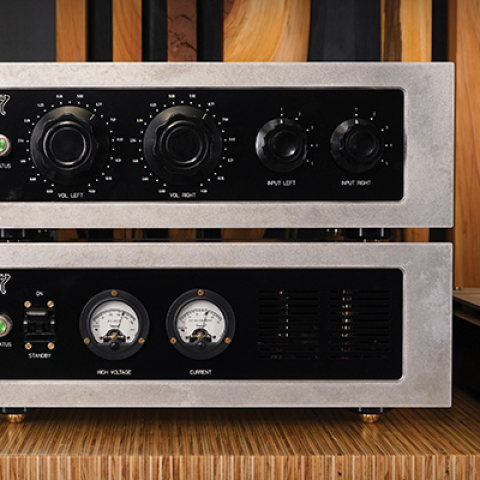
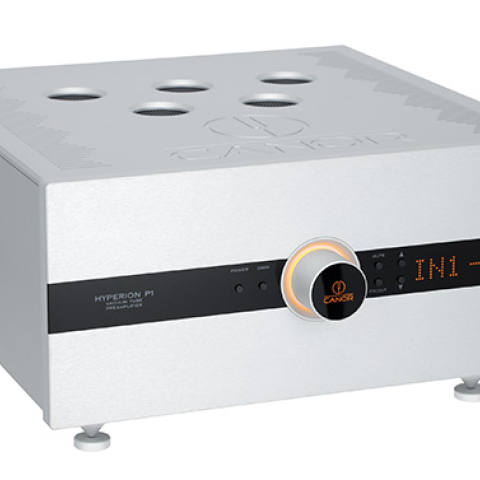
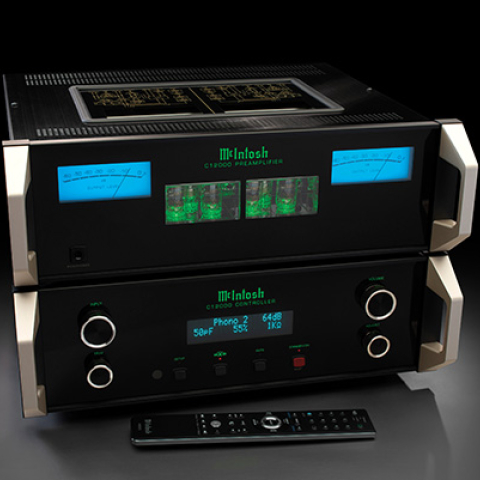
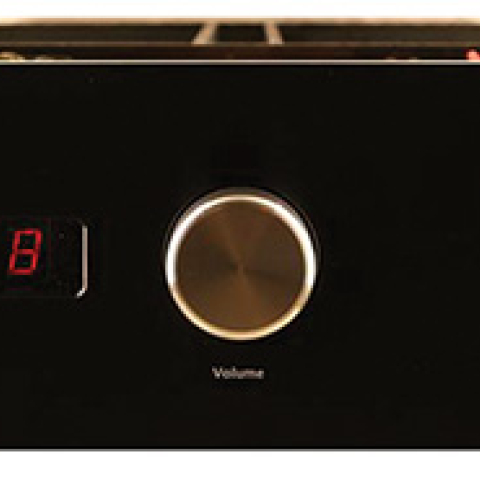
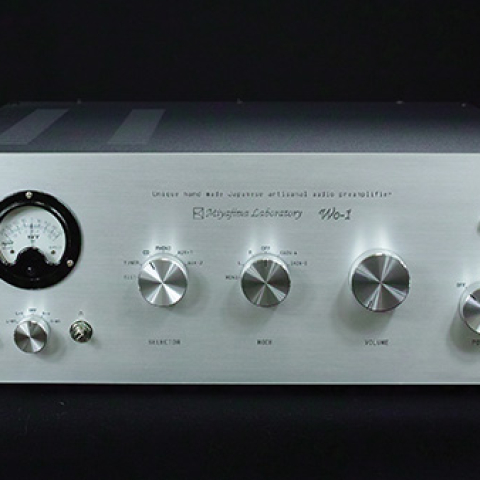
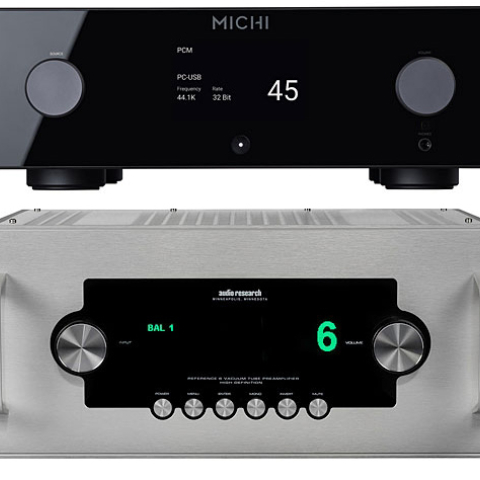
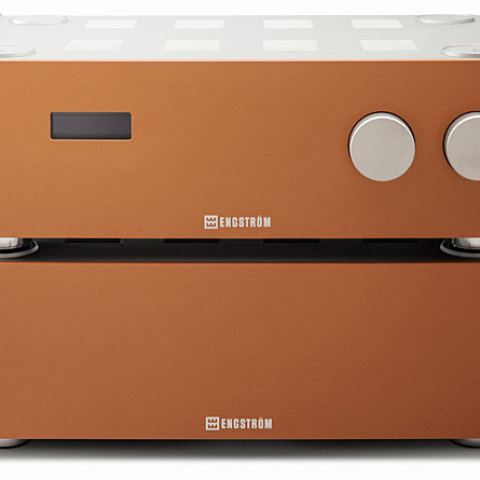
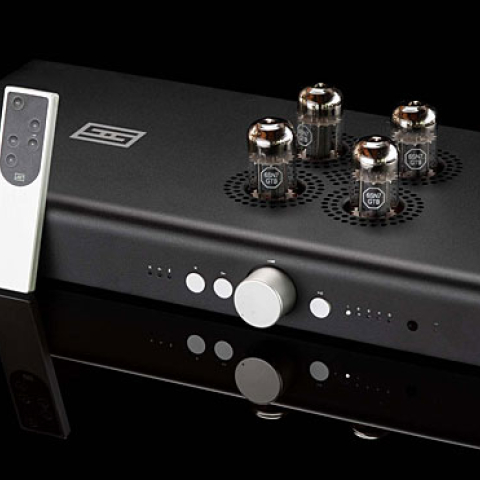
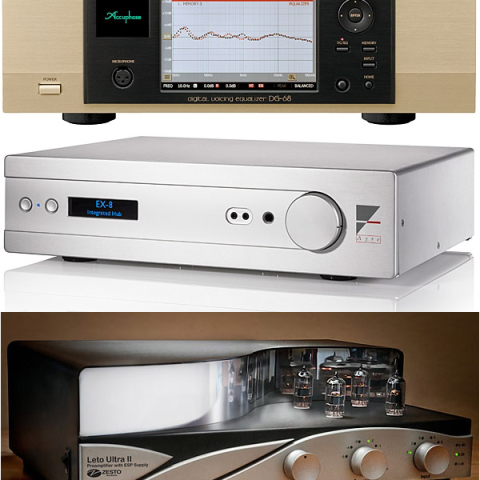
After switching among all four preamps, noting sonic differences, and filling 3 pages of notes with superlatives, I was forced to take a break of several days. During that time, I kept asking every wine connoisseur I knew, including the 42 members of the San Francisco Audiophile Society who logged in to our prescheduled 2.5 hour chat—Michael Fremer, Herb Reichert, and I are doing another Zoom event with SFAS close to Thanksgiving—if they could tell me what particular wine in what special wine glass might serve as a metaphor for the clear, shiny, polished sound I was hearing. SFAS member Lawrence (Larry) Brown supplied a perfect answer: a Willamette Pinot Noir in a Riedel glass.
My first postbreak listen was in the COVID-19–mandated masked company of Erik Owen, co-owner of Gig Harbor Audio (footnote 3), and his 21-year-old daughter, Natalia. As befits listening during the pandemic, they shared the sweet spot on the front sofa while I sat in the back, way over to the left. With my neighbors' permission—I warned them that it might be loud, and that they could cry uncle at any time—I also left the door of the music room open to increase air circulation.
The three of us soon narrowed down our track choices from an initial six to the two most telling: the hi-rez remastering of Dolly Parton's less-than-superbly-recorded "I Will Always Love You (Original Version)" from Jolene (Qobuz 24/96 FLAC) and Yello's hot-on-top, depth-plumbing, wall-to-wall "Electrified II" from Toy (Tidal 24/48 FLAC). Both tracks include recitations: Dolly does her best to sound sincere as she repeats, in deadpan fashion, words that might embarrass a Hallmark card writer, while Yello's Dieter Meier's tongue remains firmly planted in cheek.
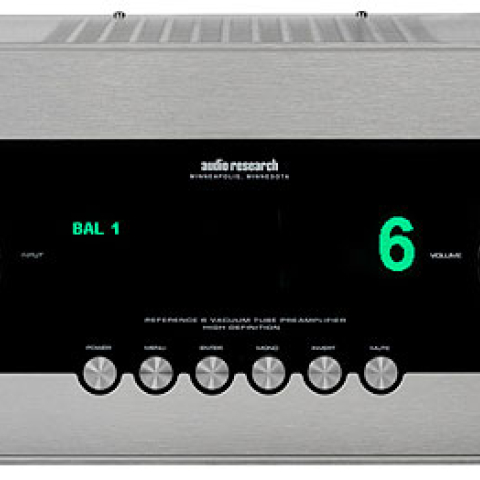
 In a nutshell—"nuts" being the operative part of the term, because that's how I felt—I discovered that the REF 6SE sounded very different than it had a few days earlier. Much of the tonal beauty that had momentarily caused me to hold my breath remained, but the shiny polish and transparency that had knocked me over was gone. The REF 6SE unquestionably fattened up Dolly's voice, brought out the back-up singers in ways I found quite pleasing, and delivered extremely tight, gut-shaking bass, but there was an opaqueness to the sound, coupled with a lack of focus to the leading edge of tones, that stood in sharp contrast to the openness and clarity I experience with the Rossini itself controlling volume and no preamp in the chain.
Of course, I didn't say that to Erik. Not only can I not share my feelings about a product before a review is published; I also didn't want to influence what he and Natalia thought. So I confined my comments to "Hmm, that was really interesting."
A few days later, Erik succinctly summarized his feelings in an email that corroborated what I'd heard. "Listening to the Dolly Parton and Yello tracks, the AR sounded full and organic," he wrote. "Then, going to the Rossini DAC straight as the preamp, I felt the music was quite a bit more direct. Not fair to judge something from 30 minutes of listening, but the raw grip of the Rossini felt more intimate and real."
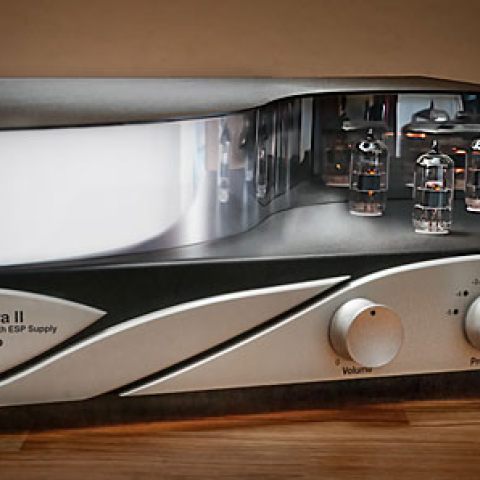
As for the other preamps, the MBL N11 was by far the warmest of the lot, with excellent bass. The well-over-twice-as-expensive D'Agostino was the giant killer (as in giant who kills, not killer of giants), with more color, bigger images than with the Rossini solo, a soundstage larger in all directions and set farther back, and the strongest bass. It blew Erik away. At the other end of the price spectrum, the Benchmark LA4, which costs less than a sixth of what the ARC REF 6SE costs, proved the least colorful and engaging of the lot, with recessed highs and a rather flat presentation. Although the LA4's sound improved when I added the manual's suggested 10dB boost and disabled its unused inputs, the listening experience was an object lesson in the axiom that as vitally important as measurements may be—I write for Stereophile because I consider measurements essential—measurements alone cannot predict how equipment will sound. Cue Bill Johnson or J. Gordon Holt.
A lot more solo listening sessions followed. On one occasion, I fished through new classical/new music recordings for solo piano, single and massed voices, small ensemble, and full orchestra—titles included Sarah Kirkland Snider's Mass for the Endangered (New Amsterdam/Nonesuch Records NWAM141, 24/96 WAV), Robert Honstein's Soul House (New Amsterdam 24/192 WAV), Lisa Bielawa's Blueprints I (16/44.1 WAV), tenor Jonas Kaufmann's new recital of German song (lieder), Selige Stunde (Sony 636976, 24/96 WAV), Reinaldo Moya's Hearing It Getting Dark (Furious Artisan 24/96 FLAC), Eric Huebner's recital of Ligeti's piano music, De'Sordre (24/96 FLAC, FCR269), and Shostakovich's Cello Concertos (24/96 WAV, Hyperion CDA68340) performed by cellist Alban Gerhardt and the WDR Sinfonieorchester under Jukka-Pekka Saraste—hoping to find something I felt moved to review.
I devoted the most time to the Shostakovich. I loved how moving the second movement sounded through the REF 6SE. The preamp's extra touch of warmth and roundness—its fatter sound—delivered massed orchestral strings with added grace and beckoned me to move deeper into the music without altering its emotional impact. Yet, I wished for more transparency.
In all fairness, when I removed the preamp and relied solely on the Rossini's volume control, I found that while the dCS DAC/Clock combo set the cello farther back in a more open, transparent, marginally airier and more natural-sounding soundstage, its plainer presentation, with less weight and richness to the solo cello, was in some respects less alluring. Which leads to the question: What's more important in music as bare and emotionally devastating as Shostakovich's, seductive allure or raw emotional truth?
Are you happy? Are you truly happy?
We all need support
In a nutshell—"nuts" being the operative part of the term, because that's how I felt—I discovered that the REF 6SE sounded very different than it had a few days earlier. Much of the tonal beauty that had momentarily caused me to hold my breath remained, but the shiny polish and transparency that had knocked me over was gone. The REF 6SE unquestionably fattened up Dolly's voice, brought out the back-up singers in ways I found quite pleasing, and delivered extremely tight, gut-shaking bass, but there was an opaqueness to the sound, coupled with a lack of focus to the leading edge of tones, that stood in sharp contrast to the openness and clarity I experience with the Rossini itself controlling volume and no preamp in the chain.
Of course, I didn't say that to Erik. Not only can I not share my feelings about a product before a review is published; I also didn't want to influence what he and Natalia thought. So I confined my comments to "Hmm, that was really interesting."
A few days later, Erik succinctly summarized his feelings in an email that corroborated what I'd heard. "Listening to the Dolly Parton and Yello tracks, the AR sounded full and organic," he wrote. "Then, going to the Rossini DAC straight as the preamp, I felt the music was quite a bit more direct. Not fair to judge something from 30 minutes of listening, but the raw grip of the Rossini felt more intimate and real."
As for the other preamps, the MBL N11 was by far the warmest of the lot, with excellent bass. The well-over-twice-as-expensive D'Agostino was the giant killer (as in giant who kills, not killer of giants), with more color, bigger images than with the Rossini solo, a soundstage larger in all directions and set farther back, and the strongest bass. It blew Erik away. At the other end of the price spectrum, the Benchmark LA4, which costs less than a sixth of what the ARC REF 6SE costs, proved the least colorful and engaging of the lot, with recessed highs and a rather flat presentation. Although the LA4's sound improved when I added the manual's suggested 10dB boost and disabled its unused inputs, the listening experience was an object lesson in the axiom that as vitally important as measurements may be—I write for Stereophile because I consider measurements essential—measurements alone cannot predict how equipment will sound. Cue Bill Johnson or J. Gordon Holt.
A lot more solo listening sessions followed. On one occasion, I fished through new classical/new music recordings for solo piano, single and massed voices, small ensemble, and full orchestra—titles included Sarah Kirkland Snider's Mass for the Endangered (New Amsterdam/Nonesuch Records NWAM141, 24/96 WAV), Robert Honstein's Soul House (New Amsterdam 24/192 WAV), Lisa Bielawa's Blueprints I (16/44.1 WAV), tenor Jonas Kaufmann's new recital of German song (lieder), Selige Stunde (Sony 636976, 24/96 WAV), Reinaldo Moya's Hearing It Getting Dark (Furious Artisan 24/96 FLAC), Eric Huebner's recital of Ligeti's piano music, De'Sordre (24/96 FLAC, FCR269), and Shostakovich's Cello Concertos (24/96 WAV, Hyperion CDA68340) performed by cellist Alban Gerhardt and the WDR Sinfonieorchester under Jukka-Pekka Saraste—hoping to find something I felt moved to review.
I devoted the most time to the Shostakovich. I loved how moving the second movement sounded through the REF 6SE. The preamp's extra touch of warmth and roundness—its fatter sound—delivered massed orchestral strings with added grace and beckoned me to move deeper into the music without altering its emotional impact. Yet, I wished for more transparency.
In all fairness, when I removed the preamp and relied solely on the Rossini's volume control, I found that while the dCS DAC/Clock combo set the cello farther back in a more open, transparent, marginally airier and more natural-sounding soundstage, its plainer presentation, with less weight and richness to the solo cello, was in some respects less alluring. Which leads to the question: What's more important in music as bare and emotionally devastating as Shostakovich's, seductive allure or raw emotional truth?
Are you happy? Are you truly happy?
We all need support
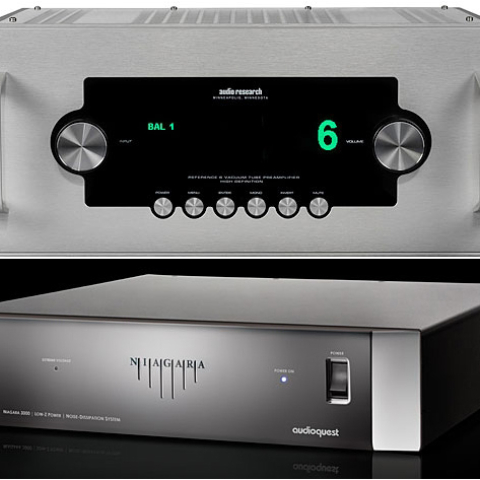
Given how much I'd loved the sound of the REF 6, I'd expected to be blown away by the REF 6SE. Instead, after that first glorious experience, I admired its sound, albeit from a distance. What was going on?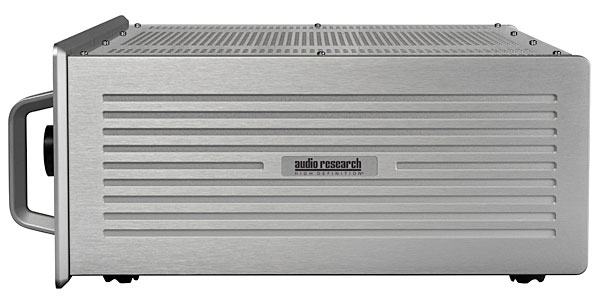 When I discussed my befuddlement with Editor Jim Austin, he suggested I remove the preamp's Nordost Odin 2 power cable from the Nordost QB8 power distributor and plug it, first, into the AudioQuest Niagara 5000 power conditioner and, next, directly into the wall. I did, and I concluded that my existing power setup sounded the smoothest and most musical.
Next, I recalled my system setup when I first discovered the beauties of the REF 6. While amps and cables were identical, I was using the dCS Vivaldi DAC and discontinued Scarlatti clock, and Grand Prix's Monaco rack with acrylic shelves. Nordost Titanium SortKones supported virtually all components. Now I was using the dCS Rossini DAC/clock combo, Grand Prix's far more resolving and neutral Monza rack with bamboo shelves, and a carefully chosen combination of Wilson Audio Pedestals, Ansuz Darkz T2S resonance support feet, IsoAcoustics Orea footers, Nordost Titanium and Bronze SortKones, and Grand Prix Audio Apex footers. That's a lot of differences.
With all those changes, the reference system typically delivers deeper and tighter bass, a fuller midrange, more accurate soundstage depth and boundaries—the image is definitely set farther back, with more air around it—and better-balanced sound from top to bottom. What I now hear from recordings of singers, instrumental soloists, ensembles, and orchestras I've heard live is far more akin to what I have experienced in the concert hall.
My mind turned to my recent interviews with "engineer's engineer" Jürgen Reis of MBL (footnote 4) and Michael Børresen of Ansuz/Aavik/Børresen. Both designers emphasized the importance of fine-tuning systems and paying particular attention to equipment supports, racks, and cabling. To quote Reis, who was responding to a query about whether he thought I'd prefer his Noble line preamp or the more expensive Reference line preamp, "If you had the Reference preamp, you might need to change the rack or feet a bit to match your taste."
I had neither ability nor desire to change the rack—the Monza is demonstrably superior to what I had before—but I could certainly change my footers. In short order, I discovered that Nordost Titanium SortKones added focus and edge, which benefitted the REF 6SE. Now timbres sounded more differentiated—quite beautiful, in fact. With leading edges more defined, the midrange also stood out in a far more distinctive manner.
When I discussed my befuddlement with Editor Jim Austin, he suggested I remove the preamp's Nordost Odin 2 power cable from the Nordost QB8 power distributor and plug it, first, into the AudioQuest Niagara 5000 power conditioner and, next, directly into the wall. I did, and I concluded that my existing power setup sounded the smoothest and most musical.
Next, I recalled my system setup when I first discovered the beauties of the REF 6. While amps and cables were identical, I was using the dCS Vivaldi DAC and discontinued Scarlatti clock, and Grand Prix's Monaco rack with acrylic shelves. Nordost Titanium SortKones supported virtually all components. Now I was using the dCS Rossini DAC/clock combo, Grand Prix's far more resolving and neutral Monza rack with bamboo shelves, and a carefully chosen combination of Wilson Audio Pedestals, Ansuz Darkz T2S resonance support feet, IsoAcoustics Orea footers, Nordost Titanium and Bronze SortKones, and Grand Prix Audio Apex footers. That's a lot of differences.
With all those changes, the reference system typically delivers deeper and tighter bass, a fuller midrange, more accurate soundstage depth and boundaries—the image is definitely set farther back, with more air around it—and better-balanced sound from top to bottom. What I now hear from recordings of singers, instrumental soloists, ensembles, and orchestras I've heard live is far more akin to what I have experienced in the concert hall.
My mind turned to my recent interviews with "engineer's engineer" Jürgen Reis of MBL (footnote 4) and Michael Børresen of Ansuz/Aavik/Børresen. Both designers emphasized the importance of fine-tuning systems and paying particular attention to equipment supports, racks, and cabling. To quote Reis, who was responding to a query about whether he thought I'd prefer his Noble line preamp or the more expensive Reference line preamp, "If you had the Reference preamp, you might need to change the rack or feet a bit to match your taste."
I had neither ability nor desire to change the rack—the Monza is demonstrably superior to what I had before—but I could certainly change my footers. In short order, I discovered that Nordost Titanium SortKones added focus and edge, which benefitted the REF 6SE. Now timbres sounded more differentiated—quite beautiful, in fact. With leading edges more defined, the midrange also stood out in a far more distinctive manner.
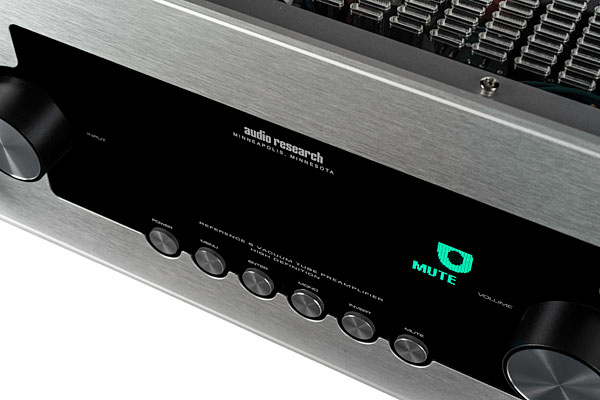 The REF 6SE's warmth and vibrancy of color, prominent midrange, and seemingly more dramatic dynamic contrasts made me want to listen more and deeper. "I just love the low sounds of Gerhardt's cello, the smoothness of the fatter midrange, and the brilliance of the high piccolos," I wrote in my notes. Yes, the Rossini by itself had tighter focus, but without the preamp the sound was less adorned, with a less seductive cushion of warmth. Whenever I removed the REF 6SE, I missed the extra beauty that it brought to music. I might not have felt impelled to swear on the Holy Bible that I was absolutely totally 100% happy, but feeling like a doggie who is assured all the belly rubs and kisses she wants sure brought me closer to feeling content.
During my final listen, I returned to Yello's room-shaking Electrified II. Anyone who thinks a tube preamp's bass response cannot equal solid-state bass reach and control needs to hear how exciting and explosive bass sounds through the Audio Research REF 6SE. That, combined with a fat midrange and a lively (but not prominent) top, contribute greatly to a unique sound that is more than the sum of its parts.
Conclusion
The REF 6SE's warmth and vibrancy of color, prominent midrange, and seemingly more dramatic dynamic contrasts made me want to listen more and deeper. "I just love the low sounds of Gerhardt's cello, the smoothness of the fatter midrange, and the brilliance of the high piccolos," I wrote in my notes. Yes, the Rossini by itself had tighter focus, but without the preamp the sound was less adorned, with a less seductive cushion of warmth. Whenever I removed the REF 6SE, I missed the extra beauty that it brought to music. I might not have felt impelled to swear on the Holy Bible that I was absolutely totally 100% happy, but feeling like a doggie who is assured all the belly rubs and kisses she wants sure brought me closer to feeling content.
During my final listen, I returned to Yello's room-shaking Electrified II. Anyone who thinks a tube preamp's bass response cannot equal solid-state bass reach and control needs to hear how exciting and explosive bass sounds through the Audio Research REF 6SE. That, combined with a fat midrange and a lively (but not prominent) top, contribute greatly to a unique sound that is more than the sum of its parts.
Conclusion
Remember those days long ago when, if you or one of your roommates picked a bunch of flowers in a field and brought them back to the dorm or apartment, someone would stick them in an empty plastic yogurt container, place it on a table, and then forget about them? Decades later, having learned some of life's lessons, when someone brings home a similar bunch of flowers, you now devote time to carefully cutting their stems and arranging them in a vase that greatly enhances the presentation. System tuning is much the same. The essential building blocks—the components—remain unchanged, but the context in which they are presented brings out their magic. What was formerly "really good hi-fi" blossoms into an audiophile bouquet. The Audio Research 6SE line-stage preamplifier is a bouquet with a fragrance all its own, one that you may well find irresistibly seductive. If you want to hear all it has to offer, pay particular attention to context, and give it all the attention it deserves. Once you do, you may very well find yourself leaning back with a look of contentment on your face as you vow to return to it again and again.
Footnote 3: I extended the invitation to Erik only after checking with Jim Austin and ensuring that, since his store carried none of the brands he would hear, there would be no conflict of interest. Footnote 4: Quoting John Atkinson, who knows an engineer's engineer when he sees one.
In a nutshell—"nuts" being the operative part of the term, because that's how I felt—I discovered that the REF 6SE sounded very different than it had a few days earlier. Much of the tonal beauty that had momentarily caused me to hold my breath remained, but the shiny polish and transparency that had knocked me over was gone. The REF 6SE unquestionably fattened up Dolly's voice, brought out the back-up singers in ways I found quite pleasing, and delivered extremely tight, gut-shaking bass, but there was an opaqueness to the sound, coupled with a lack of focus to the leading edge of tones, that stood in sharp contrast to the openness and clarity I experience with the Rossini itself controlling volume and no preamp in the chain.
Of course, I didn't say that to Erik. Not only can I not share my feelings about a product before a review is published; I also didn't want to influence what he and Natalia thought. So I confined my comments to "Hmm, that was really interesting."
A few days later, Erik succinctly summarized his feelings in an email that corroborated what I'd heard. "Listening to the Dolly Parton and Yello tracks, the AR sounded full and organic," he wrote. "Then, going to the Rossini DAC straight as the preamp, I felt the music was quite a bit more direct. Not fair to judge something from 30 minutes of listening, but the raw grip of the Rossini felt more intimate and real."
Given how much I'd loved the sound of the REF 6, I'd expected to be blown away by the REF 6SE. Instead, after that first glorious experience, I admired its sound, albeit from a distance. What was going on?
When I discussed my befuddlement with Editor Jim Austin, he suggested I remove the preamp's Nordost Odin 2 power cable from the Nordost QB8 power distributor and plug it, first, into the AudioQuest Niagara 5000 power conditioner and, next, directly into the wall. I did, and I concluded that my existing power setup sounded the smoothest and most musical.
The REF 6SE's warmth and vibrancy of color, prominent midrange, and seemingly more dramatic dynamic contrasts made me want to listen more and deeper. "I just love the low sounds of Gerhardt's cello, the smoothness of the fatter midrange, and the brilliance of the high piccolos," I wrote in my notes. Yes, the Rossini by itself had tighter focus, but without the preamp the sound was less adorned, with a less seductive cushion of warmth. Whenever I removed the REF 6SE, I missed the extra beauty that it brought to music. I might not have felt impelled to swear on the Holy Bible that I was absolutely totally 100% happy, but feeling like a doggie who is assured all the belly rubs and kisses she wants sure brought me closer to feeling content.
During my final listen, I returned to Yello's room-shaking Electrified II. Anyone who thinks a tube preamp's bass response cannot equal solid-state bass reach and control needs to hear how exciting and explosive bass sounds through the Audio Research REF 6SE. That, combined with a fat midrange and a lively (but not prominent) top, contribute greatly to a unique sound that is more than the sum of its parts.
Remember those days long ago when, if you or one of your roommates picked a bunch of flowers in a field and brought them back to the dorm or apartment, someone would stick them in an empty plastic yogurt container, place it on a table, and then forget about them? Decades later, having learned some of life's lessons, when someone brings home a similar bunch of flowers, you now devote time to carefully cutting their stems and arranging them in a vase that greatly enhances the presentation. System tuning is much the same. The essential building blocks—the components—remain unchanged, but the context in which they are presented brings out their magic. What was formerly "really good hi-fi" blossoms into an audiophile bouquet. The Audio Research 6SE line-stage preamplifier is a bouquet with a fragrance all its own, one that you may well find irresistibly seductive. If you want to hear all it has to offer, pay particular attention to context, and give it all the attention it deserves. Once you do, you may very well find yourself leaning back with a look of contentment on your face as you vow to return to it again and again.
Footnote 3: I extended the invitation to Erik only after checking with Jim Austin and ensuring that, since his store carried none of the brands he would hear, there would be no conflict of interest. Footnote 4: Quoting John Atkinson, who knows an engineer's engineer when he sees one.