MQA

Sort By: Post DateTitle Publish Date

MQA Tested, Part 1

I don't think I've ever seen an audio debate as nasty as the one over Master Quality Authenticated (MQA), the audio-encoding/decoding technology from industry veterans Bob Stuart, formerly of Meridian and now CEO of MQA Ltd., and Peter Craven. Stuart is the company's public face, and that face has been the target of many a mud pie thrown since the technology went public two years ago. Some of MQA's critics are courteous—a few are even well-informed—but the nastiness on-line is unprecedented, in my experience.
MQA: Some Claims Examined

"The fundamental problem of communication is that of reproducing at one point either exactly or approximately a message selected at another point."—Claude Shannon


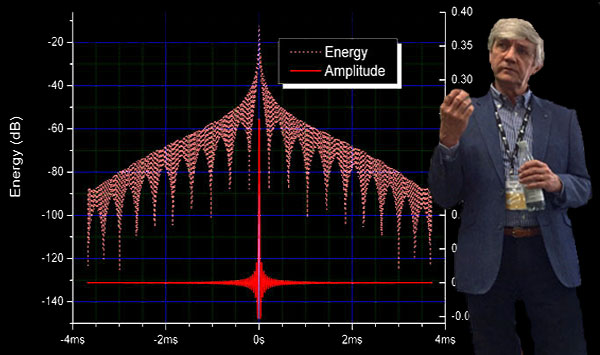
Since its announcement at the end of 2014, Master Quality Authenticated, the MQA encoding/decoding system, has spawned outspoken criticism. Some of the more thoughtful negative reactions have come from engineers such as Dan Lavry, Bruno Putzeys, and Daniel Weiss. Others have been expressed by manufacturers of digital products: the late Charley Hansen at Ayre Acoustics, for example, along with Jason Stoddard and Mike Moffat at Schiit Audio, John Siau at Benchmark Media Systems, and Jim Collinson at Linn Products. Some have been audio writers: Doug Schneider, at SoundStage!, and Paul Miller and Jim Lesurf, at Hi-Fi News. Most vociferous have been anonymous website posters. As Jim Austin remarks in his examination of MQA's decoding of impulse-response data elsewhere in this issue, "the nastiness online is unprecedented."

Analog Corner #265: Notes from the Road (Hi-Fi Shows & MQA)

At audio events held by the Los Angeles and Orange County Audio Society, I'm usually called on to speechify about one thing or another, or to roast an honoree at one of the Society's December Galas. But at the spring 2017 Los Angeles Audio Show, Bob Levi, the Society's president, quipped, "This is one awards dinner where you won't have to entertain—so relax and enjoy!"

MQA at LAAS

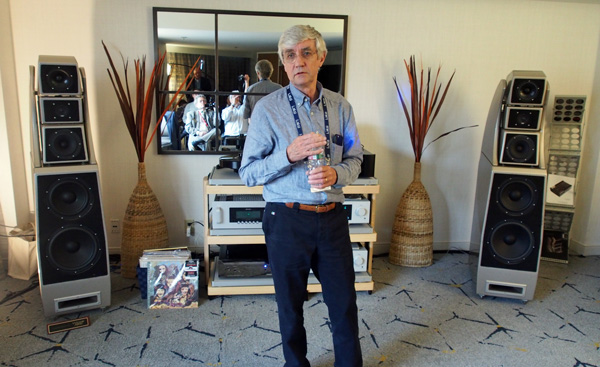
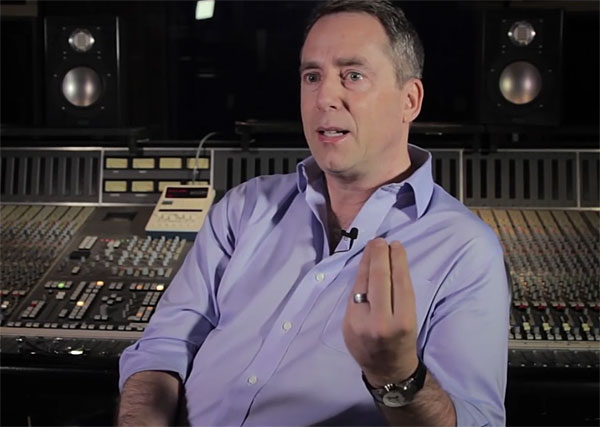
MQA's Bob Stuart comparing PCM and MQA recordings in the Sunny Components room


Despite there now having been many opportunities for audiophiles to compare MQA-encoded recordings with the PCM originals—as well as comparisons at shows and dealer events, the Norwegian 2L record label has offered downloads of MQA/PCM files for quite a long time—there are still members of the press who insist that no-one, other than some reviewers, has been able to perform such comparisons. At the 2017 LAAS, not only were some exhibitors demonstrating MQA—Aurender, Meridian—Covina, CA retailer Sunny Components devoted the show's Saturday afternoon to specific comparisons hosted by MQA's Bob Stuart and Wilson Audio's Peter McGrath.

Listening to MQA

Last June, Jim Austin briefly discussed the operation of MQA in his review of the Meridian Explorer2 USB DAC, but you can find a more detailed explanation on Stereophile's website here and here. MQA involves two fundamental concepts, discussed in a paper presented to the Audio Engineering Society in October 2014. The first is responsible for a large reduction in the bandwidth required to store and stream high-resolution files, the second for a potential improvement in sound quality. . .

Spencer Chrislu: Master Quality Authenticated

Most people who have heard music recordings encoded with Master Quality Authenticated agree that it sounds really goood (footnote 1)—but even they recognize that at least one major challenge remains: ensuring that listeners can actually get, in MQA format, the music they most love. I spoke with Spencer Chrislu, MQA's director of content services, about the company's efforts to meet this challenge.

MQA: Questions and Answers

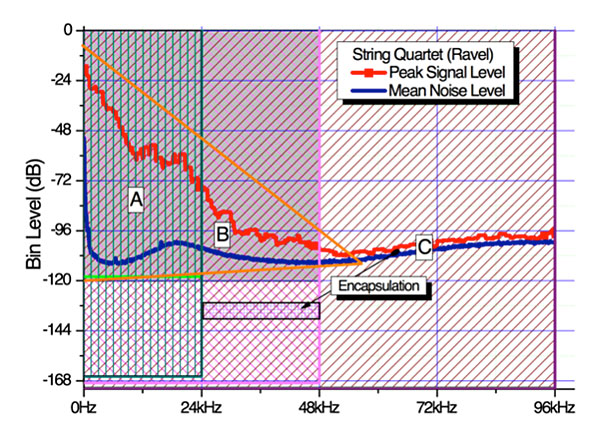
Author's Note: We are grateful to Stereophile for the opportunity to address some frequently repeated technical questions appearing in comments to articles. Recently this has included misunderstandings about noise calculation, dynamic range, resolution, definition, music spectra, channel capacity, lossless processing and temporal aspects of digital channels.


To simplify this document we have grouped the topics and set them as questions and answers either as response, tutorial or axiom. Some months ago we published a comprehensive Q&A for an online forum and to avoid repetition we occasionally refer to topics already discussed there (see [37] in the "References" sidebar).—J. Robert Stuart

Inside MQA

Jim Austin briefly discusses MQA in his review of the Explorer2 in this issue, but a more complete description of MQA can be found in an article posted on Stereophile's website at the end of 2014.


MQA involves two fundamental concepts, discussed in a paper presented to the Audio Engineering Society in October 2014, the first responsible for a potential improvement in sound quality, the second responsible for a large reduction in the bandwidth required for storage and streaming of high-resolution files...

MQA's Sound Convinces Hardened Showgoers

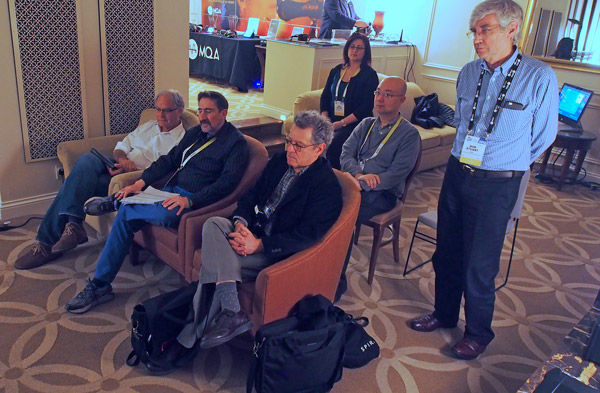
Digging MQA (from L–R): Peter McGrath, Jason Victor Serinus, and Michael Fremer, with Bob Stuart anxiously looking on and Winai Pawitwatana behind. (Photo: John Atkinson)


CES 2016 marked the first time that three writers for Stereophile—Editor-in-Chief, John Atkinson; AnalogPlanet analog guru, Michael Fremer; and this Contributing Editor—could sit down in the same room with Bob Stuart of MQA/Meridian and spend a concentrated amount of time comparing before- and after-MQA encoded (Master Quality Authenticated) tracks.

Advertisement
Advertisement
Advertisement