MQA

Sort By: Post DateTitle Publish Date

Lenbrook Acquires MQA

Note: This is a developing story. Updates will be posted as they unfold.


Lenbrook Corp, the privately owned Canadian enterprise whose holdings include NAD electronics, PSB speakers, and Bluesound (the maker of the BluOS music operating software system) has acquired the assets of MQA, Ltd, including MQA technology and the SCL6. The press release announcing the acquisition, which went public September 19 at 8am EDT, notes that the deal "further solidifies Lenbrook's commitment to excellence and innovation in the evolving landscape of audio technology."
Zen & the Art of A/D Conversion

In a series of recent feature articles for Stereophile, Jim Austin has examined how the controversial MQA codec works: "MQA Tested, Part 1," "MQA Tested Part 2: Into the Fold," "MQA Contextualized," "MQA, DRM, and Other Four-Letter Words," and, most recently, "MQA: Aliasing, B-Splines, Centers of Gravity." I doubt there is a Stereophile reader who is unaware of the fracas associated with MQA, and I have been repeatedly criticized on web forums for describing its underlying concept as "elegant."


But elegant it is, I feel.

MQA: Aliasing, B-Splines, Centers of Gravity

The right thing at the wrong time is the wrong thing.—Joshua Harris


The sampling theory formulated by Claude Shannon in the late 1940s had a key requirement: The signal to be sampled must be band-limited—that is, it must have an absolute upper-frequency limit. With that single constraint, Shannon's work yields a remarkable result: If you sample at twice that rate—two samples per period for the highest frequency the signal contains—you can reproduce that signal perfectly. Perfectly. That result set the foundation for digital audio, right up to the present. Cue the music.

MQA, DRM, and Other Four-Letter Words

In an article published in the March 2018 Stereophile, I wrote that critics have been attacking MQA, the audio codec developed by J. Robert Stuart and Peter Craven, by accusing it of being lossy. The critics are right: MQA is, in fact, a lossy codec—that is, not all of the data in the original recording are recovered when played back via MQA—though in a clever and innocuous way. For MQA's critics, though, that's not the point: They use lossy mainly for its negative emotional associations: When audiophiles hear lossy, they think MP3.

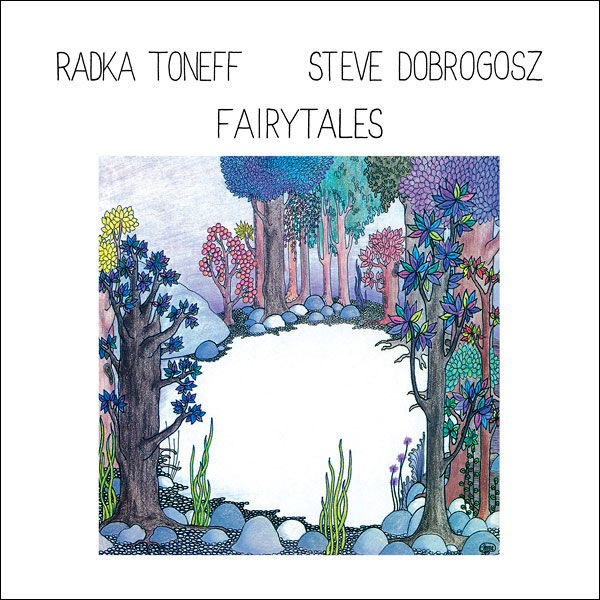
Recording of April 2018: Fairytales: Original Master Edition (MQA)

Radka Toneff & Steve Dobrogosz: Fairytales: Original Master Edition (MQA)

Odin LP03 (original LP, 1982); Odin CD9561 (24-bit/48kHz MQA-encoded FLAC file; Tidal Masters stream; hybrid MQA-CD; original sample rate 192kHz; 2017). Arild Andersen, prod. (1982, 2017); Andreas Risanger Meland, exec. prod. (2017); Tore Skille, Tom Sætre, original engs.; Svein Vatshaug, Rune Sund Nordmark, recorder restoration; Thomas Baårdsen, Geir Iversen, digital transfer of original tapes; Morten Lindberg, Peter Craven, Bob Stuart, digital restoration; Erik Gard Amundsen, technical advisor. DAA (original LP); DDD (MQA). Except: "My Funny Valentine," ADA (LP), ADD (MQA). TT: 40:11

Performance ******

Sonics ******


"See her how she flies . . ." When I first heard that lyric, from Jim Webb's "The Moon Is a Harsh Mistress," sung by a hauntingly fragile woman's voice and supported by a sparse yet lyrical piano accompaniment, at an audio show in 1983, I got chills. Who was this empathetic singer? Back in my cabaret-musician days, more than four decades ago, I backed so many singers with beautiful-sounding pipes but who didn't seem to comprehend the meaning of the words—yet this unknown woman directly communicated the song's emotion.

MQA: Benefits and Costs

Enough has been said by now about the technical details of how Master Quality Authenticated (MQA) works to fill several books. But the technical details are only part of the story, and probably not the most interesting part—and they're certainly not what provokes the extreme emotional responses of many to the format. So let's jump into the business and practical aspects of MQA to which so many audiophiles are reacting.

MQA Contextualized

When you come to a fork in the road, take it.—Yogi Berra


Over one busy week in 1986, Karlheinz Brandenburg laid the foundation of a technology that a few years later would upend the record business. Brandenburg, a PhD student in electrical engineering at the Friedrich-Alexander University Erlangen-Nuremberg, was figuring out how to code digital music efficiently enough that it could be delivered over digital telephone lines. A patent examiner had concluded that what the application proposed was impossible, so over a week of late nights, Brandenburg produced the proof of concept and more. It was another decade before the technology—MPEG-2 level III, more commonly known as MP3—would find its true home, the Internet.

MQA Tested Part 2: Into the Fold

Loss is nothing else but change, and change is Nature's delight.—Marcus Aurelius


Master Quality Authenticated (MQA), the audio codec from industry veterans Bob Stuart and Peter Craven, rests on two pillars: improved time-domain behavior, which is said to improve sound quality and what MQA Ltd. calls "audio origami," which yields reduced file size (for downloads) and data rate (for streaming). Last month I took a first peek at those time-domain issues, examining the impulse response of MQA's "upsampling renderer," the output side of this analog-to-analog system (footnote 1). This month I take a first look at the second pillar: MQA's approach to data-rate reduction. In particular, I'll consider critics' claims that MQA is a "lossy" codec.

More on MQA

An economy of information transmitted . . . what was encoded was only what was needed, nothing more. (footnote 1)


As I wrote in the January issue's "As We See It," Master Quality Authenticated (MQA), the encoding/decoding system developed by J. Robert (Bob) Stuart and Peter Craven, has been widely criticized, despite reports in this magazine and others that MQA-encoded files tend to sound better than the PCM originals from which they were derived. Also in last month's issue, Jim Austin investigated the time-domain performance of the MQA reconstruction filter and I examined some of the more general aspects, ending with: "Other criticisms of MQA involve its implications for the recording industry, for manufacturers of audio products, and for consumers. I will examine those in next month's 'As We See It.'"

Advertisement
Advertisement
Advertisement