Turntable Reviews

Sort By: Post DateTitle Publish Date

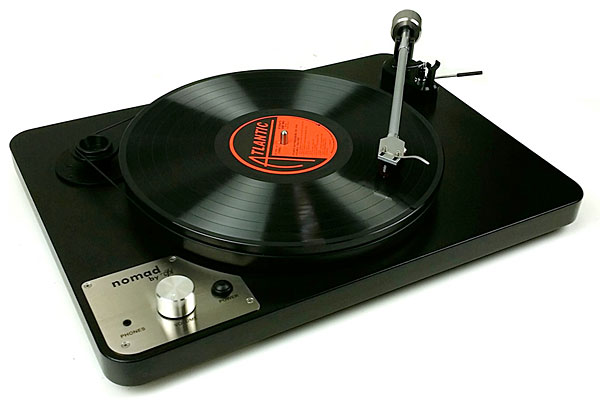
VPI Nomad LP player

I wish I'd had a VPI Nomad when I was in college. I was in a fraternity, and for most of my time there I had to rely on others' sound systems to play my music. My sophomore and junior years, some freshmen were rotated through my room, and several of them had nice sound systems and were accommodating about letting me play my music. When I wanted to really crank it up, I visited the stoners, who had the best systems and were happy to spin my collections of King Crimson and ELP, assuming I could get them to stop listening to Jefferson Starship for five minutes (footnote 1).
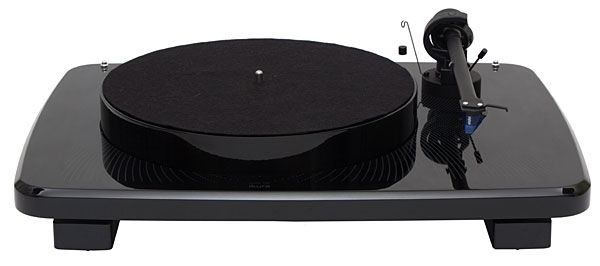
Music Hall Ikura LP player & Ortofon 2M Blue phono cartridge

The call I received from Music Hall's Leland Leard surprised me: "Hey, Bob, I think you'd be the perfect guy to review our new Ikura turntable!"


Hmm. It had been four years since I'd reviewed a record player: Pro-Ject's Debut III, in the February 2010 issue. And with the surging popularity of vinyl—hell, Rough Trade NYC's enormous new record store, in the Williamsburg section of Brooklyn, even sells turntables—the thought of a plug-and-play turntable-tonearm-cartridge combination for $1200 intrigued me. Sure, Leland—send it on.

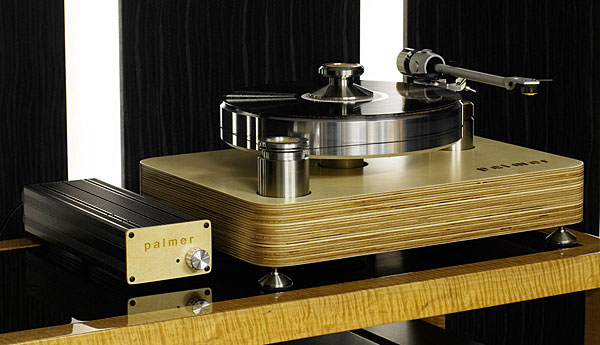
Analog Corner #231: Palmer Audio 2.5 turntable & Audio Origami PU7 tonearm

Palmer Audio's 2.5 turntable, with its laminated plinth of Baltic birch and metallic features, looks Scandinavian but is made in the UK. It shares a few conceptual similarities with the turntables made by Nottingham Analogue, another British brand. The review sample had the optional side panels of cherrywood veneer.

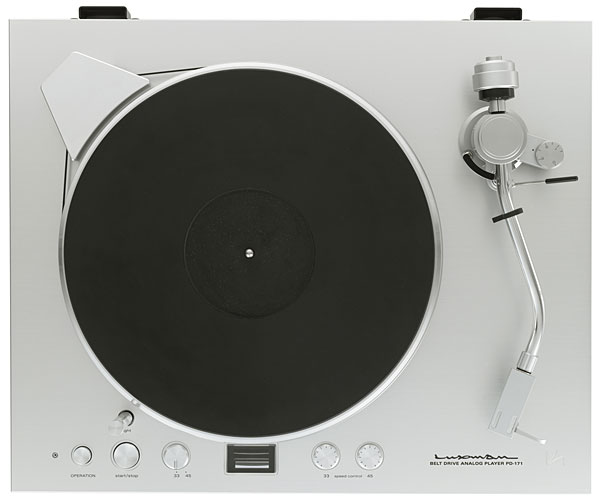
Luxman PD-171 record player

Much ink has been spilled, and rightly so, on the topic of the LP's recent and apparently durable resurrection as a playback medium. The corpse may not be quite as lively after death as before, but it is nonetheless arguably more Lazarus than Lavoisier (the latter having managed nothing more than to wink at the crowd following his time on the guillotine—as he boasted, in life, that he would do).

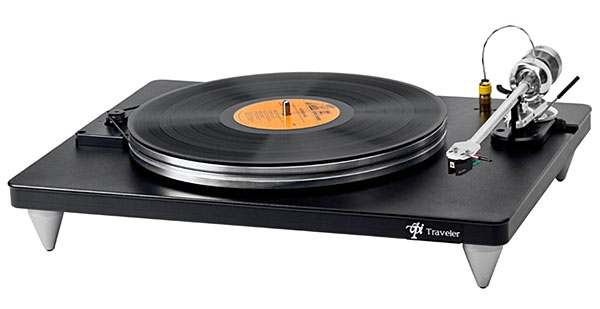
VPI Industries Traveler turntable

On May 21, 2008, five months after purchasing my very first turntable (a Rega Research P3-24), I decided that my obsession with LPs had grown to the extent that I could no longer function without a good record-cleaning machine. I'd done some research and found that the device best suited to my life and wallet was VPI's time-honored HW-16.5. I was certain, anxious, determined. But that morning, when I gave VPI a call, the line was busy. When I called again in the afternoon, the line was busy. When I called again in the evening, the line was busy.

Clearaudio Ovation & Clarify turntable & tonearm

Like many audiophiles, I cohabit with someone who understands my audio obsession but has no desire to share it. That someone is my wife. Since I began writing for Stereophile, Ashley has helped me carry amplifiers, tape up boxes for shipping, and found room in our house for all the extra components and their boxes—which sometimes make the place look like a scene from an episode of Hoarders. She's a peach. Every time new gear comes to the house or to my studio, my wife has calmly helped me move stuff around while I dance around like a six-year-old on Christmas morning.

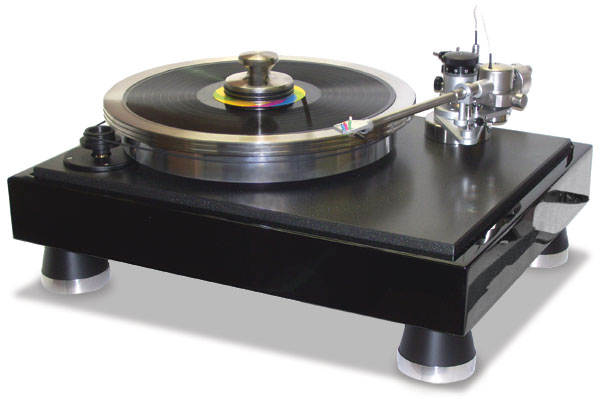
VPI Classic 3 turntable & Classic-JMW tonearm

Trends in turntable design shift back and forth over time, each "advance" turning out to be a mostly sideways move. Over its long history, VPI's founder and designer, Harry Weisfeld, has moved the analog goalposts back and forth as he's refined his thinking. His early turntables were mostly standard spring-suspension designs of normal size. By the time Weisfeld produced his fully tricked-out TNT model, which was originally designed to stably hold the heavy moving mass of Eminent Technology's ET2 air-bearing arm, he'd moved to a massive, oversized, sandwiched plinth with isolating feet at the corners. He first used springs and, later, air bladders originally designed to cushion a tractor-trailer's load, and which he'd found in a trucker's supply catalog. Via an O-ring, the TNT's outboard motor drove one of three pulleys that protruded from holes in the plinth, and attached to a T-shaped subchassis that, in turn, drove the other two pulleys via two additional O-rings.

Clearaudio Concept record player

Enticing more music lovers to try vinyl requires a foolproof, plug'n'play solution. Asking a member of the digital generation to install a cartridge in a tonearm and then set up the VTA, SRA, VTF, etc. is asking too much. It's easier to make such a request of someone already bitten by the analog bug, but with turntables, wishing someone beginner's luck will not guarantee success.

Rega RP-1 record player

I tried to name a high-end audio product that's been recommended more often than the Rega Planar 3 turntable. I failed.


The closest I could come was Rega's own RB300 tonearm, surely the best-selling perfectionist tonearm of all time. After that came the Rega Planar 2 turntable, a sample of which I owned and loved in the early 1980s. Next on my list was the original Rega Elys, a moving-magnet cartridge that sounded as chunky and direct as it was cheap and magenta.

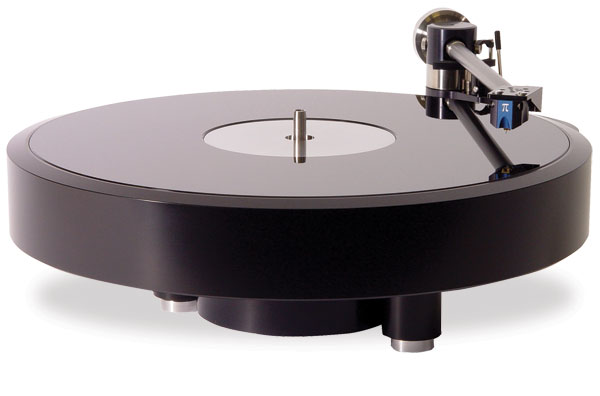
Brinkmann Audio Bardo turntable

I won't debate here how to make a turntable's platter go around. Choose your favorite: belt vs direct drive, idler wheel vs belt, spring-windup vs wind power, whatever. As far as I'm concerned, there's nothing to debate. Each of these technologies has its pluses and minuses, but none can produce CD's accuracy of speed and inherent freedom from wow and flutter.
Advertisement
Advertisement
Advertisement