Turntable Reviews

Sort By: Post DateTitle Publish Date

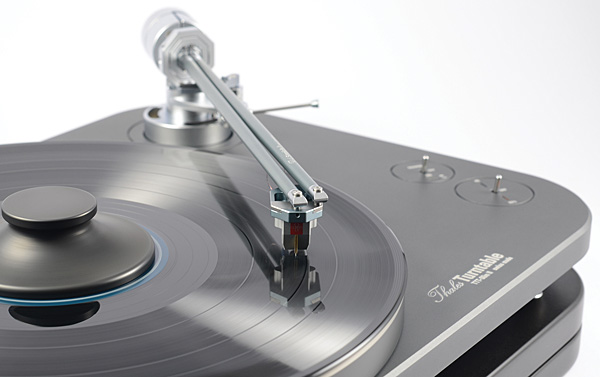
HiFiction Thales TTT-Slim II turntable & Simplicity II tonearm
Money, that unreliable buyer of happiness, has at times proven effective at delivering good sound. It can buy other things, as well: Audiophiles can swap cash for products that function as objets d'art, as status symbols, or even as canny investments.


But—do you think money can buy peace of mind for the audio enthusiast who frets over binding voice-coils, leaking capacitors, drifting resistor values, oxidizing connectors, aging or incorrectly biased tubes, and that most pernicious worry of all, distortion and premature record wear from incorrectly aligned phono cartridges? Sadly, most of those neuroses, some quite reasonable, remain unaddressed by cash almighty.
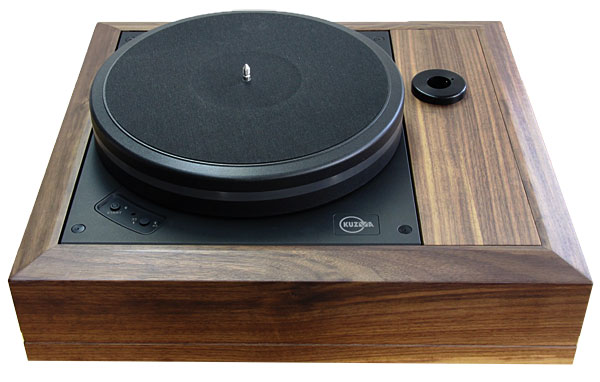
Kuzma Stabi R turntable

I've been the proud owner of a Kuzma Stabi S turntable and Stogi S tonearm since 2001. The combination was an impulse purchase, made after seeing and hearing it in action at Stereophile's Home Entertainment Show at the New York Hilton. Even under unruly show conditions, the Kuzma player created rock-solid images and played music with serious jump factor. With its matte brass finish, tubular bell looks, and overtly industrial design, the Slovenian-made Stabi S/Stogi S was steampunk before steampunk. Looking back, it was one of my best-ever audio purchases.

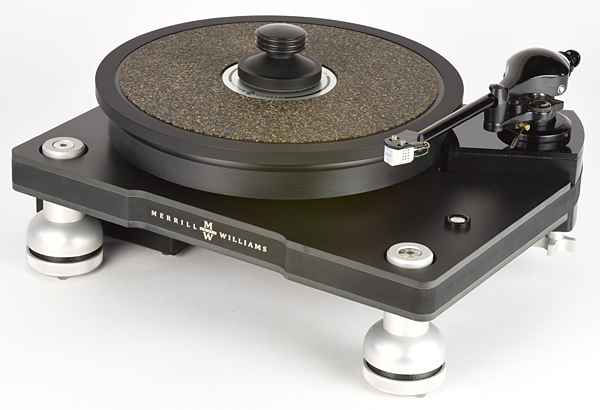
Merrill-Williams R.E.A.L. 101.3 turntable

Record players and the average consumer enjoy an on-again/off-again relationship—happily, at this moment in time, it is very much on—but to high-end audio enthusiasts, the turntable has endured as an object of near-talismanic importance. I think that's not only because the turntable continues to give us so much pleasure, but also because it seems so understandable—at its simplest, it's just a motor and a rotatable platter, attached to a board that also has some provisions for fastening a tonearm. End of story. Who among us has not, at one time or another, considered the lot of the turntable designer and thought, I could do that?

VPI Prime Scout turntable

We got our wish. Phonograph ownership is once again depicted as commonplace, even hip, in popular films, TV shows, and ads for other products. Turntables and LP jackets show up in photos in Elle Decor and Vanity Fair. New LPs are sold in stores in nice neighborhoods, and in malls with Cinnabon franchises and J.Crew stores. A shockingly high percentage of new record releases in which normal people are interested, and a few in which they are not, are now available on vinyl. For the first time in decades, I receive occasional gifts of new LPs—presumably because they're once again easy for nonenthusiasts to find and to buy—and the very few CDs I've received in the past few years have been homemade.

AnalogueWorks Zero turntable

My main task is to describe an audio component's basic character. How was it made? How did it fit into my system? How effectively did it deliver musical performances? My goal is to create stories that generate sounds and images in your mind—stories that will allow you to imagine how the component might perform in your system.


I can hear the moans from all you objectivist guys: Please, Herb, spare us your purple prose.

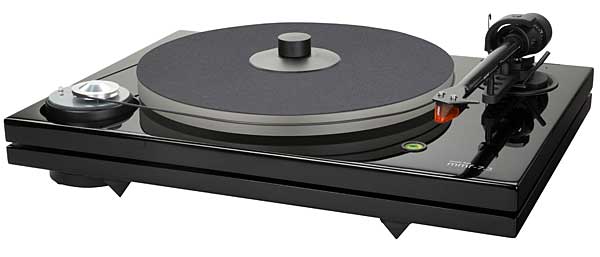
Music Hall Audio MMF-7.3 turntable

Stereophile and Music Hall Audio share a long mutual history. Like most relationships, it's had its ups and downs; unlike most relationships, this one is well documented—in retired writer Sam Tellig's much-loved "Audio Cheapskate" and "Sam's Space" columns, and Music Hall Audio proprietor Roy Hall's responses in "Manufacturers' Comments." I always found Sam and Roy's gentlemanly brawling to be good, clean, if occasionally uncomfortable fun—like the touchy rapport between a gregarious dog and a rascally cat forced to live under the same roof: A truce may have been called, but don't expect them to make nice.

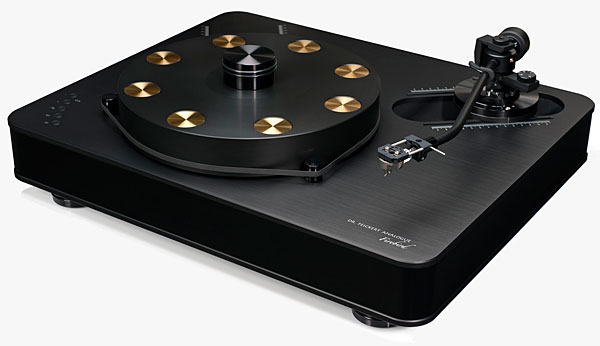
Dr. Feickert Analogue Firebird turntable

Dr. Feickert Analogue's top-of-the line turntable, the Firebird ($12,500), is a generously sized record player designed to easily accommodate two 12" tonearms. Its three brushless, three-phase DC motors, arranged around the platter in an equilateral triangle, are connected to a proprietary controller in a phase-locked loop (PLL); according to the Firebird's designer, Dr. Christian Feickert, a reference signal from just one of the motors drives all three—thus one motor is the master while the other two are slaves. (Man, today that is politically incorrect, however descriptively accurate.) Feickert says that the key to this drive system is the motor design, which was done in close consultation with its manufacturer, Pabst. The result is a feedback-based system in which the controller produces the very low jitter levels claimed by Feickert.

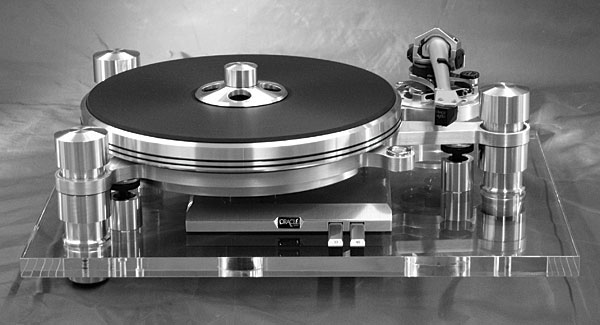
Oracle Delphi Mk.VI Second Generation turntable

The stats are impressive: Quebec's Oracle Audio Technologies, formerly Trans Audio (footnote 1), has been in business for 37 years, during which they've sold nearly 11,000 Oracle Delphi turntables. That's not bad for a perfectionist turntable—and especially not bad for a perfectionist turntable whose first and most estimable competitor, the Linn Sondek LP12, was well established by the time of the Delphi's debut, in 1979.

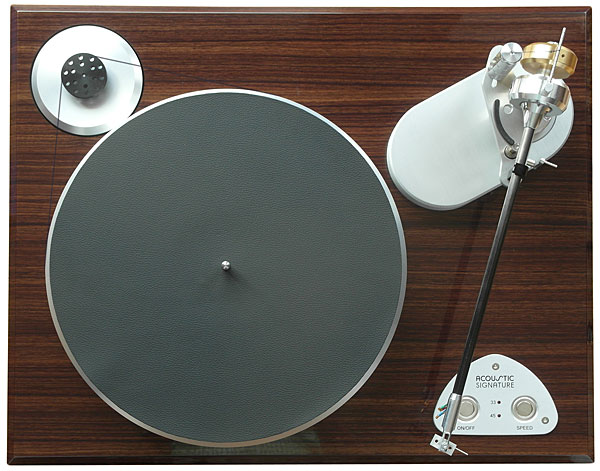
Acoustic Signature Triple X turntable & TA-1000 tonearm

In a bizarre but happy turn of events, recent consumer trends have given even the most socially awkward audiophile something to talk about at cocktail parties and family gatherings at which normal people predominate: the PonoPlayer and vinyl. These are hot topics; each is among the best-sounding music sources available, and both offer hope for our hobby, if not for music lovers in general. But vinyl has the advantage of appealing to a much wider range of budgets. LPs can be had from anywhere to "We'll pay you to haul these away" to "Your loan officer is on line one." Likewise, vinyl playback hardware is available in virtually every price range, from a second-hand Dual 1229 ($50 and up) to the highly praised Continuum Audio Labs Caliburn ($200,000 and down).

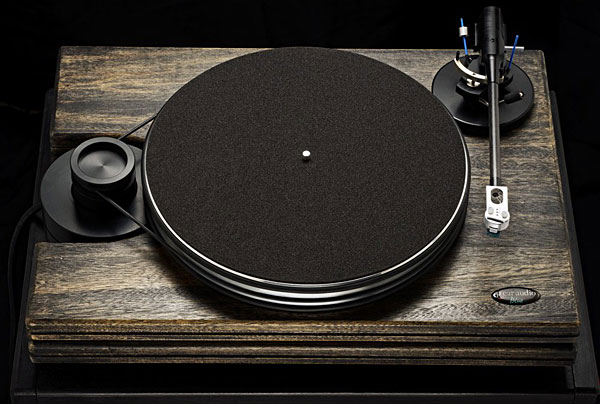
Pear Audio Blue Kid Howard turntable & Cornet 2 tonearm

There's nothing new under the sun, or so we are told. Nevertheless, in the early 1990s, a British designer named Tom Fletcher upset the audio status quo with a turntable that combined otherwise-familiar elements in a manner that was, at the very least, new with a lower-case n. Fletcher's product, the Space Deck, was perhaps the first original design in British phonography since the Roksan Xerxes of 1985; and his company, Nottingham Analogue, went from nothing to something in no time at all.
Advertisement
Advertisement
Advertisement