Turntable Reviews

Sort By: Post DateTitle Publish Date

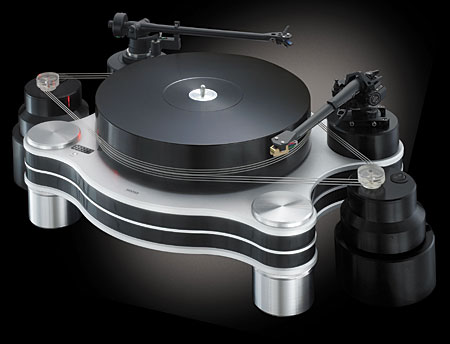
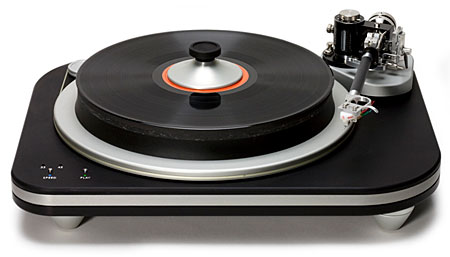
Spiral Groove SG2 turntable
Photograph: TONEAudio Magazine


High-end audio exists at the intersection of art and science. Either discipline can produce a good product, but it takes both to create the very best. The Sonic Frontiers gear I auditioned many years ago, for example, was technically sound, nicely built, and sounded good—just never as sublime as products from, say, Audio Research or VTL. On the other hand, an experienced, insightful designer such as Quicksilver's Michael Sanders can create wonderful products from humble circuits and parts, but be ultimately limited by the underlying technology. But when brilliant design, uncompromised execution, long experience, and artistry all come together, the results can be staggering.
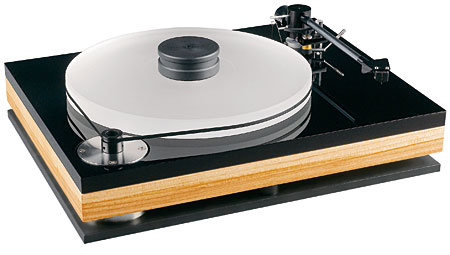
Bauer Audio dps turntable

Although LPs remain, for me, the high-end medium of choice, I'm not terribly interested in today's high-end record players. Most of them, from the 1980s through the present, have been soulless, uninspired, me-too products that utterly fail to communicate the presence, momentum, and punch of recorded music. And in certain ways—expense, complexity, size, cosmetics—some have been, quite simply, ridiculous.


Oracle Delphi Mk.VI turntable

Thirty years have not diminished the beauty and elegance of Oracle's Delphi turntable. In my opinion, it still ranks among the best-looking turntables ever made. I bought an original Mk.I, used, in 1982, and very positively reviewed the Delphi Mk.V in the December 1997 Stereophile.


In its three decades the Delphi has undergone many upgrades both technical and aesthetic. Not surprisingly, so has the price. The Mk.II Delphi sold for $1250 in 1986; the Delphi Mk.VI with Turbo power supply and dedicated power cord now sells for $8500, which, in today's market, I think is reasonable for what you get. The review sample came with an Oracle/SME 345 tonearm ($3100) and a Benz-Micro Thalia high-output MC cartridge ($1700), for a total cost of $13,300—or $11,600 for just 'table and arm.

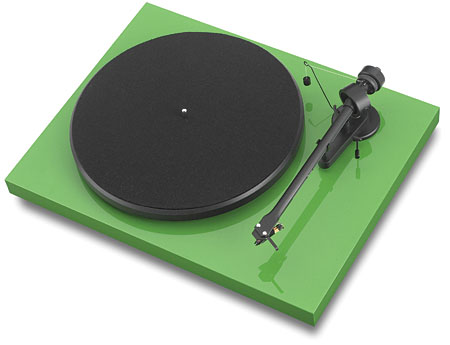
Pro-Ject Debut III record player

In the January 2010 issue of Stereophile I gushed">http://www.stereophile.com/integratedamps/marantz_pm5003_integrated_amp… effusively about the $450 Marantz PM5003 integrated amplifier. Not only was I impressed with the sound, build quality, and features of this very affordable component, but, intrigued by how it might be combined with other gear to build a complete entry-level system for about a thousand bucks, I began to ponder other entry-level components that might nicely complement it. My goal here, of course, is to inspire a new generation of young audiophiles. I felt a turntable would be a good place to start.


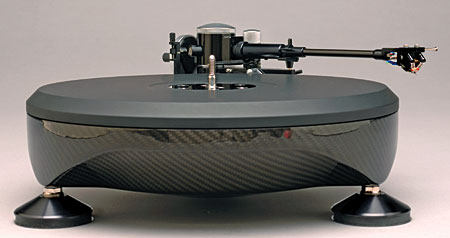
SME Model 20/12 turntable & 312S tonearm

Much has happened in the analog world since I reviewedhttp://www.stereophile.com/analogsourcereviews/796">reviewed; SME's flagship Model 30/2 turntable for the March 2003 Stereophile (footnote 1). Back then, spending $25,000 on a turntable (without tonearm) was an odd extravagance intended only for those seriously committed to the format, and who already owned large LP collections. Although new LPs were being pressed in growing numbers, the resurgence of vinyl was still spotty, and the long-term prognosis for the old medium remained in question.


Rega P3-24, RB301, & Elys 2 turntable, tonearm, & phono cartridge

It's now been eight years since a Rega P3 turntable passed through my listening room. While the new P3-24 superficially resembles the P3 (and virtually every other Rega 'table), the company has made some significant changes, including upgrading to the high-quality, low-voltage (24V), electronically adjusted motor used in the more expensive P5, P7, and P9. As in those models, an electronic circuit trims the phase angle of the P3-24's motor coils, thus substantially reducing motor vibrations. In 1998, during a factory tour, a Rega engineer demonstrated the circuit's effectiveness to me. As he adjusted the circuit board's pot, vibrations from the motor dramatically decreased, until it was difficult to tell if the motor was spinning or not. Back then, this "hand-trimmed" motor technology was available only in the P9. The P3-24 uses a less sophisticated version of the same basic idea.

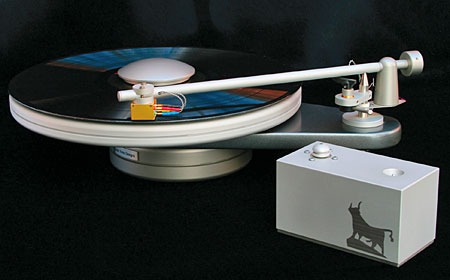
Simon Yorke Designs Series 9 turntable & tonearm

Simon Yorke is an artist, a machinist, an electronics wiz, and a political idealist. He's also an analog enthusiast who melds aesthetic and technical considerations into eye-catching, densely packed, compact record-playing devices that are ruggedly built and functionally elegant. His turntables' smooth, matte-gray, metallic finishes and efficient lines make them among the most visually pleasing ever made.


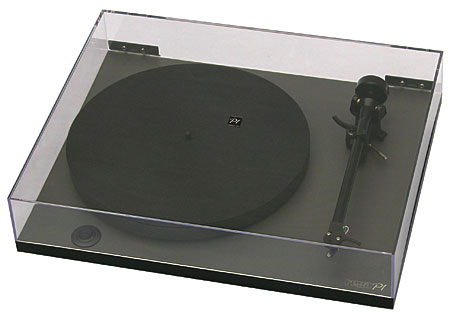
Rega P1 record player

For a word that first appeared in print only 35 years ago, prequel has a lot of impact—if only in a commercial sense. The television series Smallville has become a staple of American broadcasting. Film producers gambled millions on the chance that audiences would want to know what happened when Batman began. And while moviegoers have turned their backs on the apparently awful Hannibal Rising, the book of the same name is doing brisk business indeed.
Advertisement
Advertisement
Advertisement