

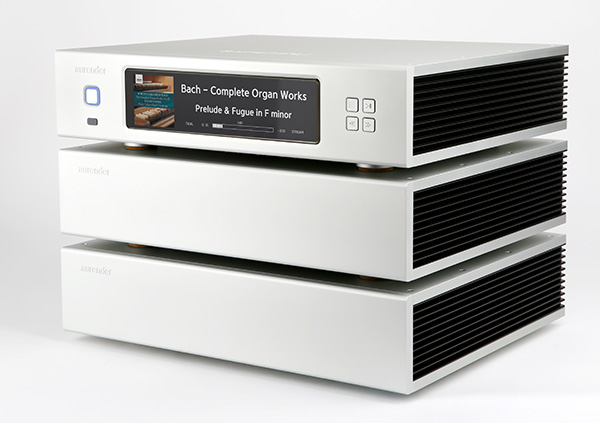
Aurender N50 server/streamer
I was born and raised in Argentina. Ever since I was a kid, I've been fascinated by machines. My mother used to call me "Botones" (Spanish for "Buttons") because I pressed every button and turned every knob I encountered. I was particularly interested in machines that played music, especially my dad's Grundig console, which sounded like a warm breeze in a beautiful sunset.
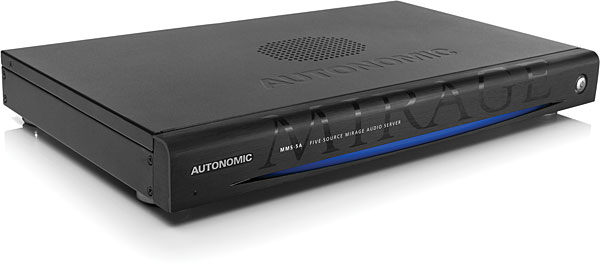
Autonomic Controls Mirage MMS-5A media server
I bought a Slim Devices Squeezebox network player in the spring of 2006 and my life changed. Having audio files on a server and being able to play them through my high-end rig via the Squeezebox's S/PDIF output liberated my music from the tyranny of a physical medium. As I wrote in my review, "physical discs seem so 20th century!" After Wes Phillips reviewed the Squeezebox's big brother, the Transporter, in February 2007, I bought the review sample and lived happily ever after in the world of bits rather than atomsat least until the summer of 2010, when Slim Devices' new owner, Logitech, brought out the Squeezebox Touch. The Touch did everything the Transporter did, with a full-color display, at one-eighth the price!
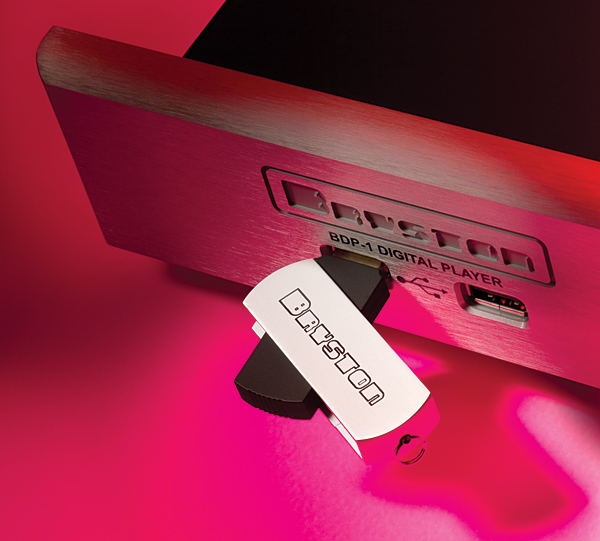
Bryston BDP-1 digital audio player
James Tanner, VP of marketing at Bryston Ltd., was frustrated. He'd borrowed a Music Vault 4000 music server to play high-resolution digital music files at Bryston's exhibit at the 2009 Consumer Electronics Show. Most of the time, the server delivered some of the best sound at that event. The rest of the time, there were dropouts and crashes. Tanner later experienced similar dropouts and crashes when he streamed hi-rez digital files over his home network to a Bryston BDA-1 digital-to-analog converter (see my review in the February 2010 issue).
I found a more relaxed Tanner at the 2010 CES. This time, he'd borrowed an Auraliti L-1000 digital file server ($3000 at www.auraliti.com), a box with no front-panel controls, no display, no hard drive, no fans, and no CD drive. Instead of a Windows operating system, the L-1000 ran a stripped-down version of the Linux open-source operating system. Its simplicity of design solved the reliability problems Tanner had encountered the year before.
Then and there, Tanner decided to ask Auraliti to help Bryston create a simple digital music file player. The result is the BDP-1.
Bryston BDP-3 Digital Music Player
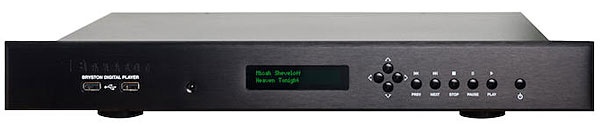
In February 2017, Bryston announced the latest upgrade of their Digital Player, introduced in 2011 as the BDP-1 ($2195), and upgraded in 2013 to the BDP-2, with a faster Atom N450 processor. The new BDP-3 Digital Player ($3495) comes equipped with an even faster Intel Quad-core processor; a Bryston-manufactured integrated audio device (IAD) in place of a third-party sound card; a custom Intel Celeron motherboard; a bigger power supply; and two additional USB ports, for a total of eightthree of which use the faster USB 3.0 protocol. Two USB 3.0 ports run on an entirely separate USB bus, making the BDP-3 compatible with the Streamlength protocols used by DACs from Ayre Acoustics and Berkeley Audio Design.
dCS Network Bridge network player
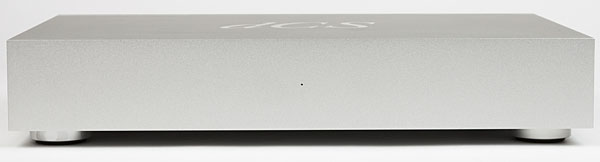
John Atkinson asked me to review the dCS Network Bridge ($4250), which was designed to be paired not just with the dCS Vivaldi DAC ($35,999) running the current v.2.02 software, but with any DAC. This meant I was forced to endure several months with the state-of-the-art Vivaldi as a replacement for my reference dCS Rossini ($23,999). Oh, how I suffered.
Esoteric N-01 network audio player
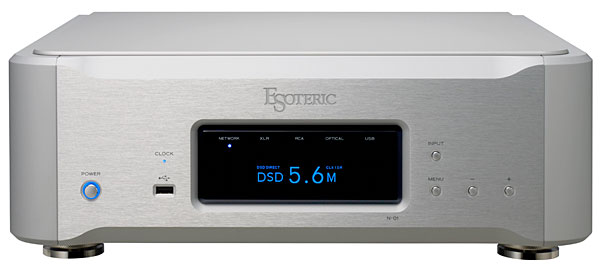
Ever since the Tokyo Electro Acoustic Company (TEAC) founded its Esoteric division, in 1987, Esoteric's slogan has been "state of the art." Given Esoteric's impressive displays at audio shows, which reflect a consistency of ownership, staff, and philosophy of engineering, design, and manufacturing, I have longed to evaluate one of their hand-assembled models in my reference system. Any brand named Esoteric, and whose top line of products is named Grandioso, had better make superior products.
exaSound Delta Music Server
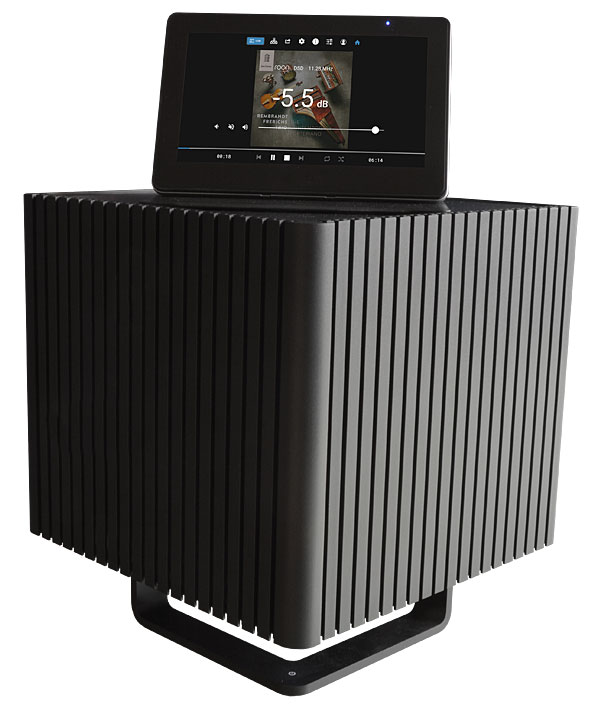
A digital front end comprises several elements: data storage, library management, program control, signal distribution, signal conditioning, and digital-to-analog conversion plus all the necessary interconnections. All this can be contained in a convenient single box, or it can be distributed.
Grimm Audio MU1 music streamer
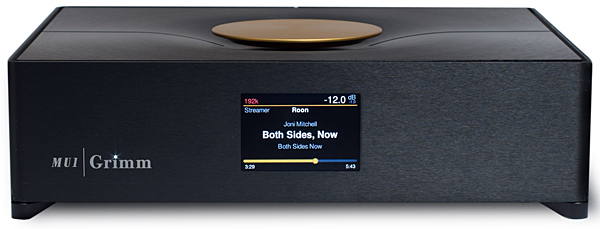
In 1979, I visited Philips Electronics' renowned Research Center in Eindhoven, Holland, to examine a prototype of what would eventually be called a compact disc player. In 1989, I returned to the Eindhoven lab to witness the birth of the first sigma-delta DACs, which eliminated the problem of large linearity errors at low recorded levels in resistor-ladder DACs.
Grimm Audio MU2 streaming preamplifier
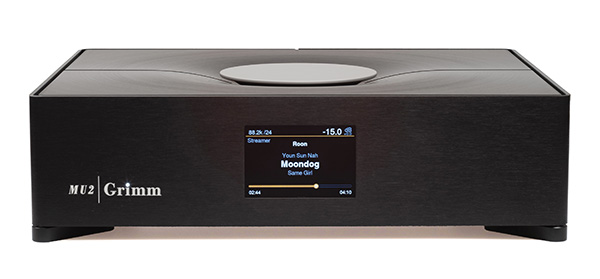
For several months, my wife and I had been living in a cozy studio apartment in New York's Financial District while our apartment underwent substantial renovations. All the old furniture was sold or donated, and decades of accumulated stuff was subjected to triage (sell, donate, or store). All my audio equipment, parts, and tools suffered the same fate. Downtown, my listening was via pretty decent headphones (B&W Px8, Audeze LCD-XC) connected to a Mytek Brooklyn+ DAC and my PC. Meanwhile, we were very busy shopping to equip the "new" apartment.
An all-in-one streamer-DAC-preamp would not have held much appeal for me if my old system was up and running. This, however, was a different time, and I was offered the Grimm MU2 for review with ideal timing.
Head-Direct HiFiMan HM-602 Digital Audio Player
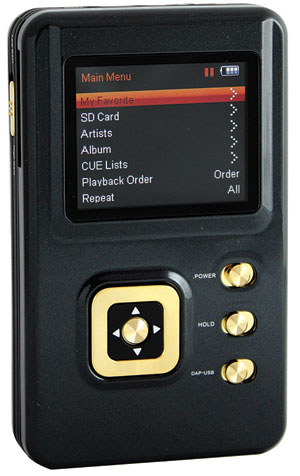 Head-Direct's HiFiMan HM-602 is the second in a growing line of perfectionist-quality portable music players designed by Fang Bian, a 31-year-old audiophile and student of nanotechnology at the City University of New York's Hunter College. Bian's first HiFiMan design was the larger, heavier, more versatile HM-801 ($790; see my review here). In building the HM-602, Fang sacrificed the '801's removable amplifier module, 15V rechargeable battery, and coaxial input, thus creating a smaller, more portable product. Much sleeker and less substantial than the '801, the HM-602 measures approximately 4" L by 2.5" W by 1" D and weighs just 7ozit can rest comfortably in the palm of a hand or a coat's inner pocket.
Overall, the HM-602 has a handsome, rather serious appearance: With its gold controls and its fine metallic finish, which at times seems a deep green and at others takes on a smoky charcoal, the HM-602, like its predecessor, exhibits an air of elegance and sophistication. And while the HM-801 proudly takes after Sony's famed WalkmanFang Bian once owned every available model of the now-discontinued portable cassette playerthe HM-602 much more closely resembles Apple's iPod Classic. On its front panel, below the 2" LCD screen, the HM-602 has a four-way control ring similar to the iPod's scroll wheel, and three sliding switches: Power, Hold (deactivates controls while music is playing), and DAP/USB.
Head-Direct's HiFiMan HM-602 is the second in a growing line of perfectionist-quality portable music players designed by Fang Bian, a 31-year-old audiophile and student of nanotechnology at the City University of New York's Hunter College. Bian's first HiFiMan design was the larger, heavier, more versatile HM-801 ($790; see my review here). In building the HM-602, Fang sacrificed the '801's removable amplifier module, 15V rechargeable battery, and coaxial input, thus creating a smaller, more portable product. Much sleeker and less substantial than the '801, the HM-602 measures approximately 4" L by 2.5" W by 1" D and weighs just 7ozit can rest comfortably in the palm of a hand or a coat's inner pocket.
Overall, the HM-602 has a handsome, rather serious appearance: With its gold controls and its fine metallic finish, which at times seems a deep green and at others takes on a smoky charcoal, the HM-602, like its predecessor, exhibits an air of elegance and sophistication. And while the HM-801 proudly takes after Sony's famed WalkmanFang Bian once owned every available model of the now-discontinued portable cassette playerthe HM-602 much more closely resembles Apple's iPod Classic. On its front panel, below the 2" LCD screen, the HM-602 has a four-way control ring similar to the iPod's scroll wheel, and three sliding switches: Power, Hold (deactivates controls while music is playing), and DAP/USB.