

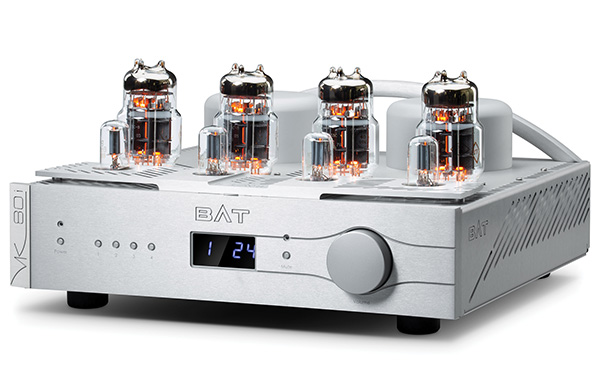
Brilliant Corners #12: Balanced Audio Technology VK-80i integrated amplifier, Ortofon Cadenza Bronze phono cartridge
In 1976, a Soviet fighter pilot named Viktor Belenko made an emergency landing in Hokkaido, Japan. He was flying a MiG-25 supersonic interceptor jet and, upon touching down, requested political asylum. This proved to be a stroke of brilliant luck for the Americans. The MiG-25 remains one of the fastest and highest-flying aircraft ever produced, and Belenko's defection allowed them to have a tantalizing look at the technology inside.
Among the top-secret loot found inside the Soviet jet was a large, heavy triode vacuum tube used as a regulator in the power supply of the MiG's radio. It was known as the 6C33C. (The enormous electromagnetic pulse caused by a nuclear explosion would fry a transistor. Tubes were used in military equipment with such an eventuality in mind.)
Brilliant Corners #21: German kitchens, Japanese amps, and Afropop gems
I have a day job at a museum. One of my favorite things about working there is taking the elevator from my office down to one of the floors open to the public; I walk into the galleries through a discreet panel in the wall. This makes me feel like I'm in one of those horror-movie manors with a tunnel concealed behind a bookshelf. Sometimes I startle people, which I kind of enjoy.
Mostly I like spending time looking at art, especially in the early mornings when the galleries are empty. Lately, I've been watching art handlers hanging a roughly 100'-long tapestry depicting some manner of planetary jetsamor maybe they are aquatic plantsby Nigerian artist Otobong Nkanga. And I make regular trips to a small theater to watch mesmerizing footage of Orchard Street in working-class lower Manhattan, shot in 1955 by veteran filmmaker Ken Jacobs. Captured on warm, saturated 16mm film, the long-gone people on the screen appear as vividly alive as the museumgoers around me.
My favorite-ever thing at the museum, though, is a life-sized kitchen. Austrian architect Grete Lihotzky designed it for a Frankfurt housing complex in 1927.
Brilliant Corners #37: A Lejonklou System
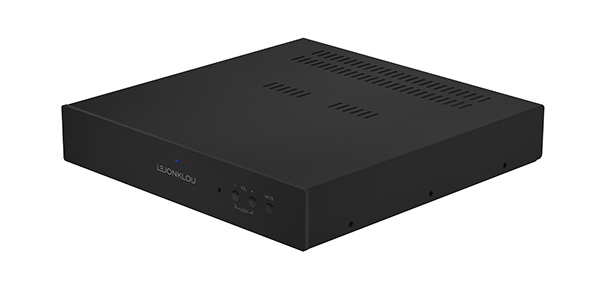
The more I listen—to gear I'm reviewing as well as other people's hi-fis—the more I believe in intangibles. One of these intangibles is the art of system building.
Bryston B-60R integrated amplifier
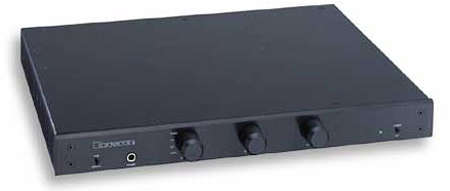
Bryston is one of North America's most established hi-fi makers. Based not far from Toronto in Peterborough, Ontario, Bryston has been in business since 1962.
Bryston B100-DA SST DAC/integrated amplifier
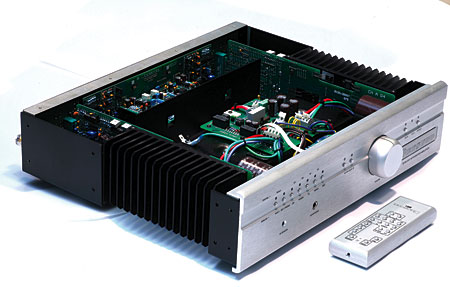
Over the years, I have used and enjoyed in my audio system large, single-purpose components. Each of these chassis has had but one role: preamplifier, amplifier, digital-to-audio converter (DAC), etc. I guess I've been just a little suspicious of products with multiple functions crammed into a single small chassis; I've figured that the designer may have cut a corner that could affect the sound.
Bryston B1353 integrated amplifier
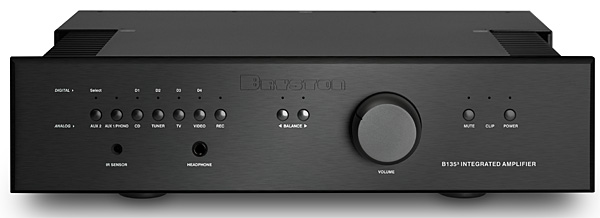
Out of the blue, a forever friend I hadn't spoken to in years called and asked me to join him at Riverside Church for a concert of William Basinski performing his renowned Disintegration Loops. Dedicated to the victims of 9/11, the work was completed as Basinski watched the airplanes crash into the World Trade Center from his Brooklyn rooftop.
Burmester 232 Classic Line integrated amplifier
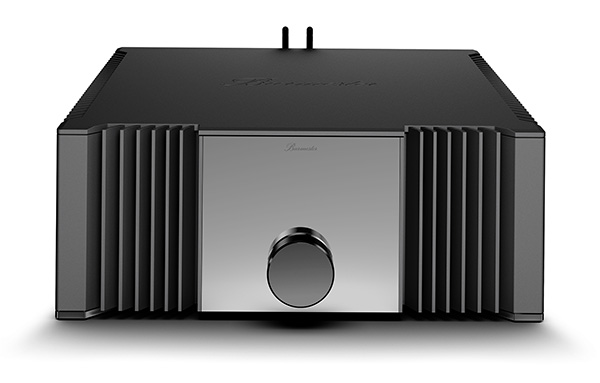
My first response, upon being offered for review the new Burmester 232 Classic Line modular class-AB dual-mono integrated amplifier ($25,000), was apprehension—but not because of the product itself, and certainly not because of the Burmester brand. I had already been won over by the pair of Burmester 218 Top Line stereo power amplifiers ($50,000/each) I reviewed in the October 2024 issue.
Cambridge Audio CXA81 integrated amplifier
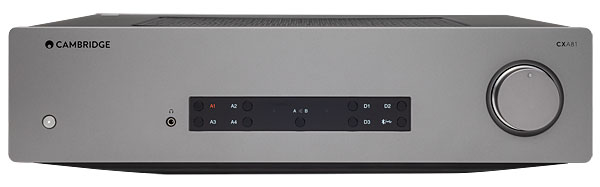
During my tenure as a Stereophile writer, I've reviewed a lot of integrated amplifiers. The mostly moderately priced integrated machines I've reviewed have included the Heed Audio Elixir ($1195), Luxman SQ-N150 ($2795) and L-509X ($9495), NAD C 328 Hybrid Digital ($549), Octave Audio V 80 SE ($10,500), Rega Brio ($995), and Schiit Ragnarok 2 ($1799 as equipped). Regardless of price, all these integrated amplifiers engaged my senses and made engaging, dynamic, colorful music from LP grooves and ones and zeros.
Cambridge Audio Edge A integrated amplifier
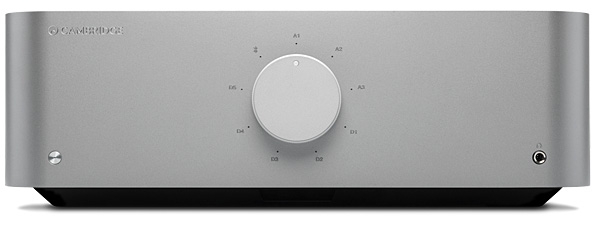
One summer in the mid-2000s I purchased a pair of Cambridge Audio components for my red-headed, tango-dancing Texas girlfriend. She quickly saw through my ruse to install some solid hi-fi in her New Jersey home away from homebut eventually she acquiesced, and soon Michael Martin Murphey (she), the Beatles (me), and Miles Davis (us) filled our weekends with music. Inspired by a Sam Tellig column I read around that time, I paired a Cambridge Azur integrated amplifier and CD player with a pair of Triangle Titus XS minimonitors. The sound produced by this quartet was clean, precise, and altogether pleasurablefor a total of about $1300.
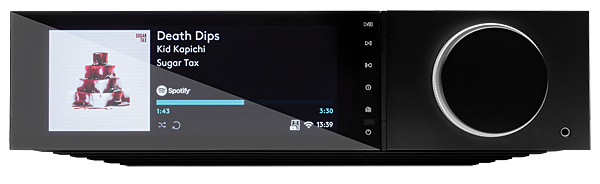
Cambridge Audio EVO 150 streaming integrated amplifier
In 1968, I was a 2-year-old toddler living in Paris, Francemy birthplaceon the 14th floor of a diplomat-occupied apartment complex overlooking the Seine. My dad, a member of the Royal Canadian Mounted Police, was stationed in Paris, working security at the Canadian embassy. My mom and I were there with him.