

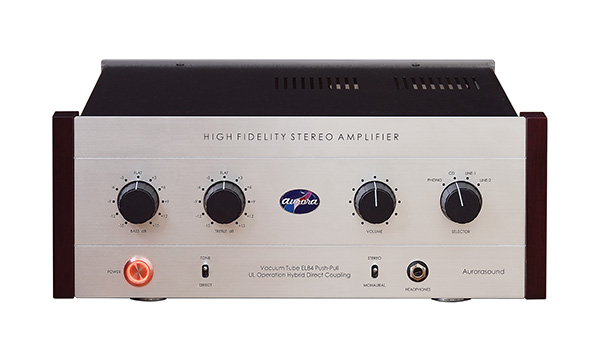
Aurorasound HFSA-01 integrated amplifier
Audiophiles are often misunderstood as mere hobbyists; in fact they hold a profound reverence for sound. Japanese jazz kissas, where vintage vinyl, turntables, tube amplifiers, and horn speakers have drawn audiences since the 1950s, exemplify this passion. Western audiophiles share a similar fervor, though our pursuit of sonic perfection often manifests in a more discreet, almost monastic, lifestyle.
Shinobu Karaki, a 65-year-old electronics designer, is the founder and chief designer of Japan's Aurorasound. A music lover first, an audiophile second, and an aspiring jazz and classical guitarist, Karaki crafts phono stages, step-up transformers, preamplifiers, power amplifiers, and integrated amplifiers for his Yokohama-based audio company.
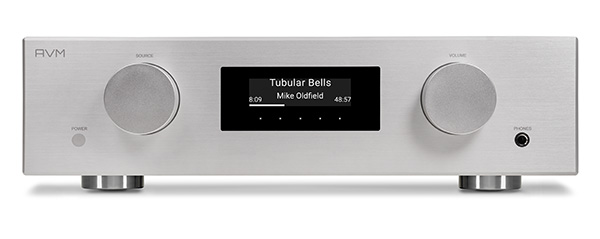
AVM Evolution AS 5.3 streaming integrated amplifier
I'm known as an unrepentant tube-amplifier devotee and turntable missionary. I spin vinyl in listening spaces, make jazz-vinyl videos, and review turntables, cartridges, and record cleaning machines. I'm a semi-Luddite for whom streaming is a last resort rather than a daily need. I prefer the analog-playback setup gauntlet to the setup gauntlet that comes with streaming amplifiers and network bridges.
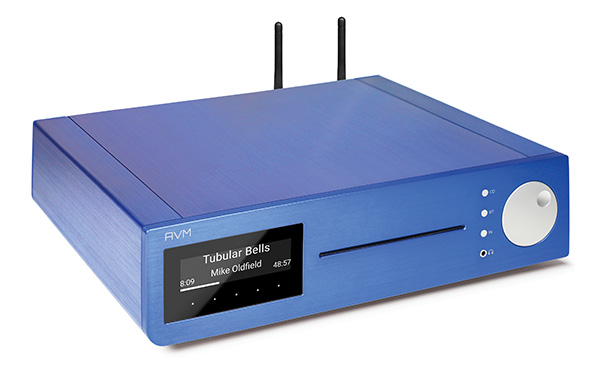
AVM Inspiration CS2.3 CD receiver
In the 1960s, my dad gave me a Panasonic receiver with two cube speakers, just in time for the advent of FM stereo radio in the San Francisco Bay Area. Out of the blue one night, he just walked in with it. The receiver allowed me to plug in a record player, though I only had a few LPs. Later, when I went off to college, my mom took me shopping for a new stereo. I chose a Kenwood integrated amplifierwithout a tuner but with the capability to plug in a tape deck, which I did. During my undergrad years, it served me well. Later, I switched to an NAD receiver, which allowed me to listen to the radio again.
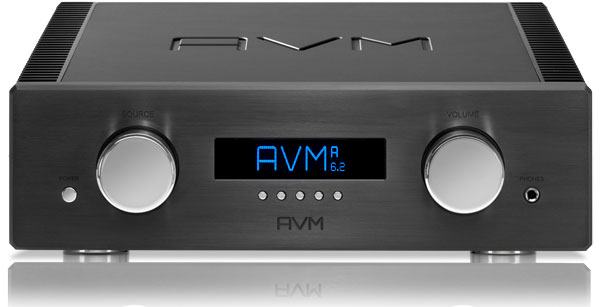
AVM Ovation A 6.2 ME integrated amplifier
During my 100 years on earth, I've owned mostly separate amps and preamps, but only because that is where I startedor I should say, that is where my audio-savvy friends directed me when I began asking for guidance. Nevertheless, the audio system I've used the longest (unchanged for almost 10 years) consisted of 1984 Rogers LS3/5a loudspeakers (15 ohms, with factory wall mounts) powered by a proletarian-looking Creek 4330 integrated amp sourced by an Oppo CD player.
Ayre Acoustics AX-5 integrated amplifier
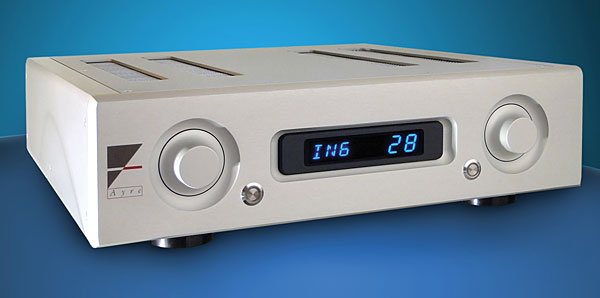
The only thing better than a review that writes itself is a product with a compelling story. Although the latter asks a little more of us here, it's usually the more enduring pleasure.
So it goes with the new AX-5 amplifier ($9950) from Ayre Acoustics, in which designer Charles Hansen has both revived an overlooked technology from a half-century ago and brought to market a more affordable embodiment of one of his own most well-received products.
Ayre Acoustics EX-8 2.0 Integrated Hub D/A integrated amplifier
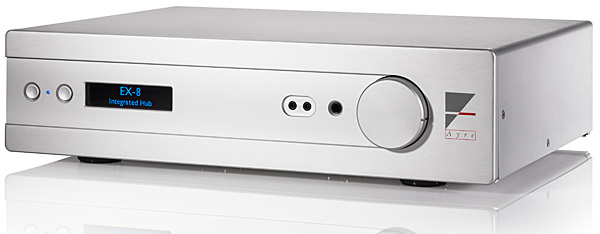
In New York City, everything comes at a premium: Housing, groceries, transportation, walking space, living space, sanity spaceconsider our cubbyhole apartments and tenement buildings. Even "air rights" are for sale in NYC, including rights to the air over my beloved Katz's Delicatessen in the Lower East Side. The square footage of my downtown apartment is less than a quarter of the space of my North Carolina home. (Brownstones? Only above 72nd Street.) But, as the song says, "If you can make it here, you can make it anywhere." What did Frank Sinatra know, anyway? He was from Hoboken!
Ayre Acoustics EX-8 Integrated Hub integrated amplifier
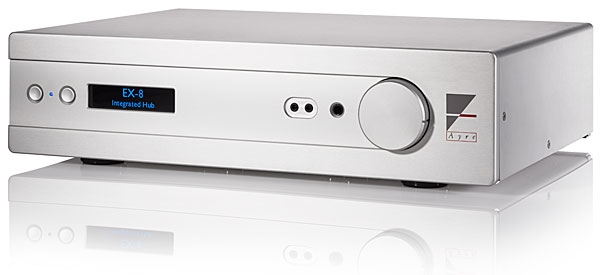
It's a high-end audio truism: Successful companies are founded by a creative engineer or entrepreneur with a vision. So what happens when the founder is no longer around? While Mark Levinson is an example of a brand that not only survived the exit of its leader but thrived, speaker manufacturer Thiel dwindled after co-founder Jim Thiel died in 2009, and eventually closed up shop. Colorado company Ayre Acoustics was faced with this problem when founder Charley Hansen passed away in November 2017.
Ayre AX-7 integrated amplifier
Dating was murder, especially in the months just before I met my wife. I knew some nice women back then, many of whom were good-hearted and others of whom were beautiful. One was both, and talented, too: She gave me presents for no reason and wrote tender things in cards with pictures of sweet meadows or the sea: My love goes on and on, they said. But for whatever reason, I just couldn't love her back, and Oh! how the shit hit the fan the day I told her so. I meant it as a respectful act of honesty and forthrightness; she took it as a cowardly act of rejection, and responded in a manner that would forever remind me of Maggie bouncing the rolling pin off Jiggs's head while calling him an insect. That day, I learned two things: 1) women are unlearnable; and, 2) honesty, while an unassailably good thing in and of itself, makes a poor tool, mostly because it lacks a safety handle.
B.M.C. Audio Amplifier C1 integrated amplifier
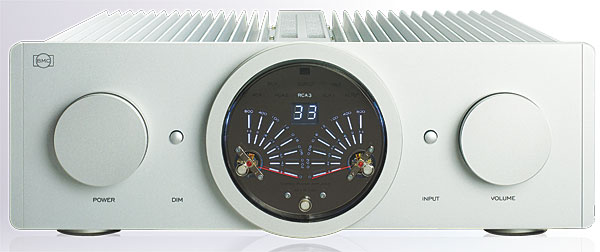
B.M.C. Audio GmbH (the initials stand for Balanced Music Concept) designs its high-performance audio products in Germany, where the company was founded in 2009, and has them manufactured in its own wholly owned factory in China. The design team is headed by Carlos Candeias, whose earlier designs included a belt-driven CD transport for C.E.C. and, for Aqvox, a high-performance, current-gainbased, balanced phono preamplifier that's reasonably priced. These have won him a lot of attention, and made him something of a celebrity in certain sectors of the audiophile world.
Bel Canto Design Black ACI 600 integrated amplifier
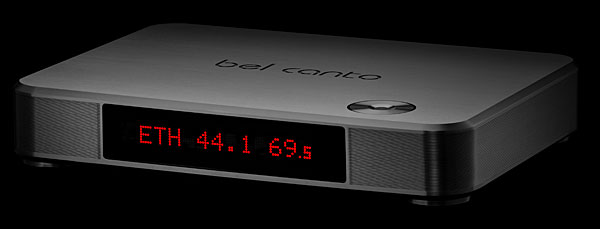
When Michael McCormick, president of Bel Canto Design, suggested that I review their Black ACI 600 integrated amplifier, I accepted without hesitation. As wonderful as my reference system may sound, its dCS digital front end alone comprises four boxes and a web of cables complex enough to send many a spider spinning. Given the choice between connecting that front end to a pair of expensive, enormous monoblockswith their similarly expensive AC cords and equipment racks/isolation platformsor to a single, visually elegant, 45-lb box that costs $25,000, produces 300Wpc into 8 ohms, and requires only a single power cord and shelf, I think many an audiophile, even those with lots of money, might gravitate toward the latter.