

Arcam FMJ A22 integrated amplifier
Have you ever gone into a high-end audio emporium dressed not to the nines, but more like the threes or fours, and been ignored by the shop's staff because they've sized you up as being too low-budget? Even though you were carrying a high-powered, fully equipped, state-of-the-art wallet in that fanny pack, they assumed the opposite and shunned you.
Arcam FMJ SR250 stereo A/V receiver
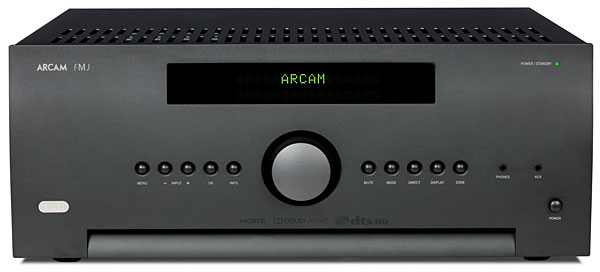
Stereophile seldom reviews A/V receivers. We made an exception for Arcam's FMJ SR250 ($3600) because it's that unusual two-channel device: one that includes room-correction software, in this case Dirac Live. Many of us who listen in multichannel are comfortable with room correction, but a week doesn't pass without my hearing or reading someone say that they bypass room correction when listening to music in stereo. Spock-like, I find that illogical and, from experience, pointless.
ARCAM Radia A25 integrated amplifier
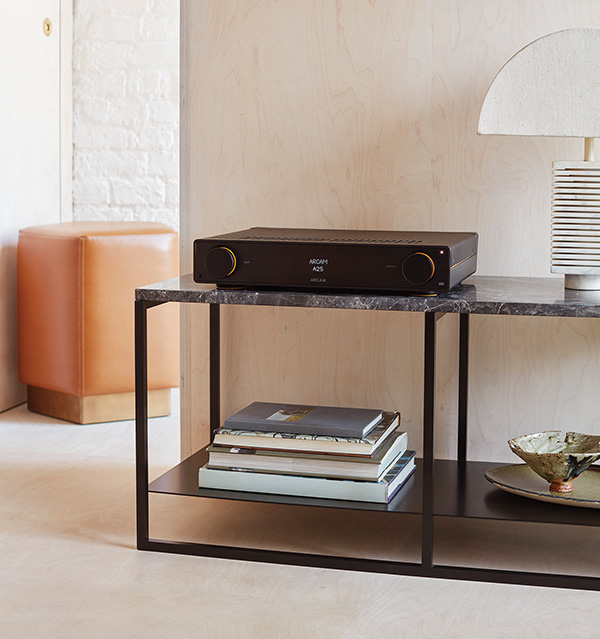
I've been to a few bowling parties and passed a bottle around a few fire pits, but I've never watched an audiophile unboxing video. Lately though, I have been paying closer attention to my first impressions of each new audio product as it enters my realm.
I'm finding it interesting to notice how a device previously unseen and unheard declares itself one small step at a time as I open its box, feel its heft, observe its form, study its manual, and, finally, wire it into my system. Those start-up experiences, plus my gut feelings during my first moments of music listening, establish a tone of innocent discovery I wish would last the whole month. It never does.
I mention this because my first impressions for my first-ever review of an ARCAM product, the Radia A25 integrated amplifier, were in that "innocent and receptive" mode from the instant I saw the box sitting outside my door.
ASR Emitter II Exclusive integrated amplifier
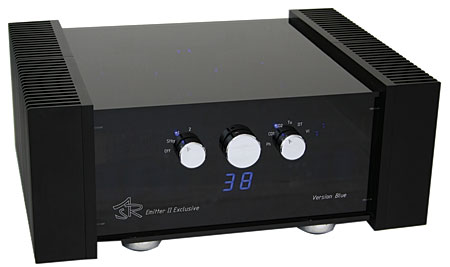
As you read this, are you listening to your stereo? Whatever the music, what you're actually hearing is your public utility's AC as modulated by your power amplifier. No matter how good the gear, the final result can be only as pure as the power feeding your components. Unfortunately, plenty of sonic schmutz usually comes along for the ride.
Audia Flight FLS10 integrated amplifier
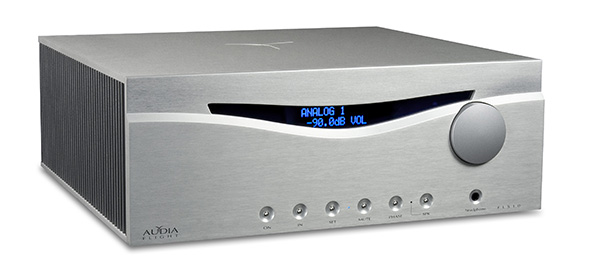
The dogma of separates has long reigned supreme among audiophiles: If you're serious about sound quality, you're supposed to need a dedicated preamp and power amp. The logic goes that separates reduce interference and offer maximum control over your sound. But there's an argument to be made that integrated amplifiers are more practical ... and potentially better-sounding.
The beauty of an integrated amp lies in its synergy. Audio engineers know exactly how the pre and power sections will interact; the two are literally designed to work together. On paper at least, that means optimized impedance matching, and signal integrity that can rival and perhaps surpass separates. How do you know whether a standalone preamp is a great match for a power amp? For most of us, it's through trial and error. It isn't unusual for restless stereo aficionados to own multiple combos over the years, in search of the ideal one. That gets costly.
Then there's the fact that an integrated amp helps declutter a room, appealing to minimalists and people whose living spaces are less than cavernous. Another plus: no need to shell out for audiophile-grade interconnects.
Audio Note Jinro integrated amplifier
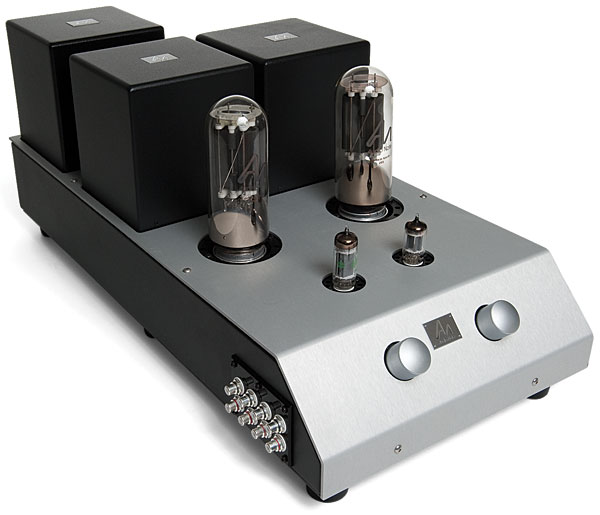
It's asked all the time, wherever audiophiles gather to grumble: "Everybody knows about Ferrari, Rolex, and Leica. But why hasn't anyone heard of . . ."
The last word is up for grabs: Wilson? Levinson? Linn? Maybe. But for me, whenever I'm in pissing-and-moaning mode, the choice is easy: Why hasn't the average consumer heard of the Audio Note Ongaku?
Audio Note Meishu Tonmeister Phono integrated amplifier
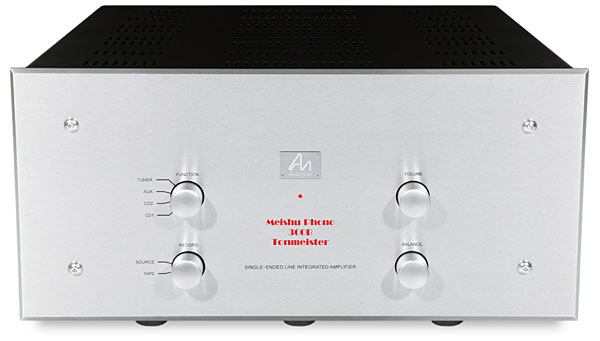
My first high-end component was an Audio Note M2 preamplifier, which I bought from former Audio Note distributor/current Stereophile contributor Michael Trei. (Senior Contributing Editor Herb Reichert was Michael's partner in that 1990s-era Audio Note venture.) Herb can regale you with tales of motoring across the Soviet Union in an unheated Mercedes, trunk full of Audio Note components and American dollars, but that's a story for another review (most likely to be written by Herb).
Audio Refinement The Complete integrated amplifier
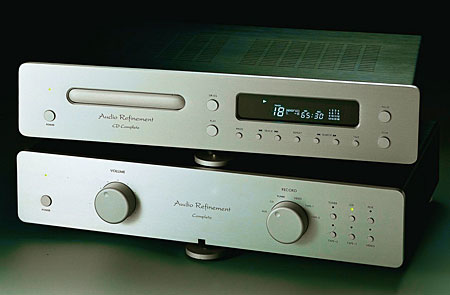
Among the most hallowed of my ten or so (the number varies) personal commandments of high-end audio is the following (to be uttered in sepulchral tones with deep humility):
Audio Research I/50 integrated amplifier
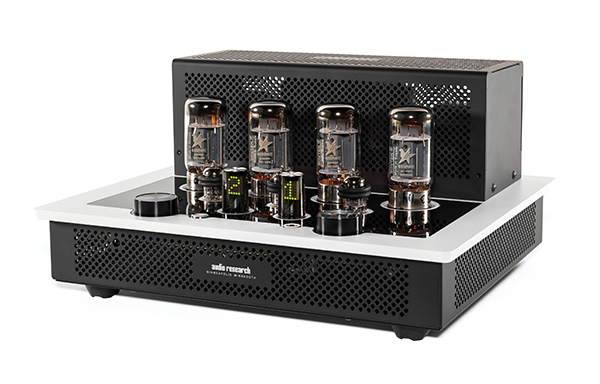
The first true high-end component I owned was an Audio Research SP-10. I reviewed this two-box, tubed preamplifier in the May 1984 issue of the English magazine Hi-Fi News & Record Review. "The SP-10 presented [recorded] information in a more coherent, less distorted manner than any preamp I've tried," I wrote in the review, concluding that "the SP-10 made me realize how many good records I owned." I purchased the SP-10 and brought the preamplifier with me when I moved to the US. Four decades later, I still have that SP-10. "Every now and again, when I want to be reminded of the magic it brings to my music, I set it up, plug in the tubes, and spend an evening spoiling my ears," I wrote for an article in Ken Kessler's 2020 book on the history of Audio Research.
I was planning to review the latest product from Audio Research, the I/50 integrated amplifier, which costs $5500, earlier this year. However, with the uncertainty back then about the company's ownership, I postponed the review. When the news broke in June that Audio Research had been acquired by AR Tube Audio Corporation, a privately owned corporation that includes Valerio Cora of Canadian loudspeaker manufacturer Acora Acoustics as a directorsee Industry Update in this issueI unboxed the I/50 and set it up in my listening room.
Audio Research VSi60 integrated amplifier
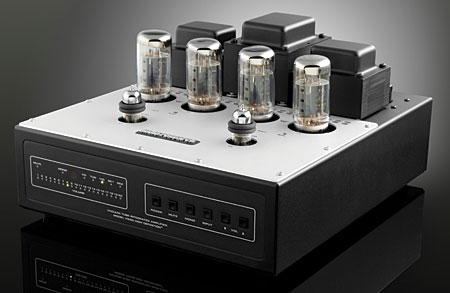
I'm a basically a tube guy, but I've never warmed up to most lower-powered integrated tube amps. Although I quite enjoyed the time I spent with the Cayin A-50T, which I reviewedhttp://www.stereophile.com/integratedamps/308cay">reviewed; in the March 2008 issue of Stereophile, over the years I've typically found I'd rather spend time with mid-priced, solid-state integrateds from Creek, Musical Fidelity, or Simaudio than deal with the loss of definition at the frequency extremes that I've heard from many lower-powered tube models. So it was with a bit of trepidation that I approached the VSi60, a 50Wpc integrated amplifier from Audio Research Corporation.