

The Moment of Truth
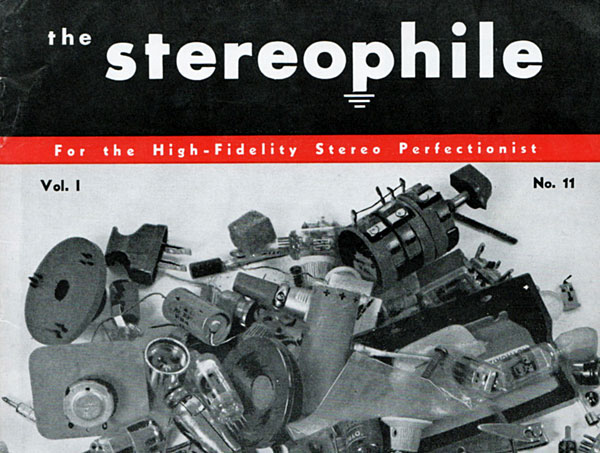
Well, it's that time. The time of reckoning, the moment of truth. It's renewal time.
Most of you have noticed the hyphenated numbers on your address labels, and most of you guessed what they were: Expiration codes. If your label has a 1-12 number on it (or no hyphenated code at all), the next issue of The Stereophile, Issue Number 12 [published in September 1966Ed.], will be the last one that will arrive on your present subscription.
The More I Know, the Less I Know
Hanging above the expensive desk in my penthouse office atop Manhattan's prestigious Stereophile Tower is a photocopy of a New Yorker cartoon, in which a bewildered-looking guy complains, "There has been an alarming increase in the number of things I know nothing about."
The Mystery of Music
The debates may be old, but they're not tired. They rage on with a virulence that suggests there's plenty of life in these old dogs yet. Online forums and Letters to the Editor are filled with them: objectivist vs subjectivist, engineer vs audiophile, double-bind vs doubly blind. The divisions may be artificial or downright specious—false dichotomies perfectly set up for cheap shots—but that doesn't dissuade people from drawing sides, driving stakes into the ground, and firing off volley after volley of accusation and retaliation.
The new aether
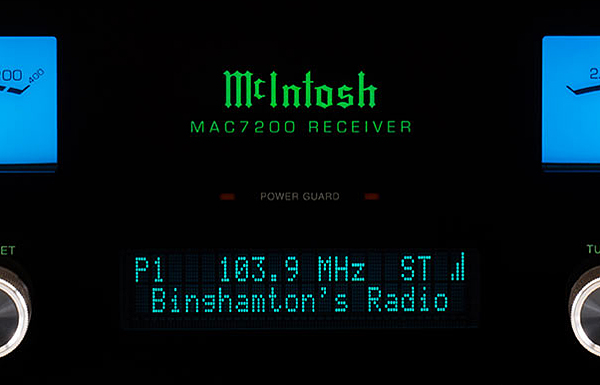
When I decided that Stereophile should review the McIntosh MAC7200 receiver (see the review in the January 2021 issue), I had several reasons for doing so. First, McIntosh is known for the quality of its radio tuners and amplifiers, so I was confident it would be an impressive product. (It was.) Second, a review of a terrestrial radio receiver in 2021 had a certain retro appeal that I thought Stereophile readers might appreciate. Third, as Larry Greenhill wrote in the introduction to that review, I like terrestrial radio.
The New Audio Geek

It's no secret that the high-end audio industry has done a poor job of reestablishing the mainstream respect it enjoyed through the latter half of the 20th century, but its lack of reach has never been as painfully obvious as it is today. Teens are inextricably tied to smartphones, moms and dads are infatuated with Bluetooth streaming, and most people would rather pay too much for an MP3 than anything at all for a DSD download. In a world dominated by fancy gadgets and intriguing technologies, the pursuit of true high-fidelity sound remains an obscure pastime for a relatively small group of aging males. Everyone knows Apple, Beats, and Bose, but few have heard of Vivid, Wilson, or YG.
The Next Generation
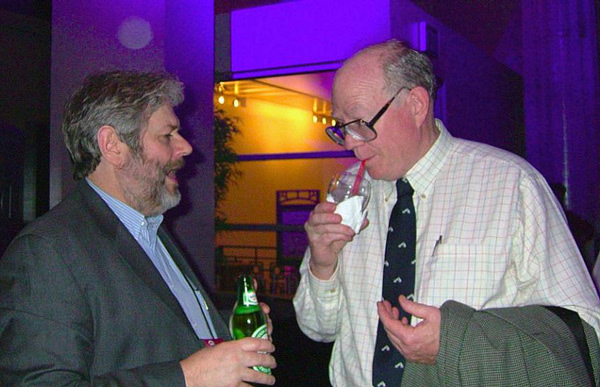
John Atkinson (left) and Larry Archibald (right) remininisce about JA joining Stereophile in 1986. (Photo: Larry Greenhill)
It was the summer of 1976. My career as a professional musician was not panning out as I had hoped. I'd played bass guitar on quite a few singles and three albums, and toured with erstwhile teen singing sensation Helen Shapirobut I was better at playing than I was at getting paid. My then wife, Maree, showed me a classified ad in the British newspaper The Guardian: the magazine Hi-Fi News & Record Review was looking for an assistant editor.
The Next Wave
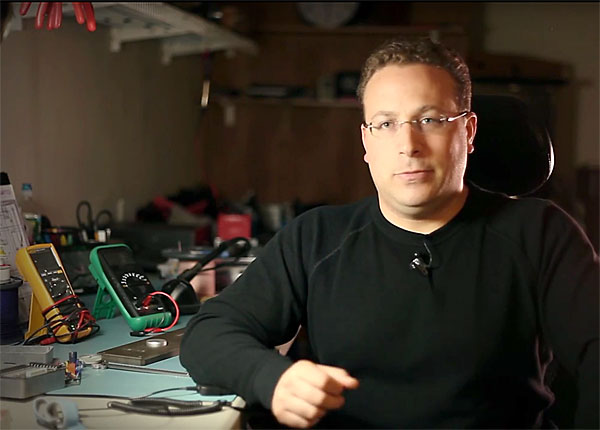
I began working as a salesman of high-end audio gear in 1978. I was 29, and, as I recall, a healthy percentage of my customers were about my age. Most of the top high-end designers and entrepreneurs, too, were young: John Curl, Dan D'Agostino, Jon Dahlquist, Ray Kimber, Mark Levinson, Bill Low, Mike Moffat, Nelson Pass, Peter Snell, Bob Stuart, Jim Thiel, Ivor Tiefenbrun, A.J. van den Hul, Richard Vandersteen, Harry Weisfeld, David Wilson. The fact is, high-end audio's Golden Agethe late 1970s to the mid-1980swas largely fueled by the under-40 set, and most high-end journalists were fellow baby boomers. Now we're all oldsters, with just a smattering of under-fortysomethings. That's about to change.
The Passing Parade
There is one date I dread every year: my wife's birthday. After nearly 16 years of marriage, I have exhausted every last iota of my spousal resources in trying to think of a suitable present. Nothing too ordinary, nothing too out of the ordinary, nothing that will trigger those dreaded words, "You did keep the receipt, right?"
The Past Is Prologue
"Why didn't they choose a color set?" I had been reminiscing about the early days of TV and how my parents bought a black-and-white set so we could watch the Coronation of Queen Elizabeth II in 1953. My daughter Emily's question had me stumped. It is difficult to explain to someone born 10 years after the launch of CD—someone who, for example, has never seen, let alone used, a typewriter, and who enjoys a comparatively infinite set of choices among mature 21st-century technologies—that it was not always thus.
The Preservation of Inspiration
A world-renowned musician had scheduled an appearance as guest soloist with the string quartet in residence at a certain university. When he arrived he noticed a pair of microphones arrayed over the small stage and, following the wires, located a college student backstage next to a tape recorder and a pair of headphones.