

DisConcerted

On Sunday, March 22, at 8pm, the state of New York shut down, governor's orders. Here in the Big City, most stores are closedeven Starbucks, or at least the ones near me. In my neighborhood, up on Broadway, a grocery store is open, and a drugstore, a hardware store, and a couple of bodegas. Some bars and restaurants are open for takeout only, some advertising COCKTAILS TO GO in big black letters painted on bedsheetsNew Orleans comes to NYC. (Meanwhile, New Orleans itself, also a coronavirus hotspot, apparently is desolate, the bars closed, a hard thing to picture.)
Dispatches from the Other Portland
Portland, Maine, my hometown for the better part of two decades, is a pretty hip place. We are not, for the most part, innovators in fashion, but we are early adopters of the more interesting latest styles.
For years now, what I take to be a Brooklyn style has been prevalent among the local twentysomething crowd. The hipper restaurants are full of pretty young women and bearded men in plaid shirts who, on the one hand, seem ready for the woodlot but who, on the other hand, seem too skinny to lift a decent-size chainsaw. Likely as not, they arrived on single-speed racing bikes converted for commuter use. Nifty machines.
Dispelling a myth (?) about phono-cartridge loading
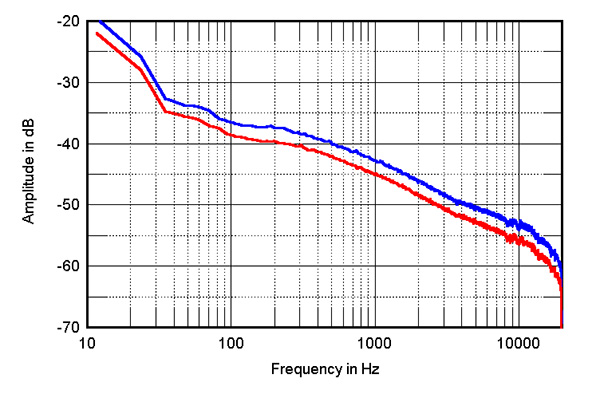
In the midst of his December 2023 Gramophone Dreams column, Herb Reichert presented the results of an experiment. He was listening to the most recent version of Zu Audio's Denon DL-103, installed on his new-old Lenco. He hooked it up to the moving coil input of his SunValley SV-EQ1616D phono preamp, which apparently is intended for use with low-output MC cartridges since it loads them down with a 50 ohm shunt resistora heavy load for all but the lowest-impedance MCs. The rough rule of thumb for loading an MC cartridge, as many readers are aware, is that the load resistance should exceed the cartridge's internal impedance by about a factor of 10.
Do It Yourself!
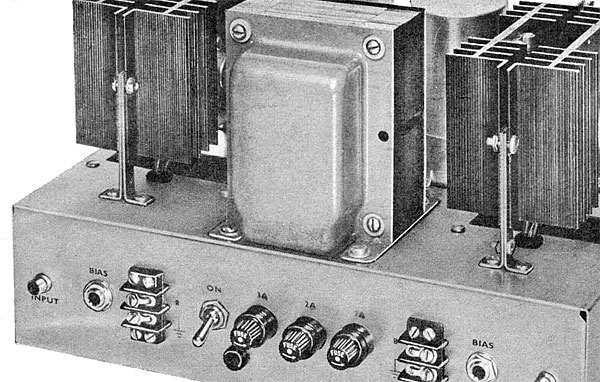
Editor's Note: in the main, Stereophile has steered clear of DIY audio projects, leaving them to magazines like The Audio Amateur, which was published by the late Edward T. Dell. But one of the exceptions was this 1967 article on the "Brute," a tube amplifier design by none other than Ed Dell. Note that the DIY competition mentioned by Gordon Holt is long closed to entries.John Atkinson
There's a platitude to the effect that the road to Hell is strewn with good intentions. Well, we don't see ourselves as headed for perdition, but we must admit that we are surveying a rather impressive-looking junk pile of good intentions at this point.
Do Musicophiles Enjoy Audio?
Paul Gowan's letter in the October 1989 Stereophile hinted that, whether or not audiophiles enjoy music, it should be true that the emotional experience we derive from music is what really matters. There, barefaced, lies the problem: who are "we"? A well-known Latin epigram affirms that in matters of taste there is no point in discussion. And a Greek epigram (coined in fact by Max Beerbohm in his Oxford novel Zuleika Dobson) suggests that "for people who like that kind of thing, that is the kind of thing they like."
Dog Legs and Feet: the Marginalization of High-End Audio
"What?"
Dolby Atmos: a Bleak Shadow?
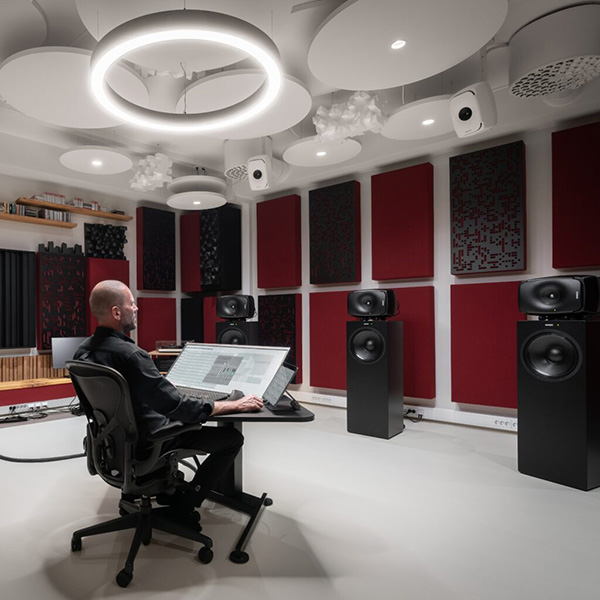
Morten Lindberg of Norwegian music label 2L.
On this page in Stereophile's December 2023 issue, contributing editor (and mastering engineer) Tom Fine and I described a press event at which Apple Corps (the Beatles umbrella corporation) presented the news about the (at the time) forthcoming new Beatles single and the forthcoming "remixed" reissues of the "Red" and "Blue" Beatles compilations. Tom attended the eventwhich, notably, was held at Dolby headquarters here in New York City, reflecting, apparently, Apple Corps' interest in Dolby Atmos. At the event, demos were presented in the Atmos format onlyno stereo.
A key point of that column was that Apple Corps, at leastand who knows how many others in the music industryare abandoning high-quality Atmos in favor of that streamed by Apple Music. Tom and I criticized this development in no uncertain terms, concluding that if Apple's lossy-compressed version of Dolby Atmos is what we're being offered, "we should hope for its demise."Don't Just Sit There!

Like every sensible publication, The Stereophile keeps track of the questions raised by readers who write to us, so we can get some idea of what most of you would like to see in future issues of the magazine. To date, the list looks like this, in order of diminishing interest: transistor amps and preamps, loudspeakers, pickups, tape equipment, tuners and, way at the bottom of the list, recordings. We are devoting most of the August 1964 issue to a discussion of commercial recording practices.
Don't Play It Again, Sam!

What do Prince, David Bowie, Merle Haggard, Gato Barbieri, Phife Dawg, Frank Sinatra Jr., Keith Emerson (Emerson Lake & Palmer), Dan Hicks (Dan Hicks and His Hot Licks), Maurice White (Earth, Wind & Fire), Paul Kantner and Signe Toly Anderson (Jefferson Airplane), Glenn Frey (Eagles), Dale Griffin (Mott the Hoople), pianist Paul Bley, bassist Rob Wasserman, sopranos Susan Chilcott, Phyllis Curtin, and Denise Duval, countertenor Brian Asawa, composers Steven Edward Stucky and Sir Peter Maxwell Davies, and conductors Pierre Boulez, Nikolaus Harnoncourt, Gilbert Kaplan, Gregg Smith, and Royston Nash have in common? Besides the fact that all were musicians who made multiple recordings and who died in 2016, their recorded legacies rarely, if ever, get airplay at dealerships or audio shows.
Don't Tell Your Friends!
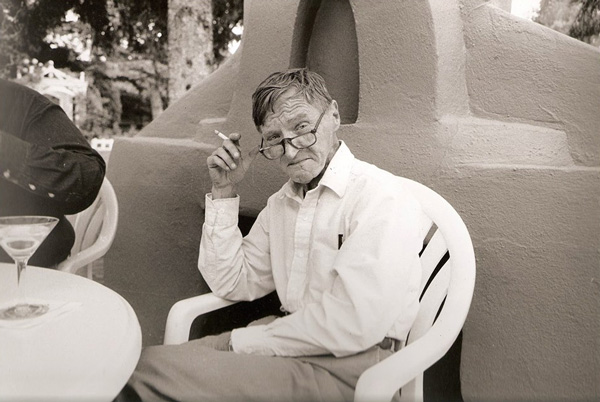
Stereophile's founder, J. Gordon Holt, photographed toward the end of his life by Steven Stone.
Editor's Note: The forthcoming August 2017 issue of Stereophile is No.451, but 55 years ago this summer, J. Gordon Holt was putting together the first issue of what initially was to be called The Stereophile. Here is Gordon's editorial leader from that issue, published in November 1962.