

Credibility Gap

To audiophiles who are aware that their household line voltage changes under varying loads, and have observed the absolutely fantastic differences in the sound of their system when the next-door neighbor turns on Junior's night light, it may come as a surprise to learn that there are folks out there who think you're full of crap. That's right, Virginia, they don't think you can really hear all those things you pretend to hear. (You are only pretending, aren't you?) They can't hear all those things, so how can you? Well, sometimes they can. They'll even admit that. But those tiny little differences are so trivial that they don't matter no more than a fruitfly's fart. That's the word in scientific circles these days. Or haven't you been following the "establishment" audio press lately?
Current Events
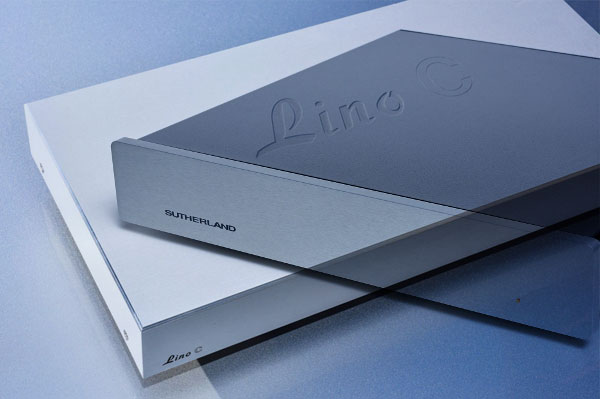
My first exposure to current-mode phono preamplification was maybe a dozen years ago, when such products were new. The one I received, though nicely packaged, was not ready for prime time. I never smelled smoke, but I never heard sound, either: If it wasn't DOA, it was at a minimum DSAADead Soon After Arrival.
Data Density Eats Tweaks for Breakfast
Otto von Bismarck (1815–1898), the Prime Minister of Prussia who brought about the unification of Germany, was not a nice man. But he was no dummy, either. One of his most prophetic remarks was in response to a journalist's question about what Bismarck thought to be the single most decisive factor in modern history: "The fact that the North Americans speak English."
Deeper Meanings
As a card-carrying member of the Audio Engineering Society and an avid audiophile, I was particularly disturbed by the ideas expressed at the 1990 AES Conference entitled "The Sound of Audio." (A report on the papers presented appears in this month's "Industry Update" column.) The tone of the three-day session in May was set during the Conference Chairman's opening remarks. He said that an AES conference on the sound of audio was "unusual" and "out of the mainstream." Further, he expressed a common underlying attitude among the AES that "audiophile claims" (of musical differences between components) have been "nagging us" and are "an annoyance."
Despite What You've Heard, Jazz Lives

On this page in the May 2011 issue of Stereophile, Steve Guttenberg became the latest in a long line of prophets of doom who periodically announce that jazz is deceased. Guttenberg argued that "Digital audio mortally wounded recorded music's creative mojo in 1982" and was "stifling creativity in rock and jazz."
I bring glad tidings to Stereophile readers. When it comes to jazz, Guttenberg is dead wrong. The jazz art form today is rich, diverse, deep, and international.
Different Strokes
In last month's "As We See It," I examined how I decide upon ratings in Stereophile's biannual "Recommended Components" listing. This leads me to talk about who writes our equipment reports. Stereophile currently has a team of 16 active reviewers. The core are professional: J. Gordon Holt, Robert Harley, Thomas J. Norton, Corey Greenberg, and Martin Colloms. The others—Sam Tellig, Jack English, Robert Deutsch, Don Scott, Jonathan Scull, Larry Greenhill, Dick Olsher, Guy Lemcoe, Lewis Lipnick, and Steven Stone—may be enthusiastic amateurs, but they are amateurs only in the sense that they don't earn their livings from writing. I'm the team's catcher, both calling the game and keeping the stray balls from getting away. Why, then, is it this cast of characters (footnote 1) who gets to cast judgments in stone in my magazine?
Digital Data Compression: Music's Procrustean Bed
Procrustean bed: a scheme or pattern into which something or someone is arbitrarily forced.
Procrustes: a villainous son of Poseidon in Greek myth who forces travelers to fit into his bed by stretching their bodies or cutting off their legs.—Webster's Ninth New Collegiate Dictionary
Procrustes: a villainous son of Poseidon in Greek myth who forces travelers to fit into his bed by stretching their bodies or cutting off their legs.—Webster's Ninth New Collegiate Dictionary
Digital Revenge
Many audiophiles will look back on the summer of 1982 as the year the creeping cruds invaded their hallowed halls of hi-fi. In the Conrad Hilton hotel, where most of the high-end contingent gathered at the June 1982 Consumer Electronics Show, one exhibitor was featuring a videodisc presentation with wide-range audio and insisting that this was the way of the future. And at least three others had managed to smuggle in digital tape recorders (all Sony PCM-F1s), and were giving many CES visitors their first taste of real, unadulterated, digital reproduction.
Digital Sound
Everybody, including myself, was astonished to find that it was impossible to distinguish between my own voice, and Mr. Edison's re-creation of it.—Anna Case, Metropolitan Opera Soprano, 1915
Directional Questions
As I write this, I am recuperating from four days of frenzy at the 1986 Winter CES in Las Vegas, Nevada. I am also pondering why I was so unexcited by most of what I saw and heard of the high-end exhibits; high-end audio may have reached a developmental plateau of sorts.