

Nobis Cantabile power amplifier
I dig tube amps. When all's said and done, good tube amps seem to sound more like real life than most solid-state gear; even after listening to and enjoying the hell out of musical solid-state designs like the Audio Research D-240 II and the Muse Model One Hundred, once I hook up the big VTL Deluxe 225s again it's just like going home. I could go on about timbral accuracy and clearer midrange textures, but the bottom line is, music just plain sounds better when you shoot it through good tubes, and once most people experience that magic, they're hooked.
Octave Audio MRE 220 SE monoblock power amplifier
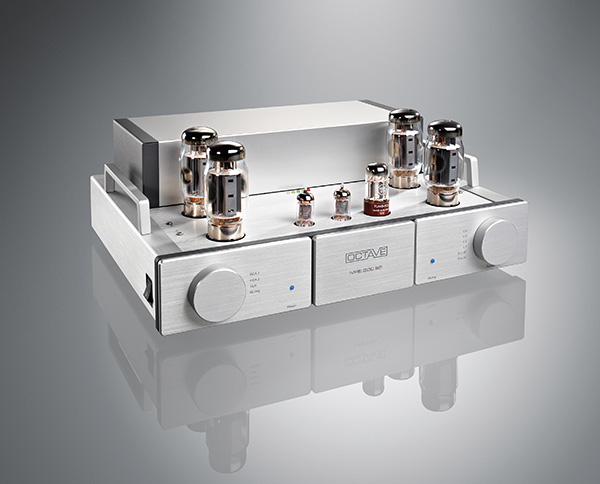
Tubes, tubes, tubeshow we love to bask in their glow, roll them, and take their second-harmonic distortion into our hearts as if it were a child or a pet. Some may put out so much heat that we have no choice but to open a window, turn on the air conditioning, or listen in the garb of Adam and Eve before that fatal first bite. As they and you age, you can never be sure who's at their best. Tubes, at least, can be replaced, albeit at significant expense...
I haven't reviewed much tube gear, but when I haveBruce Moore and VTL (in my pre-Stereophile days), Audio Research, and in our September 2022 issue, the towering Octave Jubilee Mono SE tubed pentode push-pull monoblocksI've been enamored of their sound. I waxed ecstatic about the "captivating beauty" and "heavenly" highs of the Jubilee Mono SEs. I can still recall how gorgeous they sounded; every listen was special.
Hence, my enthusiastic "yes" to a solicitation from John Quick, VP of Sales & Marketing for Dynaudio North America, Octave's North American distributor, to review the smaller MRE 220 SE mono push-pull tube amplifier.
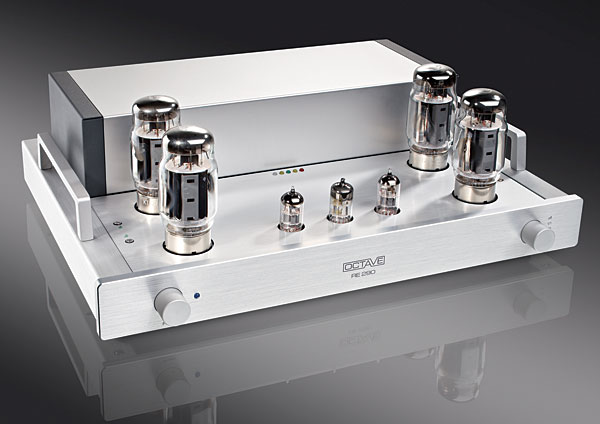
Octave Audio RE 290 power amplifier
Ever since I became a Stereophile contributing editor, people have asked me, "How do you determine what equipment you're going to review? Do you get to pick your own, or does John Atkinson tell you what to do?"
I've chosen roughly 85% of the components I've reviewed for Stereophile, those choices made on the bases of what I find interesting, and what I think readers would like to know about. It's as simple as that.
Octave Jubilee Class A monoblock power amplifier
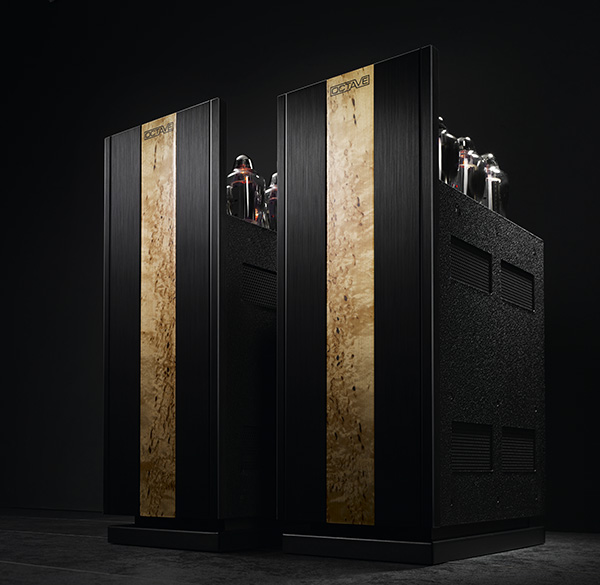
A first for German manufacturer Octave is the Jubilee Class A mono ($85,000/pair), a push-pull class-A monoblock with a self-regulating autobias pentode circuit that can also run in "high power" class-AB mode. The Jubilee Class A monoblock uses KT120, KT150, or KT170 output tubes.
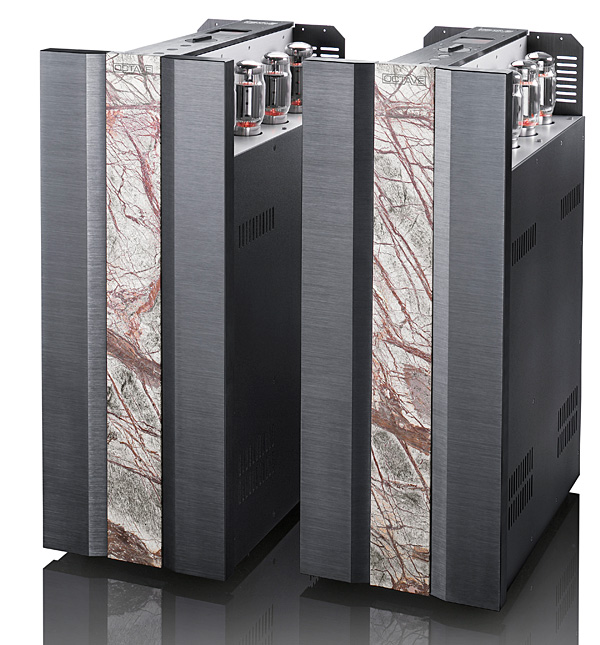
Octave Jubilee Mono SE monoblock power amplifier
When I was a young man, blind dates were always laced with anxiety. (Proms were even worse. Once, when I arrived in a rented tux and my father's prized dress gloves, my date's father ordered me to take out the trash.)
PrimaLuna DiaLogue Premium power amplifier
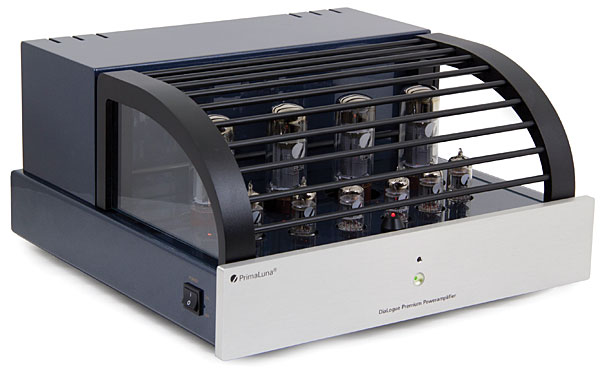
The road to hell is paved with good inventions: clever ideas that appear, in hindsight, motivated more by a desire to sell clever ideas than to make musically superior products.
The DiaLogue tube amplifiers from PrimaLuna have, at their heart, a clever idea of their own: an output circuit that is user-switchable between triode operation, in which the screen grid of a tetrode or pentode power tube is defeated by means of connection to the tube's anode; and Ultralinear operation, in which the screen grid of a tetrode or pentode carries a portion of the AC music signal, supplied by a tap on the output-transformer primary, in a feedback-like effort to reduce distortion and increase power. Fans of the former often report a sweeter, more tubey sound, while fans of the latter report a tighter, more detailed, more timbrally neutral sound. Audio enthusiasts are given to reporting any number of things.
PrimaLuna DiaLogue Seven power amplifier
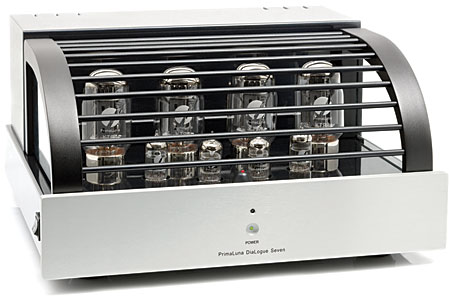
Step 1: Find something that works. Step 2: Use it. Step 3: Repeat as necessary, then retire.
PrimaLuna EVO 300 Hybrid power amplifier
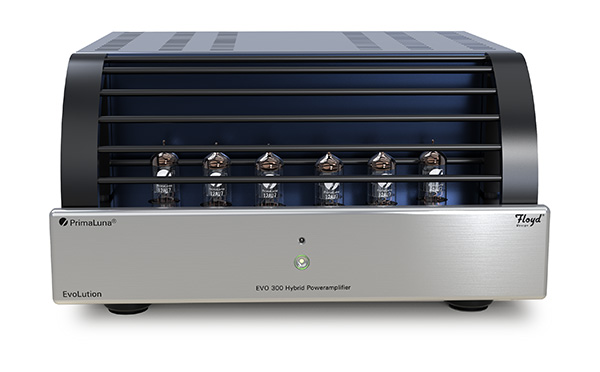
These days, listeners the wide world over enjoy hearing their music recreated for them by equipment whose origins are international; trade isolationists might consider the example of PrimaLuna. This Holland-based company's operations span three continents, with designers from Floyd Design and Durob Audio in the Netherlands, manufacturing in China, and input from California-based Harmonia Distribution.
PrimaLuna ProLogue Premium power amplifier
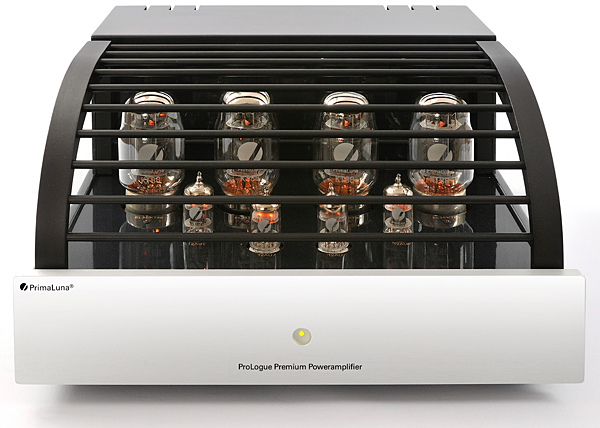
Let us pretend . . . you have a pair of loudspeakers that have proven themselves to sound articulate and musically responsive in your room, without excess boom, bloom, or frail leanness. They mate with your décor and impress your friends. But maybe you're bored, and feel certain that your speakers would sound better with a better amplifier than the one you have now. Maybe you feel an urge to spend money? Perhaps a new amp will make your records sound the way you imagine they should sound?
I have had these thoughts many times.
PrimaLuna ProLogue Three tube preamplifier & Seven monoblock amplifier
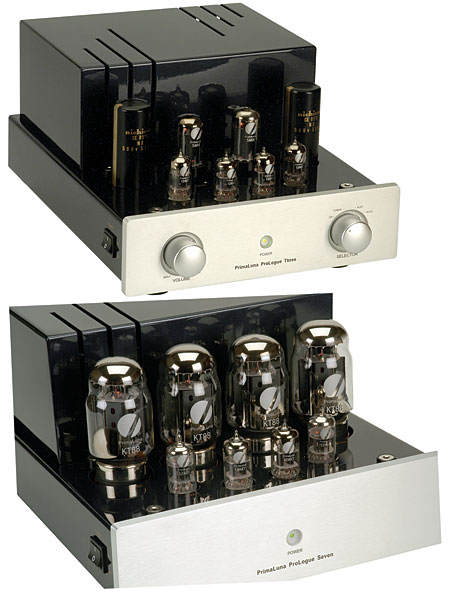
Everybody loves a bargain. No—make that: Most people love a bargain. Some just want the best, and they don't care about the cost. Some even distrust and reject out of hand any product that's not expensive enough. If you're one of these people, you might as well stop reading this review right now—the PrimaLuna ProLogue Three and ProLogue Seven are not for you. $1395 for a tube preamp? $2695 for a pair of 70Wpc tube monoblocks equipped with four KT88 tubes each? Must be based on old designs in the public domain using cheap parts carelessly assembled...