

McIntosh MC 275 Commemorative power amplifier
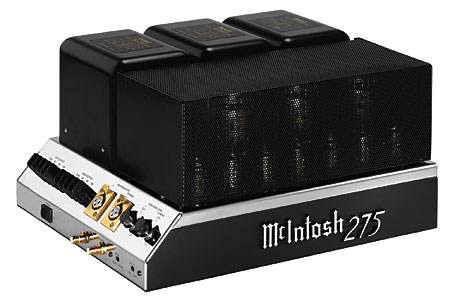
The McIntosh MC 275 power amplifier has been born yet again. It's the Count Dracula of power amps. It refuses to stay dead. Introduced in 1961, the Mac 275, in its original hardwired edition, was produced until 1970. This was the amp I desired while in college but couldn't afford. I remember the Mac 275 fondly—rather like girlfriends from my college years.
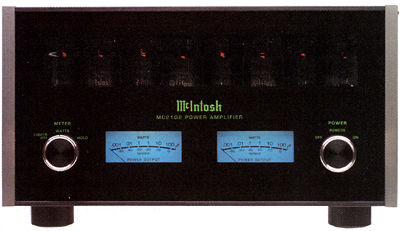
McIntosh MC2102 power amplifier
"Larry—if I'd told you 10 years ago that McIntosh would be heavily into tubes in the 21st century, what would you have said?"
McIntosh MC275 power amplifier
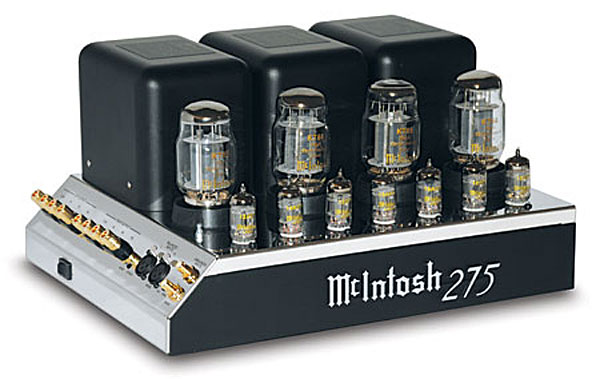
It's been a while since I've had a classic amplifier in my system, and McIntosh Laboratory's MC275 is as classic as they come. Introduced in 1961 as the "powerhouse" of that era's newfangled stereo tube amps (two 75W amplifiers in one chassis!), the MC275 retained its position as the amplifier to ownchallenged only, perhaps, by Marantz and a few othersuntil 1970, when it fell prey to the widespread wisdom that transistors were king and tubes were dead, and the model was discontinued. The MC275 briefly returned in 1993, in a limited "Commemorative" edition to honor the late Gordon Gow, longtime president and chief designer of McIntosh Labs. To everyone's surprise, that edition sold well, and McIntosh, gingerly at first, crept back into the tube business.
Mesa Engineering Baron power amplifier
Some audiophiles tend to get a mite sniffy around those of us who have expensive tastes and limited budgets. I've always been willing to spend the price of a new car on a set of speakers, but I never had the cash or credit. The sonic virtues of hefty, high-powered Krells and wondrous, single-ended tube designs always enchanted me, but when you're raising a family you make do. Through my experiences in a high-end audio establishment I learned the metaphysics of mixing and matching as befits my lowly caste, and I gradually developed sophisticated reference points, so that as the years swept by I managed to inch my way up the aural food chain.
Music Reference RM-200 Mk.II power amplifier

In his "Manufacturer's Comment" in response to my review of the original Music Reference RM-200 power amplifier in the April 2002 issue, designer Roger Modjeski admitted that being a manufacturer was not his first choice. "Frankly, I'd rather consult than produce," he claimed. "I'd rather be making a living doing stand-up comedy," I said to myself after reading his comment.
Music Reference RM-200 power amplifier
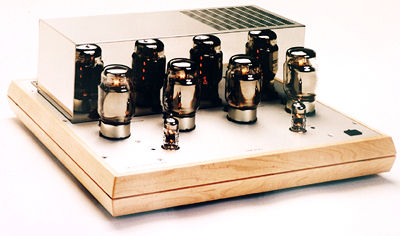
Reviewing a vacuum-tube power amplifier is like having your pants pulled down in front of a large crowd of people. I don't know how else to describe the feeling of spending a month or two luxuriating in fabulous sound, then writing a glowing review, then receiving a copy of the review as it will appear in the magazine, complete with John Atkinson's assessment of the amp's test-bench performance, which is usually miserable.
Music Reference RM-9 power amplifier
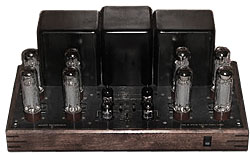 Do you believe in beginner's luck? If so, some of your personality traits should be quite predictable. Let's see. You're very likely an optimist with a "bull-market" mentality, play the lottery, and, most important, bought a CD player within a year of its introduction, or a solid-state amp in the '60s. You're apt to mail in a profusion of bingo cards (you know, the kind Stereo Review is full of) and spend hours perusing specifications in the hope of finding a kernel of truth in all of that chaff. You'd particularly be appalled at that fellow I ran into the other day, who had bought an AR-1 in 1956 and waited another decade before buying another speakerjust to make sure stereo wasn't a fad. Hey, relax, I won't turn you in; the mere fact that you're reading Stereophile is sufficient reason for redemption.
Nagra VPA monoblock power amplifier
Nagra's VPA amplification system consists of two slim, handsome monoblock amplifiers intended for vertical placement. They look good adjacent to the speakers. However, two 845 tubes put out a lot of heat, so the amplifier should be at least a foot away from your speakers...unless you're looking for a nice crackle finish.
Nestorovic Alpha-1 power amplifier
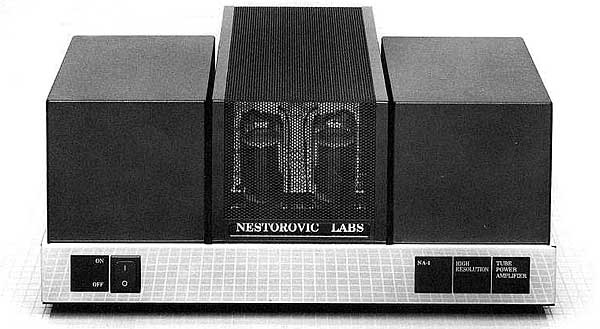
The great debate that has long separated audiophiles is tubes vs solid-state. Other topics, CD for example, may temporarily steal the spotlight, but year-in and year-out no other subject is the cause of as much controversy as whether tubed or solid-state circuitry produces the more accurate sound. As is typical with long-standing feuds, the split runs deep, and tempers often flare.
New York Audio Laboratories Futterman OTL-1 power amplifier
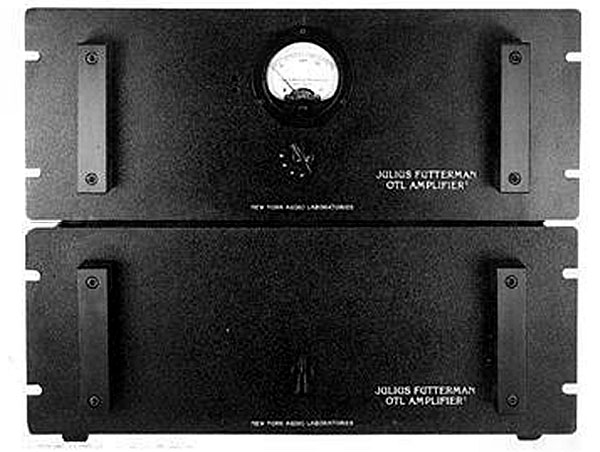
Few people in the high end know the difference between glorious excess and wretched folly as well as Harvey Rosenberg. Harvey's audio equipment always strives towards the glorious folly of providing the most romantic sound possible with modern technology. This may explain why his relatively small company, New York Audio Laboratories, can build an amplifier like the Futterman OTL-1, which costs a glorious $12,000 a stereo pair and actively competes for the title of best amplifier in the world.