

Quad II Classic monoblock power amplifier
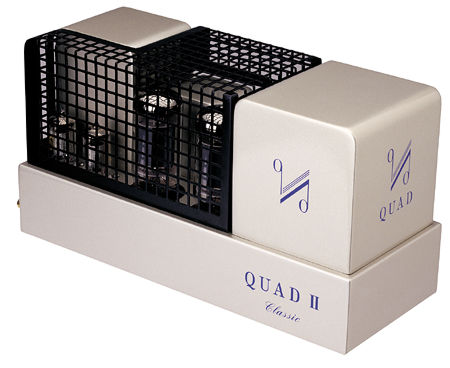
"The realistic reproduction of orchestral music in an average room requires peak power capabilities of the order of 15 to 20W when the electro-acoustic transducer is a baffle-loaded moving-coil loudspeaker of normal efficiency."
—Peter">http://www.stereophile.com/news/121503walker/index.html">Peter Walker and D.T.N. Williamson, writing in the Journal of the Audio Engineering Society in 1954
—Peter">http://www.stereophile.com/news/121503walker/index.html">Peter Walker and D.T.N. Williamson, writing in the Journal of the Audio Engineering Society in 1954
Quicksilver Audio Horn Mono monoblock power amplifier
Single-ended triode (SET) amplifiers are typically paired with horn loudspeakers, for good reason: most SETs produce very low power, so to get acceptable loudness you need a highly sensitive speaker, which means horns. Similarly, horn owners are often advised that the best amplifier for their speakers is a SET. Certainly, the horn-SET combination can be magical, but, in my experience, SETs are not the only type of amplifier that can sound good with horns.
Quicksilver MS190 power amplifier
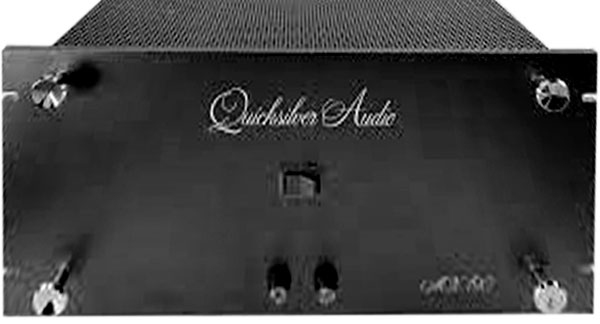
It would appear that there are still people out there who are unaware that this is the age of the transistor. Not only are tubed amplifiers not vanishing from the face of the earth, they are proliferating. Audio's equipment directory for 1977 listed three tubed power amplifiers. The same directory for 1984 lists over 30 of them, and the Quicksilver amplifier is not even included!
Raven Audio Spirit 300B Reference Stereo power amplifier
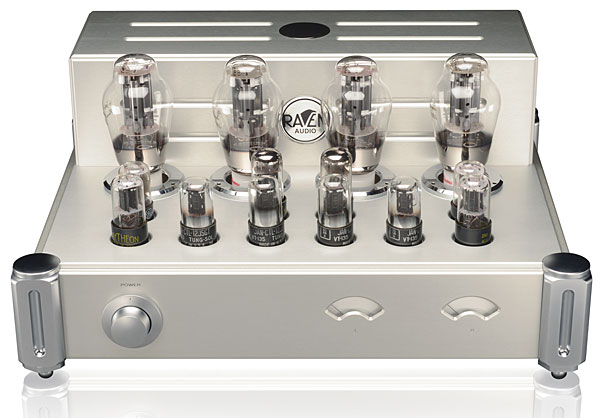
No one can say precisely how or when the ancient 300B triode tube made its cross-kingdom leap to the modern world of consumer audio, but we've got the where pretty much nailed down: It all began in Asia, where the best of the West is sometimes held in reverence rather than left to drown in consumerism's wake. Asia is the final resting place for the great Western Electric cinema systems of the 1940sand that's where the 300B earned its un-American second act. By the mid-1990s, the tube had captured the hearts of hobbyists who, consciously or not, sensed that the audio refineries of the day had lost the plot, not to mention the body.
Rogue Audio Atlas power amplifier
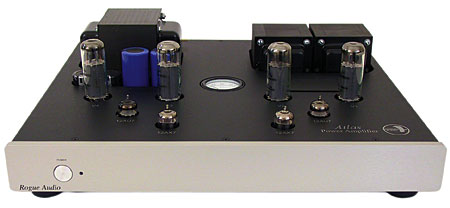
When I unpacked the Rogue Audio Atlas, I didn't know how much it cost. After examining its chassis of high-grade steel, its silver-anodized aluminum faceplate, its sleek and slightly rounded edges, and, above all, its two chunk-o'brick transformers—for such a little thing (a foot-and-a-half square by half-a-foot high), it's heavy—I guessed around five grand. Then I called Rogue Audio and learned that it retails for $1395.
Rogue Audio M-180 monoblock power amplifier
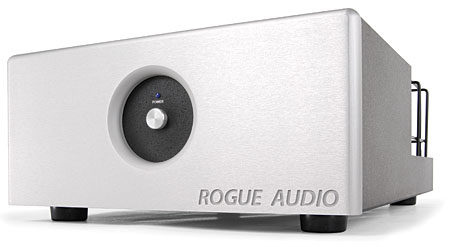
Two audiophile buddies of mine both own Rogue Audio M-150 monoblocks. I'd always been impressed with not only the sound quality of the M-150, but also its price. For $4495/pair, I thought my friends got a whole lotta amp for notta lotta dough. In this day and age, it's a rare and wonderful thing to get a pair of monoblocks, made in the US by a real audio company, that give you 150Wpc of tube power for under $5000. When Rogue came out with an update of the M-150, the M-180 ($5495), I thought it might be a good subject for my first full review in Stereophile. John Atkinson thought so too. I also thought it would be interesting to compare the M-180 with the very tube-like and almost identically priced Pass Labs XA30.5 two-channel amplifier ($5500), a sample of which I had on hand. (see my Follow-Uphttp://www.stereophile.com/solidpoweramps/pass_labs_xa305_power_amplifi…; in August 2009).
Rogue Audio Magnum M-120 monoblock power amplifier
I'm a big believer in the notion that if you can't hear a difference, why pay for it? I also believe that the ultimate goal of any high-end system should be to simply disappear and leave the listener immersed in the presence of the music. System synergy is paramount, and how you spread your compromises around and make your tradeoffs work for you is generally more significant than how expensive the final tab is. Thank God there are still plenty of companies out there dedicated to the proposition that ultimate resolution and build quality are anything but antithetical to real-world value.
Rogue Audio Stereo 100 power amplifier
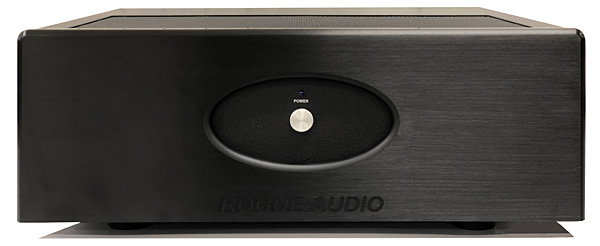
When I began writing for Stereophile, I dreaded doing comparisons. They were stressful and tediousand what if I got them wrong? But I quickly learned: Not only do readers enjoy comparisons, they need them. How else might they imagine the relative merits of the component under consideration? Once I realized this, I began acquiring a range of reference amplifiers.
But conspicuously missing from my audio menagerie has been a fast, neutral, 100Wpc tube amp to put more pop, fire, and maybe a little glow, into the Harbeth M30.2s.
Rogue Audio Titan Atlas Magnum power amplifier
One drizzly, gray morning I found myself with an unexpected hole in my schedule and an unusual hankering for doughnuts. Since my move to Portland, Oregon, last August, people from around the country have told me that I just had to try the over-the-top creations over at Voodoo Doughnuts. So I donned my raincoat and walked through downtown Portland for one of Voodoo's fried, raised, and glazed treats. Once inside Voodoo's tiny storefront, I chose two confections: a maple-bacon bar (yep, they put a whole strip of bacon on top of a doughnut), and an Old Dirty Bastard doughnut with chocolate frosting, Oreos, and a peanut-butter topping. They were delicious, and way more doughnut than one man should eat.
Siltech SAGA power amplifier
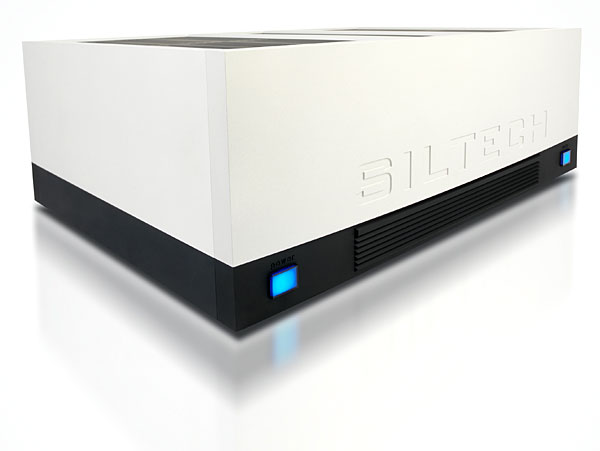
Among the biggest buzzes at the January 2013 Consumer Electronics Show, and at Munich's High End Show the following May, was the sound in the room of Siltech BV, a Dutch company best known for its high-end cables. Siltech was demonstrating an innovative new power amplifier, and using it to drive the company's glass-cabineted Arabesque loudspeakers ($90,000/pair). The sound was unmistakably lush yet also remarkably linear, notably dynamic, and seemingly free of electronic artifacts. It sounded like the sound of "nothing"which was really something!and so much of a something that it caught the attention of many reviewers. But while there's often controversy and disagreement about a given product's sound quality, this time the enthusiasm seemed unanimous.