Postscript—February 2020
A quarter of a century later, we can ask what has changed and what was missed out?
The article was focused on components used in hi-fi electronics, mainly analog. The levels of conformity that could be achieved a quarter century back have not been greatly increased today. A maturity has been reached. Meantime, the audio industry (high-end, the bastion of analog) is dependent on, by and large, standard parts, that are, or were, made in high volumes. But today, many close-tolerance parts, made for analog electronics and central to high-end signal paths, are becoming scarce and harder to find. Some key parts are recast and wrecked for audiograde use (footnote 1). Bigger interests prevail.
Digital electronics was not considered. Yawn. It's hardline math-headed followers believe it is immune to part tolerances. Elimination by design. As the theory says so, anything else (including the real world) must be a mistake. Thus it was audiophiles, and astute hi-fi engineers, not the faceless digital IC designers, who showed that tolerances do remain crucially important, for example, those affecting jitter and timing, or permitting or assisting the generation of musically-toxic IM products.
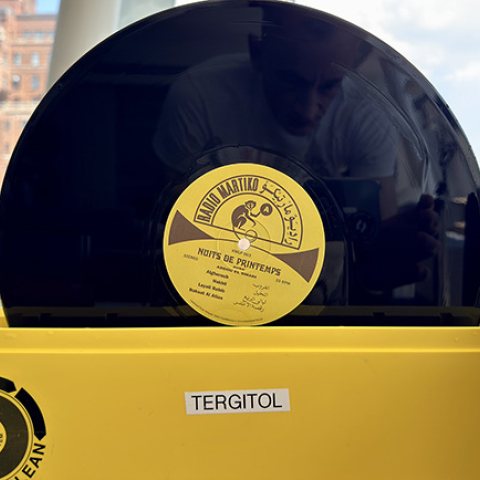
The continued existence of analog audio gear in the front line of accuracy and musical experience, let alone a worldwide vinyl resurgence, says it all. Technology's high water mark has been reached, and well-rooted human-resonant technology continues to bite back. In the vinyl library at Toad Hall, is a 12" single from 1983, with a resolute Malcolm X, sampled, preaching "No Sellout".
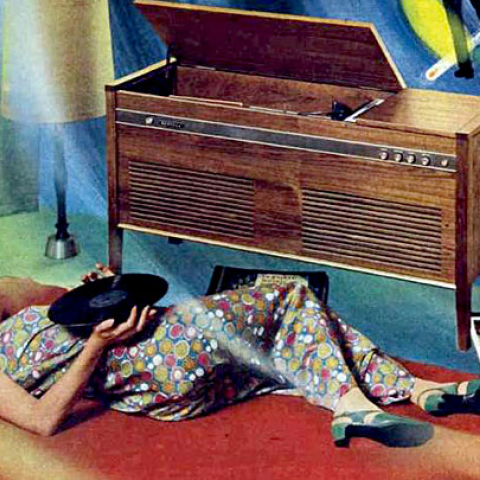
Supertuners—Mind Your Cactus: Back with component tolerances and signal path variations, it was assumed that Stereophile's readers would realise that having equipment made with closer-matched parts, wouldn't only mean that units with different serial numbers stand a higher chance of being sonically similar across production lots and runs—but also that the stereo image would be sharpened-up. Over the RIAA curve-soup allowed by cheaperskate makers. A dry wit detective like Philip Marlowe (often borrowed here) would say that the image can be made so pinpoint that a searing jazz trumpet (try Lee Morgan, Dizzy Gillespie) "is gonna drill a hole in the sofa". Or Metallica's snare drum is so sharp it seems like it will slice the top off a cactus that the someone has left in the stereo hot spot.
Also not mentioned, signal-path–wise, were crossover inductors. Many speaker makers get away with using parts with rather sloppy tolerances, like 1960s electronics. Not helped by the fact that coil makers have never been told to get their act together. With complicated (some would say evil) variations in multiple dimensions, any coil-based part is way less neat and clean than the other passive components. If that wasn't enough, coils wound on ferritic cores will assuredly generate trains of anti-musical harmonics, needed only in miniscule quantities to nastify sonics, and the pattern can vary item to item. So hands-up any tube amp makers who match the harmonic structure of stereo pairs of output transformers? or solid-state makers who match the saturation behaviours of the anti-RF ferrite rings needed these days on most inputs?
Outside the scope of this article, but no less central are:
i) the 101 variabilities in real wood, artificial/fake wood, metals, plastics and rubbers, oils, etc used in turntables, CD players/transports, speakers, their cabs, and cables. And the room and room furniture. With some of these, stereo matching isn't an issue. But your turntable or CD player might sound different to others', just because a different grade of oil was used in the bearing.
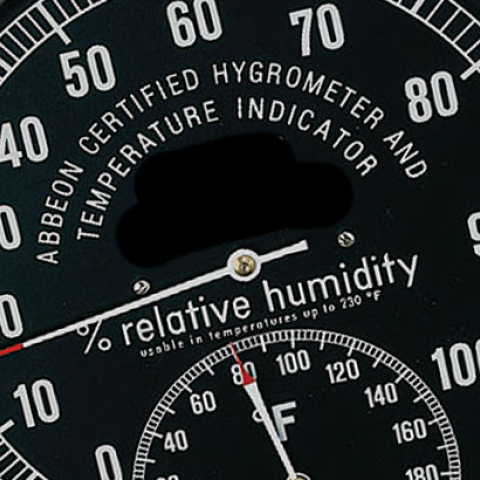
ii) Effects of weather particularly temperature, humidity, ions and pollutants, on the equipment and on humans. Sensitivity varies widely.
iii) Cyclic variations in ground vibrations, AC power pollution and strong RF, effectively a microwaving, from 5G and smart meters and other electrosmog generators.
There are of course always other known unknowns, and also unknown unknowns. Variabilities in sonic performance and cognitive levels that humans have yet to greatly notice.
Some listeners, like professional performers, have sufficient mind control to not be affected by common variations and influences. It may be a learned thing, to cease fretting about small day-to-day changes in sonics.
Zenfulness leads to Kiss implosion: Kiss—"Keep It Effin' Simple" in English Cockney—is an ace expression from 1960s-era US military and contractors, as to good design. No less equally, it's solidly established that one route to musicality is with simple-most circuitry. Such is usually freed from most sorts of corrective feedback. But this makes such equipment (such as solo-triode and solo-MOSFET amplifiers) extra-open to variability. Unit-to-unit and stereophonic. The "whole idea: of corrective feedback is to level-up things. Without this, it's well known that the core active parts of such kit, generally triode tubes and MOSFETs, have to be selected. As variations can be far wider than even the slackest crossover inductors—as gross as 300% is possible. Those are the good specimens.
Selected properly, this means in multiple dimensions, so lots of measurements with their own tolerances. How many costly tubes/valves can a maker afford to reject? Suddenly, simplicity gets complicated and the cost of purism hurtles up. Meantime, the audio path will still need accurate resistor and capacitor values where such govern or influence interchannel matching—particularly the RIAA response.
The bottom line is that a lot more testing and tweaking and maybe rejecting lots of parts, may be far more necessary, with low- and zero-feedback signal path equipment. This might help justify some high prices, if a maker can show all the hours of work, the costly test equipment needed, and also the piles of rejected parts (footnote 2).
Footnote 1: I reported in a 2000 issue of Stereophile the changes that resulted when resistor manufacturer Holco replaced the copper leads with steel. Footnote 2: Further reading—A.A.Tomkins, Errors, chance and Quality Assurance, Joseph Lucas, Birmingham, England 1971. Footnote 3: Ben Duncan, hardcore analog equipment designer since the 1970s, has been an ardent music lover too, with English tastes like liquide ambient drum'n'bass, thunderous Anglo-Jamaician dub, and romantic Northern Soul on 7" vinyls rescued from '60s America. Beginning 1980 as an early user of 1%, then 0.5%, and later selecting to 0.1% tolerance parts, BD designed a high-end DIY active crossover, then two advanced DIY disc preamp modules, DEQ and ADEQ, used in the AMP-01 & -02 mainframe preamplifiers. All had unusually tight tolerance parts giving inter-band and inter-channel accuracy levels that appear to remain uncommon today. Not designed by accountants. Mind your sofa.
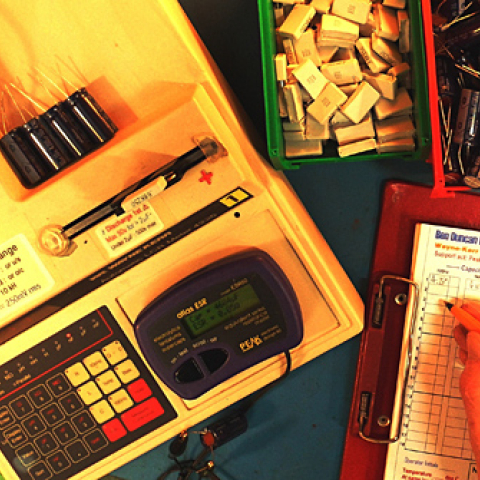
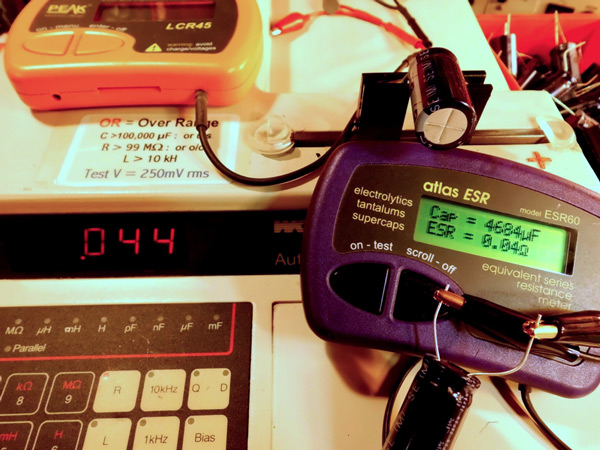
The close-up shows a parasitic resistance measurements taking place on elcaps that are typically used in the signal path of a MC head-amp. Two instruments are in use in sequence: a Wayne-Kerr desktop meter displays ESR at 100Hz, 1kHz, and here 10kHz, while the palm-sized Atlas tester then tests at 100kHz. ESR comprises various parasitics neatly mnemonic'd "Evil and Superfluous Resistances", which are exquisitely non-linear and greatly varied in behavior. A low-as-possible ESR is therefore a 1st-order indicator of sonic quality. Nondisclosure by makers speaks volumes. Also if a few parts in a batch read way higher, they can be picked out, and sent to work in lesser roles, for example, in musician's kit where sonic bloat is wanted.
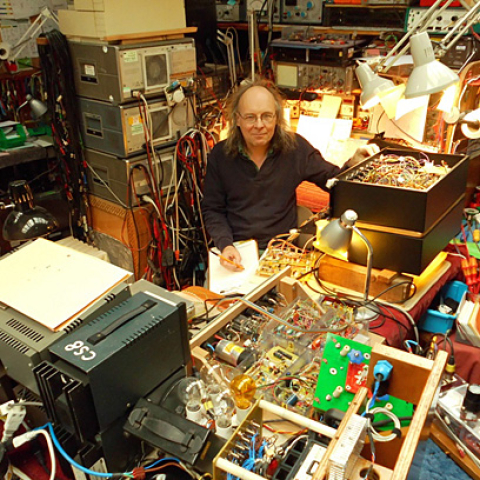
The picture above shows what few audio gear makers had access back in 1980s and '90s, namely proper component analysis kit. The cost of each item of serious, specialized test gear would be in four or five figures in today's dollars or pounds sterling, so a properly equipped test suite could soon be costing in the quarter-million area. Few, if any, in the audio industry are so well focused, let alone resourced. Use of the earlier generations of test equipment (what was affordable secondhand in 1980s and '90s) meant analog apparatus that was complicated to set-up, and that needed time-consuming manual intervention. Today, high-grade digital equipment is smooth to use, and far less costly, be it upcycling the best gear that money could buy from the 1980/1990s, or the latest handheld analyzers. Now Digital works for Analog. No sellout!—Ben Duncan (footnote 3)
Footnote 1: I reported in a 2000 issue of Stereophile the changes that resulted when resistor manufacturer Holco replaced the copper leads with steel. Footnote 2: Further reading—A.A.Tomkins, Errors, chance and Quality Assurance, Joseph Lucas, Birmingham, England 1971. Footnote 3: Ben Duncan, hardcore analog equipment designer since the 1970s, has been an ardent music lover too, with English tastes like liquide ambient drum'n'bass, thunderous Anglo-Jamaician dub, and romantic Northern Soul on 7" vinyls rescued from '60s America. Beginning 1980 as an early user of 1%, then 0.5%, and later selecting to 0.1% tolerance parts, BD designed a high-end DIY active crossover, then two advanced DIY disc preamp modules, DEQ and ADEQ, used in the AMP-01 & -02 mainframe preamplifiers. All had unusually tight tolerance parts giving inter-band and inter-channel accuracy levels that appear to remain uncommon today. Not designed by accountants. Mind your sofa.