Michael Trei
 PJ Harvey: Rid Of Me
Island Records ILPS 8002 (LP). 1993. Steve Albini, eng. The late Steve Albini hated to be called a record producer, and when one of the literally thousands of bands he recorded insisted that he be credited, he preferred the term audio engineer. Albini's stripped-down recording style aimed to capture the true live sound of a band, with as little studio trickery as was possible. This approach, combined with PJ Harvey's raw, hard-hitting songs, results in an album of truly intense emotion and power. The sound is stunningly real, as if you're in the room with the band. Word is that Harvey hated the mix, feeling that her vocals were buried, but it's all there if you listen.
 Johnny Hartman: Once In Every Life
Johnny Hartman, vocals; Joe Wilder, trumpet; Frank Wess, tenor saxophone, flute; Billy Taylor, piano; Al Gafa, guitar; Victor Gaskin, bass; Keith Copeland, drums.
Bee Hive Records 7012 (LP). 1981. Jim Neumann, Susan Neumann, prods. Singer Johnny Hartman is best remembered for his 1963 collaboration John Coltrane and Johnny Hartman, but with this late-career album, the entire focus is on Hartman's deep and sonorous baritone voice. Backed by a sympathetic ensemble featuring Joe Wilder on trumpet and Frank Wess on tenor sax, Hartman shines here on standards like "I Could Write a Book" and slow ballads like "I See Your Face Before Me." The recording is superb, and the overall effect is a bit like taking a shower in chocolate sauce. Out of print for decades, it was finally reissued by Analogue Productions on vinyl and hybrid SACD in 2016.
Rogier van Bakel
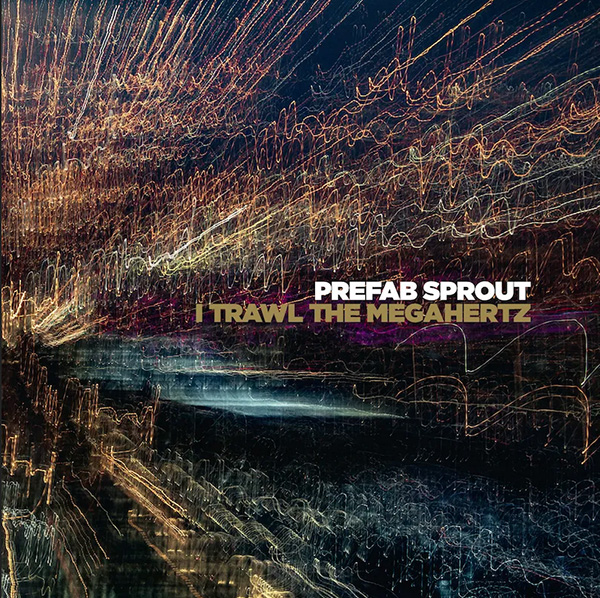 Prefab Sprout/Paddy McAloon: I Trawl The Megahertz
Sony Music UK G0100036581682 (CD). 2003. Paddy McAloon and Calum Malcolm, prod.; Calum Malcolm, eng. For commercial reasons, this solo recording was also released under the name of Prefab Sprout, McAloon's terrific pop band. Don't be fooled. It's as personal as an album can be, full of alienation and foreboding brought on by the British songsmith almost losing his sight. Gone is the wide-eyed sunniness of radio-ready pop pearls like "The King of Rock 'n' Roll" and "Hey Manhattan." Instead, we find somber but gorgeously arranged chamber music and sonic collages that, here and there, include snippets from shortwave radio broadcasts. Especially on the 22-minute title track, the picture that emerges is of McAloon being swallowed by encroaching twilight, spinning the dial on his radio, scouring the ether (hence the title), and pining for human connection. If that sounds joyless, not so fast. The nine largely instrumental pieces are beautiful and wistful, the way Satie or Radiohead can be. Intimate brass and string sections conjure autumnal colors that far eclipse Prefab Sprout's paintbox. Criminally underrated, I Trawl the Megahertz is a devastating meditation on affliction and loss. Far from being off-putting or pretentious, it's full of grace and humanity, and one of the most affecting records I know.
 Bear Project: Planet Soil
Bear Project NL (Qobuz stream). 2023. René Meister, prod.; Eric Blom and René Meister, engs.
Stephen Francis Vasta
 Tallis: The Votive Antiphons
The Cardinall's Musick/Andrew Carwood
Hyperion CDA68250 (CD, 2018). Jonathan Freeman-Attwood, prod.; Martyn Haskell, eng. Earlye Musicke isn't my preferred line of territory: academic, etiolated performances don't speak to me; besides, Tallis's full, close voicings want a fuller sound. But this compilation offers one of the best choral programs I've ever heard. The Cardinall's Musick—its affected spellings notwithstanding—is not a faux-Anglican group, but a mixed-voice choir: the adult sopranos and altos are even permitted to use vibrato (horrors!). The personnel may change from piece to piece, but the results are consistent: vibrant and well-balanced, captured in an apt, unobtrusive ambience.
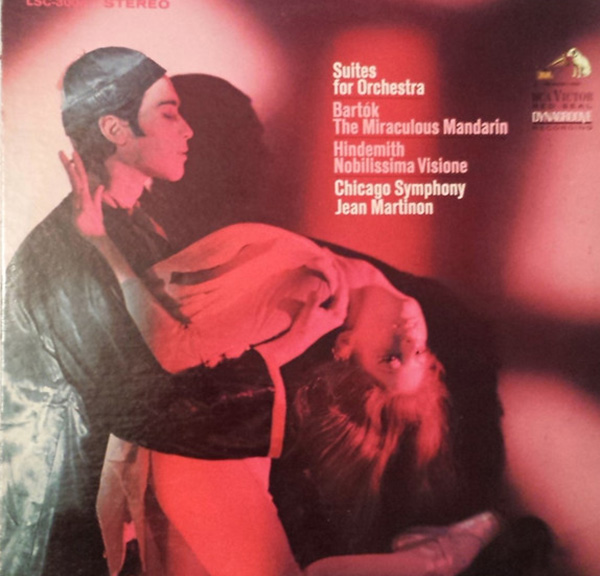 Bartók: Miraculous Mandarin Suite
Hindemith: Nobilissima Visione
Chicago Symphony Orchestra, Jean Martinon, cond.
RCA Red Seal LSC-3004 (LP). 1968. Howard Scott, prod.; Paul Goodman, eng. Jean Martinon made few records during his short-lived Chicago tenure, but the results were first-rate. Here, he draws a wealth of color from 20th century scores not particularly noted for it. Thus, where other conductors emphasize the Mandarin's punchy, aggressive elements Martinon's textural variety and buoyant shaping make it sound like—er—music. Similarly, the Chicago Symphony's warm, rich palette—especially, and surprisingly, among the strings—bring the sometimes arid Hindemith to vibrant life. The performances are available in an RCA bargain box, but it's worth hunting down the vinyl.