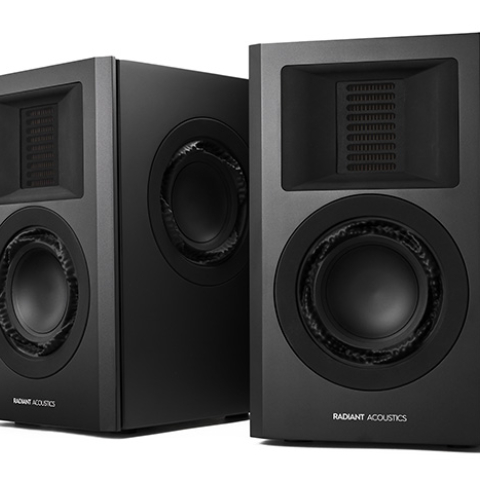
 I decided to test the low-frequency performance of The Nines. It pleased and amused me to learn that John Atkinson uses a Taylor Swift tune, "All Too Well (Taylor's Version)," from her remade Red (24/96 FLAC, Big Machine Records/Qobuz), to test low bass. It's a good tune for that purpose, with a prominent bassline dropping an octave at 2:25, when she sings, "'Cause there we are again in the middle of the night." The Nines clearly reproduced the descending low-frequency energy, but pushing the SPLs pushed the fuzziness. These little boxes are great at reasonable volumes, but they simply can't move that much air.
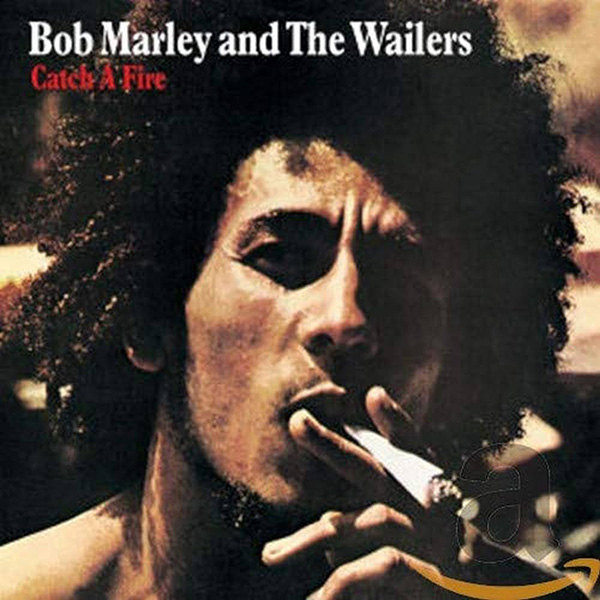
The same was true with "Concrete Jungle," the first cut on the 50th-anniversary extended reissue of Bob Marley and the Wailers' Catch a Fire (24/96 FLAC, Universal Music Catalogue/Qobuz). It's reggae, so the bass is loud. Played at moderate levels, the bass sounded clean and went deep. Played loud, the bass grew some wool. Bass wasn't recorded as cleanly on the second track, "Slave Driver," so it went from somewhat fuzzy to quite fuzzy as I increased the volume. If you listen relatively loud and enjoy music with a heavy bottom, you will probably enjoy The Nines best with a subwoofer connected; Klipsch sells packages with The Nines and various matching subs.
On the plus side, the kickdrum beats were loud and proud no matter the listening volume. The Nines projected the beat well out into the room.
I decided to test the low-frequency performance of The Nines. It pleased and amused me to learn that John Atkinson uses a Taylor Swift tune, "All Too Well (Taylor's Version)," from her remade Red (24/96 FLAC, Big Machine Records/Qobuz), to test low bass. It's a good tune for that purpose, with a prominent bassline dropping an octave at 2:25, when she sings, "'Cause there we are again in the middle of the night." The Nines clearly reproduced the descending low-frequency energy, but pushing the SPLs pushed the fuzziness. These little boxes are great at reasonable volumes, but they simply can't move that much air.
The same was true with "Concrete Jungle," the first cut on the 50th-anniversary extended reissue of Bob Marley and the Wailers' Catch a Fire (24/96 FLAC, Universal Music Catalogue/Qobuz). It's reggae, so the bass is loud. Played at moderate levels, the bass sounded clean and went deep. Played loud, the bass grew some wool. Bass wasn't recorded as cleanly on the second track, "Slave Driver," so it went from somewhat fuzzy to quite fuzzy as I increased the volume. If you listen relatively loud and enjoy music with a heavy bottom, you will probably enjoy The Nines best with a subwoofer connected; Klipsch sells packages with The Nines and various matching subs.
On the plus side, the kickdrum beats were loud and proud no matter the listening volume. The Nines projected the beat well out into the room.
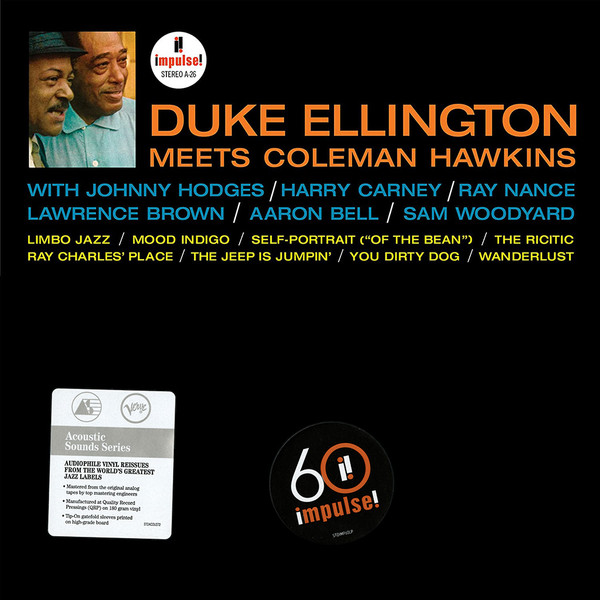 Next, I focused on the soundstage and transmission of low-level details at moderate listening levels. The Nines excelled at this. In the December 2023 Revinylization column, I reviewed three vinyl versions of Duke Ellington Meets Coleman Hawkins, one of my favorite jazz albums. On the second track, "Mood Indigo," I wanted to experience the effect of Hawkins stepping out of the right speaker when he begins his solo. With those same three LP versions of the album digitized 24/96 into my music library, I revisited "Mood Indigo" with The Nines. The differences among the three LPs were quite audible; I clearly preferred the original Impulse! LP.
I closed my eyes, forgot I was listening through little wooden boxes (and worked hard to ignore the vinyl ticks and clicks). Lo and behold, there he was in front of me, to my right, blowing that wonderful solo.
But can these speaker-gadgets rock? My acid test for speakers—for determining whether they have any hope of compatibility with my listening tastes—is the Rolling Stones' "Can't You Hear Me Knocking" from Sticky Fingers. The version I have preferred lately is on the Japanese SACD, which claims to be a "flat transfer" of the master tape. It preserves the dynamics I remember from the LP—nice, crisp drumbeats and distinct and varied guitars—as opposed to recent CD reissues, which are superloud with almost no dynamic range and so sound mushy. To my surprise, The Nines played the DSD file on my hard drive (ripped from the SACD by a friend who knows the "PlayStation method") through the Foobar2000 player with the DSD/SACD plug-in.
Next, I focused on the soundstage and transmission of low-level details at moderate listening levels. The Nines excelled at this. In the December 2023 Revinylization column, I reviewed three vinyl versions of Duke Ellington Meets Coleman Hawkins, one of my favorite jazz albums. On the second track, "Mood Indigo," I wanted to experience the effect of Hawkins stepping out of the right speaker when he begins his solo. With those same three LP versions of the album digitized 24/96 into my music library, I revisited "Mood Indigo" with The Nines. The differences among the three LPs were quite audible; I clearly preferred the original Impulse! LP.
I closed my eyes, forgot I was listening through little wooden boxes (and worked hard to ignore the vinyl ticks and clicks). Lo and behold, there he was in front of me, to my right, blowing that wonderful solo.
But can these speaker-gadgets rock? My acid test for speakers—for determining whether they have any hope of compatibility with my listening tastes—is the Rolling Stones' "Can't You Hear Me Knocking" from Sticky Fingers. The version I have preferred lately is on the Japanese SACD, which claims to be a "flat transfer" of the master tape. It preserves the dynamics I remember from the LP—nice, crisp drumbeats and distinct and varied guitars—as opposed to recent CD reissues, which are superloud with almost no dynamic range and so sound mushy. To my surprise, The Nines played the DSD file on my hard drive (ripped from the SACD by a friend who knows the "PlayStation method") through the Foobar2000 player with the DSD/SACD plug-in.
 Spinning shiny circles—and black ones
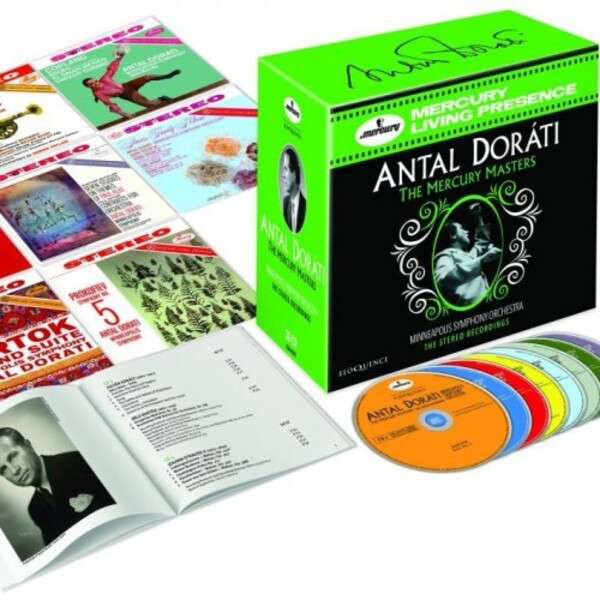
To check the TosLink input, I connected an Oppo DV-970HD DVD/CD/SACD player and spun a pair of shiny silver discs from a pair of box sets I produced and remastered: the complete Antal Doráti/Minneapolis Symphony on Mercury Living Presence, Mono era (31 CDs, Eloquence 484 4064) and Stereo era (30 CDs, Eloquence 484 4207, footnote 5). I dove into the music of Zoltán Kodály (1882–1967), one of Doráti's teachers and mentors. Along with fellow Hungarian composer Béla Bartók, Kodály prowled the hinterlands of present-day Hungary and Romania collecting peasant songs, work songs, and other folk music. Sometimes they traveled with an Edison cylinder recorder; sometimes they transcribed the music as it flowed.
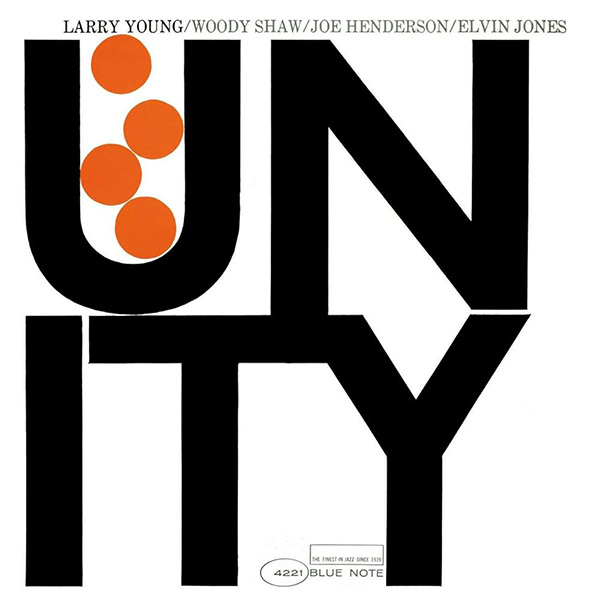 I switched to phono to test The Nines' phono preamp. My favorite Blue Note jazz record is Unity by Larry Young. There's a Kodály connection: Young's piano teacher in Newark, New Jersey, was a student of Kodály. The first cut on Unity is titled "Zoltan"; the opening horn flourish by Woody Shaw (trumpet) and Joe Henderson (tenor sax) quotes the Emperor's entrance from Háry János Suite.
Connecting a turntable ended up requiring a bit of a "rigamarole," as my father used to say. It's not ideal to place a turntable near a speaker—yet, turntables have short cables, for good reason: The signal level coming out of any cartridge, even a high-output moving magnet, is small; vibrations from a loudspeaker, especially at low frequencies, can cause feedback. Plus, cable capacitance increases with length and affects the sound. But what can you do when the phono preamp is located inside the speaker?
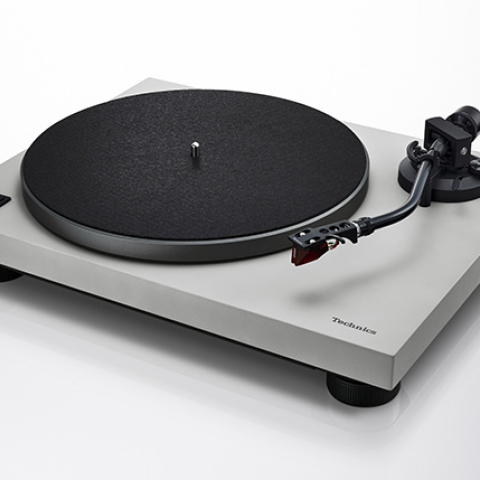
I saw little alternative. I set up a temporary stand made of two milk crates with a piece of thick plywood on top and moved my Technics SL-1200MK5 onto it. The cartridge was an Ortofon 2M Blue that once belonged to the late Art Dudley. I figured this is the right cartridge for this purpose because it's one a person new to vinyl and not (yet) obsessed might own. The 2M Blue's relatively high output gave the system its best shot at achieving decent output with low background noise.
I switched to phono to test The Nines' phono preamp. My favorite Blue Note jazz record is Unity by Larry Young. There's a Kodály connection: Young's piano teacher in Newark, New Jersey, was a student of Kodály. The first cut on Unity is titled "Zoltan"; the opening horn flourish by Woody Shaw (trumpet) and Joe Henderson (tenor sax) quotes the Emperor's entrance from Háry János Suite.
Connecting a turntable ended up requiring a bit of a "rigamarole," as my father used to say. It's not ideal to place a turntable near a speaker—yet, turntables have short cables, for good reason: The signal level coming out of any cartridge, even a high-output moving magnet, is small; vibrations from a loudspeaker, especially at low frequencies, can cause feedback. Plus, cable capacitance increases with length and affects the sound. But what can you do when the phono preamp is located inside the speaker?
I saw little alternative. I set up a temporary stand made of two milk crates with a piece of thick plywood on top and moved my Technics SL-1200MK5 onto it. The cartridge was an Ortofon 2M Blue that once belonged to the late Art Dudley. I figured this is the right cartridge for this purpose because it's one a person new to vinyl and not (yet) obsessed might own. The 2M Blue's relatively high output gave the system its best shot at achieving decent output with low background noise.
 Summing up
Klipsch's The Nines is a flexible, good-sounding speaker-gadget system priced to be accessible to a wide range of users. They make a great TV-sound system, with the built-in ability to stream music from a Bluetooth-connected phone-gadget or tablet. They can also be the heart of a high-quality first step into high fidelity, with connectivity for streaming, CDs, and vinyl, plus the television. As a small-room system, they will fill the space with music either by themselves or in conjunction with a subwoofer. (Klipsch makes several matching models.) Remember your first hi-fi? I remember mine. The Nines excited me in a similar way, with peppy and fun sound—smaller in scale than I typically experience these days but hitting a lot of high marks: for clarity, detail, and impressive punch and drive. With their array of modern-world connection options, they could be a young person's self-contained gateway into audiophilia, and they make a fine small-room or second system for anyone. Bass-heads can spring for a matching subwoofer. The system is also somewhat portable—not in the sense that you'd haul it to the beach but in the sense that you could take it with you to a vacation home or an Airbnb. I enjoyed my time with The Nines. I played them hard and had fun. They don't provide the nth degree of detail-revealing audiophile sound, but they grab enough of the music, and push it out in the room, to get the party started and keep it going all night.
Footnote 5: For more about the Mercury Living Presence series, see Robert Baird's "A Fine Art: The Mercury Living Presence Recordings." For more about the Doráti sets, see bit.ly/43ZVnuN and bit.ly/434Am0B. Also see the dCS documentary at dcsaudio.com/edit/watch-our-new-film-on-mercury-living-presence. Footnote 6: The original recording used Fairchild Pic-Sync, a means to overcome powerline problems. The original LP was cut after a Pic-Sync resolver; subsequent reissues were not—hence the original LP only was relatively free of wow. Footnote 7: Northrop has since been gut-renovated and made into a smaller performance space with better acoustics.