 The sound
I've used the word "stunned" so frequently in my reviews that I dare not use it again, lest its meaning be blunted. "Gobsmacked," a descriptor oft invoked by one of my mentors, John Atkinson, is a viable alternative, but it, too, is more than a bit overused by audiophiles. Yet "surprised" is inadequate to convey my reaction when I began auditioning the Varèse Transport. I was
amazed to hear what I heard and
astonished to feel what I felt.
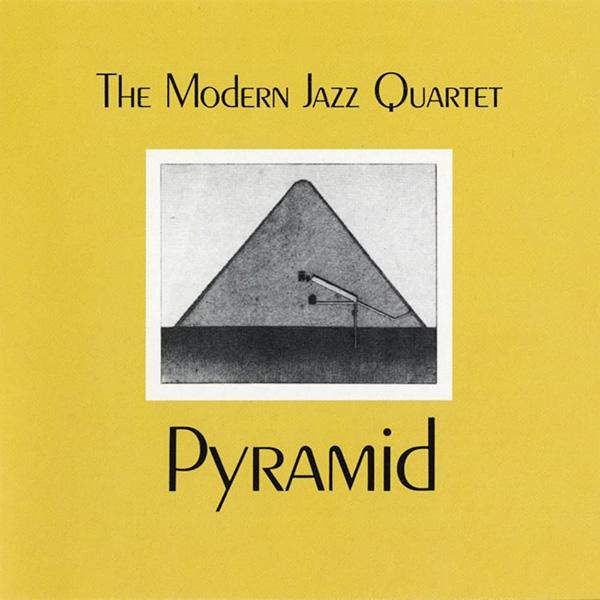
Which doesn't mean that there weren't false starts. I began with a track Scott often chooses—one which we could play on CD and stream through Qobuz—The Modern Jazz Quartet's "Pyramid" (LP version) from the eponymous CD,
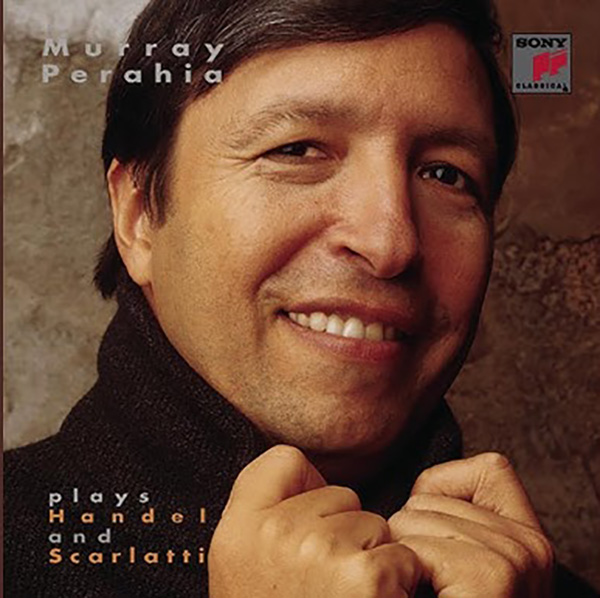
Pyramid (16/44.1 FLAC, Rhino Atlantic/download). It quickly became apparent that the CD and streamed versions were not the same. All I could ascertain for certain was that, read from a CD by the Varèse Transport, the vibraphone sounded gorgeous. Several more inherently flawed comparisons sputtered along, equally inconclusive. Only when Scott brought over his ripped-to-USB AIFF copy of Murray Perahia's 1997 Sony CD of Handel's Suite for keyboard (
Suite de pièce), Vol.1 No.5 in E major ("The Harmonious Blacksmith"), HWV 430, from
Murray Perahia plays Handel and Scarlatti (16/44.1 FLAC, Sony/Qobuz), was I able to figure out what was what.
Though I had to play several movements multiple times, the joy and perfection with which Perahia executes every move of his fingers with a harpsichord-like touch, and the subtle dynamics he employs, kept me smiling. If you want to hear 14 minutes of one of the most joyful keyboard pieces of the baroque period, check out this recording. Its elation brings to mind the equally joyful first movements of Bach's first and second
Brandenburg Concertos, both in F major, and his arias "Phoebus eilt mit schnellen Pferden" (So Cupid too seeks his pleasure) and "Sich üben im Lieben" (To indulge in love) from
Weichet nur, betrübte Schatten, BWV 202 (aka The Wedding Cantata).
As long as the recorded performance was great, any sense of a barrier between me, artist, and music was eliminated. The illusion of artists performing directly in front of me was sometimes disarmingly real. I know that every recording is a product of electrical manipulation that reflects the engineer's signature as much as the artist's—that every recording is a reality unto itself—yet CD and SACD playback often sounded as direct-to-the-source as anything I'd ever heard. I've never experienced CD or SACD sound remotely as good as through the Varèse Transport and system.
I was astonished and moved by how much subtle dynamic contrast the Varèse Transport revealed. If I listened carefully to the Qobuz stream of Perahia's Handel through the
Dragonfire Mini Dragon desktop system with subwoofer, I could eventually ascertain a slight drop in volume between 1:10 and 1:12 in the first movement. Emotionally, it didn't register at all. Through the Varèse system, however, in that slight softening of touch I felt Perahia sinking deeper into the music, reaching deeper into its heart. As his heart responded, so did mine.
I had a similar experience when I cued up, for the first time in years, the CD of Brahms's song "Heimweh II [O wüsst ich doch den Weg zurück]," from soprano Elly Ameling's 1977 recording of Brahms songs. I originally discovered this recording on an out-of-print LP in the Berkeley Public Library and searched for decades until, soon after the start of the 21st century, Philips rereleased it as part of a five-CD set,
The Artistry of Elly Ameling.
Captured in its prime, Ameling's voice had gained gravity and profundity since she made her first, lighter-voiced commercial recordings well over a decade earlier. I place the best of her mature Brahms recordings on the same exalted level as those of sopranos Lotte Lehmann and Elisabeth Schumann. Each woman had a distinct voice and sensibility, better suited to some songs than others. But when voice, heart, and repertoire matched, the results were transporting.
As were they through the Varèse Transport. I had no idea how dynamic Ameling's smaller voice could sound (footnote 3) until I played this song through the Varèse. Ameling's art registers emotion more through tone and shading than through specific word-painting; hearing more of how she sang the song to herself means everything, to me, at least. I expect that many jazz lovers feel the same about 'Trane's artistry, others about Janis Joplin's or Samara Joy's. SACD vs the DSD file on USB stick was a tougher call. I went back and forth many times on two tracks of Mahler's
Songs of a Wayfarer, performed marvelously if imperfectly by Alice Coote on a Pentatone SACD of
Mahler Song Cycles with the Netherlands Philharmonic Orchestra under Marc Albrecht. Eventually I decided that the file on a stick sounded a bit more vivid than the SACD, but I'm not certain. They sounded different, but those differences were hard to pin down.

After all the testing, I had a ball digging out CDs known and unknown. I used to carry John Atkinson's 2008 CD of male ensemble Cantus's
While You Are Alive (Cantus Recordings) to audio shows. Despite how many times I heard it, including at the end of one show where John and I sat in mystical silence as golden sound poured forth from a darTZeel/Evolution Acoustics system, I've never heard the ensemble sound as real, present, and dynamic on Eric Whitacre's "Lux Aurumque" as it did through the Varèse Transport. Nor did I expect to hear so much color, vibrancy, shading, and pristine silence from a 16/44.1 CD.
After a dose of "Mood Indigo" in stereo from Nina Simone's 1959
Little Girl Blue (Bethlehem)—I'd never heard her voice sound so soulfully beautiful, even on LPs played on hugely expensive setups at audio shows—and
Ella and Louis's mono recording of "Can't We Be Friends" from Michael Bishop's Lim Ultra HD 32/192 CD remastering, I turned to something new: Tyshawn Sorey's
Monochromatic Light (Afterlife), the first release on a new Houston label, DaCamera Editions.
This unbroken 75-minute work was recorded at Rice University in October 2023 by the fabled Judith Sherman (winner of 14 Grammy Awards), with Francis Schmidt. Sherman worked on every aspect of the recording. When I first listened to the 24/96 WAV download, it didn't touch me. But read from the CD with the Varèse Transport, the opening eight minutes seemed to embody Executive Producer Sarah Rothenberg's assertion, "Minutes have no meaning in this music—no more than inches can describe a Rothko painting." Once this review is submitted, I look forward to playing the entire CD in darkness and experiencing some of the time-stands-still, Morton Feldman–like magic reportedly shared at the music's world premiere in Rothko Chapel.
What more is there to say?
The more I listen to the entire Varèse music system, the more I'm convinced that describing it as "better than" fails to convey the extent to which it elevates digital reproduction to an entirely different plane. I can't compare it to an analog front end of comparable or greater price, but I have yet to hear a digital front end (especially one without a preamplifier) that brings me as close to what I would like to think sound engineers and artists hoped I would hear.
I never expected a dynamically limited CD—a medium some hi-fi pundits have called inherently incomplete, irritating, and incongruent—to send me spinning, head over heels. Nor did I expect an SACD, even though recorded in DSD, to rival the sound of DSD64 files stored on a USB stick or music server.
The Varèse Transport is a remarkable achievement. As part of a full Varèse system, it shows how good silver discs can sound.
Many decades ago, when Terry McEwen became head of London Records' classical division in New York and then served as the executive vice president of London Records U.S.A., he invited critics over to share one of his greatest passions: savoring 78 recordings of great opera singers of yesteryear. On the radio show he hosted during his days as general director of the San Francisco Opera, McEwen recounted that on one occasion he cued up a 1935 recording by Claudia Muzio, the soprano who opened the War Memorial Opera House as
Tosca in 1932. After some critics queried "Claudia who?" McEwen asked his radio audience, "How can you be a critic if you don't have standards?"
The dCS Varèse Transport, as part of a complete Varèse Music System, sets a new standard in silver disc reproduction, at least in my experience. Even if it's not in your price range, try to hear it in an equipment configuration and room that do it full justice. What you hear may change your mind about what's possible from digital audio. Highest possible recommendation.
Footnote 3: Although Ameling first achieved recognition in 1956 when her rendition of Gounod's "Jewel Song," from the opera
Faust, won first prize during the International Vocal Competition 's-Hertogenbosch in the Netherlands—I've got it on CD—the size of her voice limited her operatic performances.