CD Player/Transport Reviews

Sort By:  Post Date TitlePublish Date

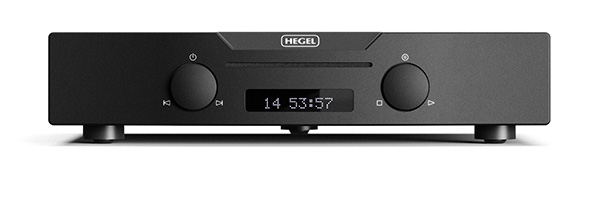
Hegel Music Systems Viking CD player

The pleasures of reviewing a new CD player reside in its light weight, compact dimensions, and, most of all, its ABC-simple installation: no cartridge to mount, no stylus to break, no step-up trans formers or cartridge-load values to explore. No server, no Ethernet switches, no digital processor or outboard clock, no NOS, OS, filter choices, or upsampling (usually), no DSD or DXD, no specialized cables, and-especially-no garish, billboard-sized LCD menu to trigger anxiety. Just plug the player in, connect it to a preamp, and choose a CD to play first.

Yes, folks, digital audio was once that simple.

I'm pleased to be reviewing a new CD player, the Viking from Hegel Music Systems, in part because Hegel's founder and chief engineer Bent Holter appears to feel the same way I do.

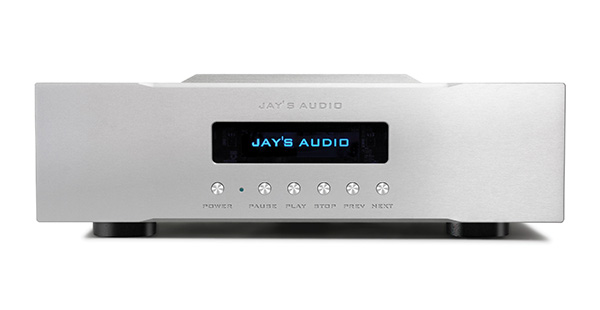
Jay's Audio CDT3-MK3 CD transport

They say a jack of all trades is the master of none. While this expression is typically used to describe people, it also works for machines that play 5" optical discs.

The Compact Disc was launched in 1982, but the four decades since have seen an alphabet soup of similar-looking shiny discs including major formats like DVD, SACD, DVD-A, and Blu-ray Audio. As each new format arrived, hardware manufacturers scrambled to keep up, developing machines that could play just about any disc you could throw at them (or, rather, insert in them). The result was a bunch of "jack of all trades" disc spinners...

But what if we gave up the notion of universal compatibility and concentrated on building a player dedicated to squeezing the best possible results from the very first, and by far the most common, shiny 5" disc, the good old-fashioned "Red Book" Compact Disc? Would we get better performance?

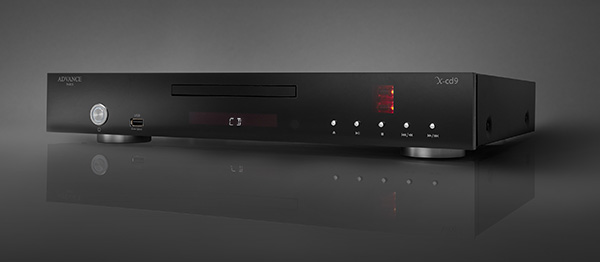
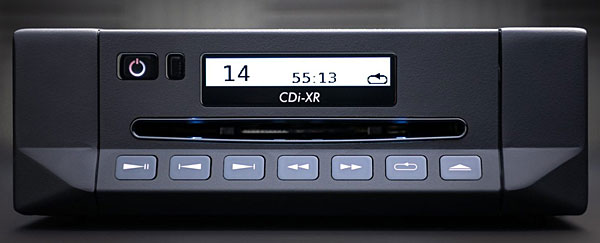
Cyrus CDi-XR CD player

In the 1990s, I was a globetrotter, interviewing musicians in diverse locales for several publications. My habit when arriving in London was to hit the duty-free shops for Cuban Montecristo cigars, move on to the newsagent for the latest issues of Hi-Fi News and Hi-Fi Choice, then take a leisurely romp through Oranges & Lemons, Richer Sounds, and Sevenoaks Sound & Vision—three major London audio stores.

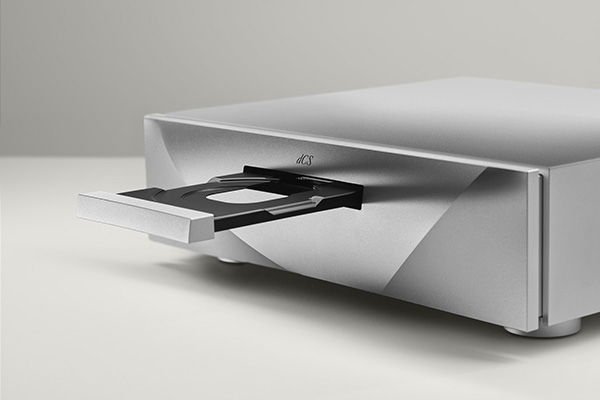
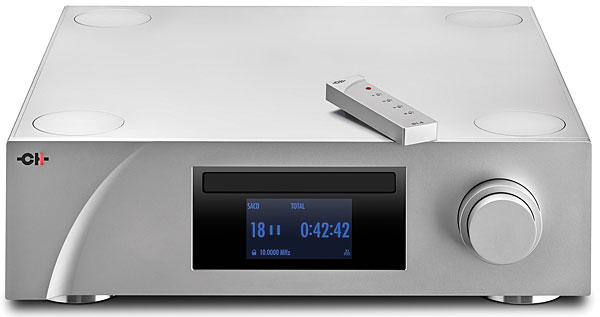
CH Precision D1.5 SACD/CD player/transport

There's a school of thought that maintains that among all hi-fi components, the D/A converter is easiest to perfect or come close to perfecting. Just make sure that every sample is converted accurately, that there's little rolloff in the audioband, that aliased images are suppressed almost completely, and that background noise is extremely low, and you have a top-quality D/A processor. Use of a high-quality DAC chip is assumed.

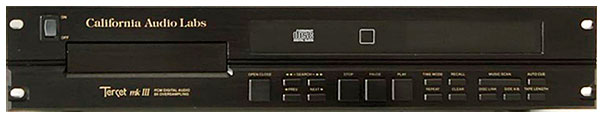
California Audio Labs Tercet Mk.III CD player

At $1295, the Tercet Mk.III represents a step up from CAL's $750 Icon, which I enthusiastically recommended back in April 1990 (Vol.13 No 4, footnote 1). Externally, with the exception of a wider and slightly thicker front panel, it appears to be a carbon copy of that unit. Like the other products in California Audio Lab's stable, the Tercet Mk.III is designed from the ground up in-house.

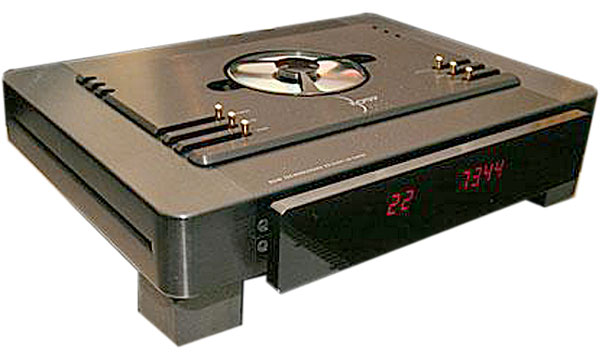
Bow Technologies ZZ-Eight CD player

"Something's coming, I don't know what it is, but it is gonna be great!"—Tony, West Side Story

While the Sharks and the Jets rumble in the consumer electronics playground, knife-fighting for supremacy in the next software go-round, in 1998 we're still living in the 16-bit/44.1kHz audio world, and will be doing so for the foreseeable future. Maybe your idea of audio bliss is listening to the equivalent of computing with a Commodore 64, but it's not mine.

Luxman D-105u CD player

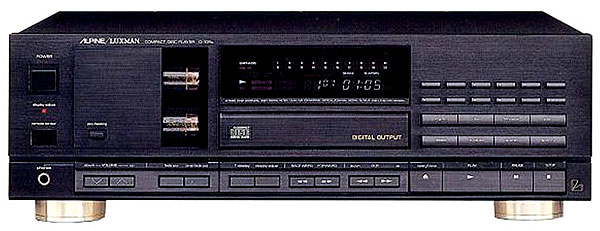
The $1200 D-105u, the top of Luxman's CD-player line, is novel in its twin-triode vacuum-tube amplification in the analog output stage. This configuration is said to provide high linearity with low distortion and that hard-to-quantify musicality found in tubed products. In addition, the D-105u incorporates an anti-vibration laser pick-up mechanism and a high-mass magnetic disc clamper, the latter feature said to mass-load the disc center to minimize spindle-motor microvibration, thus improving tracking accuracy for lowest error rate.
Advertisement
Advertisement
Advertisement