Tom Fine

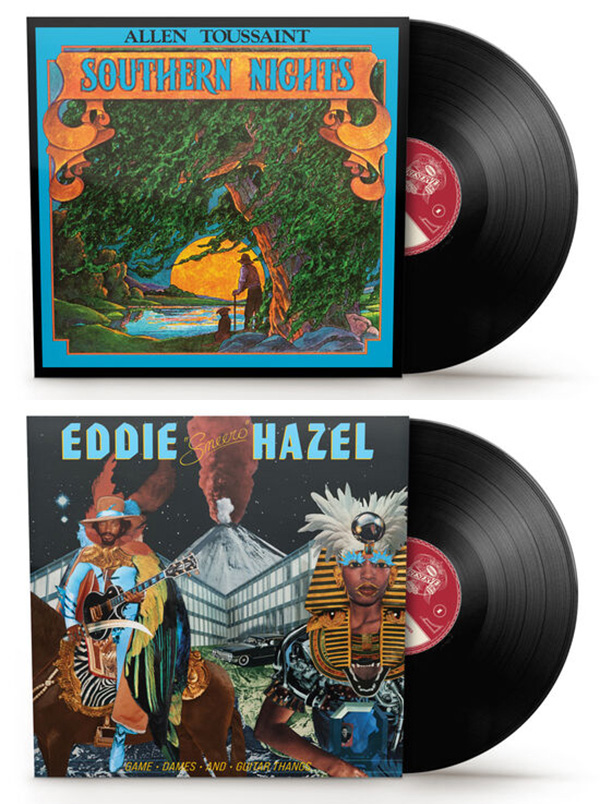
Revinylization #63: The Three-Horned Vinyl Rhino

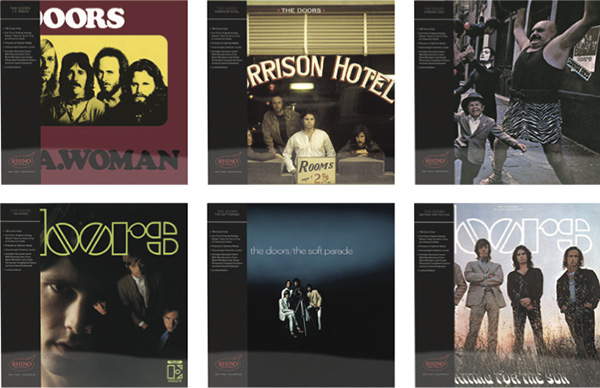
Rhino Records started in 1978 as an eclectic indie label specializing in compilations and offbeat reissues. Its emblem was a scowling rhinoceros-human hybrid with a record spinning on the tip of its horn. Time Warner acquired the label during the 1990s, and today Warner Music uses it as its chief nonclassical reissue vehicle.

As a back-catalog label, Rhino was active early in the vinyl revival—and it continues to be. Rhino quickly learned that a popular older album, when released as a high-quality physical artifact—whether it's an LP, a CD box, a multichannel Blu-ray audio disc, or a combination of formats—engages fans more than merely dropping a new remaster onto streaming. I spoke with Rhino's president, Mark Pinkus, about the company's three-tier vinyl strategy soon after the company announced the third of those tiers, a new, lower-priced all-analog vinyl line called Rhino Reserve.

Continue Reading »

Focal Diva Utopia Wireless Streaming Active Loudspeaker

What if there was a character in Stanley Kubrick's classic movie 2001: A Space Odyssey who was an audiophile? Aboard the Discovery One interplanetary space ship, what would his system look like? He'd probably have a pair of ultramodern speakers that could pluck sound out of the ether. He'd control the system with something like a present-day smartphone or tablet, commanding the HAL 9000 computer to play his favorite songs. The speakers would stand unobtrusively in a white room with 1970s modern-minimalist furniture, no rack of components to drive them, no wires connecting them, no shelves of physical media to play. And they would fill the room with music.

I am sitting earthbound in my living room almost a quarter-century beyond the year 2001, living a similar scenario with the Focal Diva Utopia streaming amplified wireless speaker system. My living room is not at all reminiscent of the Discovery One with its rotating central interior (footnote 1). But with the Diva Utopia system, I feel more in a sci-fi future young me might have imagined than with any hi-fi component I've reviewed so far. About the only thing the Diva Utopia has in common with the stereo systems I grew up with—and with my current reference system—is two floorstanding cabinets and diaphragms that move air to make sound.

Continue Reading »

Rabbit Holes #14: Uh-Oh, Talking Heads Come to Town

A quick survey of 1977's rock albums shows a vibrant genre, pushing in many directions at once. British punk went major label, with debut albums from The Clash, The Damned, Wire, and The Sex Pistols (their only studio album). The Ramones released Rocket to Russia. David Bowie explored a new direction with both Low and Heroes. Mainstream blockbusters included Rumours by Fleetwood Mac, News of the World by Queen, Slowhand by Eric Clapton, and Pink Floyd's Animals. Not to mention Meat Loaf 's Bat Out of Hell and the soundtrack to Saturday Night Fever (footnote 1).

Amid all of this, there was a distinct new sound, quickly labeled New Wave. It wasn't rock like Queen, Pink Floyd, or anything coming out of Laurel Canyon. And it wasn't manufactured in the disco-pop factories. But it wasn't punk. It was NYC-centric, but there was also Brit brat (before brat was a thing), Elvis Costello, introducing himself with My Aim Is True. Back in the Big Apple, two seminal new wave debuts dropped in 1977: Television's Marquee Moon, and Talking Heads: 77.

Continue Reading »

Perfect Album Sides

Before the bits and bytes, before the streams, the music business and its most talented artists, producers, and engineers conjured up a notion of musical-sonic holiness: the perfect album side.

Remember albums? The idea is quaint in the era of streaming, a time of "summer songs," one-hit wonders, meme songs, song snippets on TikTok, songs tied to viral videos, robot-generated playlists, and whatnot. Those of us older than the World Wide Web itself, we remember albums. They were 12" slices of happiness, sadness, escape, epiphany—all the feelings.

Continue Reading »

Sonus faber Sonetto V G2 loudspeaker

Here's a hard truth: A written review of a full-sized speaker—any speaker, really—is, at best, semi-useful. We all listen differently, we have different musical tastes, our system electronics are different, and our listening rooms vary a lot. You will gain a general picture of a speaker's capabilities and foibles from John Atkinson's measurements, and I can tell you how the speakers sound to me, in my room. But that's it. You need to hear them for yourself before making a buying decision. The best I can do is tell you how my music brain felt when the speakers were in my house and making music.

But hey, that's better than nothing. If you're in the market for a pair of modestly sized, reasonably priced floorstanding loudspeakers, I encourage you to read on as I describe the lively musical times I spent with the Sonus faber Sonetto V G2s ($6499/pair).

Continue Reading »

X Marks the End

Photo by Frank Gargan

All bands dissolve eventually, for reasons ranging from commercial failure, personnel dynamics, and death to just running out of steam. The band X, beloved by its niche fanbase and highly influential in punk, hard rock, and even alt-country, decided to control the time and place of its end. Earlier this year, they announced "the final album," Smoke & Fiction. "The End Is Near" tour listed shows through October 2024.

Continue Reading »

Rabbit Holes #13: Elvis in Memphis, Warts and All

Calling Elvis Presley the king of rock'n'roll may seem hyperbolic today, but that's what he was during 21 years in the hot pop culture spotlight. His recording career began and ended in his hometown of Memphis. From a bright cultural comet heralding something new to a depressed drug addict mailing in middling performances from his mansion's den, Sony's box set, Memphis, captures all his home-turf recording sessions.
Continue Reading »

Hegel H400 streaming integrated amplifier

The Internet of Things has arrived at the stereo rack. Many hi-fi systems are now connected to the wider world, controlled by phones and tablets. Complex front panels with many switches and buttons have practically vanished; those still around are retro pieces or style statements. Little front-panel touchscreens with complex menu trees have been rendered vestigial or at least redundant. Designers of receivers, integrated amplifiers, and DACs must now at least consider incorporating a streaming module and a device-control app. In certain component categories and certain price brackets, a built-in app-controlled streamer is now a key part of the value proposition, much as a tuner was back in the days of terrestrial radio.

The Hegel H400 combines the functions of an integrated amplifier, DAC, and streamer.

Continue Reading »

Rabbit Holes #11: Chasing John Lennon's Mind Games

After a wild decade in the biggest pop music group ever, John Lennon's post-Beatles years were spent in protest, in various kinds of therapy, in immigration court, and in search of a new musical identity. He had been a musician since age 16 and a superstar since his early 20s. He was only in his 30s.

By summer 1973, when Lennon's fourth album, Mind Games, was recorded at New York's Record Plant Studios, the turbulence of Lennon's life seas was at gale force. He was separating from Yoko Ono and starting a 16-month relationship (consummated at Ono's suggestion) with their shared administrative assistant, May Pang. The Nixon Administration was targeting Lennon and Ono for deportation because of their left-wing political activities, mostly focused on the Vietnam War.

Continue Reading »

T+A R 2500 R multisource receiver

The hi-fi receiver has been many different things. Early examples, like the Harman Kardon "Stereo Festival" TA-230 from 1958 (said by modern-day Harman/Samsung to be the first stereo receiver), featured separate FM and AM monophonic tuners that could assign a speaker to each if you wanted to listen to what was then a fad: stereo broadcasts over two stations (left channel over FM, right over AM, for instance). Standardized FM stereo broadcasting began in 1961, and by then, receivers had evolved into large, complex, nearly complete stereo systems; an example of that was the Fisher 800.

It might be nice if the receiver can connect to a modern TV, which will have either TosLink or HDMI-ARC output, or both. For those of us who still own a bunch of CDs, we might as well include a robust DAC—and maybe even a built-in CD transport. Throw in FM analog and digital tuners, and voilà, you have the R 2500 R, the "21st Century Receiver" from T+A Elektroakustik of Herford, Germany, southwest of Hanover.

Continue Reading »
Advertisement
Advertisement
Advertisement