Floor Loudspeaker Reviews

Sort By: Post DateTitle Publish Date

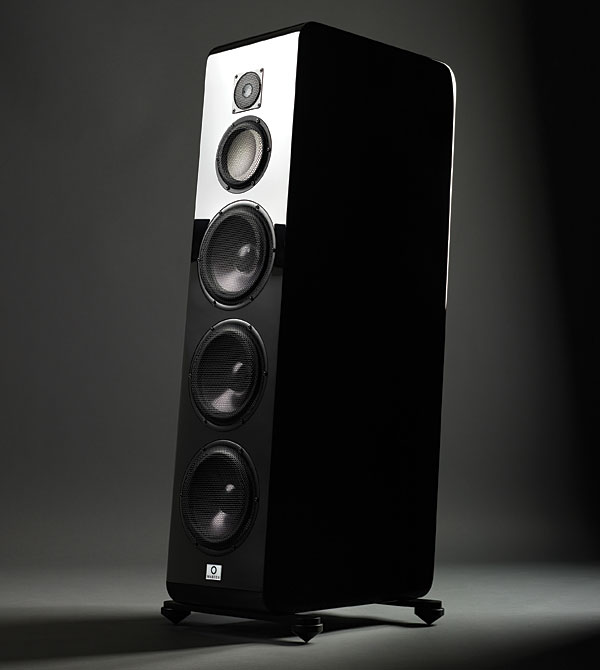
Wilson Audio Specialties Alexandria XLF loudspeaker
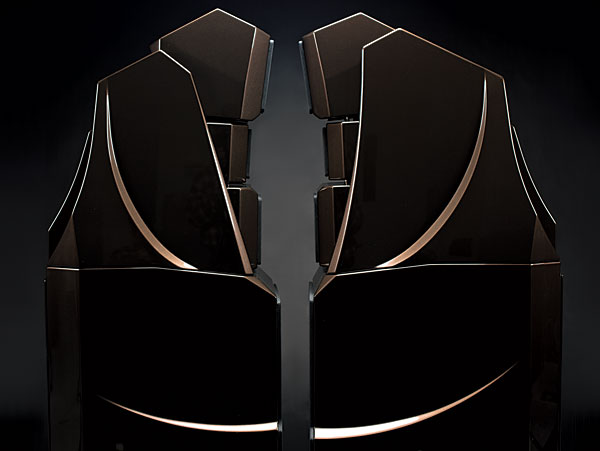
The Wilson Audio Specialties Alexandra XLF costs $200,000/pair. So does a Ferrari. Perhaps if Wilson Audio Specialties sold as many pairs of XLFs as Ferrari sells cars, the price might drop. For now, $200,000 is what you pay.


Can a loudspeaker possibly be worth that much? Add $10,000 for speaker cables, and that's what I paid for my first home in 1992. Today, the average American home costs around $272,000, which is likely less than the cost of an audio system built around a pair of Alexandra XLFs.
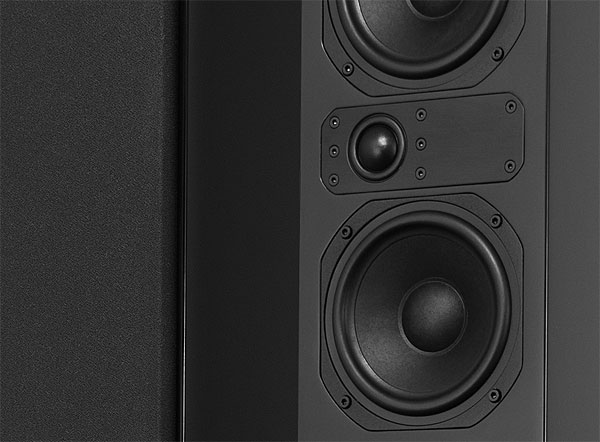
Sony SS-AR2 loudspeaker


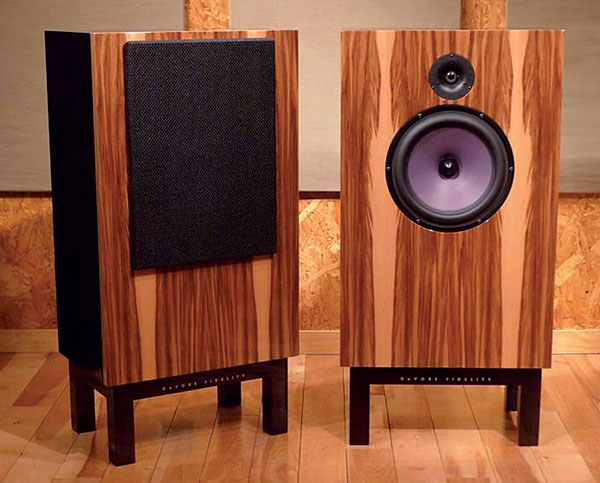
A highlight for me of Stereophile's 2011 equipment reviews was Kalman Rubinson's report on Sony's SS-AR1 loudspeaker in July. I had been impressed by this unassuming-looking floorstander at the 2009 Rocky Mountain Audio Fest, when, courtesy Ray Kimber, I had used a pair for my "Loudness Wars" demonstration—and was equally impressed when I used another pair for a dem of my recordings at Massachusetts retailer Goodwin's High End, in summer 2011. The SS-AR1 costs $27,000/pair and combines a full frequency range with an uncolored, detailed midrange, sweet-balanced highs, and excellent dynamics. "The Sony SS-AR1 is an impressive loudspeaker," summed up Dr. Kal; "it brings the analytical capabilities of studio monitoring to the listening room." So when I learned that Sony had introduced a smaller, less-expensive version, the SS-AR2 ($20,000/pair), it took me less than the proverbial New York minute to request a pair for review.

Marten Django XL loudspeaker

If it's rare to go to an audio show and hear most of a company's products set up properly in multiple rooms, it's rarer still to hear those products also sounding terrific in each and every room. Such was my introduction to Marten's loudspeakers at the 2010 Consumer Electronics Show. In each of the systems in which the Swedish company's speakers were set up, and no matter what gear was upstream of them, I heard distinctly neutral, open, musical sound. After having the very same experience with Marten's speakers at the 2011 CES, I concluded that they must know what they're doing, and that their speakers are the real deal. I wanted to review some.

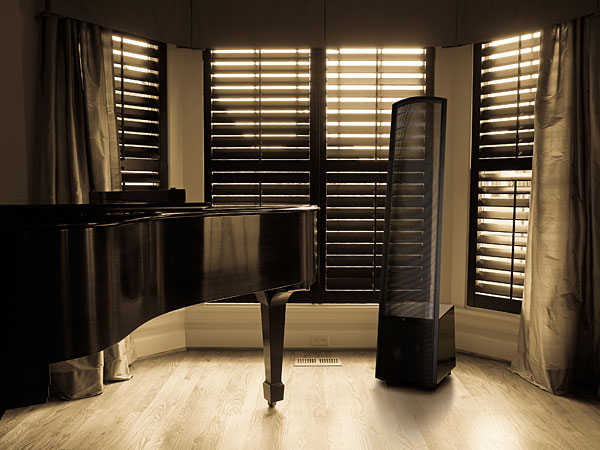
MartinLogan Montis loudspeaker

One of my formative audiophile experiences was the first time I heard electrostatic speakers. I walked into an audio store and heard music played by a live jazz combo. But where were the musicians? I saw none, though I did notice a couple of room-divider panels in the part of the store where the music seemed to be coming from. Eventually, it dawned on me that these must be loudspeakers—but they sounded like no other speakers I'd ever heard, and nothing like the Advents I had at home.

Emotiva X-Ref XRT-5.2 loudspeaker

We've all read about how bookstores, appliance stores, and other bricks-and-mortar retailers are suffering with the increasing domination of Internet sales. That got me thinking about audio dealers. I've always believed that one can't really make an informed purchase of audiophile equipment without hearing it in a system properly set up by and at at a serious audio retailer. Here in New York City, we're blessed with six first-rate audio dealers in Manhattan alone, with more in the suburbs. I estimate that 90% of the products reviewed in Stereophile can be auditioned at a dealer or two within a two-hour drive of anywhere in the New York metropolitan area.

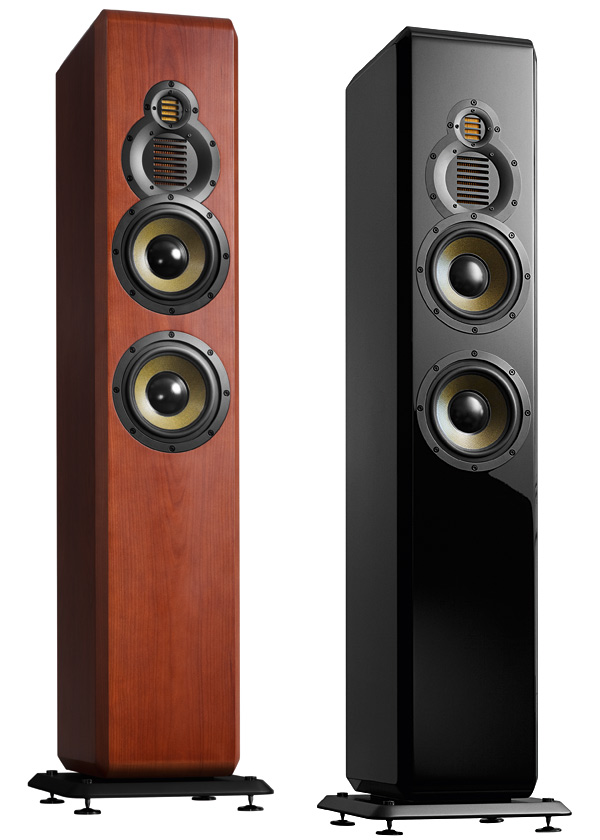
ADAM Audio Classic Column MK3 loudspeaker

It was three or four years ago, at a CEDIA Expo, that I first happened upon Advanced Dynamic Audio Monitors, aka ADAM Audio. What grabbed me was the array of imposingly high-tech speakers comprising their elite Tensor line. Sitting out in the middle of the floor of the Atlanta Convention Center, they not only looked more advanced than anything else around, they had the audacity to sound superb in a totally inappropriate acoustic situation. Despite the surrounding busyness of the Expo, I was able to sit down and actually enjoy the Beatles' Love on DVD-Audio. Clearly, these guys knew what they were doing. I vowed to follow up on it.

Lansche Audio 5.1 loudspeaker

The phenomenon of the "singing flame" has been known since the 19th century. Place electrodes either side of a flame and, if you apply a high enough audio-modulated voltage to those electrodes, the ionized particles in the flame will cause it to emit sound. (Search YouTube for "singing flame" and you'll find many examples.) This principle was developed into a practical loudspeaker in 1946 by a French inventor, Siegfried Klein, who confined an RF-modulated arc to a small quartz tube, coupled it to a horn, and called the resulting speaker the Ionophone. An intense radio-frequency electrical field ionizes the air between inner and outer electrodes to produce a distinctive, violet-tinged yellow flame in the quartz combustion chamber. When the RF field is modulated by the audio signal, this causes the almost massless ionized flame to expand and contract in what should be a perfectly pistonic manner.

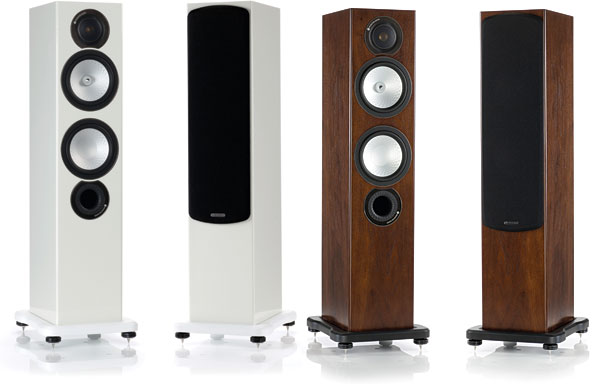
Monitor Audio Silver RX6 loudspeaker

In March 2006 I wrote a very favorable review of Monitor Audio's Silver RS6 loudspeaker. At the time, I felt this $999/pair, small-footprint floorstander produced the greatest sound quality per dollar of any speaker I'd heard. Despite the proliferation of affordable speakers of increasing quality I've heard since then, I remained particularly impressed by the Silver RS6's clarity and lack of coloration and the speed of its midbass, all of which continued to exceed the performance of any other affordable speaker I've heard.

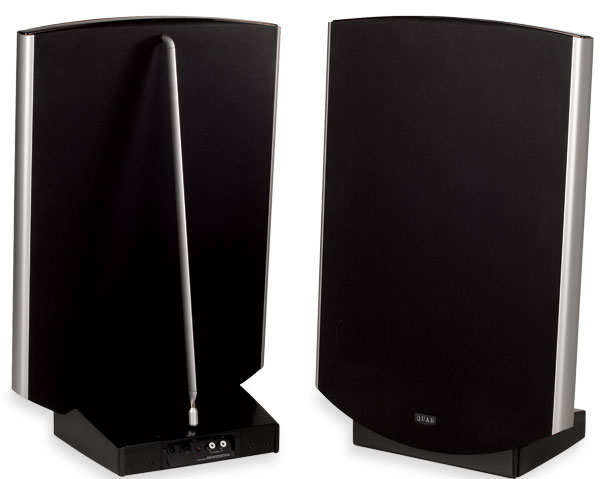
Quad Reference ESL-2805 loudspeaker

I gasped. An almost perfect 300Hz squarewave had appeared on the oscilloscope screen—something I had never before seen from a loudspeaker.


It was the spring of 1982. John Crabbe, then editor of the British magazine Hi-Fi News & Record Review, and I had driven up to Quad's factory in Huntingdon, England. The ESL-63 electrostatic loudspeaker had been launched the previous summer, and we were to interview its designer, Peter J. Walker, for an article that would appear in the July 1982 issue of HFN/RR. Peter set up a pair of ESL-63s on wooden kitchen chairs, fed one of them a 300Hz squarewave, casually placed a mike before it, and showed us the result on the 'scope. "Of course, why should a speaker being able to reproduce a squarewave matter at all, hmmm?" he rhetorically asked us.

Advertisement
Advertisement
Advertisement